


Sudanese Groups Agree on Basis for Transition to Democratic Rule

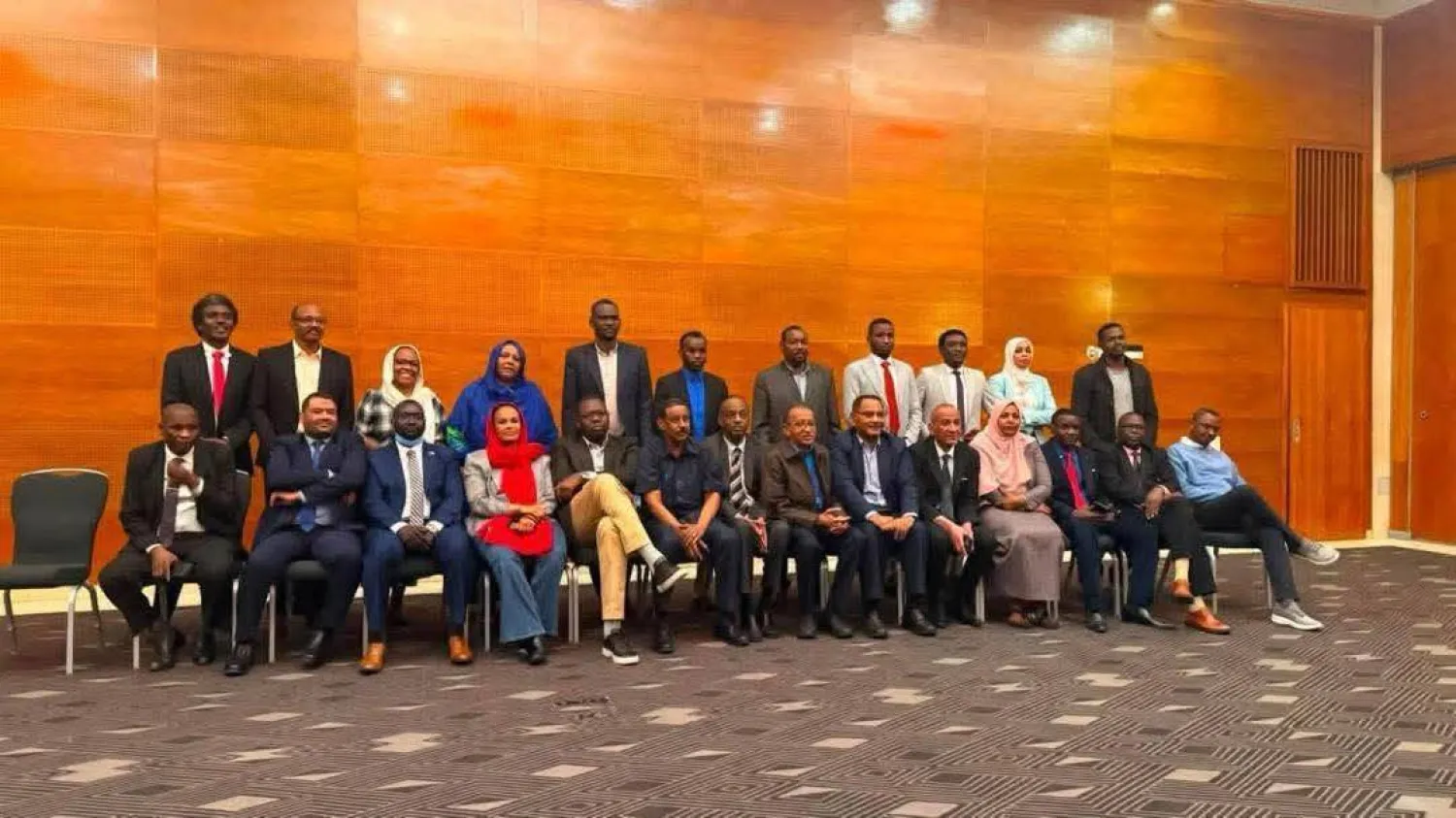
A photo shows political and civil groups who participated in the Addis Ababa meeting and agreed on a new path to end the war
TT

Sudanese Groups Agree on Basis for Transition to Democratic Rule

A photo shows political and civil groups who participated in the Addis Ababa meeting and agreed on a new path to end the war

Sudanese political and civil forces from rival camps have reached a significant breakthrough, agreeing on a common vision to launch a process aimed at ending the war and laying the groundwork for a peaceful transition to democratic civilian rule, following days of talks.

The forces, once grouped under one umbrella before the war split them apart and hardened their positions, issued a joint statement that included the Civil Democratic Alliance for the Forces of the Revolution, known as Somoud, led by former prime minister Abdalla Hamdok, the Democratic Bloc, an ally of the Sudanese army, and the Arab Socialist Baath Party, along with other parties, political forces, public figures, and civil, women’s and youth organizations.

The statement said the parties had agreed on a new political path to achieve comprehensive peace, end the war, and establish the basis for a peaceful solution that preserves Sudan’s unity and sovereignty.

It marks the first such consensus since Sudan’s war erupted in April 2023, bringing together anti-war forces represented by Somoud and the Democratic Bloc, the largest political alliance supporting the Sudanese army.

Early on Friday, the Sudanese forces handed the draft consensus vision to the international quintet mechanism, which includes the African Union, the Arab League, the European Union, the United Nations, and the Intergovernmental Authority on Development, IGAD.

The agreement followed the failure to hold a formal meeting called by the Quintet mechanism, pushing the political and civil forces into intensive side consultations to agree on the foundations of a new political process. The signatories said the consensus reflected a shared political and civil will to end the fighting and pave the way for a comprehensive, peaceful settlement.

The meetings brought together the Democratic Bloc, Somoud, and the Tasis alliance, which is aligned with the Rapid Support Forces (RSF). But the talks themselves were held between the Democratic Bloc and Somoud after members of the Democratic Bloc refused to sit with the Tasis delegation.

The joint statement said any political process must be comprehensive, with priority given to addressing the humanitarian disaster caused by the war, expanding civic space, and creating the conditions needed for a successful national dialogue.

It also stressed accountability for war crimes, criminal justice, and transitional justice to address the social and psychological scars left by the conflict.

Committee to draft the agenda

The parties agreed to form a preparatory committee of no more than 40 members, men and women, representing the different sides of the political process.

The committee would reflect political diversity, geographic balance and social, professional, women’s and youth representation, as well as those affected by the war, including displaced people and refugees.

The committee will identify the participants in the political process according to agreed criteria, draft the dialogue agenda and the principles and foundations of a political solution, oversee measures to prepare the atmosphere, set the dialogue methodology, determine the time and venue, and coordinate with regional and international mediators and guarantors.

The vision sets out three simultaneous tracks for the political process.

On the humanitarian track, the forces called for lifting sieges on cities and camps in Darfur, Kordofan and other affected areas, opening safe corridors for aid delivery and civilian protection, and requiring the warring parties to allow humanitarian organizations to operate without restrictions.

On the security track, the vision called for a humanitarian ceasefire based on the terms of the Jeddah Declaration and monitored by regional, international and UN bodies, in parallel with the launch of the political process, paving the way for a permanent and comprehensive ceasefire.

On the political track, it called for a comprehensive Sudanese dialogue among political and civil forces to address the roots of the national crisis and reach a new social contract that would underpin a democratic civilian transition.

The document also called for confidence-building measures before the process begins, including the release of detainees, prisoners and abductees, mechanisms to search for the missing, the cancellation of arbitrary measures against civil and political forces, guarantees for freedom of political and civil activity, and an end to politically driven war-related trials.

Participants in the Addis Ababa meetings on Wednesday and Thursday stressed that the ousted National Congress Party and its organizational fronts must be excluded from any role in the next political process, a position described as one of the principles that won broad consensus among the participating parties.

They also stressed the exclusion from the political process of the National Congress Party, which was ousted by the 2018 revolution, and its organizational fronts.

It is widely believed that the Democratic Bloc’s participation in the Addis Ababa meeting and the consensus that followed may have been directed by Sudanese army leaders.

The vision’s principles include affirming Sudan’s unity and sovereignty, linking the humanitarian, security, and political tracks as part of an integrated package to end the war, and restoring the path toward a democratic civilian transition.

The quintet mechanism had invited Sudanese forces, including the RSF-linked Tasis, to an exploratory meeting aimed at narrowing differences and opening a new political track to end the country’s continuing conflict.

The meeting also examined the possibility of forming a unified mechanism to support efforts to stop the war and negotiate transitional arrangements, ahead of a comprehensive political dialogue among the Sudanese.

Mubarak Ardol, head of the Democratic Alliance for Social Justice and a prominent Democratic Bloc leader, said the Addis Ababa consultations marked a major step since the war began.

He said participants had reached a common position on the preparatory committee for the political process and on the final statement, while maintaining their rejection of Tasis’ participation in the political process.

The Democratic Bloc includes several armed movements and political forces, most notably the Justice and Equality Movement led by Jibril Ibrahim, the Sudan Liberation Movement led by Minni Arko Minnawi, the Beja Congress, and the Democratic Unionist Party, among others.

Al-Wathiq al-Bireir, Secretary-General of the National Umma Party, said the Addis Ababa meeting aimed to agree on the foundations and mechanisms for preparing a comprehensive Sudanese political process.

He said his party remained committed to rejecting the return of the National Congress Party and the Islamic Movement to the political scene after the war.


Syria Hails Shift From Captagon Hub to Anti-Drug Partner

Syria’s Anti-Narcotics Directorate seized 25 million professionally packaged Captagon pills. (Syrian Interior Ministry)
TT

Syria Hails Shift From Captagon Hub to Anti-Drug Partner

Syria’s Anti-Narcotics Directorate seized 25 million professionally packaged Captagon pills. (Syrian Interior Ministry)

Syria on Friday marked what it called its shift from a “Captagon hub” to a “partner in combating it,” as the world observed the International Day against Drug Abuse and Illicit Trafficking.

The official Syrian Arab News Agency, SANA, said this year’s event was held under the slogan “The global drug problem: persistent issues, new challenges and innovative responses,” citing rapid changes in global drug markets, the rise of new substances and increasingly complex smuggling routes.

SANA said the occasion came as Syria presses ahead with efforts to dismantle drug production and smuggling networks following changes in the file after the fall of the former government, a reference to the government of former President Bashar al-Assad.

“After years in which Syria, under the former regime, was one of the world’s most prominent hubs for producing and smuggling Captagon, the country entered a new phase after liberation,” SANA said in a report on Friday.

That phase, it said, is focused on dismantling drug factories, pursuing trafficking networks and expanding international cooperation, turning Syria “from a source of threat into an active partner in combating it.”

SANA said that in December 2025, one year after Assad’s government fell, the United Nations Office on Drugs and Crime, UNODC, confirmed the disruption of large-scale Captagon manufacturing in Syria.

It said the Syrian government had dismantled 15 Captagon manufacturing facilities and 13 smaller storage sites since December 2024, the month the former government fell.

The agency said UNODC’s 2026 report also noted that disruption in the Captagon market after Assad’s fall had pushed up pill prices in some areas. The report also warned that some users could turn to other synthetic drugs, such as methamphetamine.

Coinciding with the international anti-drug day, SANA said the Interior and Health ministries had launched a national campaign under the slogan “Syria Without Drugs.”

Brig. Gen. Khaled Eid, head of the Anti-Narcotics Directorate, told Syrian Alikhbariah that reaching a “Syria Without Drugs” was not just a slogan, but a national project built on scientific and carefully studied plans.

He said the campaign rests on a balance between deterrence and treatment. “The user is viewed as a victim who requires care, while the dealer and smuggler are treated as perpetrators of a crime that requires punishment,” he said.

Eid said the Interior Ministry had faced “a complex reality” in recent months, including local manufacturing centers and distribution networks targeting young people. He said this required stronger security controls, tighter oversight of border crossings, better-equipped anti-narcotics units with modern tracking technology, and an integrated database on active networks.

According to SANA, Syria’s Anti-Narcotics Directorate has carried out 1,550 drug seizures and interdiction operations since Assad’s fall. The operations led to the dismantling of 90 international smuggling networks and the closure of 17 Captagon factories.

The seized materials included 697 million Captagon pills, 15 metric tons of hashish, 10 million narcotic pharmaceutical pills, 180 kg of cocaine, 84.5 kg of crystal meth, 7 kg of heroin and 221 metric tons of chemical precursors, according to Eid.

Separately, the UN Security Council unanimously passed a resolution renewing the mandate of the United Nations Disengagement Observer Force in the Golan, known as UNDOF, during a session on Thursday.

Syrian Alikhbariah quoted Syria’s Permanent Representative to the United Nations, Ibrahim Olabi, as saying at the session that Syria was now one of the most stable countries in the region and was “engaged in reconstruction, restoring institutions and attracting investment.”

He also cited Syria’s cooperation with international partners on counterterrorism, chemical weapons-related obligations and regional security.

Olabi also addressed political change in Syria, saying “the change in Syria was represented by the disappearance of a regime that practiced torture and used chemical weapons.”

On Israel, Olabi expressed “Syria’s concern over Israeli statements about not withdrawing from Syria,” saying “Israel’s current actions can be interpreted as an attempt to seize the lands it occupied.”

Olabi said the change in Syria that Israel appeared to fear was the removal of “an authoritarian regime that used chemical weapons against its people.” He asked whether Israel preferred the situation that had existed under Assad.

UNDOF was established after the October 1973 war under the Disengagement of Forces Agreement signed by Syria and Israel in 1974. The force has operated since then in the buffer zone to monitor compliance with the ceasefire in the Syrian Golan Heights, which Israel has occupied since 1967.


Iraq Row Erupts Over ‘Missing’ $140 Bn

 A session of Iraq’s parliament in Baghdad, March 2026. (Iraqi News Agency)
A session of Iraq’s parliament in Baghdad, March 2026. (Iraqi News Agency)
TT

Iraq Row Erupts Over ‘Missing’ $140 Bn

 A session of Iraq’s parliament in Baghdad, March 2026. (Iraqi News Agency)
A session of Iraq’s parliament in Baghdad, March 2026. (Iraqi News Agency)

A senior Iraqi official has ignited a new dispute over the fate of about $140 billion in public revenues, as Iraq presses ahead with corruption investigations involving high-ranking officials at the oil and electricity ministries.

The cases center on allegations that tens of millions of dollars and billions of Iraqi dinars were stolen through contracts suspected of being fake.

The developments come as the Iraqi government faces mounting financial and political pressure ahead of Prime Minister Ali al-Zaidi’s visit to the United States in mid-July.

The government is also grappling with efforts to bring weapons under state control, complete the formation of the government and confront financial strain caused by a drop in Iraqi oil exports after the closure of the Strait of Hormuz.

The pressure has prompted Baghdad to seek alternatives to secure state employees’ salaries for the next three months.

Missing $140 billion

In a televised interview broadcast two days ago, former Finance Ministry undersecretary Masoud Haider said the state treasury had received about 455 trillion dinars over the three years of the previous government, equivalent, by his estimate, to about $345 billion.

Haider said operating spending and public-sector salaries totaled about $205 billion, then questioned the fate of the remaining $140 billion.

Haider, a member of the Kurdistan Democratic Party, said spending on infrastructure projects, including overpasses in Baghdad, could not explain the gap.

He accused the Finance Ministry of blocking his access to data from the accounting and budget departments while he served as undersecretary.

He said the restriction was imposed because of his ethnic and party affiliation and presented an official document that he said barred the two departments from dealing with him without the minister’s approval.

Haider said he informed former Prime Minister Mohammed Shia al-Sudani of what he described as a legal violation, but said Sudani took no action.

Former Finance Minister Taif Sami denied the accusations. In a statement, she said Haider’s remarks were “baseless and not supported by any reports or official documents issued by the relevant oversight authorities.”

Sami said oil revenues are monitored and audited by the Federal Integrity Commission and the Federal Board of Supreme Audit, as well as by international auditing systems that track oil exports and reconcile exported volumes with collected revenues.

She said the disappearance of the cited sums would be “impossible” without their appearing in official records and reports.

She said non-oil revenues had also grown in recent years as a result of reform measures, including the introduction of point-of-sale systems and follow-up with public companies to collect dues and transfer them to the public treasury after audit by the Federal Board of Supreme Audit.

On revenues from the Kurdistan Region, Sami said the file differed from other federal revenues. She said the region’s revenues had not been transferred to the federal treasury in a way that would allow them to be included in the accounts cited.

Sami said maintaining public trust in financial and oversight institutions required accuracy and reliance on facts and official documents, not estimates or accusations unsupported by evidence.

Major budget changes

On Iraq’s severe financial crisis, lawmaker Hussein al-Daraji said in press remarks that the time left this year was not enough to prepare and pass a 2026 budget draft in parliament.

He said the government was instead preparing a draft 2027 budget, which he expected to be sent to parliament in October or November.

Daraji said the government planned major changes to the 2027 budget law, making it different from previous budgets in how it is prepared, how its tables are structured and how spending is set.

He said the decision to bypass the 2026 budget was driven by accounting issues stemming from the advanced stage of the fiscal year. The state, he said, is still spending under a temporary one-twelfth disbursement mechanism, based on the Financial Management Law and the previous three-year budget.

According to the parliamentary finance committee, the government and parliament have agreed to focus technical efforts on preparing the 2027 budget in an economic format with new spending tables.

The draft is expected to be referred to parliament before the end of the year, with the aim of reducing the deficit and passing it before the start of the new fiscal year.


Lebanon Banking on US Pressure to Yield ‘Declaration of Intent’ in Negotiations with Israel

Lebanese President Joseph Aoun chairs a cabinet meeting on Thursday. (Lebanese Presidency)
TT

Lebanon Banking on US Pressure to Yield ‘Declaration of Intent’ in Negotiations with Israel

Lebanese President Joseph Aoun chairs a cabinet meeting on Thursday. (Lebanese Presidency)

Lebanon is counting on US pressure to push Israel to soften its position after the third day of the fifth round of Lebanese-Israeli negotiations in Washington failed to yield a breakthrough.

The two delegations failed to agree on a declaration of intent, prompting the US State Department to extend the round by one day and schedule a fourth session for Friday.

The extension came after Lebanon’s cabinet on Thursday approved a mandate for the negotiating delegation to continue the talks.

The decision was backed unanimously by ministers, including those aligned with Hezbollah and the Amal Movement, even as the “Shiite duo” continues to reject direct negotiations with Israel.

Differences remain

Thursday’s talks were the longest since the fifth round began, lasting 11 hours. They had been expected to end with a news conference, and journalists were invited in the evening.

But the event was canceled without explanation before the US State Department announced that negotiations would continue for another day, signaling that major differences remained.

Sources familiar with the talks said the extension followed a failure to agree on the final wording of the declaration of intent, despite discussions having reached the stage of detailed drafting.

The sources told Asharq Al-Awsat that Lebanon is insisting the declaration include core principles: affirmation of Lebanese sovereignty, recognition of the Lebanese army’s role in extending state authority, and a clear link between any field arrangements or “model areas” and a full Israeli withdrawal from occupied Lebanese territory, along with the return of displaced people.

Israel, the sources said, remains firm. It is demanding security guarantees to prevent Hezbollah from rebuilding its military infrastructure and is refusing to include any clear commitment to a full withdrawal from Lebanese territory in the declaration of intent.

(2L/R) Israel's Ambassador to the US Yechiel Leiter, State Department Chief of Staff Daniel Holler, US Ambassador to Lebanon Michel Issa and Lebanese Ambassador to the US Nada Hamadeh attend a meeting between Israeli and Lebanese delegations hosted by the United States at the State Department in Washington, DC, on June 3, 2026. (AFP)

The sources said the main sticking point is the issue of “model areas.” They said Israel had retreated from an earlier approval of the proposal and is now demanding that the Lebanese army first deploy in areas outside the yellow line, meaning areas still under Lebanese state control north of the Litani River.

The aim, the sources said, is for the army to impose control there and disarm Hezbollah. Lebanon rejects that approach and insists that any model areas must first be tied to Israel’s withdrawal from the territory it occupies.

The sources also pointed with concern to security developments on Friday in the south, where Israeli incursions continued. They cited indications of attempts to expand the yellow line on the ground.

“All of this makes Lebanon even more determined to link any understanding to a full Israeli withdrawal,” one source said.

Lebanon banks on US pressure

US Secretary of State Marco Rubio had said Thursday that progress had been made in the negotiations and suggested that a declaration of intent could be reached. But that has not happened, with differences between the two delegations still unresolved.

Lebanon is now counting on further US pressure to push Israel to ease its stance and accept the Lebanese proposal in Friday’s session, particularly on withdrawal and the model areas. The sources said Rubio was expected to follow the talks from Washington after returning there.

In parallel, Lebanon’s cabinet approved on Thursday a decision “taking note” of the negotiations underway in Washington.

The decision said the cabinet took note of the mandate granted by the president, in agreement with the prime minister, to the Lebanese negotiating delegation, authorizing it to take the necessary steps to achieve the desired outcome under the delegation's supervision.

The sources said the mandate allows the Lebanese delegation to sign in Washington any agreement or declaration of intent that may be reached, but does not bring it into force. Implementation would still depend on cabinet approval.

They stressed that the delegation is not acting independently. President Joseph Aoun is continuously following the talks and issuing instructions to ensure the delegation remains committed to Lebanon’s core principles throughout the negotiations.