


Lebanon Reports Israeli Strikes as Hezbollah Claims Attacks Against Troops in South

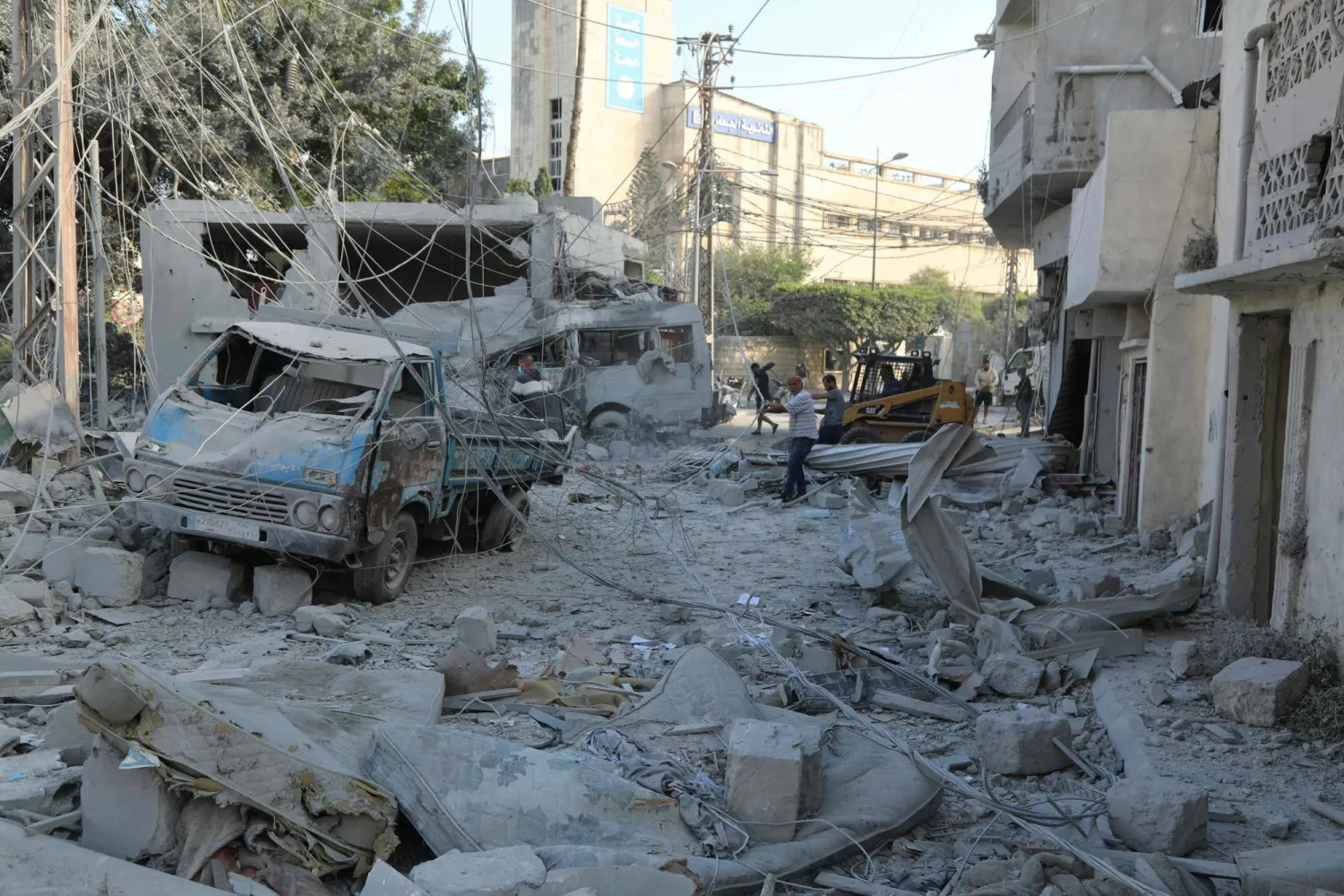
Workers clean the debris following Israeli airstrikes that hit the previous day, near the archaeological site of the Roman hippodrome in the southern Lebanese city of Tyre on June 8, 2026. (AFP)
TT

Lebanon Reports Israeli Strikes as Hezbollah Claims Attacks Against Troops in South

Workers clean the debris following Israeli airstrikes that hit the previous day, near the archaeological site of the Roman hippodrome in the southern Lebanese city of Tyre on June 8, 2026. (AFP)

An Israeli strike hit a vehicle in the city of Tyre, south Lebanon on Monday, Lebanese state media reported, as Israel vowed to press attacks on Hezbollah despite Iranian warnings.

Hezbollah meanwhile said it targeted Israeli troops in Lebanon, but did not claim any attacks on Israeli territory.

Lebanon's state-run National News Agency (NNA) reported that "an enemy airstrike targeted a car with a missile in the city of Tyre, near the Lebanese Red Cross building".

An AFP photographer in Tyre saw flames erupting from a car on a coastal road as residents gathered at the scene and an ambulance and paramedics headed towards it.

Reporting airstrikes from the early morning, the NNA said Israeli raids hit more than a dozen locations in the south, including Burj al-Shemali near Tyre.

A Lebanese culture ministry official said Israeli bombardment on the city a day earlier damaged a UNESCO World Heritage site there, and AFP correspondents saw dust and debris at the site.

The NNA said some of Monday's strikes caused casualties, though Lebanon's health ministry has not yet released any tolls.

Iran's military command on Monday afternoon said it was halting its operation against Israel after the two sides exchanged fire for the first time since a truce in the Middle East war took effect in April.

Iran had delivered a "painful response" to Israel and "accordingly, the cessation of armed forces operations is hereby announced", the Khatam al-Anbiya central command said in a statement carried by state television.

"However, it is emphasized that should acts of aggression and hostility continue, including in southern Lebanon, much more severe and crushing measures than before will follow," it added.

But Israeli Defense Minister Israel Katz later vowed that the military would "continue to operate in Lebanon against the terrorist organization Hezbollah".

He added that Israel would strike Beirut's southern suburbs in retaliation for every attack on northern Israel.

"We categorically reject Iran's threats. Any Iranian attempt to link Lebanon and Iran and attack Israel will be met with great force, as happened yesterday," Katz said.

Iran insists a halt to the broader Middle East conflict must include a ceasefire in Lebanon, and on Sunday fired missiles at Israel in response to Israeli strikes on Beirut's southern suburbs earlier in the day.

On Monday, Hezbollah claimed a series of attacks on Israeli troops who have invaded south Lebanon.

Israel's military intercepted three projectiles fired from Lebanon, an AFP correspondent near the border reported, as Israel's military said the munitions had targeted its forces operating in Lebanon's south.

Lebanon says Israeli strikes have killed more than 3,600 people since Hezbollah drew Lebanon into the Middle East conflict on March 2 with rocket fire at Israel to avenge the US-Israeli killing of Iran's supreme leader.

After an April 17 ceasefire between Israel and Hezbollah began, Israel announced a so-called Yellow Line inside Lebanese territory about a dozen kilometers from its northern border where its ground troops are operating.


Over 600,000 Displaced Lebanese Return Home Amid Ceasefire, Says IOM

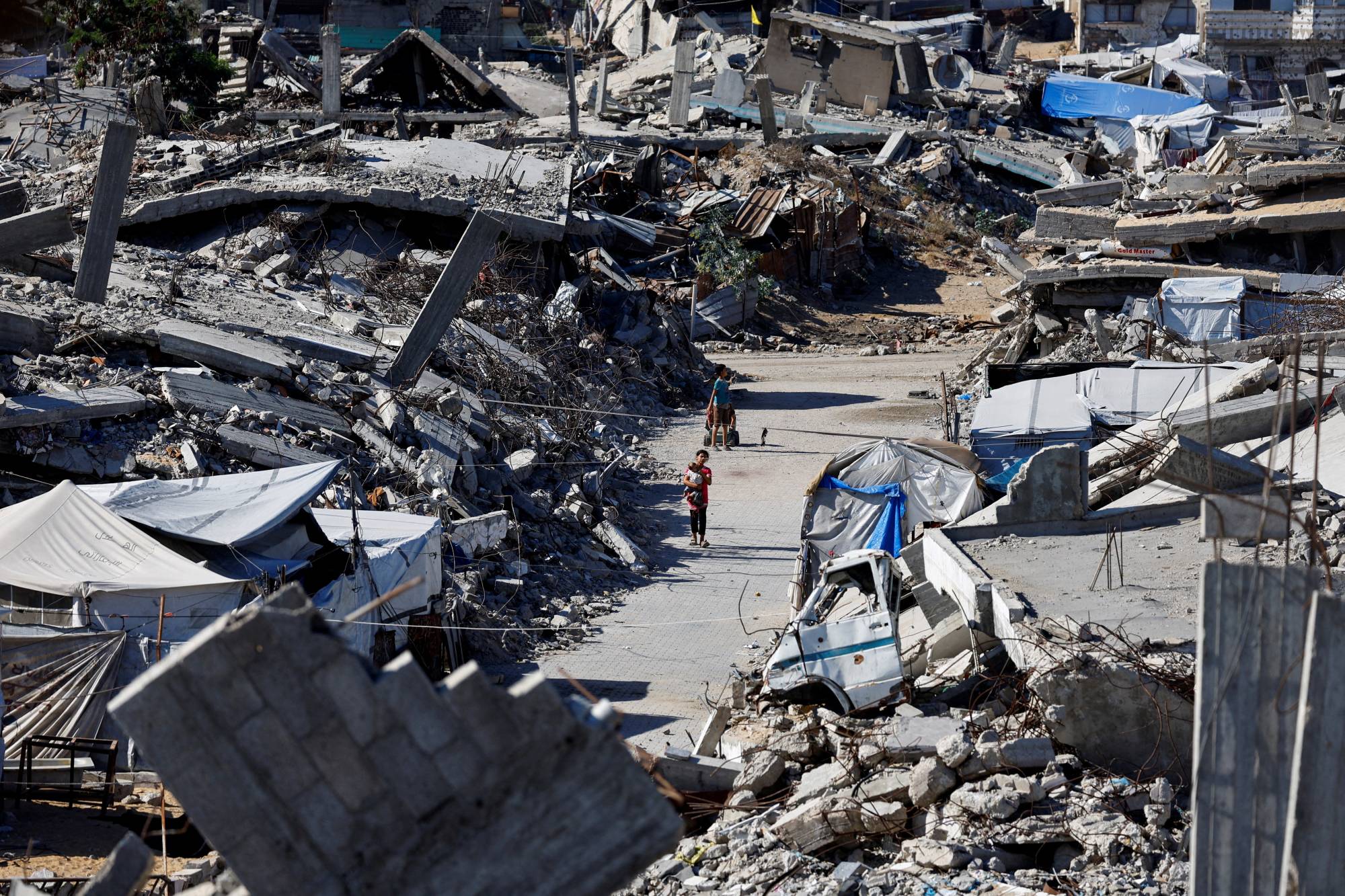
 Relatives of missing victims weep, as they gather at the site of destroyed buildings that were hit in an Israeli airstrike in Qannarit village, southern Lebanon, Saturday, June 20, 2026. (AP)
Relatives of missing victims weep, as they gather at the site of destroyed buildings that were hit in an Israeli airstrike in Qannarit village, southern Lebanon, Saturday, June 20, 2026. (AP)
TT

Over 600,000 Displaced Lebanese Return Home Amid Ceasefire, Says IOM

 Relatives of missing victims weep, as they gather at the site of destroyed buildings that were hit in an Israeli airstrike in Qannarit village, southern Lebanon, Saturday, June 20, 2026. (AP)
Relatives of missing victims weep, as they gather at the site of destroyed buildings that were hit in an Israeli airstrike in Qannarit village, southern Lebanon, Saturday, June 20, 2026. (AP)

More than 640,000 displaced people in Lebanon have returned home, according to the International Organization for Migration (IOM), as clashes between Hezbollah and Israel have wound down following a deal to end the Middle East war.

Lebanon was drawn into the regional war on March 2 when Tehran-backed group Hezbollah fired rockets at Israel to avenge the killing of Iran's supreme leader in US-Israeli strikes.

Israel responded with heavy airstrikes and an invasion of southern Lebanon, where its troops still occupy swathes of territory.

Lebanese authorities say Israeli attacks have killed around 4,300 people and displaced over one million, particularly from southern Lebanon and Beirut's southern suburbs.

In a report on Thursday, the IOM said "646,107 IDPs (internally displaced persons) have begun returning to their communities", while about 500,000 other people remain displaced, based on data collected in coordination with local authorities since June 22.

An agreement signed by Tehran and Washington last month established a ceasefire in Lebanon starting June 21.

Since then, hundreds of thousands of people have returned to their homes in southern Lebanon and Beirut's southern suburbs.

Lebanese authorities say they have worked to remove informal tent encampments in and around Beirut and reduce the number of official shelters.

But it remains impossible to return to dozens of towns and villages near the southern border, many of which have suffered massive destruction.

Israeli officials have also vowed that their forces will remain in an occupied "security zone" 10 kilometers (six miles) deep, despite the ceasefire.

- 'Indefinite forced displacement' -

Last week Lebanon and Israel concluded a US-backed framework agreement aiming to pave the way for a permanent end to the war.

The agreement calls for the disarmament of Hezbollah, a gradual Israeli withdrawal from southern Lebanon and the deployment of the Lebanese army there -- starting with two "pilot" areas.

However, the agreement -- rejected by Hezbollah -- does not set a timetable for Israeli withdrawal.

Instead, it makes Israeli withdrawal contingent on Hezbollah's disarmament first, a tall order that experts say the Lebanese state cannot meet.

Reacting to criticism of the agreement, particularly from Hezbollah, Lebanese President Joseph Aoun insisted on Friday that the document "does not legitimise the continuation of the Israeli occupation in Lebanon".

He said the absence of a timetable was because it was a "framework formula" rather than a final agreement.

"Our shared objective is one: to secure Israel's withdrawal," he said, according to a statement from the presidency.

Amnesty International and five other NGOs warned on Friday that the framework agreement "threatens to betray war crimes victims in Lebanon".

They argued that "parts of the text appear to be aimed at preventing victims of serious international crimes from seeking justice before international forums".

Aoun responded to this criticism of article 13 of the framework agreement by saying that "it affirms the suspension of legal proceedings between the two states during the negotiation period" but "does not preclude" any private entity from taking legal action.

The NGOs added that other parts of the text "seem to acquiesce to the prolonged and indefinite forced displacement of tens of thousands of residents of vast swathes of southern Lebanon occupied by Israeli forces".


Former Syrian Colonel Unfit for Trial in Landmark UK Crimes Against Humanity Murder Case

Prosecutors said al-Salem was part of a Syrian Air Force Intelligence group that suppressed demonstrations in the Damascus suburb of Jobar when the government carried out a bloody crackdown during the 2011 uprising against former President Bashar al-Assad’s authoritarian leadership. (AFP)
TT

Former Syrian Colonel Unfit for Trial in Landmark UK Crimes Against Humanity Murder Case

Prosecutors said al-Salem was part of a Syrian Air Force Intelligence group that suppressed demonstrations in the Damascus suburb of Jobar when the government carried out a bloody crackdown during the 2011 uprising against former President Bashar al-Assad’s authoritarian leadership. (AFP)

A former Syrian air force colonel is unfit to stand trial in a landmark British case charging him with three counts of murder as crimes against humanity for attacks on civilians in 2011, a judge said Friday.

Not guilty pleas were entered on behalf of Salem al-Salem, 58, in the Central Criminal Court after prosecutors accepted medical findings that his rare neurological condition was too advanced for him to enter a plea or face trial.

Justice Bobbie Cheema-Grubb said al-Salem will face a trial of facts next year on murder and torture allegations but he won't be required to appear in court. The trial will determine whether he committed the acts but cannot result in a conviction because of his condition.

Al-Salem is the first person in the UK charged with murder as a crime against humanity under the International Criminal Court Act of 2001. UK law allows British prosecutors to bring charges for some international offenses, including crimes against humanity and torture, regardless of where they were committed.

Prosecutors said al-Salem was part of a Syrian Air Force Intelligence group that suppressed demonstrations in the Damascus suburb of Jobar when the government carried out a bloody crackdown during the 2011 uprising against former President Bashar al-Assad’s authoritarian leadership.

Al-Salem “was tasked with quelling civilian protests against the regime and the defendant ordered officers under his command to shoot protesters and he himself shot protesters,” prosecutor Emilie Pottle said at a previous hearing. “The murders were part of a widespread and systemic attack against the civilian population.”

Al-Salem, who appeared by a video link with an oxygen mask over his face, has a progressive and fatal motor neuron disease that has left him paralyzed in all four limbs with cognitive impairment and limited ability to communicate, prosecutor Tom Little said.

“The motor neuron disease is now advanced. In addition, there is associated depression, apathy and cognitive impairment as well as severely restricted speech,” Little said in reading out one doctor's report. “The defendant is monosyllabic and only really understandable to close family.”

He is charged with murder in the deaths of Omar Al-Homsi, Nizar Fayoumi-AlKhatib and Talhat Dalal in April and July 2011. He faces a count of conduct ancillary to murder in the death of Mohammed Salim Zahrak Balik.

Al-Salem is also charged with torturing three other people as part of his official duties. Prosecutors said he was present and participated in interrogations when detainees were beaten, shocked and hung by handcuffs from a ceiling.


Mourners in Damascus Bury Cafe Blast Victims as Officials Promise Justice

Mourners carry the coffin of Fathi Muhammad Saeed Qabbani, who was killed Tuesday when an explosive device detonated in a cafe near Damascus' main courthouse complex, during his funeral in the Al-Midan neighborhood of Damascus, Syria, Friday, July 3, 2026. (AP Photo/Omar Albam)
TT

Mourners in Damascus Bury Cafe Blast Victims as Officials Promise Justice

Mourners carry the coffin of Fathi Muhammad Saeed Qabbani, who was killed Tuesday when an explosive device detonated in a cafe near Damascus' main courthouse complex, during his funeral in the Al-Midan neighborhood of Damascus, Syria, Friday, July 3, 2026. (AP Photo/Omar Albam)

Mourners filed through Damascus on Friday, a day after an explosive device set off in a cafe in the Syrian capital killed 10 people.

The funeral procession in the normally bustling Midan neighborhood carried the coffins of three of the victims. Another 21 were wounded in the explosion at a popular cafe near the capital's main judicial complex, which was often frequented by lawyers.

Syria's Health Ministry raised the death toll Friday from nine to 10. Officials have promised to arrest those behind the attack, but no updates were announced in the investigation. No group has claimed responsibility for the attack.

Bahaa Qabbani said his brother, Fathi Qabbani, a married father of one son, worked at a shop near the site of the explosion and was passing by the cafe at the moment of the blast. He was killed, The AP news reported.

Qabbani called the perpetrators of the attack “a group of terrorists who are against the homeland,” and called on security forces to “take hold of the country with an iron fist."

Although there is so far no indication who carried out the attack, many were quick to blame loyalists of former President Bashar Assad, who was ousted in an insurgent offensive in December 2024. During the funeral procession, some mourners chanted, “The people want remnants of the former regime to be executed.”

Also Friday, Syria's state-run news agency SANA reported that three members of security forces were wounded in an attack on a checkpoint at the entrance to the Damascus suburb of Jaramana. It said that a man on a motorcycle threw two hand grenades at the checkpoint guards and tried to throw a third one, but it exploded in his hand, killing him.

Another person was arrested in connection with the attack, SANA reported.

Since overthrowing the Assad dynasty, Syria’s new rulers have struggled to exert control across the country and to check extremist groups.

Deadly attacks blamed on the ISIS group have targeted religious minorities, including a suicide attack on a church in a Damascus suburb and a bomb set off in a mosque in a predominantly Alawite area in the city of Homs.
