




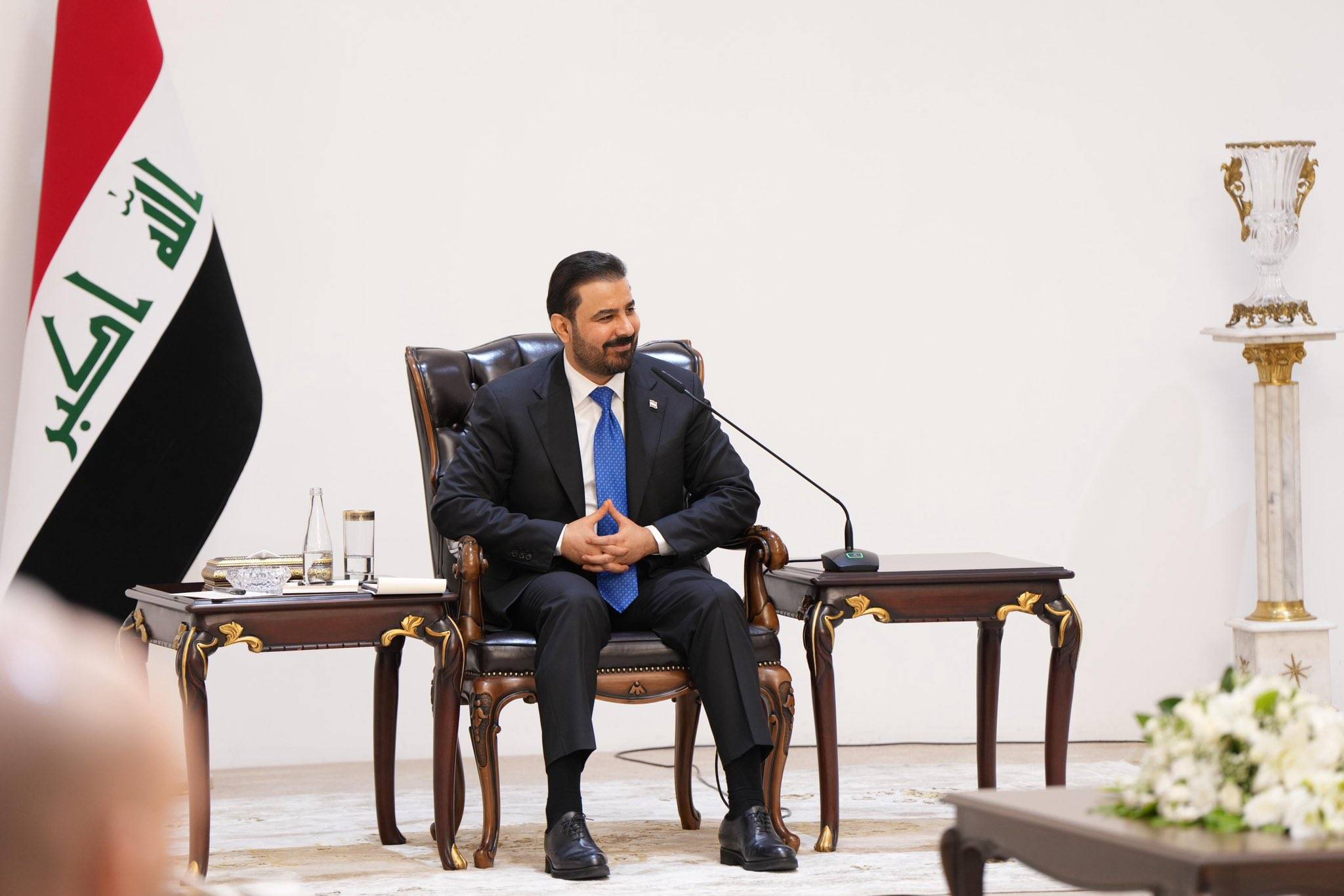
As Baghdad prepares to finalize the proposed agenda for Iraqi Prime Minister Ali Al-Zaidi’s visit to the United States, in coordination with Washington, an Iraqi official source told Asharq Al-Awsat that the expected visit of US envoy Tom Barrack to Iraq will “determine the final agenda for the visit and its key areas of discussion across different sectors and fields.”
The same source said that “work is underway to prepare all bilateral concerns and issues, whether those already agreed upon and ready to be turned into agreements and memorandums of understanding, or those that remain under discussion, foremost among them the details of disarming the armed factions and the US veto on some armed political groups participating in the government, despite their declared willingness to disarm and hand over their weapons to the state.”
Asked whether Barrack’s visit to Baghdad is intended to discuss the prime minister’s Washington agenda or had already been scheduled, the official source said: “Tom Barrack coordinates relations between Baghdad and Washington and therefore visits Baghdad periodically for that purpose. He also discusses unresolved issues between the federal government and the Kurdistan Regional Government, which the US administration is keen to see resolved, particularly those related to oil.”
The source added that Barrack’s upcoming visit falls within that framework, as he will also travel to Erbil.
“Accordingly, the remaining unresolved issues, especially oil, will be on the agenda because they are among the issues the Iraqi delegation will take with it to Washington.”
Regarding completion of the cabinet, which still lacks roughly nine ministers, the source said the prime minister is holding talks with political forces to fill the remaining posts, hoping the government lineup will be completed before the Washington visit.
He added that this issue will also be discussed with Barrack in Baghdad, particularly because some ministerial portfolios are expected to go to political groups that won substantial parliamentary representation and therefore qualify for more than one ministry. Resolving the matter requires discussions with the US side to lift its veto after those groups decided to hand over their weapons to the state.
On unresolved issues with the Kurdistan Region, the government source explained that there are two categories of disputes with Erbil.
“One category is longstanding and repeatedly resurfaces. It is related to constitutional matters and is not expected to be resolved, nor is it likely to feature prominently during Barrack’s visit to Baghdad and Erbil. The second category concerns normal political disagreements, including oil exports through the region’s outlets, the region’s share of federal ministries, and disputes between the two main Kurdish parties and their impact on relations with Baghdad.”
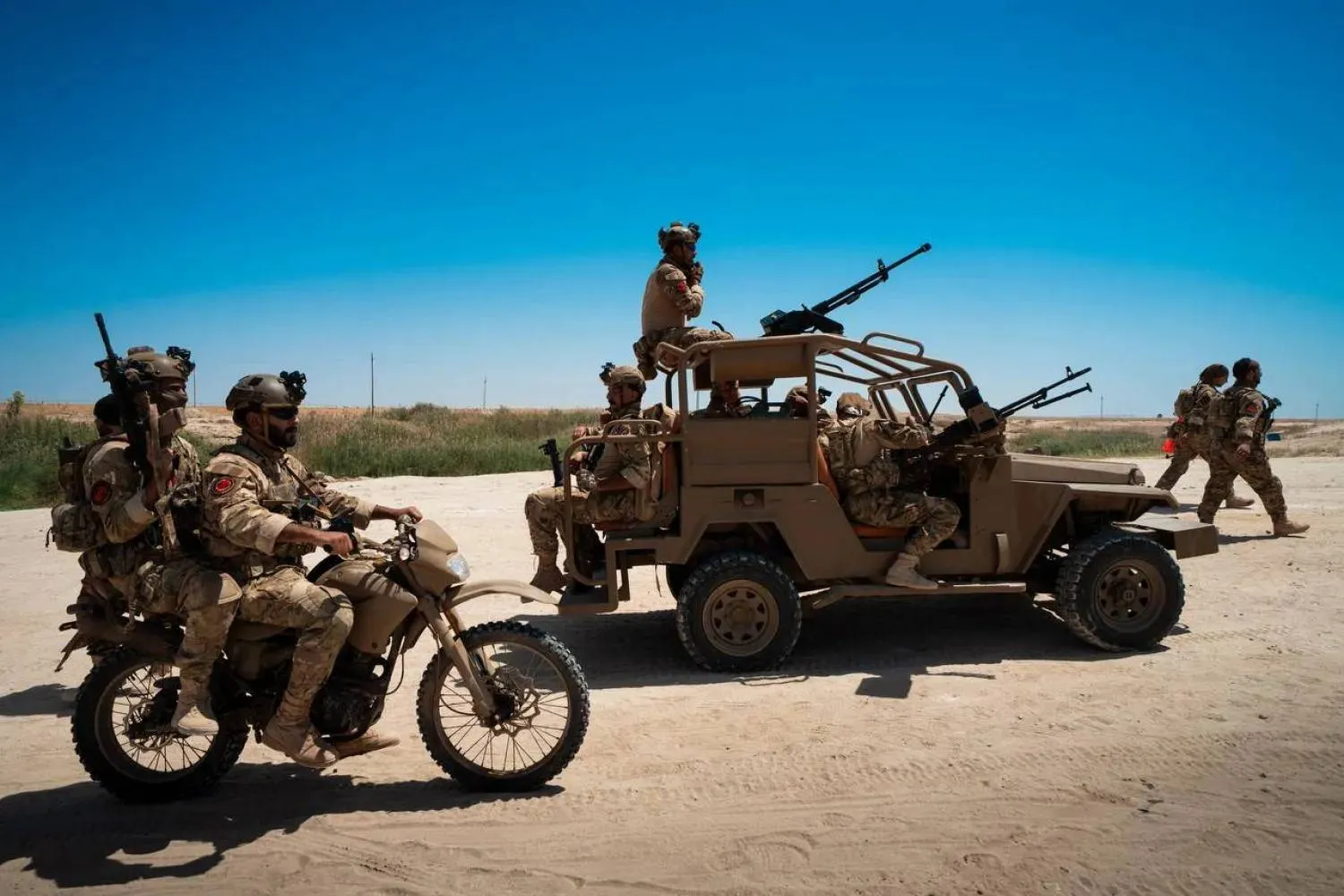
Meanwhile, Popular Mobilization Forces Chairman Falih Al-Fayyadh on Sunday called on Prime Minister and Commander-in-Chief of the Armed Forces Ali Al-Zaidi to relocate PMF camps outside urban areas.
Speaking at the official central ceremony marking the 12th anniversary of the PMF’s establishment, Al-Fayyadh said the force “stands against sectarianism and has contributed to building a national partnership in which members of all communities and religions fight in the same trench, contrary to claims that it is a sectarian project.”
He stressed that the PMF “represents all Iraqis and has enabled minority groups to defend their own areas.”
Al-Fayyadh called on the government and relevant authorities to “provide suitable alternative camps for the Popular Mobilization Forces, ensuring the completion of their full deployment outside city centers and provincial capitals.”
For his part, Mokhtar Al-Moussawi, a member of the Iraqi parliament’s Foreign Relations Committee, said the issue of factional weapons in Iraq is not a matter of a “direct handover” but rather part of broader regional and international calculations. He noted that “the US administration understands the nature of the game just as the armed factions do.”
Al-Moussawi said there is division within the Popular Mobilization Forces structure and that the factions are not united in their positions. Some have expressed readiness to hand over their weapons or sever organizational ties, while others categorically reject such steps.
He added that Iraq’s political landscape is closely linked to regional developments.
“Iraq’s foreign policy remains unstable, and at this particular stage we are seeing a path of understandings between Iran and the United States moving toward an agreement. If such an agreement is signed, there will be an entirely different approach to dealing with the weapons issue in Iraq.”
Al-Moussawi, a lawmaker from the Badr bloc, which is included in the disarmament process, said Iraq does not have full control over the matter and that a large part of the understandings is managed in Washington and Tehran.
He added that factional weapons are directly linked to the outcome of any potential US-Iran agreement. He also stressed that what is currently taking place amounts to temporary political balancing and that the weapons file could be revisited in a different manner after any agreement is signed between the two sides.
Separately, Baghdad has provided security guarantees to Erbil regarding the protection of oil fields in the Kurdistan Region from attacks periodically carried out by armed factions.
According to a political source who disclosed details of a military delegation’s visit to Erbil led by Chief of Staff Lt. Gen. Abdul Amir Rashid Yarallah, the delegation held a series of meetings and field visits to several oil fields to assess security conditions and discuss measures needed to protect facilities and personnel.
The source added that the delegation provided direct security assurances to oil companies operating in the region, affirming that attacks targeting oil sites would not be repeated.
Kurdistan Region Prime Minister Masrour Barzani received the delegation. According to an official statement, the delegation chief briefed him on the objectives of the visit, which was undertaken under directives from the federal prime minister to follow up on efforts to maintain security and stability, particularly the protection of oil companies and the prevention of attacks against them.
Barzani expressed his appreciation to Al-Zaidi for his follow-up efforts and assurances regarding the security and stability of the Kurdistan Region, reaffirming the regional government's full support for these steps.
He also renewed his call for stronger cooperation and coordination between the Peshmerga forces and the Iraqi army to address shared security and military challenges and threats.


