


Palestinian Prisoner Dies After 25 Years in Israeli Jail

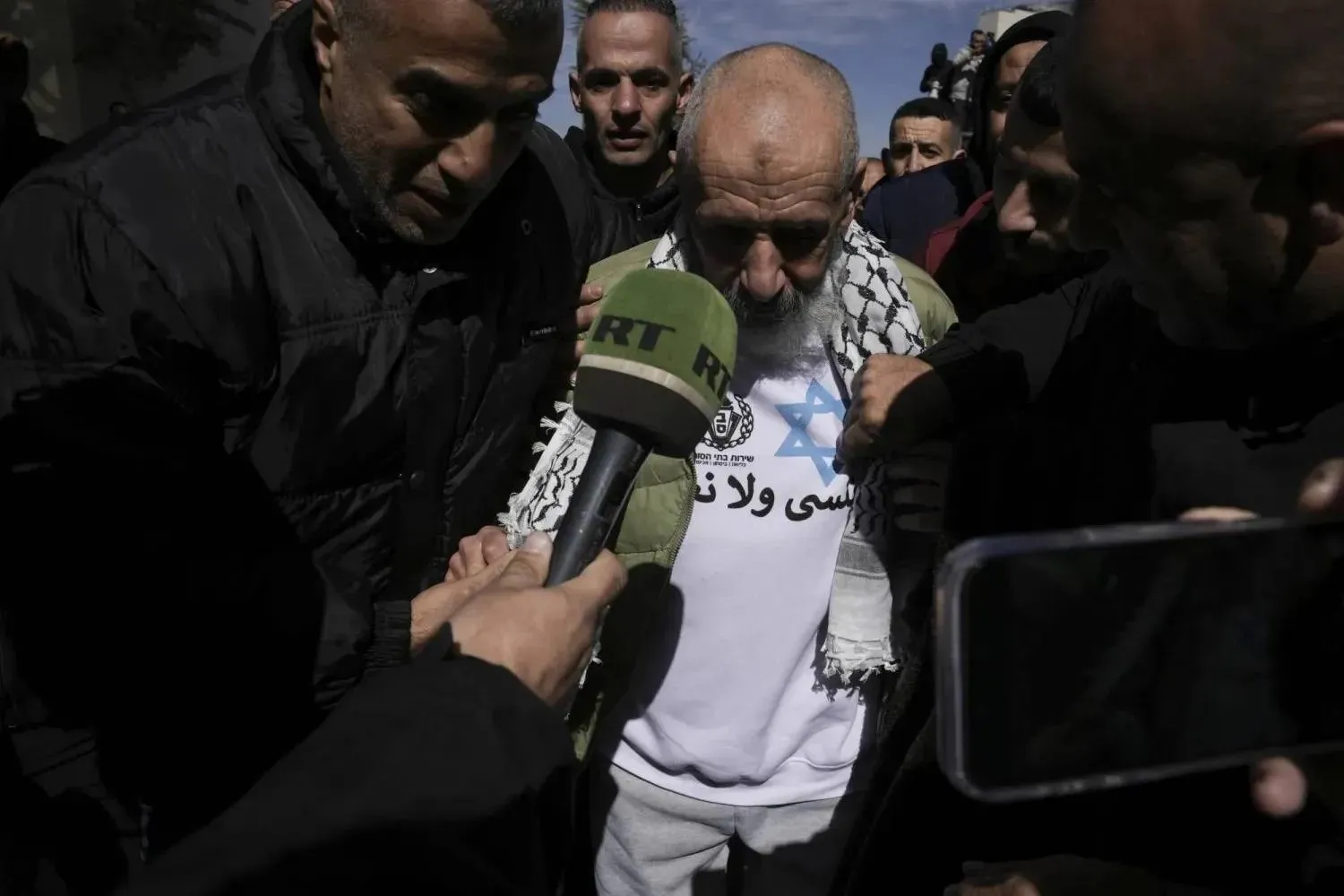
A Palestinian prisoner is released from an Israeli prison as part of a prisoner exchange deal last year. (AP)
TT

Palestinian Prisoner Dies After 25 Years in Israeli Jail

A Palestinian prisoner is released from an Israeli prison as part of a prisoner exchange deal last year. (AP)

Israeli authorities have informed the family of Imad Sarhan, a 47-year-old Palestinian prisoner from Haifa, that he died in Gilboa Prison after suffering what officials described as a heart attack. No further details were provided.

The death is the latest in a growing number of prisoner fatalities reported since the outbreak of the Gaza war on Oct. 7, 2023.

In a joint statement, the Palestinian Commission of Detainees and Ex-Detainees Affairs and the Palestinian Prisoners Club said Sarhan had been imprisoned since 2001 and was serving a life sentence.

The organizations said he was subjected to lengthy and harsh interrogations during the early years of his detention, including systematic torture that left lasting health complications and contributed to a gradual deterioration in his condition. They also cited repeated periods of solitary confinement.

According to the statement, Sarhan developed chronic cardiovascular illnesses during his imprisonment, including heart, arterial and vascular diseases, as well as high blood pressure.

His health deteriorated to the point that he needed a wheelchair in recent years.

The groups said Sarhan was a victim of medical negligence and abusive prison policies, stressing that his death reflected broader conditions facing Palestinian prisoners, particularly since the start of the Gaza war.

Human rights groups and Palestinian prisoner advocates have repeatedly pointed to worsening conditions in Israeli prisons over the past two years, including restrictions on medical care, overcrowding, harsh disciplinary measures, and limited contact with families.

The Palestinian Prisoners Club has also raised concerns about outbreaks of scabies among detainees, accusing Israeli prison authorities of maintaining conditions that facilitate the spread of disease by limiting access to cleaning supplies, showers, and fresh clothing.

Prison conditions worsened after Itamar Ben-Gvir became Israel’s national security minister in late 2022. Ben-Gvir claimed that prisoners had been receiving excessive privileges and ordered stricter regulations, including reductions in food allocations, shower time, outdoor recreation, and family visits.

Palestinian organizations said those restrictions intensified significantly after October 2023.

The Commission of Detainees and Ex-Detainees Affairs and the Prisoners Club said the prison system has since adopted harsher policies involving abuse, starvation, medical neglect, and prolonged isolation.

They criticized the continued restrictions on monitoring visits by the International Committee of the Red Cross and limits on communication between prisoners and their families.

According to the groups, Sarhan’s death raises the number of Palestinian prisoners whose deaths have been announced since the start of the Gaza war to 90. They said the total number of prisoner deaths documented since 1967 now stands at 327.

The organizations held Israeli authorities fully responsible for Sarhan’s death and renewed calls for international legal action and accountability.

As of June 2026, they said, more than 9,400 Palestinians were being held in Israeli prisons, including 3,324 administrative detainees and 1,316 prisoners classified by Israel as “unlawful combatants.”

Tareq Saleh’s Forces Accuses Iran’s Revolutionary Guards of Guiding Assault on Yemen’s West Coast

Smoke rises during clashes between Yemeni government forces and Houthis (Reuters)
TT

Tareq Saleh’s Forces Accuses Iran’s Revolutionary Guards of Guiding Assault on Yemen’s West Coast

Smoke rises during clashes between Yemeni government forces and Houthis (Reuters)

In its first statement since losing extensive positions on Yemen's west coast, the government’s National Resistance revealed the cost of a month-long battle against the Houthis. It accused Iran’s Revolutionary Guard Corps (IRGC) and its regional allies of providing direct support and managing the offensive, which culminated in the group seizing control of vast positions and areas along the coast.

The "National Resistance" forces, led by member of the Yemen’s Presidential Leadership Council Tareq Saleh, announced that more than 500 of their personnel were killed and nearly 1,500 others wounded. This was compared to more than 1,000 dead and thousands wounded among the Houthis, according to the statement about the battles that spanned from August 9 to September 10.

The statement, broadcast by the military forces' media, comes following a major field shift on the west coast fronts, with the Houthis advancing and seizing control of Hays, al-Khawkha, Mokha and its port, and extending their control to Bab al-Mandeb, Mayyun Island, and the rest of the Yemeni islands in the southern Red Sea.

The National Resistance described the battles as some of the "fiercest clashes" they have fought against the Houthis, stating that the offensive began with intensive missile bombardment and attacks using drones and booby-trapped boats, before expanding across the Hays, al-Kadha, Maqbanah, and al-Barah areas.

It added that the Houthis deployed large numbers of fighters and reinforcements from various axes in an attempt to shift the balance of power on the ground and besiege the defending forces.

The National Resistance linked the nature of the offensive and the Houthis' ability to mobilize forces and execute simultaneous operations to what they described as direct support from personnel and expertise of the IRGC and its regional allies.

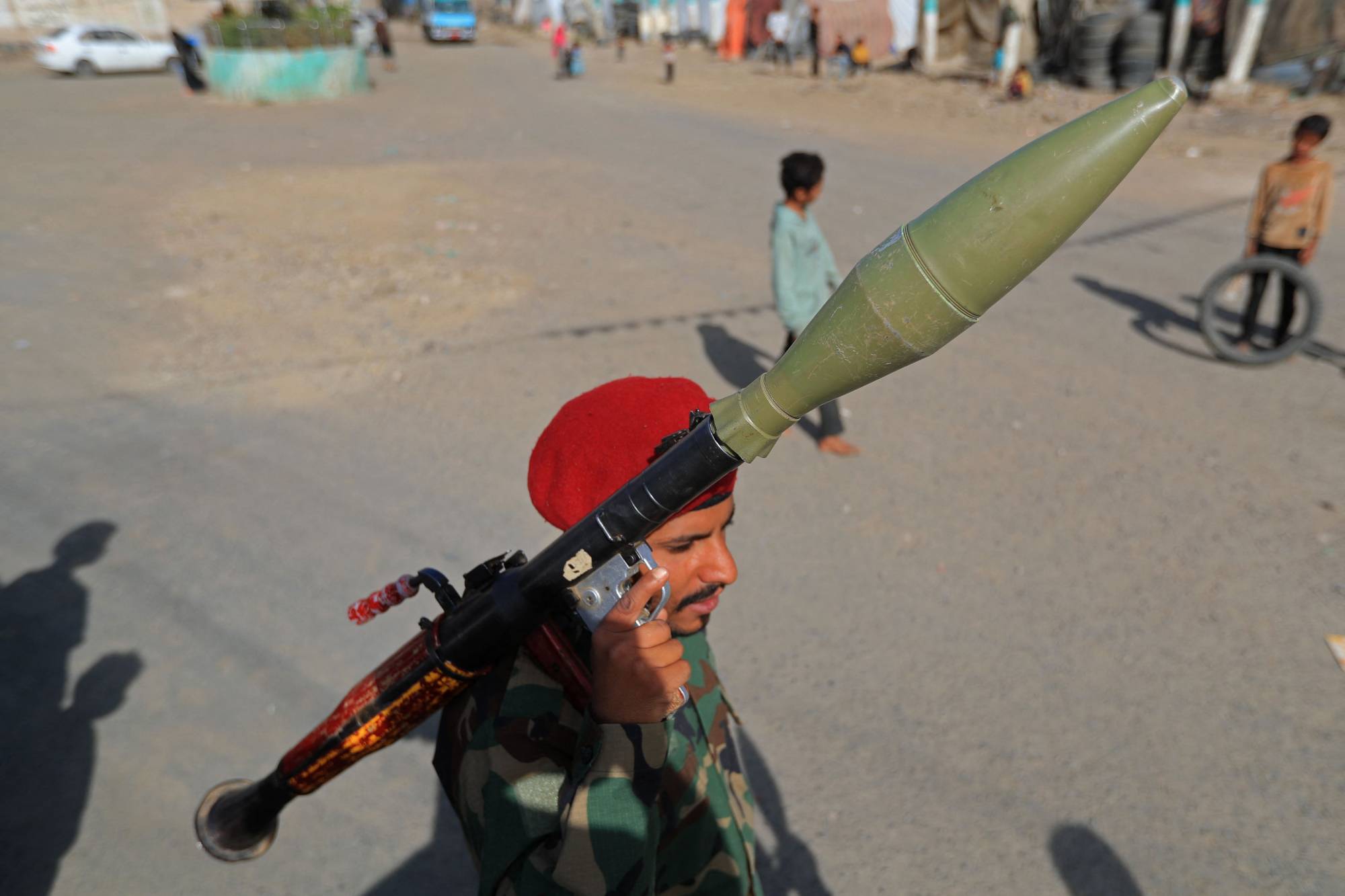
A Yemeni gunman brandishes his weapon during a rally to recruit more fighters in Sanaa on September 10, 2026. (AFP)

It said the offensive was prepared in advance to exploit the terrain and establish fire control over several commanding heights, in an attempt to tighten the siege on the forces and destroy their combat capability.

It added that the course of the battles revealed, according to its assessment, the nature of the Iranian role in supporting the Houthis, accusing the group of executing a project that targets Arab national security and international waterways.

Faced with the intensity of the offensive and the succession of reinforcements, the National Resistance revealed that its leadership decided to reposition forces into new defensive lines, aiming to preserve its "strike force" and foil the plan to encircle and destroy it.

The repositioning is not the end of the fight, but rather a measure to preserve its forces and rearrange their deployment after losing extensive positions.

The statement praised Saudi support, which it said continued until the "last moment," alongside the backing of the Giants Brigades, National Shield, and tribal volunteers, saying this is an embodiment of the unity among anti-Houthi forces.

The National Resistance said the developments underscore the need for integrating anti-Houthi fronts and mobilizing them simultaneously, rather than relying on a single military sector, aiming to regain the initiative and impose a new military reality.

In an attempt to avoid holding other Yemeni factions responsible for the loss, the statement stressed that the resistance has no intention of "accusing anyone of treason" or engaging in "settling scores or political posturing." It called for viewing developments objectively, drawing lessons, and rearranging priorities for the upcoming phase.


Israeli Strike Kills Two People in Gaza, Medics Say

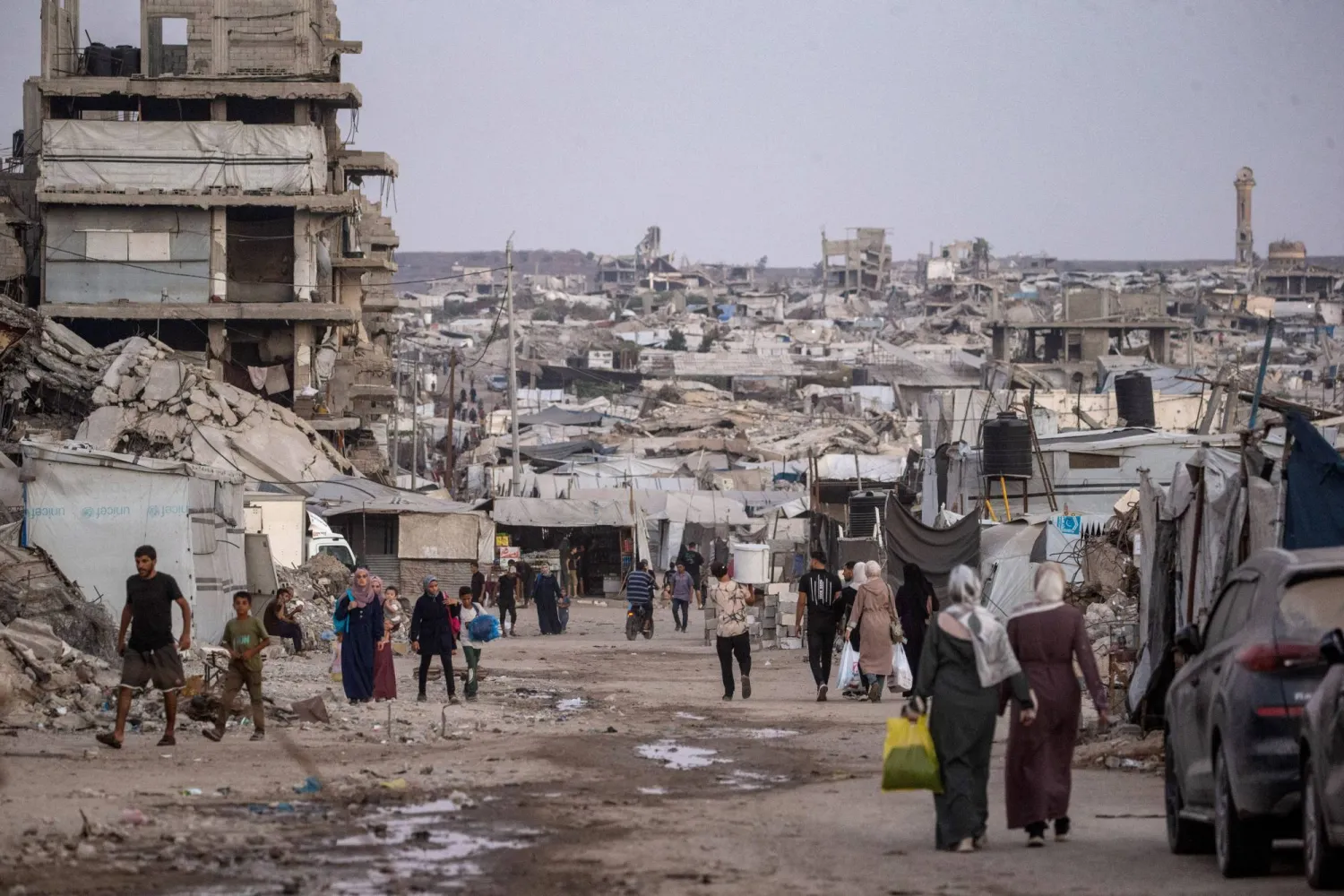
Internally displaced Palestinians walk among the ruins of destroyed residential buildings in the Al-Sheikh Radwan neighborhood, east of Gaza City, Gaza Strip, 10 September 2026. (EPA)
TT

Israeli Strike Kills Two People in Gaza, Medics Say

Internally displaced Palestinians walk among the ruins of destroyed residential buildings in the Al-Sheikh Radwan neighborhood, east of Gaza City, Gaza Strip, 10 September 2026. (EPA)

An ‌Israeli airstrike on Sunday killed at least two Palestinians in a vehicle and wounded 13 others in the Gaza Strip, medical staff said.

The strike in the Tel Al-Hawa neighborhood in western Gaza City, left the vehicle mangled, according to footage circulated on social media. Local medical staff told ‌Reuters that ‌they urged people to provide ‌information ⁠that could help identify ⁠the two people who were killed and whose bodies were dismembered by the explosion.

The Israeli military said the strike targeted two Hamas fighters, without giving further information.

An October 2025, ⁠US-backed, ceasefire halted large-scale fighting in ‌Gaza, but ‌it has not ended Israeli strikes and ‌there has been little progress on ‌steps towards permanent peace.

Hamas accuses Israel of violating the ceasefire and undermining efforts to implement US President Donald Trump's broader plan ‌to end the Gaza conflict, which includes the Israeli withdrawal ⁠from ⁠the strip and the disarmament of Hamas.

Israel says Hamas has been violating the deal.

More than 1,300 Palestinians, mostly civilians, have been killed in Gaza since the ceasefire took effect, according to the territory's health officials, while the Israeli military says four Israeli soldiers have been killed.

Hamas does not usually disclose information about fatalities among its fighters.


Syria Rejects Sovereignty Violations, Netanyahu’s Entry into Its Territory

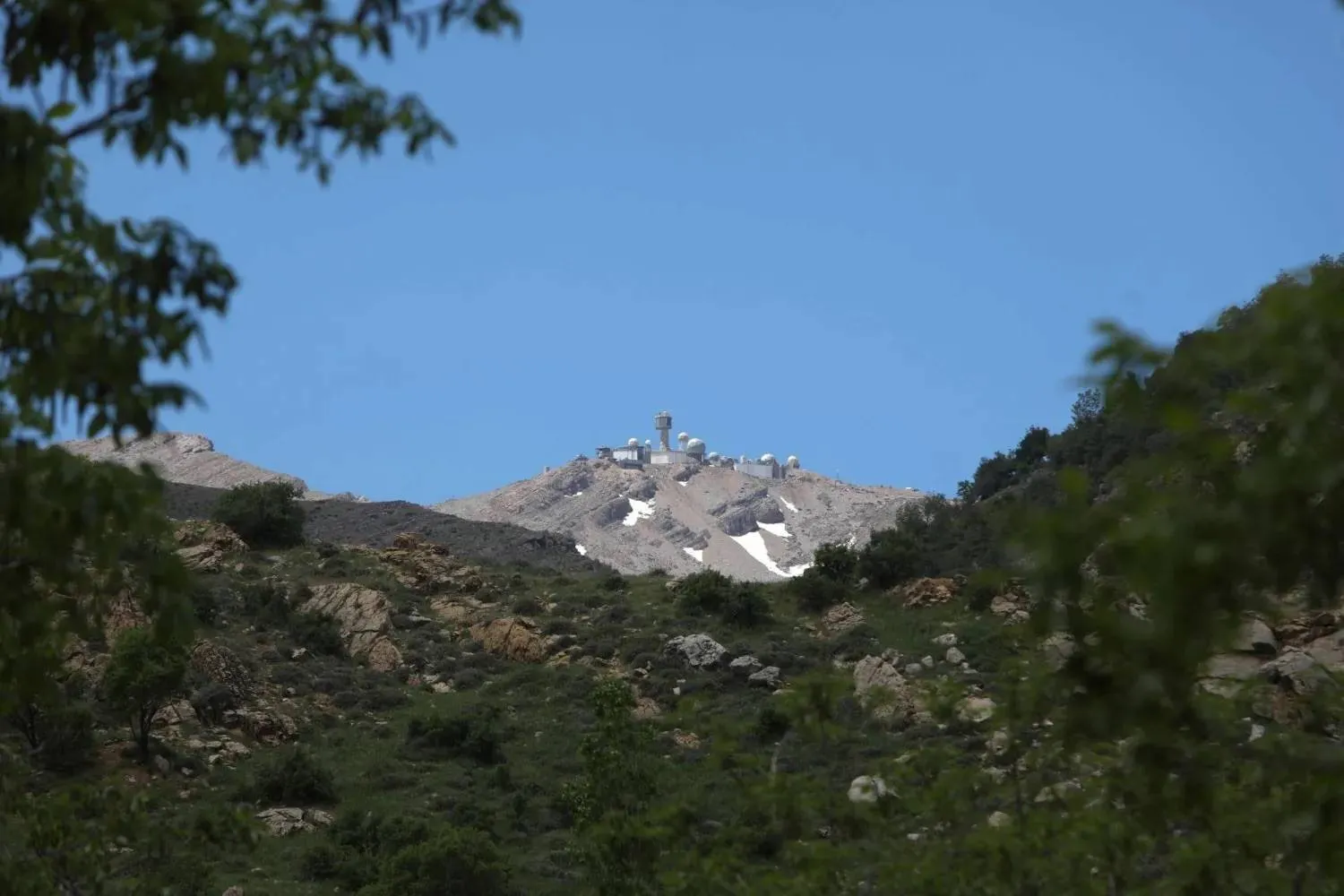
An Israeli observation post overlooking the village of Beit Jinn in southern Syria (AFP) 
TT

Syria Rejects Sovereignty Violations, Netanyahu’s Entry into Its Territory

An Israeli observation post overlooking the village of Beit Jinn in southern Syria (AFP) 

Syria on Saturday renewed its rejection of violations of its sovereignty and Israeli Prime Minister Benjamin Netanyahu’s entry into its territory, as Israeli forces continued a weeklong escalation of artillery fire and incursions around Beit Jinn, on the slopes of Mount Hermon in western rural Damascus.

Residents fear an Israeli incursion into the town could lead to a repeat of events in late 2025, when dozens were killed or wounded in clashes between residents and an Israeli patrol that entered Beit Jinn.

Syrian Foreign Minister Asaad al-Shaibani said Syria had clearly reaffirmed before the UN Security Council, with the support of more than 40 countries, its rejection of violations of its sovereignty and Netanyahu’s entry into Syrian territory.

In a post on X, al-Shaibani stressed that Damascus remained committed to the country’s unity, independent decision-making and territorial integrity. He welcomed the international response supporting Syria in the face of continuing Israeli violations and said Damascus would continue to defend its national rights through legitimate political and diplomatic means under international law and the UN Charter.

Representatives of several UN member states, joined by Syria’s Permanent Representative to the UN Ibrahim Olabi, gathered outside the Security Council in New York on Friday to denounce Netanyahu’s entry into Syrian territory and reaffirm Syria’s sovereignty, unity and territorial integrity.

Netanyahu, accompanied by Israeli Defense Minister Israel Katz, entered the Syrian side of Mount Hermon on Sept. 9, where Israeli forces are deployed.

Damascus strongly condemned what it called Netanyahu’s “illegal entry” into Syrian territory and his tour of Mount Hermon, describing it as a flagrant violation of Syria’s sovereignty, territorial integrity and international law.

Syria held Israel fully responsible for the consequences of the violations and called on the UN, international organizations and influential countries to act to halt the attacks and ensure a return to the Disengagement Agreement.

Meanwhile, local sources in Beit Jinn told Asharq Al-Awsat that more than 10 Israeli military vehicles and two tanks had entered farmland belonging to the village of Mazraat Beit Jinn, east of the town.

The incursion came hours after Israeli artillery fire struck the Ain al-Shaara area north of Beit Jinn, with the shell landing on agricultural land.

Israeli forces had repeatedly shelled areas around Mazraat Beit Jinn and Bat al-Warda hill since Sept. 3, without reported casualties or material damage. An Israeli drone had also struck a civilian vehicle on the road to the town, wounding several civilians.

Local sources voiced fears of a repeat of Nov. 28, 2025, when an Israeli military patrol entered Beit Jinn, triggering fierce clashes with residents that killed 13 people from the town and wounded 24 others.

The escalation in western rural Damascus comes as Israeli forces continue incursions and attacks on towns and villages in rural Daraa and Quneitra near the ceasefire line. The operations have continued since the first day following the fall of former President Bashar al-Assad’s government on Dec. 8, 2024.
