

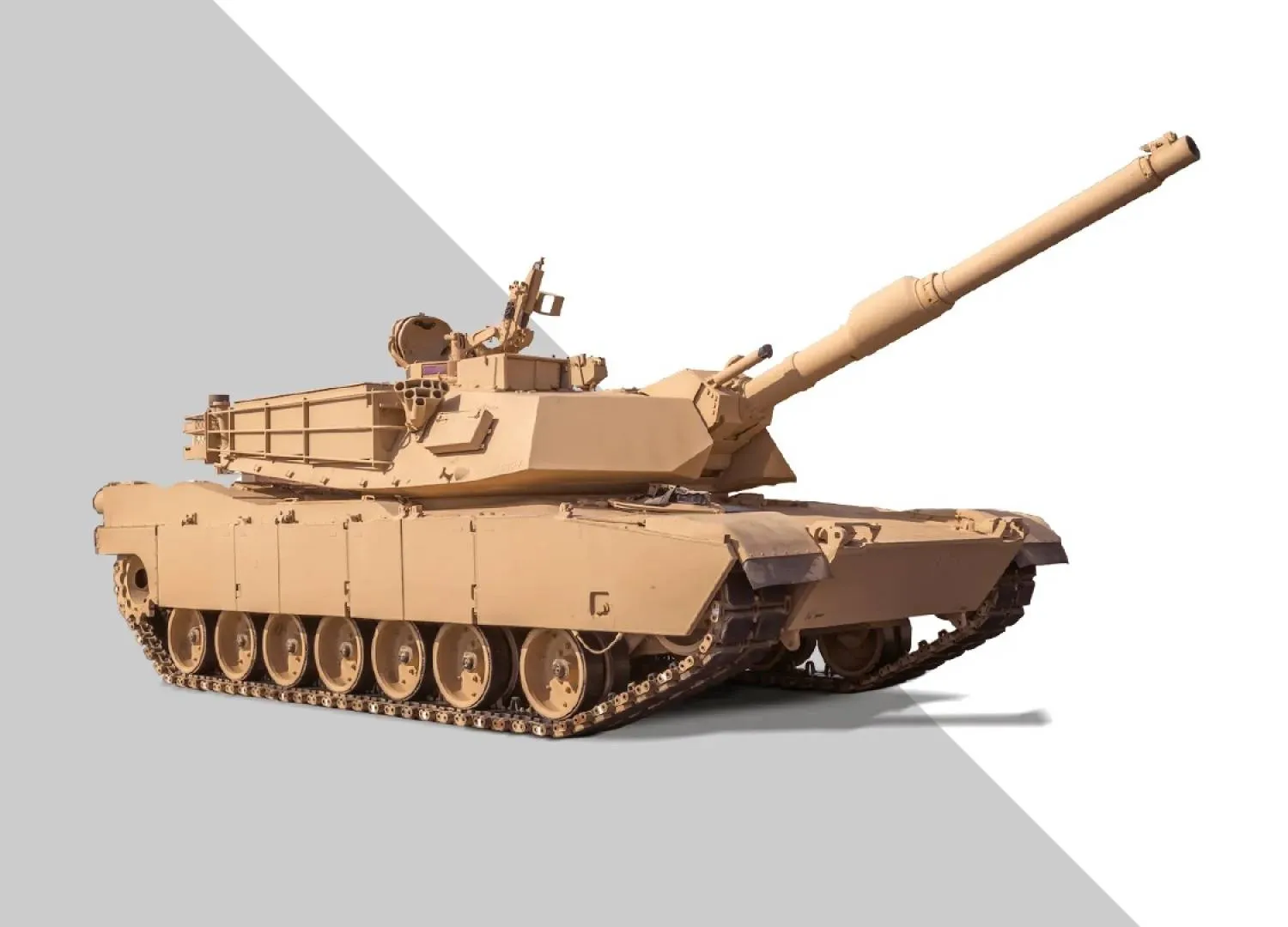

Egyptian Program to Develop Abrams Tanks Alarms Israel

The M1A1 Abrams tank. (Egyptian Ministry of Military Production)
TT

Egyptian Program to Develop Abrams Tanks Alarms Israel

The M1A1 Abrams tank. (Egyptian Ministry of Military Production)

Former military officers have confirmed that Egypt is working with the United States to boost its armored forces by introducing technological upgrades and modern combat specifications to a large number of M1A1 Abrams tanks, raising alarm in Israel.

According to Israel’s Nziv.net platform, there are major Israeli concerns about a shift in the regional balance of power after Washington recently approved a huge deal to upgrade 555 Abrams tanks out of 1,130 American tanks in the Egyptian army.

The military factory in the Abu Zaabal area north of Cairo, the only facility authorized outside the United States to produce components of this model, will oversee the development project at a cost of around $4.69 billion.

The M1A1 Abrams tank is the Egyptian army’s main battle tank, with a top speed of 20 miles, according to data from the Egyptian Ministry of Military Production.

National security expert Mohamed Abdel Wahed told Asharq Al-Awsat that this was not the first time Egypt develops these tanks. It did so in the 1980s through a joint military production agreement with the United States.

The latest agreement to develop the tanks was signed in 2024. It called for refurbishing the existing vehicles instead of replacing them with new ones that would have come at a higher cost.

“Egypt is developing this tank and capitalizing on its global reputation. The development involves incorporating modern technology to boost its capabilities,” Abdel Wahed explained.

Former Egyptian intelligence official Gen. Mohammed Rashad told Asharq Al-Awsat: “The upgrades include installing a higher-caliber gun to increase the firing range to 105 mm, upgrading the aiming and targeting systems to use lasers, reinforcing the tank’s armor against close-quarters combat and anti-tank weapons, installing a recoil suppressor on the tank’s gun to maintain stability and aiming accuracy, and fitting the tank with a high-powered engine to boost speed and maneuverability.”

“These capabilities make the Egyptian Armored Corps one of the most advanced and lethal armies in the region, with high combat capabilities in all circumstances, which is a direct cause for concern in Tel Aviv,” he explained.

Abdul Wahed added: “Egypt is manufacturing 90 percent of the components for this tank. Localizing military technology and industries in Egypt is very important.”

Israeli media has over the past two years frequently reported about Tel Aviv’s concern over what it described as “the detection of the construction of massive logistical infrastructure and fuel depots in the Sinai Peninsula.”

They alleged that these measures would allow Egyptian forces to move rapidly and extensively eastward, forcing Israel to maintain close and continuous monitoring of the deployment and movement of Egyptian forces despite the peace treaty between them.

Egypt has repeatedly denied the allegations, saying its work in Sinai has development purposes and any deployment of the military aims to protect the border and national security.

Rashad said the Israeli concerns over the Egyptian military’s upgrades and tanks program stem from its “fear that the Egyptian armored forces will become capable of matching Israel’s.”

Tel Aviv constantly boasts about its capabilities that are a result of continuous upgrades to weapons and combat equipment, he added, noting that its military ranks seventh globally in the manufacture and export of weapons and combat equipment.


Syria President Says Wants France to Be 'Primary Partner'

France's President Emmanuel Macron (L) and Syria's President Ahmed al-Sharaa attend a meeting at the People's Palace in Damascus on July 7, 2026. (Photo by Ludovic MARIN / POOL / AFP)
TT

Syria President Says Wants France to Be 'Primary Partner'

France's President Emmanuel Macron (L) and Syria's President Ahmed al-Sharaa attend a meeting at the People's Palace in Damascus on July 7, 2026. (Photo by Ludovic MARIN / POOL / AFP)

Syrian President Ahmed al-Sharaa said Tuesday that he wants France to be a primary partner for Damascus, which he said has regained its role as a transit hub after the Strait of Hormuz closure.

"After the Strait of Hormuz crisis, the world realized the value of safe and stable corridors... here the importance of Syrian geography is highlighted, which today has regained its vital role as an indispensable link in the global corridors market, and we want France to be our primary partner in this path," Sharaa said in an economic forum with his French counterpart Emmanuel Macron and representatives from both countries.


Explosions Rock Damascus, Wounding 18, as French President Macron Visits Syria

An ambulance drives past the site where explosive devices blew up near a hotel where French President Emmanuel Macron was meant to be staying, in Damascus, Syria, July 7, 2026. (Reuters)
TT

Explosions Rock Damascus, Wounding 18, as French President Macron Visits Syria

An ambulance drives past the site where explosive devices blew up near a hotel where French President Emmanuel Macron was meant to be staying, in Damascus, Syria, July 7, 2026. (Reuters)

Two bombs exploded near a hotel in Damascus where French President Emmanuel Macron had spent the night, but his office said he did not hear the explosions and he met Syrian President Ahmed al-Sharaa soon afterwards on Tuesday.  

Syrian authorities said 18 people were wounded by the blasts, overshadowing the first visit to Syria by a European Union head of state since Sharaa toppled Bashar al-Assad in 2024, and underlining continued security threats in the country.  

The explosions struck a busy area between the Syrian Tourism Ministry and the national museum across the street from the Four Seasons hotel, where a source in Macron's delegation and Syrian security sources ‌said he had ‌spent the night and had met civil society groups on Tuesday morning.  

In a post ‌on ⁠X, Macron said ⁠his visit to Syria continues.  

"Nothing can undermine the desire of Syrians to live in a fully sovereign and secure Syria," he posted. "This morning I met Syria in all its diversity, and I saw dignity, courage and determination." 

FLAMES AND SMOKE BILLOW FROM TRASH CAN  

The first blast hit soon after Macron's motorcade left for the presidential palace.  

Reuters footage showed flames and smoke billowing from the site, when a second explosion was caught on camera a few meters (yards) away. The second blast went off next to an ambulance parked at the scene, where some two dozen people had gathered.  

Emergency personnel worked to extinguish the blaze, with smoke and flames close to ⁠the shops behind. 

Reuters video showed Macron's motorcade heading along a highway towards the presidential ‌palace before the blasts.  

A video published by Syrian state media then showed ‌him standing alongside Sharaa and meeting other Syrian officials and military officers.  

There was no immediate claim of responsibility for the attack. 

Sharaa has been working to stabilize and rebuild Syria since leading opposition forces that toppled Assad after ‌more than 13 years of civil war, building close ties to Western and Middle Eastern states that opposed Assad. 

ISIS, an adversary of Sharaa during the civil war, has claimed a series of attacks on government forces in Syria since February, when the extremist group announced what it described as a new phase of operations against his government. 

DAMASCUS CAFE BOMBED LAST WEEK  

The Syrian Interior Ministry said security forces ‌had identified two bombs planted near the Tourism Ministry and had been preparing to defuse them when they went off, describing the devices as crudely made.  

The bombs — one of them ⁠placed in a car ⁠parked on the roadside and the other in a trash can — were planted outside a security cordon around Macron's place of residence, and posed no threat to his visit, the ministry said.  

Internal security forces have launched search operations to identify those responsible, it said.  

The French Presidency said the blasts were not audible from the presidential motorcade and a Reuters journalist with the press group accompanying Macron did not hear the blast or see any commotion during the French president's morning events.  

Last week, a bomb at a Damascus cafe killed nine people and wounded 20 others. There was no claim of responsibility.  

Macron's visit was intended to highlight Syria's political transformation under Sharaa. During the Syrian conflict, a range of militant groups including ISIS gained a foothold in the country. Sharaa has pledged to build an inclusive new order in Syria since ending more than five decades of iron-fisted rule by the Assad family.  


Iraq Seizes More Cash and Gold in Oil Ministry Corruption Probe

Bundles of cash newly seized from the Deputy Oil Minister (Iraqi News Agency) 
TT

Iraq Seizes More Cash and Gold in Oil Ministry Corruption Probe

Bundles of cash newly seized from the Deputy Oil Minister (Iraqi News Agency) 

Iraqi authorities announced Monday the seizure of an additional 25 billion Iraqi dinars, $1 million in cash, and about five kilograms of gold in the corruption case involving detained Deputy Oil Minister for Refining Affairs Adnan Al-Jumaili and other suspects linked to the investigation.

Diaa Jaafar, the investigating judge at Iraq’s Central Anti-Corruption Criminal Court, said in a statement that total assets seized so far have risen to 127 billion Iraqi dinars and $24 million, in addition to real estate, vehicles, and gold jewelry confiscated during the investigation.

He said inquiries and efforts to track down other suspects were continuing until all legal procedures are completed.

Sources at Iraq’s Integrity Commission told Asharq Al-Awsat that the total value of assets seized from Al-Jumaili so far — including cash and 70 properties — exceeds 250 billion Iraqi dinars (about $191 million).

The Interior Ministry also announced Monday the arrest of another suspect connected to Al-Jumaili’s alleged corruption network in Salahuddin province. According to the ministry, intelligence officers seized more than $3 million, over 750 million Iraqi dinars, a cache of light weapons, modern vehicles, and government contracts from the suspect’s residence.

Iraqi authorities last week arrested 15 people, including lawmakers, heads of political blocs, and former governors, on corruption charges based on confessions allegedly made by Al-Jumaili. Security sources said the latest detainee serves as contracts director at the Baiji Refinery, where authorities discovered the cash during a raid on his home.

Despite broad public support for the government’s anti-corruption campaign, skepticism remains over whether Prime Minister Ali Al-Zaidi’s administration will sustain the drive rather than limiting it to a single wave of arrests. Public doubts have been fueled by Al-Zaidi’s earlier remarks suggesting the possibility of settlements under which suspects could regain their freedom after returning embezzled public funds.

Sources familiar with deliberations inside the ruling Shiite Coordination Framework told Asharq Al-Awsat that some coalition leaders have grown increasingly dissatisfied with the recent crackdown, with some urging the prime minister to halt the campaign for fear that arrests could reach figures affiliated with their factions. Although most Framework parties have publicly endorsed the anti-corruption drive, the sources said their private positions differ from their public statements.

Ghalib Al-Daami of the Iraqi Academy for Combating Corruption said investigations were proceeding on parallel domestic and international tracks, targeting suspects inside Iraq as well as fugitives abroad. He added that authorities are preparing action against businessmen accused of defaulting on billions of dollars in loans from Iraqi banks.

Al-Daami ruled out the prospect of releasing current detainees through financial settlements and said judicial and oversight authorities are pursuing 954 cases involving the recovery of assets smuggled abroad, in addition to 262 legal requests related to recovering funds transferred overseas by imprisoned corruption suspects.
