


Iraq Shakes Up Top Security and Economic Posts in Surprise Reshuffle

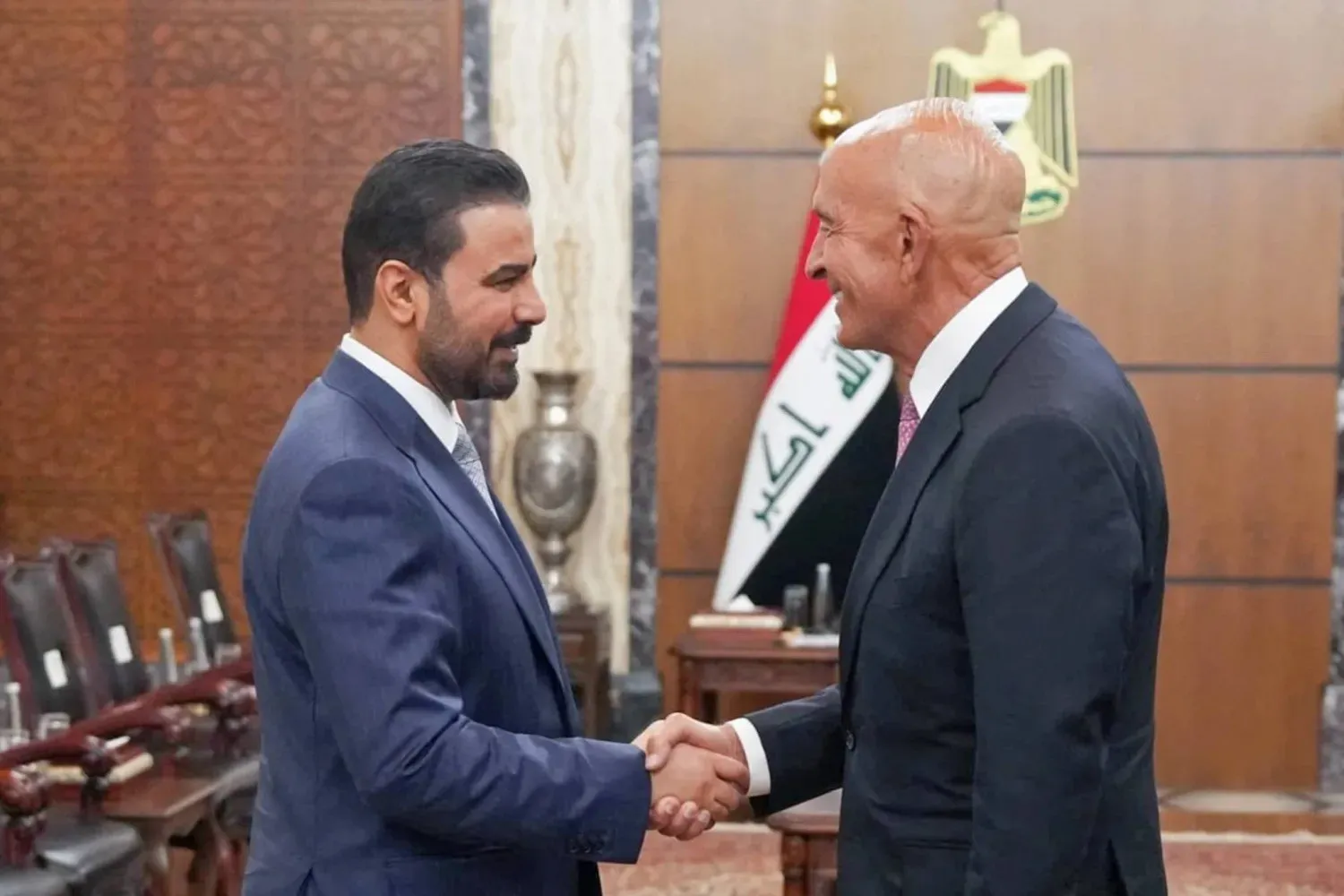
Iraqi Prime Minister Ali al-Zaidi during talks with US presidential envoy Tom Barrack in Baghdad, June 16, 2026. (Iraqi Government Media)
TT

Iraq Shakes Up Top Security and Economic Posts in Surprise Reshuffle

Iraqi Prime Minister Ali al-Zaidi during talks with US presidential envoy Tom Barrack in Baghdad, June 16, 2026. (Iraqi Government Media)

Iraqi Prime Minister Ali al-Zaidi has carried out a surprise reshuffle of senior security and economic posts, removing or replacing three prominent figures in moves that come just days after high-level talks with US presidential envoy Tom Barrack in Baghdad.

The changes include the appointment of Bassem al-Badri as head of the National Security Service, replacing Abdul Karim al-Basri, widely known as Abu Ali al-Basri. The veteran security official had long been associated with the Interior Ministry’s elite Falcon Intelligence Cell and has been one of Iraq’s most influential intelligence figures over the past decade.

Abu Ali al-Basri played a central role in directing sensitive intelligence operations and tracking leaders of al-Qaeda, ISIS and members of the former Baath Party. During former prime minister Nouri al-Maliki’s second term from 2010 to 2014, he became highly influential while overseeing critical security matters. The Falcon Intelligence Cell was frequently described as the intelligence body closest to the commander-in-chief’s office during that period.

His successor, al-Badri, has served since 2013 as head of the de-Baathification department within Iraq’s Higher National Commission for Accountability and Justice.

Ali al-Allaq was reportedly relieved of his duties as governor of the Central Bank of Iraq. He is expected to be succeeded by Nizar Nasser, who heads the bank’s Anti-Money Laundering and Counter-Terrorism Financing Office.

Al-Allaq oversaw Iraqi monetary policy through a period marked by major financial and economic challenges. Nasser’s appointment comes as Baghdad faces growing pressure to tighten oversight of the financial sector and strengthen efforts to combat money laundering and illicit financing.

The reshuffle also reportedly includes the dismissal of National Security Adviser Qasim al-Araji and the appointment of Qasim al-Aboudi as a replacement, adding another significant security dimension to the changes affecting key state institutions.

The Iraqi government has yet to issue an official explanation for the decisions or indicate whether they form part of a broader restructuring of the country’s security and economic apparatus.

The moves follow recent talks in Baghdad between al-Zaidi and Barrack that, according to official statements, produced understandings on security, economic cooperation and broader bilateral relations.

Iraqi officials said the discussions yielded agreement on a package of measures aimed at reinforcing the state’s monopoly on arms, advancing the disarmament of armed factions operating outside government control, and providing security guarantees for American companies investing in Iraq.

The developments come ahead of an anticipated summit between al-Zaidi and US President Donald Trump at the White House in mid-July. Baghdad is seeking to strengthen ties with Washington and attract foreign investment while simultaneously reshaping key security and economic portfolios at home.


Syrian Authorities Say Killed Assad-Era Officer After Clash

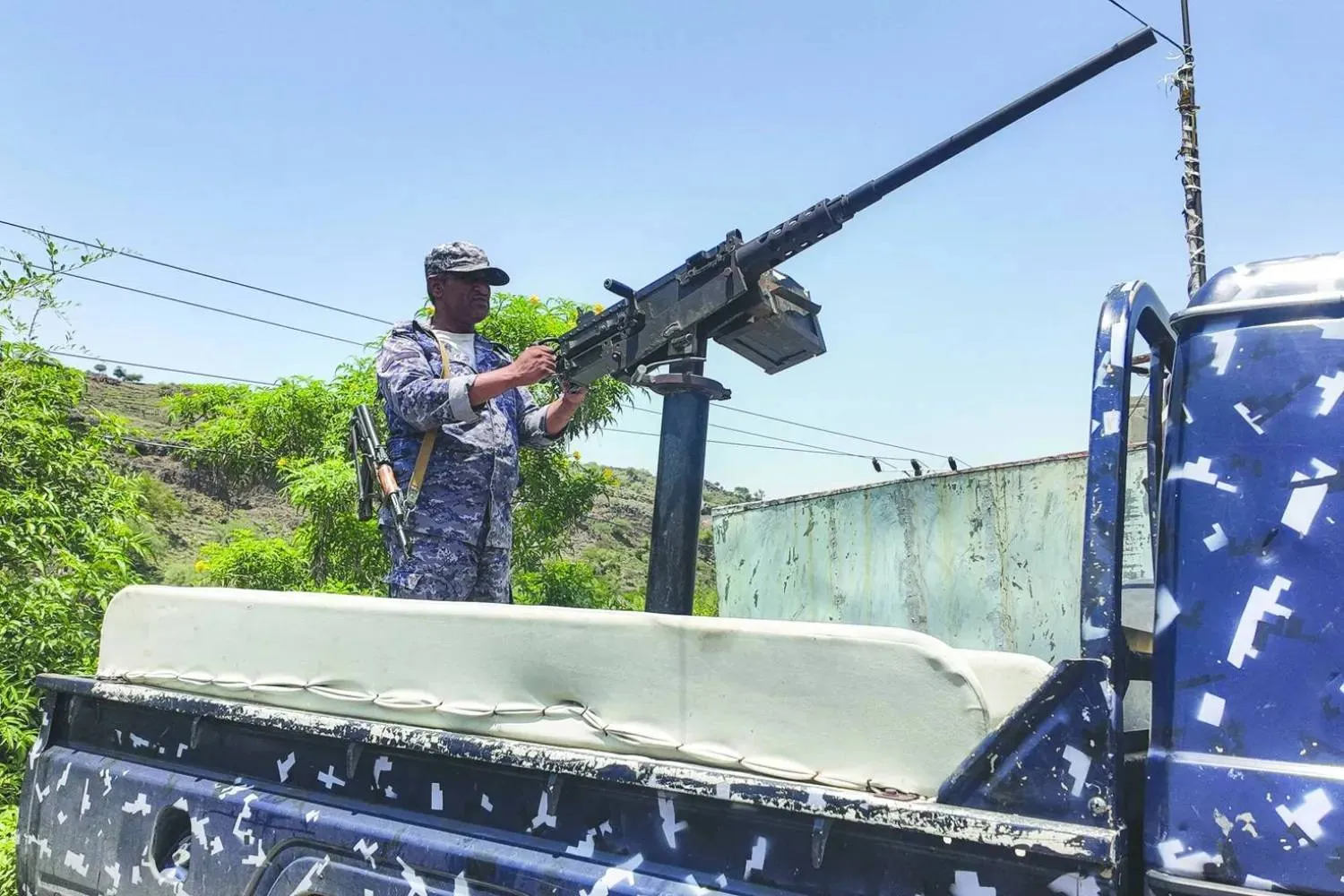
A member of Syria's internal security forces in Tartus city. (SANA)
TT

Syrian Authorities Say Killed Assad-Era Officer After Clash

A member of Syria's internal security forces in Tartus city. (SANA)

Syrian security forces said on Sunday that they killed an army commander who served under ousted ruler Bashar al-Assad, after he opened fire on them as they tried to arrest him.

In a statement, the forces accused Firas Abdul Karim Hammoud of having taken part in anti-government insurrections that killed security personnel.

Since Assad's fall in December 2024, Syria's new authorities have arrested dozens of security officials from his rule, and trials began in April.

The security forces said they "neutralized Firas Abdul Karim Hammoud... following an armed clash and a raid on his hideout in the town of Safita" in Tartus province in the coastal Alawite heartland.

Hammoud had previously "opened fire on security personnel during an attempt to arrest him", they added.

"During the recent operation, he again opened fire and initiated a firefight with the security forces... necessitating their response."

They said Hammoud served as a commander of the special forces in the so-called "25th Division" under Assad's rule.

They accused him of working under Assad-era general Ghiath Dalla in leading pro-Assad groups on the coast after the former president's fall.

They added that he was involved in "armed insurrection operations" against state institutions that killed security personnel.

Dalla, a former officer in the much-feared Fourth Brigade, had announced on social media last year the formation of a "military council for the liberation of Syria".

The announcement came shortly before deadly violence targeting the Alawite minority, to which Assad's family belongs, erupted on the Syrian coast in March 2025.

Authorities accused armed Assad supporters of sparking the violence by attacking security forces in an ambush.


Iraq Sentences US-Sanctioned Oil Official to Prison

The sun sets behind apartment buildings in Baghdad, Iraq, Friday, Aug. 28, 2026. (AP)
TT

Iraq Sentences US-Sanctioned Oil Official to Prison

The sun sets behind apartment buildings in Baghdad, Iraq, Friday, Aug. 28, 2026. (AP)

Iraq sentenced a US-sanctioned oil official to seven years in prison after he was arrested as part of a government-led anti-corruption campaign, the country's anti-graft body said on Sunday.

Deputy oil minister for distribution affairs Ali al-Bahadli is among dozens of officials who were detained in June during anti-graft raids that took place in several areas, mostly in Baghdad's fortified Green Zone.

The Commission of Integrity said in a statement that an anti-corruption court sentenced Bahadli to seven years in prison for "illicit gains".

The ruling requires Bahadli to return to the state an amount equivalent to more than $20 million in ill-gotten gains, in addition to paying a fine of the same amount.

The United States imposed sanctions on Bahadli in May, accusing him of fraudulently mixing Iraqi and Iranian oil as part of a scheme to help Iran avoid sanctions.

At the time, Iraq's oil ministry denied the accusations against Bahadli, who was then arrested during the anti-graft raids.

Iraqi authorities said that the raids were part of new Prime Minister Ali al-Zaidi's campaign to fight the corruption that has plagued Iraq for decades.

But several Iraqi officials told AFP that the raids were also part of al-Zaidi's campaign against funding for pro-Iran armed groups and the smuggling of Iranian oil.

Iraq has been under mounting pressure from the United States to curb Tehran's influence and rein in Iran-backed armed factions, which Washington designates as terrorist groups.

Al-Zaidi, who took office this year with the blessing of the United States, has pledged to ensure the armed factions that emerged after the US-led invasion hand over their weapons to the state.

In Iraq, corruption is especially rampant across public institutions, but convictions typically target mid-level officials or minor players and rarely those at the top of the power hierarchy.


US News Agency Says Crew Attacked by Israeli Settlers in West Bank

 Israeli settlers look out through a metal fence, as an Israeli flag flutters nearby, on the day of their weekly tour in Hebron, in the Israeli-occupied West Bank, August 29, 2026. (Reuters)
Israeli settlers look out through a metal fence, as an Israeli flag flutters nearby, on the day of their weekly tour in Hebron, in the Israeli-occupied West Bank, August 29, 2026. (Reuters)
TT

US News Agency Says Crew Attacked by Israeli Settlers in West Bank

 Israeli settlers look out through a metal fence, as an Israeli flag flutters nearby, on the day of their weekly tour in Hebron, in the Israeli-occupied West Bank, August 29, 2026. (Reuters)
Israeli settlers look out through a metal fence, as an Israeli flag flutters nearby, on the day of their weekly tour in Hebron, in the Israeli-occupied West Bank, August 29, 2026. (Reuters)

Israeli settlers attacked an NBC crew in the central West Bank Saturday, as they were interviewing a Palestinian woman who said she’d been driven out of her house by settlers, the network said.

NBC’s American correspondent Matt Bradley, two other crew members and the woman they were interviewing were all treated for injuries sustained during the attack, NBC said. There were no further details on their injuries.

The assault was caught on video and shared by NBC, with footage showing masked settlers approaching the crew with sticks and beating the crew’s vehicles.

Israel’s military said it was “aware of reports of Palestinian injuries, including a Palestinian woman who sustained non-life-threatening injuries and was evacuated by the Red Crescent for medical treatment.” It did not comment on the attack on the NBC crew.

It was the latest in a growing wave of violence by West Bank settlers. Prime Minister Benjamin Netanyahu issued a rare condemnation of the violence on Saturday. The Israeli leader has come under heavy US criticism for the settler attacks.

Settlers seized British activist and held him locked in shed

Israeli settlers seized a British activist from a Palestinian village in the West Bank and locked him in a shed before turning him over to police, his lawyer said Sunday.

The lawyer, Inbar Shaked Vardi, said settlers held her client, Finn Joughin, for half an hour Saturday before turning him over to Israeli police. Joughin was set to appear before a Jerusalem court later Sunday, she said.

Video showed two settlers, one armed, restraining Joughin and marching him away from the village.

It was not immediately clear what led to his capture. Settlers say he assaulted a child, accusations Vardi vehemently denied.

Settlers point to a video where the activist uses his body in an apparent attempt to block a settler boy from passing through a fence. Vardi said the video shows he was trying to protect the village.

Police said they were investigating and holding Joughin in custody on suspicion of committing an indecent act against a minor.
