


Why Is Hamas Once Again Displaying Its Flags and Threatening a 'New October 7'?

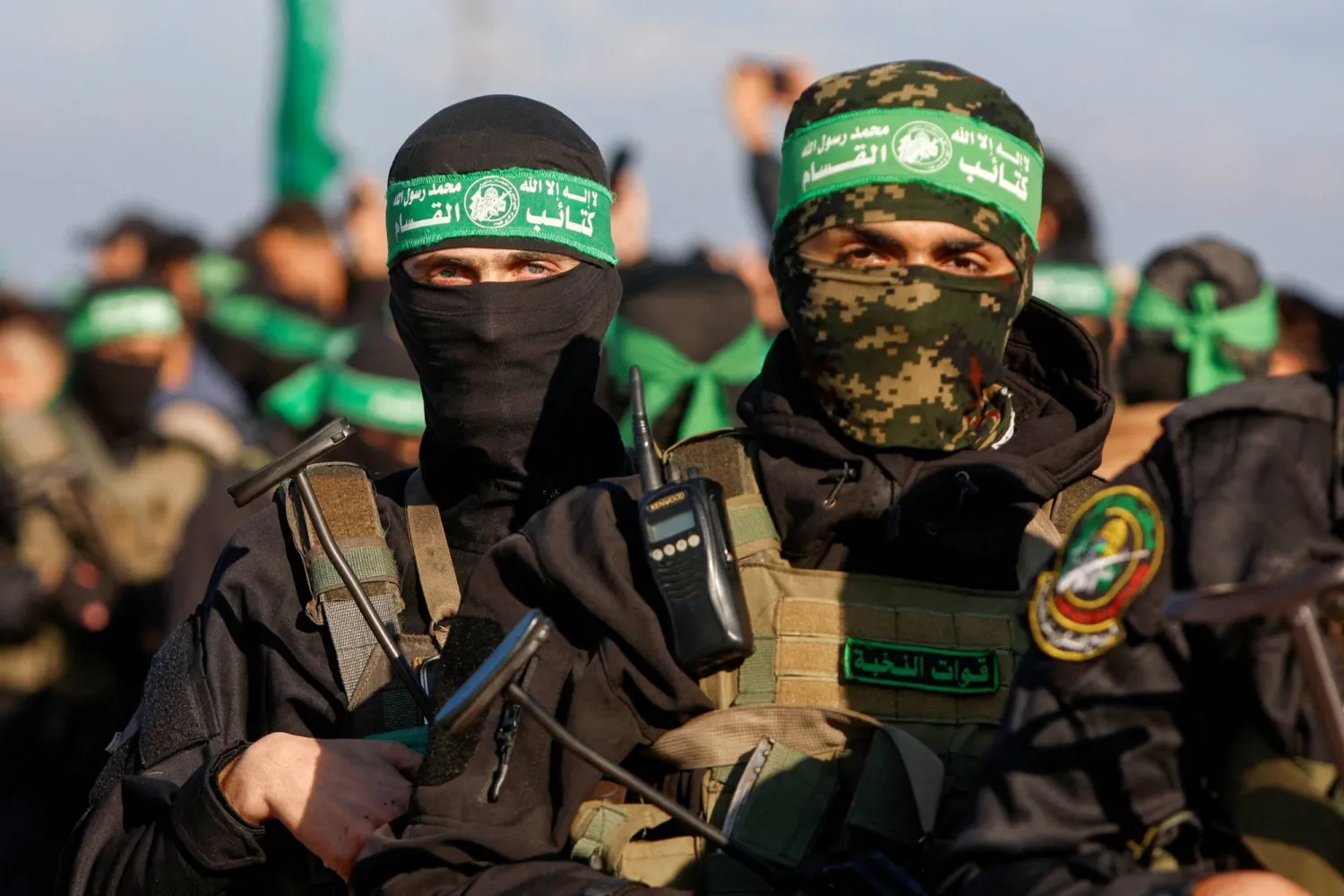
Palestinian Hamas militants stand guard on the day of the release of Keith Siegel,  a US-Israeli dual national hostage held in Gaza since the deadly October 7, 2023 attack, as part of a ceasefire and a hostages-prisoners swap deal between Hamas and Israel, in Gaza City, February 1, 2025. REUTERS/Mohammed Salem
Palestinian Hamas militants stand guard on the day of the release of Keith Siegel, a US-Israeli dual national hostage held in Gaza since the deadly October 7, 2023 attack, as part of a ceasefire and a hostages-prisoners swap deal between Hamas and Israel, in Gaza City, February 1, 2025. REUTERS/Mohammed Salem
TT

Why Is Hamas Once Again Displaying Its Flags and Threatening a 'New October 7'?

Palestinian Hamas militants stand guard on the day of the release of Keith Siegel,  a US-Israeli dual national hostage held in Gaza since the deadly October 7, 2023 attack, as part of a ceasefire and a hostages-prisoners swap deal between Hamas and Israel, in Gaza City, February 1, 2025. REUTERS/Mohammed Salem
Palestinian Hamas militants stand guard on the day of the release of Keith Siegel, a US-Israeli dual national hostage held in Gaza since the deadly October 7, 2023 attack, as part of a ceasefire and a hostages-prisoners swap deal between Hamas and Israel, in Gaza City, February 1, 2025. REUTERS/Mohammed Salem

The reappearance of Hamas flags and those of its military wing, the Al-Qassam Brigades, during the funeral of a field commander killed by Israel after he was targeted while walking was no coincidence. Rather, it was part of a coordinated effort that surprised many observers after a prolonged period during which the movement had refrained from such displays.

The funeral was held for Walid Haniyeh, a field commander in the Al-Qassam Brigades and a relative of former Hamas leader Ismail Haniyeh, who was assassinated by Israel in Tehran in July 2024. It coincided with June 26, the day activists had called for mass protests against Hamas over the deteriorating humanitarian situation in Gaza. The movement paid close attention to the planned mobilization and worked extensively to thwart it, believing that "suspicious" actors were behind it, before the protests ultimately failed to attract significant participation.
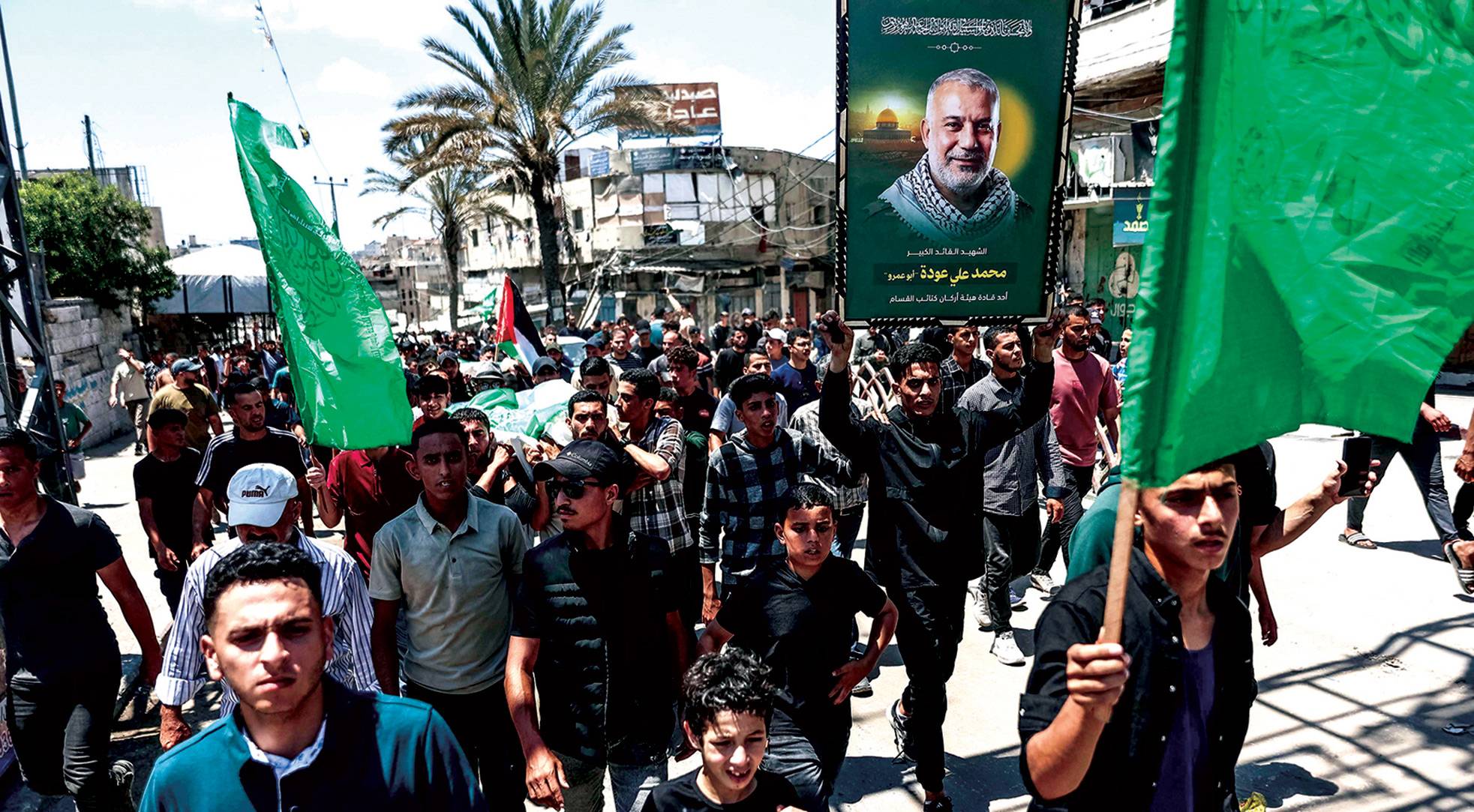
Palestinians carry the body of Mohammad Odeh, a commander in the military wing of Hamas, during his funeral in Gaza City on May 27, 2026 (AFP)

Following that funeral, Hamas continued displaying its flags at the funerals of members killed by Israel. Al-Qassam Brigades flags also reappeared, armed men attended the ceremonies, and participants chanted slogans including, "Khaybar, Khaybar, O Jews... October 7 will return." The displays drew the attention of Israeli media, which launched a fresh campaign of incitement against Hamas and the Gaza Strip.

The last time Hamas flags and armed members appeared publicly was during the handover of Israeli hostages under the second prisoner exchange agreement, which began in January 2025, before Israel resumed its military campaign in March of the same year. Israeli forces later used those events to identify Hamas leaders and members who were subsequently killed in a series of targeted assassinations and military operations.

With the scenes recurring recently, particularly as Israeli military operations continue on a smaller scale despite the declared ceasefire in October 2025, Asharq Al-Awsat asked four Hamas sources in the Gaza Strip about the reasons behind the return of flags, armed participants, and the draping of victims' bodies in Hamas and Al-Qassam Brigades flags. All four said the movement's leadership in Gaza had taken a decision, which was circulated across all areas, to resume displaying flags and chanting what they described as "jihadist" slogans at the funerals of members killed by Israel.
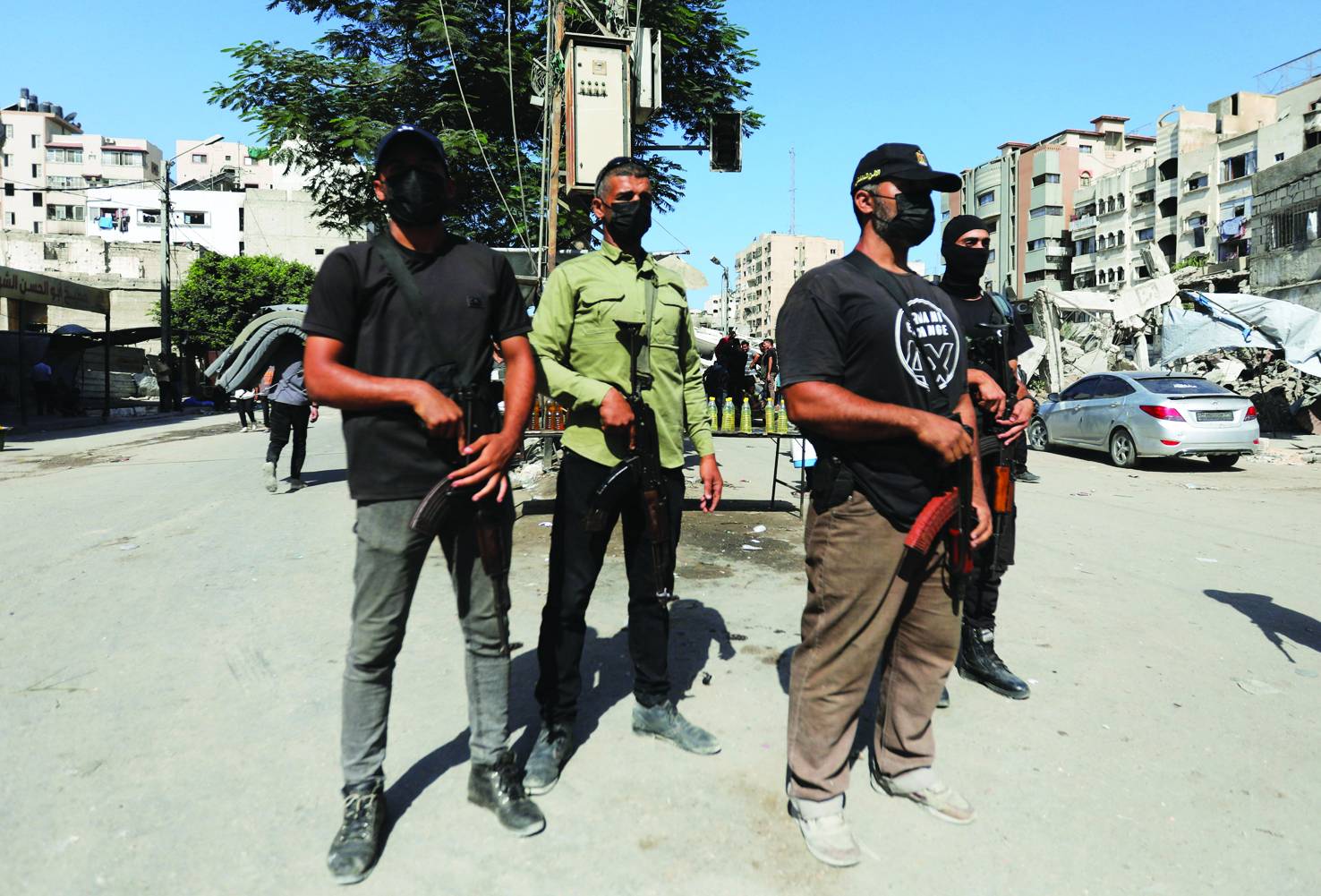
Hamas police officers stand guard, amid a ceasefire between Israel and Hamas, in Gaza City, October 11, 2025. REUTERS/Stringer

According to the four sources, each of whom spoke separately, the decision was intended to reaffirm the Hamas leadership's position that the movement remains present and strong, and cannot be defeated through military force or through any Israeli or US plans that bypass an agreement with Hamas over the future of the Gaza Strip and the Palestinian issue as a whole.

One source said one of the reasons behind the move was the calls for what became known as the June 26 public protests. According to the source, Hamas leaders believed there were attempts to create widespread unrest inside Gaza, and wanted the funeral of Walid Haniyeh, held hours before the planned demonstrations, to show that the movement remained strong and cohesive. The other three sources neither confirmed nor denied that account.

All four sources said the armed men appearing at recent funerals were relatives and friends of those killed, some of whom belong to Hamas, and that their participation was neither officially organized nor coordinated.

Regarding threats of repeating October 7 and other slogans described as "jihadist," the sources said such chants are largely spontaneous in their wording. However, an internal directive circulated among officials responsible for organizing local events, including funerals, instructed them to ensure that slogans emphasized the role of the "resistance" and conveyed that it remains active and present, just as it was before the war.
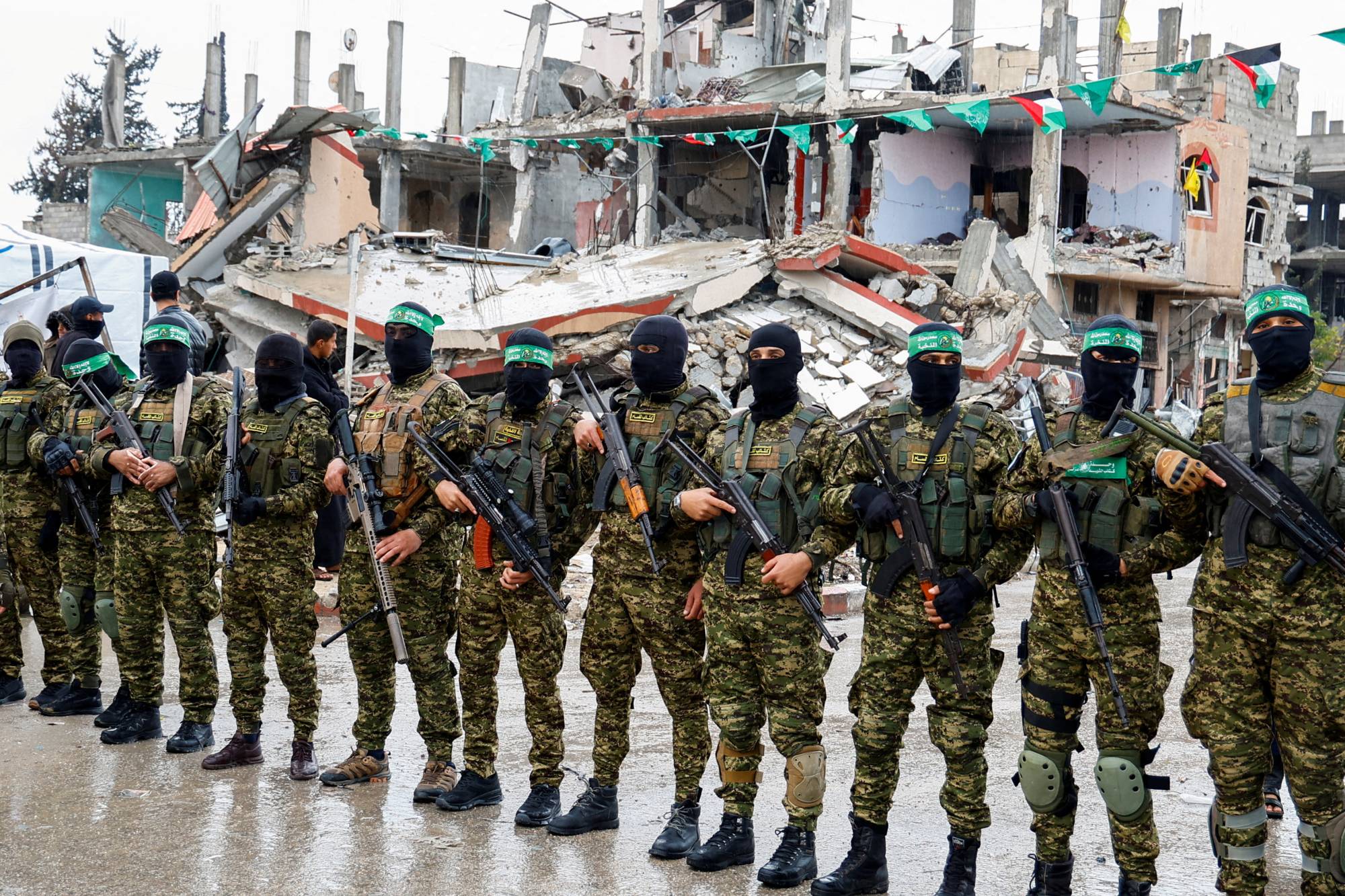
FILE PHOTO: Palestinian Hamas militants stand guard on the day of the handover of hostages held in Gaza since the deadly October 7 2023 attack, as part of a ceasefire and a hostages-prisoners swap deal between Hamas and Israel, in Rafah in the southern Gaza Strip, February 22, 2025. REUTERS/Hatem Khaled/File Photo

Some observers believe the move could provoke Israel and provide it with further justification for escalating military operations in Gaza. Hamas supporters inside and outside the enclave have called for an end to the display of flags and the chanting of such slogans, arguing that Israeli media had exploited them to intensify its campaign of incitement against Gaza, much as it did at the beginning of the war. They also warned that Israeli intelligence could use the funerals to identify field activists and later target them for assassination, as happened previously following prisoner exchanges and other events.

Two Hamas sources acknowledged that such concerns may be valid but argued that Israel does not need additional justifications. They said military operations have continued despite the declared ceasefire, with assassinations and other attacks persisting at varying levels of intensity. According to the sources, more than 1,060 Palestinians have been killed so far as a result of the continuing Israeli military operations.

A third source said: "The reality has certainly changed, and what worked before the war is no longer suited to the current circumstances. But that does not mean complete surrender. Assassinations have repeatedly shown that they do not weaken the movement. Instead, they strengthen its resolve to continue its course."

At the same time, several Israeli television channels and newspapers published reports citing official intelligence assessments submitted to the Israeli military's General Staff and political leadership. The reports claimed Hamas was rebuilding its capabilities in Gaza by manufacturing various types of weapons, restoring some tunnels, and possibly preparing attacks against Israeli forces. They also alleged that the movement continues to reject disarmament, maintain control over humanitarian aid, transfer funds from abroad to Gaza to pay its members, channel funds to its military wing to rebuild its ranks, and recruit new members.

According to the Israeli newspaper Israel Hayom, the Israeli military has intensified targeted assassinations in Gaza in an effort to hinder Hamas' attempts to consolidate its presence while rebuilding its military capabilities. The newspaper quoted a political source as saying: "We are accelerating the pace of assassinations, but remain below the threshold of international criticism. This will continue as long as Hamas is unwilling to disarm."
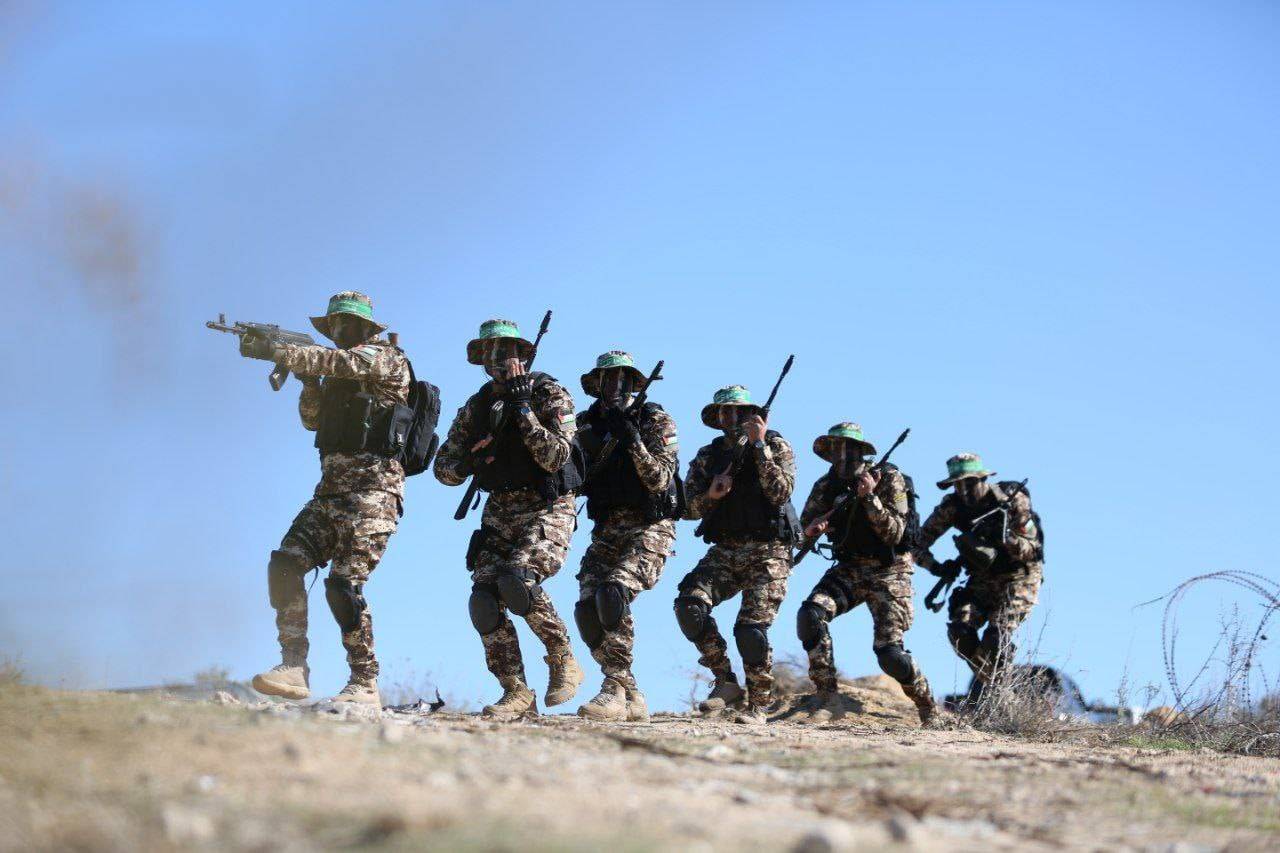
Fighters from Al-Qassam Brigades, affiliated with Hamas, in the Gaza Strip (Archive)

Meanwhile, Yedioth Ahronoth reported that Yaniv Asor, commander of the Israeli military's Southern Command, has for some time been trying to persuade the General Staff to resume large-scale fighting in Gaza. According to the newspaper, he has so far failed because the political leadership does not currently want to resume full-scale combat, given the constraints imposed by the United States.

The four Hamas sources told Asharq Al-Awsat that Israeli threats and reports in the Hebrew-language media form part of an ongoing campaign of incitement that predates the war, continued throughout it, and persists to this day.

Two of the sources said Hamas is making use of some of the capabilities available to it in preparation to defend Palestinians should Israel resume the war. However, they insisted that the movement does not intend to launch another attack similar to that of October 7, 2023, or any comparable operation. Instead, they said, its objective is to reach an agreement that guarantees Palestinian rights, brings the war to a complete end, ensures humanitarian relief for Gaza's residents, restores the basic necessities of life, and enables the reconstruction of their homes.


Houthis Target Mokha to Halt Port’s Growing Role

Dozens of Houthi missiles and drones targeted Yemen’s Mokha port (AFP)
TT

Houthis Target Mokha to Halt Port’s Growing Role

Dozens of Houthi missiles and drones targeted Yemen’s Mokha port (AFP)

For more than a week, Iran-backed Houthis have pounded Yemen’s city of Mokha, its port and nearby harbors close to the Bab al-Mandab Strait with dozens of ballistic missiles and drones.

The sweeping escalation in Mokha has knocked the port out of service and caused heavy damage to infrastructure, facilities and docked vessels.

The Houthis say they are targeting military-linked sites and vessels, but those claims have not been verified.

Government and informed sources say the scale and pattern of the attacks point to broader aims, including possible military shifts along the western coast and Houthi fears that Mokha could emerge as a commercial rival to the Houthi-held port of Hodeidah.

Government forces on the western coast say the Houthis have fired 46 ballistic missiles and 55 drones at the commercial port and nearby harbors, while also using explosive-laden boats.

Informed sources told Asharq Al-Awsat that the Houthis fear a surprise government offensive but remain uncertain about where any operation could begin.

That concern, the sources said, has driven attacks on positions held by elite Yemeni army units now ready to take part in any potential battle launched from Marib province.

The Houthis have sharply intensified strikes on Mokha port and nearby facilities in an apparent effort to disrupt its expanding role as a Red Sea commercial hub, just as development and rehabilitation work is nearing completion to allow the port to receive container ships and boost import and export activity.

The unprecedented bombardment has halted port operations and stopped ships carrying food, electrical goods, and other cargo from arriving from the opposite shore of the Red Sea, at a time when the port had been preparing for a new phase of commercial activity.

Informed sources say the scale of the attacks reflects Mokha’s growing importance to importers and traders, especially those moving goods to northern Yemen through Houthi-controlled Hodeidah port, where commercial sources say they face multiple levies and fees.

The targets struck by missiles and drones also point to Houthi fears that Mokha could become an alternative commercial and maritime hub, drawing on its location near Bab al-Mandab and its ability to serve large areas including Taiz, Ibb, and parts of Lahj, Hodeidah, and al-Dhale.

But the Houthis’ calculations go beyond trade, according to the sources. The group also sees Mokha as a possible launch point for military operations against other areas it controls in Hodeidah province, placing the city and its port within a wider military equation.

Civilian facilities hit

The scale of the damage underlines the breadth of the attacks.

In the first days of the bombardment, three commercial vessels docked at the port were destroyed, including a wooden ship carrying goods for several traders and agencies. Unloading operations later stopped after workers were evacuated and rented cranes were put out of service.

The initial strikes killed seven people inside the port, including three civilians — a cook, a laborer, and an administrative employee — and four members of the facilities security force.

The attacks also hit the quay, logistics workshops, and the central hangar, as well as equipment and marine craft used to service vessels, crippling key parts of the port’s operations.

In the following days, the Houthis struck the Tihama, a commercial vessel that carried food and passengers between Yemeni ports, the Horn of Africa, and the Socotra archipelago.

Four crew members were killed, along with two Yemeni rescuers who were trying to save the crew and the vessel, according to local sources.

In the latest attack, the group fired four missiles at a locally owned commercial vessel docked at al-Ardi harbor in the Bab al-Mandab area. The ship, owned by a local contractor, had been under maintenance for several months after unloading its cargo.

Maritime sources said Yemeni contractor Bilal al-Shumairi had bought the vessel, named Amir Khan, from an Indian trader in Indonesia for use in his maritime and commercial activities.

The sources said the crew was Yemeni and had fully evacuated the ship during the previous week, preventing any casualties among its members.

Houthi losses mount

The escalation around Mokha comes as the Houthis suffer battlefield losses along front lines with government forces, particularly south of Hodeidah.

More than 180 Houthi fighters have been killed there, according to government sources, without the group making gains or capturing new positions.

The sources said the losses come as the Houthis seek to reinforce their military presence along western coast fronts while intensifying strikes on Mokha and the Bab al-Mandab area.

They said the pattern suggests an effort to complicate the battlefield and pressure government forces ahead of any possible military move.

The Houthis have also suffered losses on other fronts, including the killing of Hussein al-Hatfi, commander of the guard detail protecting Abdul-Khaliq al-Houthi, brother of the group’s leader and commander of what the Houthis call the “Central Military Region.”

Al-Hatfi was killed in a drone strike carried out by government forces as part of a series of attacks on Houthi positions and gatherings, according to the sources.

Government sources said al-Hatfi was from the Majz area of Saada province and was the fourth of his brothers to be killed while fighting in Houthi ranks since the war began.


Hezbollah Threat to Mobilize the Street: Venting Anger or a Pressure Tactic?

Hezbollah supporters wave the flags of the group and Iran in Beirut’s southern suburbs during a ceremony held last month to coincide with the funeral of late Iranian Supreme Leader Ali Khamenei. (EPA)
TT

Hezbollah Threat to Mobilize the Street: Venting Anger or a Pressure Tactic?

Hezbollah supporters wave the flags of the group and Iran in Beirut’s southern suburbs during a ceremony held last month to coincide with the funeral of late Iranian Supreme Leader Ali Khamenei. (EPA)

“You have the right to be angry. But we ask you to hold that anger inside and be ready to use it when the time comes to achieve your goals and demands.” With those words, Hezbollah Secretary-General Naim Qassem addressed supporters in his latest appearance last week.

He then went further: “This anger has its time, and it can erupt,” warning in advance that responsibility for the fallout from any such eruption would lie with those who “do not know how to do their job” or who “try to work against the resistance and its people.”

The remarks have raised a broader question in Lebanon: Is Hezbollah preparing its supporters for a stage in which it moves from containing anger in the street to mobilizing it?

The question comes as southern Lebanon and its residents face severe hardship, mounting losses, and growing political and military pressure.

No decision to take to the streets

For now, there is still a gap between anger and a decision to mobilize.

Qassem Qassir, a political writer close to Hezbollah, said the anger Qassem referred to “is real and present within the resistance’s support base, particularly in the south, which is facing Israeli killings, destruction and massacres, which the Lebanese authorities have been unable to stop despite ongoing negotiations with Israel.”

But Qassir said there was “no information so far indicating any change in Hezbollah and the Amal Movement’s decision not to take to the streets.” Amal, led by parliament Speaker Nabih Berri, is a close ally to the Iran-backed party.

Qassir said some groups occasionally stage spontaneous protests, while anger is also expressed through statements and comments on social media.

Still, he said Qassem’s remarks could be “a signal for steps to come,” particularly amid what he described as “psychological preparations” for possible action if the situation moves toward further escalation.

“Hezbollah’s popular base is ready to mobilize,” he said, pointing to large turnouts whenever supporters are called to an event or funeral.

Protest vs. uprising

Political writer and academic Mona Fayyad drew a sharper distinction between anger inside Hezbollah’s support base and the ability to turn it into collective action.

“The main question is whether there is anger among Hezbollah’s supporters that could lead to an explosion, and whether the secretary-general is capable of turning that anger into actual mobilization,” Fayyad told Asharq Al-Awsat.

She said anger was unsurprising given displacement and the difficult social and living conditions facing Hezbollah’s supporters. But, she added, that did not mean it would become a popular uprising.

Collective action, she said, requires several conditions: a shared sense of threat, confidence in the leadership calling for action, and a belief that mobilization can produce results.

She also warned that a leader who identifies his supporters’ anger while asking them to delay expressing it risks widening the gap between the leadership and its base.

Qassem’s limited charisma “does not help him manage Hezbollah’s relationship with its supporters or turn anger into popular mobilization,” she went on to say.

‘Operating on the margins’

Lawyer and university professor Ali Mourad was more critical.

He said Qassem’s latest speech, particularly his effort to place responsibility for the consequences of the war on the state, reflected “a major illusion” and “a continued attempt to evade responsibility by shifting it onto the state.”

“The situation in the south is extremely difficult, and Jabal Amel is facing one of its most dangerous political and social moments after the people of the south were uprooted from their land,” Mourad told Asharq Al-Awsat.

But he questioned where Qassem’s threatened “eruption” would be directed.

“Against whom would this explosion be, and for what purpose?” he asked. “Would it be against the state, which is now dealing with the consequences of a war it was not part of?”

“The current phase is not one of anger or explosion,” Mourad said. “It is a phase of reassessment, limiting losses and dealing with their consequences.”

He said Hezbollah was “incapable of taking serious steps in this direction” and was instead “operating on the margins to escape its responsibility.”

The people of the south understand that the state is not responsible for what happened and that responsibility for the choices that led to the war lies with Hezbollah, he stressed.

Mourad said the “anger, wounds, and sorrow” felt by southerners should instead be translated into politics by ending the existing duality and moving toward a clearer equation based on “land in exchange for weapons,” rather than “fueling the battle or reproducing it.”

“The tragedy of the people of the south now goes beyond the political dispute between Hezbollah and its opponents,” he said. “Everyone must come under the authority of the state as the only available option.”

Mourad ended with a pointed question: What is the value of calling people into the streets to protest when many are already living there after losing their homes and property?


Iraq Tests Limits of State Power in Push to Rein in Armed Factions

A member of the Iraqi security forces in Baghdad. (AFP)
TT

Iraq Tests Limits of State Power in Push to Rein in Armed Factions

A member of the Iraqi security forces in Baghdad. (AFP)

The Iraqi government appeared to test how far it could push efforts to bring weapons under state control by arresting a senior al-Nujaba Movement figure, then handing him over to the security arm of the Popular Mobilization Forces — a move that may have been designed to prevent a broader clash with armed factions.

Iraq's Counter-Terrorism Service arrested Abbas Hussein al-Yaqoubi, al-Nujaba's intelligence chief and a PMF official, in the Dhi Qar province on Monday under a judicial warrant over suspected involvement in attacks targeting the US presence and interests in Iraq.

Judicial authorities have not said why al-Yaqoubi was arrested or what charges he faces.

Hours later, the PMF said it had taken custody of him. Its media official, Muhannad al-Aqabi, said al-Yaqoubi had been handed to the PMF's General Directorate of Security "to follow up on legal proceedings with the judiciary," without giving further details.

The transfer suggested that the government, after showing it was prepared to deploy state security agencies against a prominent figure in a major armed faction, chose to contain the confrontation before it escalated, particularly after threats were directed at Prime Minister Ali al-Zaidi.

Local reports say al-Yaqoubi oversees security in areas of Baghdad's southern belt.

The al-Nujaba Movement is aligned with Iran and continues to reject the Iraqi government's plan to bring weapons under state control by September 30.

Government spokesperson Haider al-Aboudi said al-Yaqoubi's arrest was carried out under a judicial order and that the government would deal according to law with anyone refusing to place weapons under state authority, according to remarks carried by Iraqi media.

The message was clear: the state claims authority over arms.

Test of strength

The arrest marked the clearest test yet of al-Zaidi's attempt to enforce state control over weapons, one of Iraq's most sensitive issues.

Several armed factions are tied to powerful political forces and retain military capabilities beyond the country's traditional security institutions, making any attempt to curb their autonomy, politically and militarily, fraught.

An official in the al-Nujaba Movement called the arrest a “dangerous escalation” by al-Zaidi and said the group would announce its position within hours.

The warning came after another pro-Iran group, Kataib Hezbollah, threatened al-Zaidi, prompting Badr Organization leader Hadi al-Amiri to call for calm between the government and the “resistance factions.”

Al-Amiri warned against “hasty, ill-considered or provocative moves” and urged all sides to avoid inflammatory rhetoric and miscalculations.

Kataib Hezbollah security official Abu Mujahed al-Assaf escalated the rhetoric further on Tuesday, issuing a strongly worded warning to al-Zaidi and accusing him of “terrorizing the families of the mujahideen” through raids on homes under direct US supervision.

He set three conditions for defusing the crisis: “the complete and genuine departure of the Americans, the removal of Turkish forces from northern Iraq and the dissolution of the Peshmerga forces belonging to the Kurdistan Region.”

He described those demands as the basis for resolving what he called “the bravado of this young man” and for any future rapprochement or framework for dealing with the government.

Iraqi reports also said an extraordinary session between al-Zaidi and lawmakers on the Security and Defense Committee over legislation to bring weapons under state control was marked by objections, defenses of the factions and questions over what would happen to their weapons, fighters and families.

The reaction underscored the government's narrow room for maneuver.

Any attempt to impose a full state monopoly over weapons could quickly shift from a legal measure into a wider political and security crisis.

‘Iraq’s isolation’

Al-Aboudi said the government was trying to spare Iraq further consequences, saying the country had come close to isolation because of the weapons issue.

That may explain the government's balancing act: show that judicial orders can be enforced even against a senior figure in an armed faction, then contain the fallout before the confrontation spreads.

The timing is particularly sensitive as the international coalition's mission in Iraq approaches its end.

Al-Aboudi said the coalition was accelerating steps to conclude its mission by the end of September, while al-Zaidi was giving particular attention to strengthening Iraq's air defense capabilities.
