


Baghdad Rejects Iranian ‘Protection’ for Suspects Placed on Corruption Lists

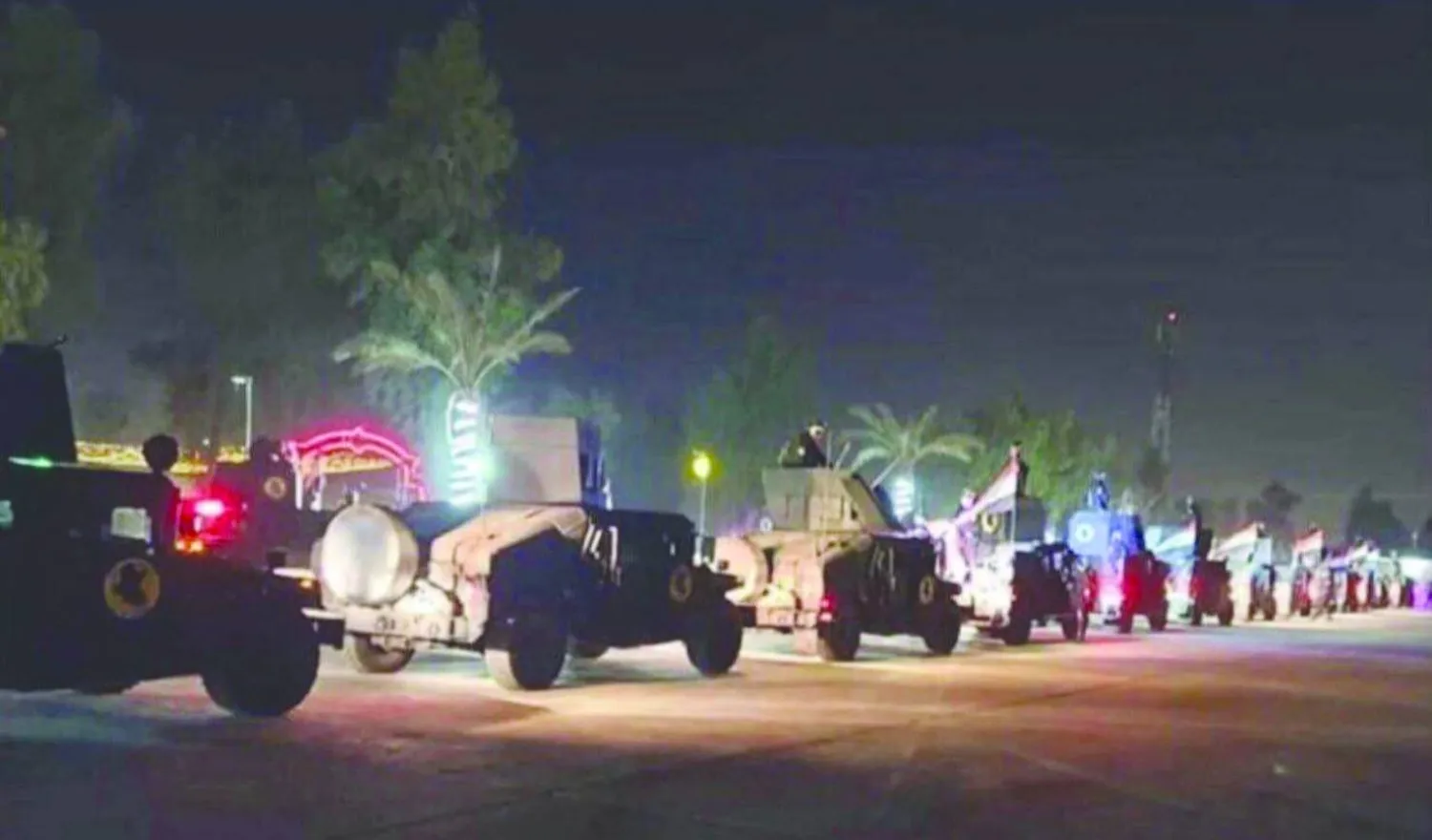
A circulating image shows Iraqi vehicles at an entrance to the Green Zone at dawn on June 28, 2026
TT

Baghdad Rejects Iranian ‘Protection’ for Suspects Placed on Corruption Lists

A circulating image shows Iraqi vehicles at an entrance to the Green Zone at dawn on June 28, 2026

The Iraqi government has rejected Iranian requests to exempt individuals facing judicial arrest warrants as part of corruption investigations and has urged Tehran to use official diplomatic channels to arrange visits by Iranian officials who have “customarily held secret meetings” in Baghdad, according to two informed sources on Sunday.

The developments followed what was described as a “secret” visit by Esmail Qaani, commander of the Quds Force, shortly after an official visit by Iranian Foreign Minister Abbas Araghchi, who met Iraqi Prime Minister Ali al-Zaidi on June 28.

One source said Qaani arrived in Baghdad a few days after Araghchi’s visit without any public announcement. It is believed to have been his first trip to Iraq since al-Zaidi took office on May 14.

As Iranian influence in Baghdad has expanded over the years, reports of undeclared visits by senior officials from the Iranian Revolutionary Guard Corps (IRGC) have become frequent, although many were never officially confirmed and some could not be independently verified.

During the recent US-Iran war, Qaani acknowledged that he had traveled to Baghdad in late April to express his “thanks and appreciation to the Iraqi people and officials.”

Iranian Requests

According to the two sources, the Iranian officials sought changes to Iraq’s plan to bring all weapons under state control after the government set Sept. 30 as the deadline for eliminating arms outside state authority. Tehran also requested that Baghdad narrow the list of arrest warrants that could target political and government figures with close ties to the IRGC.

One source said Iraqi authorities rejected any changes to their plans on weapons control and anti-corruption measures and informed Tehran of their decision. Baghdad also insisted that Iran adhere to formal diplomatic procedures and rejected “bypassing official channels through secret meetings,” in an apparent reference to Qaani.

Unannounced visits by Iranian officials, particularly commanders of the Quds Force, have long been politically sensitive in Iraq and across the region. The Iraqi government did not respond to requests for comment.

For years, Baghdad has struggled to establish the state’s monopoly over arms. Iran-backed armed factions argue that they have earned a role in shaping political decisions because of their campaign against ISIS.

The United States has pressed Iraq to diminish its ties with Iran, and some observers believe al-Zaidi’s government is gradually emerging as a promising opportunity to reshape the balance of power as part of a broader regional realignment.

In an interview with Asharq Al-Awsat, al-Zaidi pledged to place all weapons under state control, declaring that “there will be no weapons except those of the state.”

Doubts and International Commitments

A former lawmaker from a Shiite alliance told Asharq Al-Awsat that the recent developments do not necessarily signal a fundamental shift in Baghdad’s relationship with Tehran.

Speaking on condition of anonymity, he warned that Iran and its Iraqi allies could respond to growing US pressure by adopting a lower profile while preserving their influence through indirect channels.

He said it remains too early to conclude that Iranian influence is receding, noting that the extent to which Tehran-aligned factions comply with government policies will become clearer in the coming months.

A senior political adviser in Baghdad told Asharq Al-Awsat that the government informed Tehran it could not approve of requests that would violate Iraq’s international commitments on combating money laundering and controlling weapons that threaten regional security.

Baghdad has recently entered into commitments with the US and European countries to implement economic and security reforms, including tighter measures against money laundering and illegal weapons.

The adviser added that Iraq remains committed to maintaining its strategic partnership with neighboring Iran on the basis of mutual respect and shared interests.


PA Calls Sanctions on Israeli Settlements ‘Important’ Step to Accountability

 View of an area near the Israeli settlement of Maale Adumim in the occupied West Bank, Tuesday, Sept. 8, 2026. (AP)
View of an area near the Israeli settlement of Maale Adumim in the occupied West Bank, Tuesday, Sept. 8, 2026. (AP)
TT

PA Calls Sanctions on Israeli Settlements ‘Important’ Step to Accountability

 View of an area near the Israeli settlement of Maale Adumim in the occupied West Bank, Tuesday, Sept. 8, 2026. (AP)
View of an area near the Israeli settlement of Maale Adumim in the occupied West Bank, Tuesday, Sept. 8, 2026. (AP)

The Palestinian Authority on Tuesday welcomed the announcement by 12 countries of trade sanctions on Israeli settlements in the occupied West Bank, calling it "an important step" to accountability.

"This as an important practical step toward holding the settlement system accountable and demonstrating non-recognition of the unlawful situation created by the occupation," Palestinian President Mahmoud Abbas's office said in a statement.

Twelve countries including Britain, Canada and France announced Tuesday they would sanction trade with Israeli settlements in the West Bank, after increasing attacks by settlers against Palestinians in the occupied territory.

Denmark, Finland, Iceland, Ireland, Norway, Poland, Portugal, Spain, and Sweden also plan to issue restrictions on trade with the settlements, the nations' foreign ministers said in a joint statement.

The action follows weeks of increasing attacks by Israeli settlers against Palestinian villages in the illegally occupied territory that has drawn widespread condemnation from the international community.

Ireland and Spain have already taken measures against trade with Israeli settlements, and France has for weeks been pushing for a similar decision from the European Union, Israel's leading trading partner, but has been blocked by some members.

The 12 ministers said actions by the Israeli government in the West Bank was "undermining the possibility of a two-state solution" referring to a plan under which two states -- one Israeli and one Palestinian -- would live peacefully side by side.

"The situation is rapidly deteriorating amid unprecedented levels of settler violence and settlement expansion," they warned.

The E1 settlement plan -- approved by Israel last year after decades of being frozen, notably due to pressure from successive US administrations -- would see 1,200 housing units built in the West Bank.

It would further isolate Israeli-annexed east Jerusalem from the rest of the occupied territory.

During an address to the UK parliament, British Foreign Secretary Ed Miliband accused the Israeli government of turning a "blind eye" to what he called "ethnic cleansing" by the Israeli settlers.

He announced Britain would introduce an "import ban on goods from illegal settlements in the occupied territories".

"I do not believe the British people want us supporting the occupation by accepting products from settlements in our shops and supermarkets," he told the British parliament, flanked by new Prime Minister Andy Burnham.

"We will take action against specific companies and individuals who provide services such as construction, infrastructure, financing, or real estate for settlement expansion," he added.

In a statement posted on X, French Foreign Minister Jean-Noel Barrot said France "will end trade" with settlements located in the occupied territories.

Commenting on Britain's move, America's ambassador to Israel Mike Huckabee told BBC Radio Tuesday: "I feel like it's discrimination against the Israeli government. It's a discrimination against the Jewish people."

Milibrand is the son of Jewish immigrant parents.

Israeli Finance Minister Bezalel Smotrich, who leads a far-right party that advocates the annexation of the entire West Bank, called for the expulsion of Britain's ambassador to Israel.

Israeli Prime Minister Benjamin Netanyahu has vowed to continue establishing the illegal settlements despite mounting international pressure, promising a major wave of settler immigration into the West Bank.

Some of the violence by settlers in recent weeks had drawn rare condemnation from Netanyahu and unusually strong criticism from Huckabee, as well as more typical critics in European capitals.

The UK government's move signals a toughening of its stance towards Israel under Burnham, who entered Downing Street in July after Keir Starmer stepped down.

Burnham has said that Starmer was too soft on Israel, which faced intense international criticism over its relentless offensive that flattened much of Gaza following the October 7, 2023, Hamas attack.

Starmer's government did, however, announce sanctions on six entities and one person "involved in financing, enabling and carrying out settler violence" back in June and last year formally recognized a Palestinian state.

More than 500,000 Israelis live in illegal settlements in the West Bank, among some three million Palestinians.

According to an AFP tally based on data from the Palestinian health ministry, Israeli forces or settlers have killed at least 1,105 Palestinians in the territory since the start of the Gaza war.

Trade between the UK and the Occupied Palestinian Territories was around only £38 million ($51 million) in 2025, according to the government, implying the move could be largely symbolic.

Critics have also said it could be difficult to distinguish goods from the West Bank from those from the rest of Israel.


Some Israeli Actions in Syria May Amount to War Crimes, UN Probe Says

Israeli soldiers stand next to military vehicles as they gather near the ceasefire line between Syria and the Israeli-occupied Golan Heights, December 9, 2024. (Reuters)
TT

Some Israeli Actions in Syria May Amount to War Crimes, UN Probe Says

Israeli soldiers stand next to military vehicles as they gather near the ceasefire line between Syria and the Israeli-occupied Golan Heights, December 9, 2024. (Reuters)

A UN commission investigating Syria said on Tuesday it was deeply alarmed over Israel's military activity inside Syrian territory, warning that some actions including the detention of civilians could amount to war crimes.

Presenting an update to the UN Human Rights Council, Commissioner Fionnuala Ní Aoláin said Israeli military operations in southern Syria had become "increasingly sustained and entrenched", with recurring ground incursions, patrols, raids and searches affecting civilians.

The Israeli mission in Geneva accused ‌the Commission of conducting ‌an "Israel-bashing session" and said Israel had no territorial aspirations in ‌Syria.

"It ⁠maintains a temporary ⁠buffer zone amounting to 0.1% of Syria to protect its citizens from proven security threats," it said in a statement.

Syria is seeking to rebuild nearly two years after the fall of former President Bashar al-Assad.

Israeli troops entered a UN-patrolled buffer zone after the collapse of Assad's government in December 2024, a move Israel described as temporary and necessary to secure its border during the political transition.

Israel has since carried out hundreds ⁠of strikes on Syrian military infrastructure and seized new positions ‌deeper into Syria. The Syrian government and the ‌United Nations have said the deployment violates Syrian sovereignty and a 1974 disengagement agreement that followed ‌the 1973 Middle East war.

Israel says its actions are necessary to protect ‌its security.

The Independent International Commission of Inquiry on Syria said it had documented the establishment of temporary checkpoints and fixed military infrastructure by Israel on Syrian territory, particularly in the southern provinces of Quneitra and Daraa.

"The Commission is deeply alarmed about continued Israeli violations," Ní Aoláin told the council, ‌saying local residents reported "bewilderment" at Israeli actions while the country undergoes reconstruction.

As of June, the commission had identified 49 Syrians, including ⁠two children, detained ⁠by the Israeli military on Syrian territory and believed to have been transferred across the border, she said.

"Such acts may amount to war crimes," Ní Aoláin said.

In a statement released alongside the session, the commission said some detainees were being held incommunicado, raising concerns about potential torture or ill-treatment. It said Israeli military activity had caused displacement among residents and described Israel's presence in the area as a "belligerent occupation".

The commission said it agreed with UN Secretary-General Antonio Guterres that violations of Syria's sovereignty and territorial integrity were unacceptable and must cease.

Syria's representative welcomed the commission's findings and reiterated Damascus' commitment to cooperate with UN human rights mechanisms while pursuing accountability for abuses committed under the former government.

The Syrian delegate also condemned Israeli military operations, accusing Israel of violating international law and the 1974 disengagement agreement.


Drone Strike Near Courthouse in Central Sudan Kills 13

The war in Sudan has raged for more than three years. (AFP)
TT

Drone Strike Near Courthouse in Central Sudan Kills 13

The war in Sudan has raged for more than three years. (AFP)

A drone strike blamed on Sudan's paramilitary Rapid Support Forces killed 13 people outside a courthouse in the army-held central town of Umm Rawaba on Tuesday, a medical source and witnesses told AFP.

The attack is the latest in an escalating wave of drone attacks by both the RSF and the Sudanese army, which have been at war since April 2023.

"There are now 13 killed and 22 injured being treated at the hospital," a medical source at the local hospital told AFP, revising an earlier toll of 12 after one more person succumbed to their injuries.

The strike hit a crowded area outside the courthouse in North Kordofan, where residents had gathered to complete legal and administrative procedures.

"I was near the courthouse when I saw the drone hit a tree outside the building," one witness told AFP, adding that the area was crowded with people at the time.

Another witness said residents rushed to help those caught in the blast.

"After the drone hit, we tried to save people, but some died at the scene," he said. "The sound of the explosion was very loud."

Umm Rawaba, which lies along a strategic route linking central and western Sudan, has remained under army control despite repeated attacks in the surrounding region.

There was no immediate comment from the RSF.

- Military build-up -

Drone strikes, deployed en masse by both sides, killed more than 1,100 people this year, according to UN figures.

Since the war broke out, more than 200,000 people have been killed, aid workers estimate, while millions more have been displaced in the world's largest displacement and hunger crises.

Attempts at diplomacy have floundered as fighting escalates on several fronts across Africa's third-largest country.

Kordofan has been a strategically important battleground, linking army-controlled areas in central Sudan with the vast western region of Darfur, where the RSF consolidated power last year.

On the southeastern border with Ethiopia, RSF attacks have displaced hundreds of thousands of people as they press an offensive through the Blue Nile state.

Military sources told AFP the RSF had expanded its presence along the frontier in recent weeks, raising concerns that the conflict could spill into new areas and further destabilize an already volatile region.

The UN has repeatedly warned against the growing use of drones and other advanced weapons, pointing to thriving supply lines through Sudan's borders.

RSF supply lines have been tracked through Sudan's borders with Libya, Chad, South Sudan and Ethiopia.

This week, a United Nations fact-finding mission warned that outside support was enhancing the military capabilities of both sides and enabling increasingly advanced operations, often with severe consequences for civilians.

"Protecting Sudan's civilians requires action not only against those fighting the war, but also against the individuals, entities and networks that enable it to continue," said the mission's chairman Mohamad Chande Othman.

The UN warning coincided with a US call for the United Nations Security Council to expand an arms embargo currently focused on Darfur to cover all of Sudan.
