

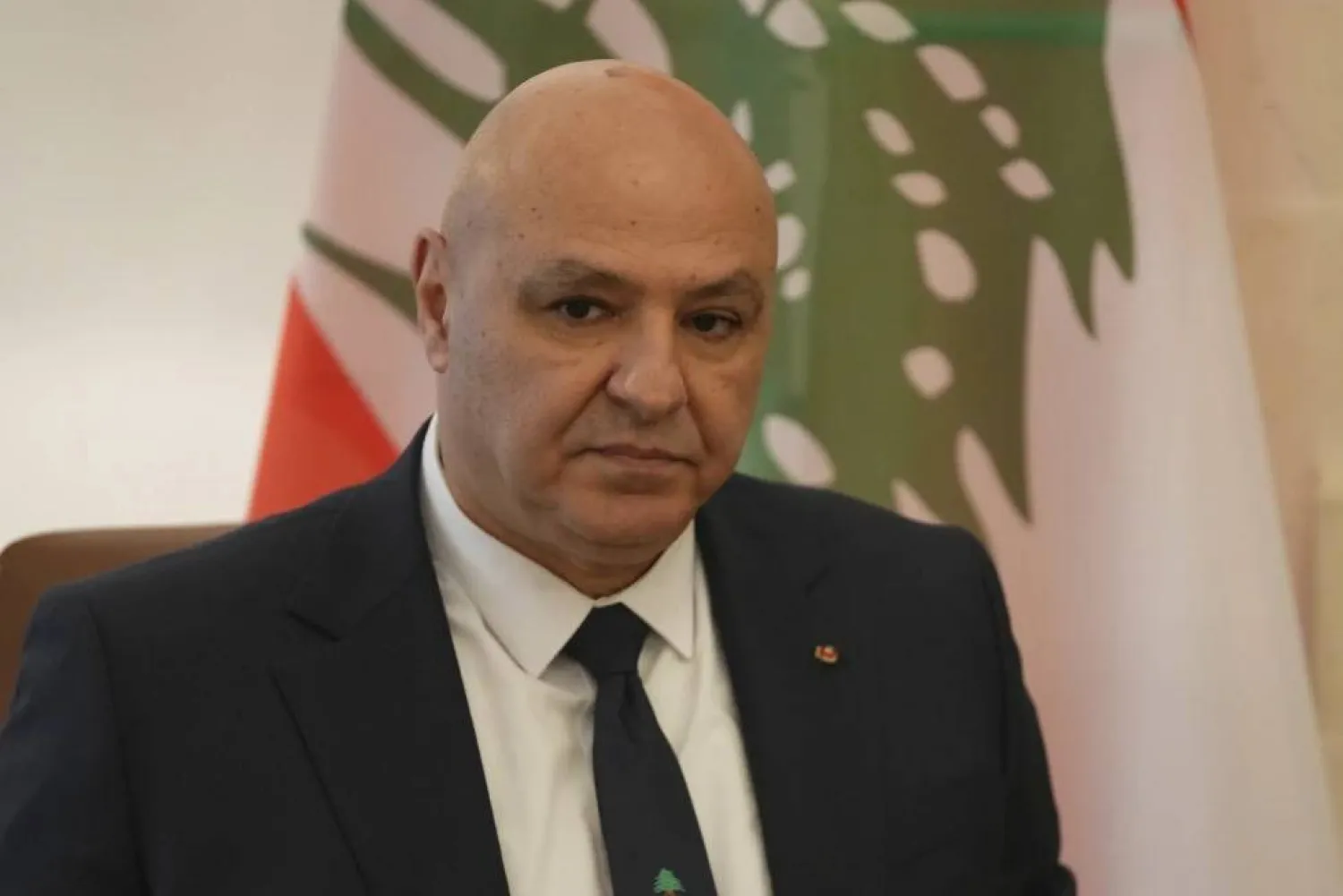

Lebanon's President to Asharq Al-Awsat: We Chose Negotiation to Limit the Occupation and the Suffering of Southerners

Lebanese President Joseph Aoun (AP)
TT

Lebanon's President to Asharq Al-Awsat: We Chose Negotiation to Limit the Occupation and the Suffering of Southerners

Lebanese President Joseph Aoun (AP)

With increasing military tension between the US and Iran in and around the Strait of Hormuz, Lebanese President General Joseph Aoun is trying to hold onto hope of emerging from the catastrophe that has afflicted his country.

Using the word "catastrophe" is not an exaggeration. The Israeli occupation in southern Lebanon has expanded, bringing with it destruction, exacerbating the suffering of displaced persons, and intensifying division over responsibility for the war and ways out of it.

Facing the Israeli military occupation of the South, Lebanon has no choice but to rely on American assistance, which it hopes will materialize further after the scheduled meeting at the White House on July 21 between the US and Lebanese presidents.

Aoun's Priorities for the Meeting with Trump

At Baabda Palace, Asharq Al-Awsat asked Aoun what Lebanon seeks from the White House meeting.

He replied: "First, we want Lebanon to remain on the American agenda ... There is no need to reiterate the importance of having a good relationship with the US and benefiting from President Donald Trump's expressed desire to help us; his role is vital, and we are counting on it."

"We face an extremely difficult and complex situation. We know well that the US is the only party capable of exerting pressure on the Israeli government to prevent it from targeting the southern suburbs (of Beirut), infrastructure, or expanding occupied areas in southern Lebanon. No other party can fulfill this role."

"We want the US administration to help us restore our entire land. We will not relinquish a single inch or a single citizen. The issue of our sovereignty is not subject to concession or interpretation. It is at the forefront of the national principles that we are keen to adhere to. We want the land to be returned and to be under the sole authority of the Lebanese army, meaning under the authority of legitimate Lebanese institutions," Aoun added.

He stressed that Lebanon is asking for its natural right to extend the authority of its legitimate institutions over all Lebanese territories. "We cannot leave southern Lebanon captive to regional developments, with its people paying heavy prices in lives and property."

"Lebanon's fate cannot be separated from the fate of its south, neither in security, nor in economy, nor in stability," Aoun added.
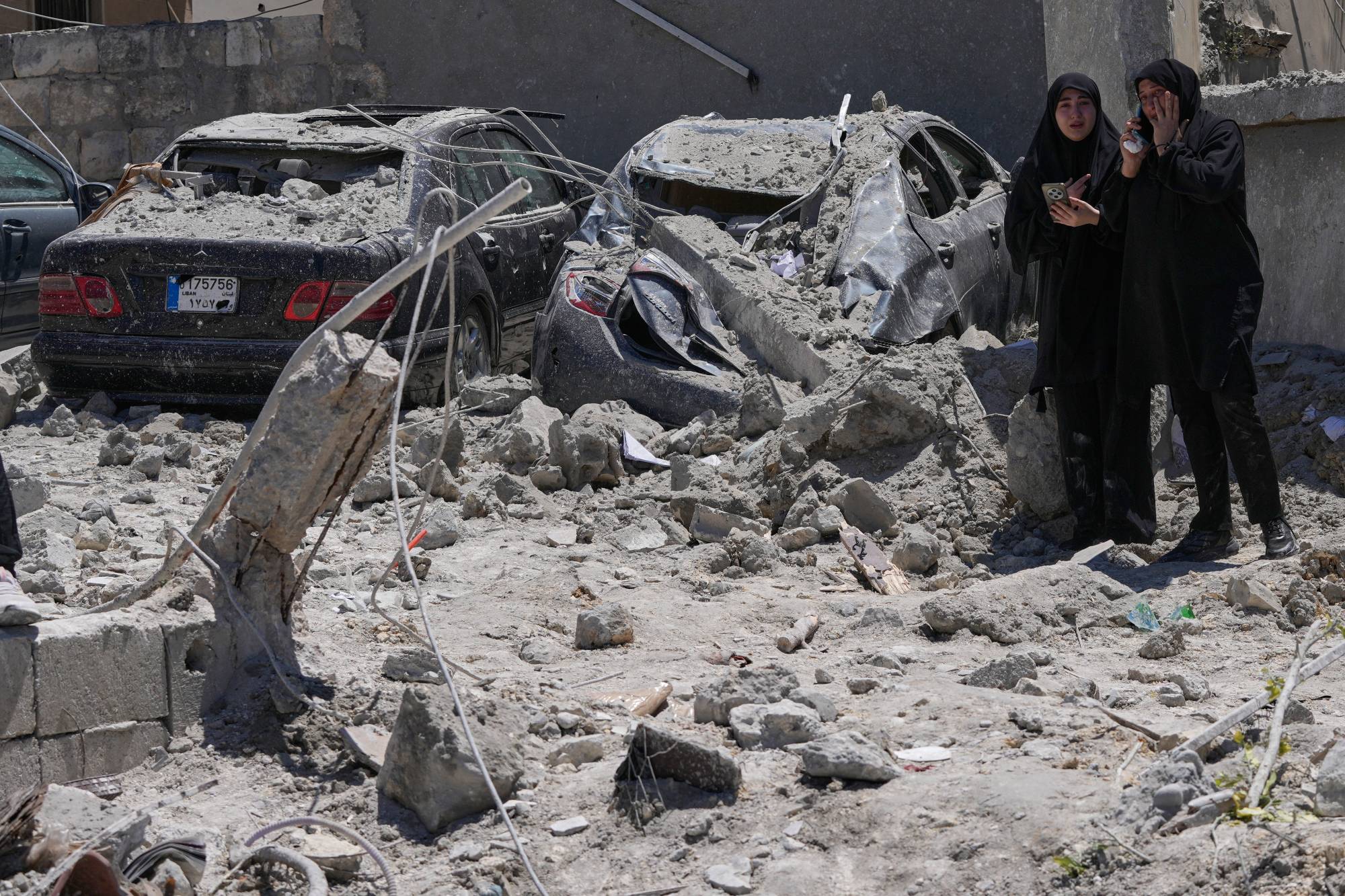
Relatives of missing victims weep, as they gather at the site of destroyed buildings that were hit in an Israeli airstrike in Qannarit village, southern Lebanon, Saturday, June 20, 2026. (AP Photo/Mohammed Zaatari)

"We want President Trump to support our legitimate demands for the restoration of our entire land, and he is expected to succeed in persuading Israel to withdraw from Lebanon. I want to inform him of the reality in southern Lebanon and the dangers of maintaining the current situation or returning to escalation," Aoun told Asharq-Awsat.

He also hoped for American support for the Lebanese army, which is tasked with difficult missions, and for the reconstruction of what the war has destroyed and assistance to stimulate the Lebanese economy after the significant losses it has suffered.

Calculations of Direct Negotiation with Israel

Regarding the division over the method of direct negotiations with Israel, Aoun said: "We were not in a situation that allowed for ideal choices. The war threatened to expand, along with Israel threatening to occupy more territory. The scenes of displacement were harsh, as were the scenes of destruction."

"There was a risk of widespread destruction to Beirut and its infrastructure. We were effectively faced with a single option, especially given the significant imbalance of power. We had no choice but to seek assistance from the US. Direct negotiations were the only available option for us to make a serious attempt to shorten the period of occupation of our land, alleviate the suffering of the displaced, open the door for their return to their villages, and strive to rebuild what was destroyed."
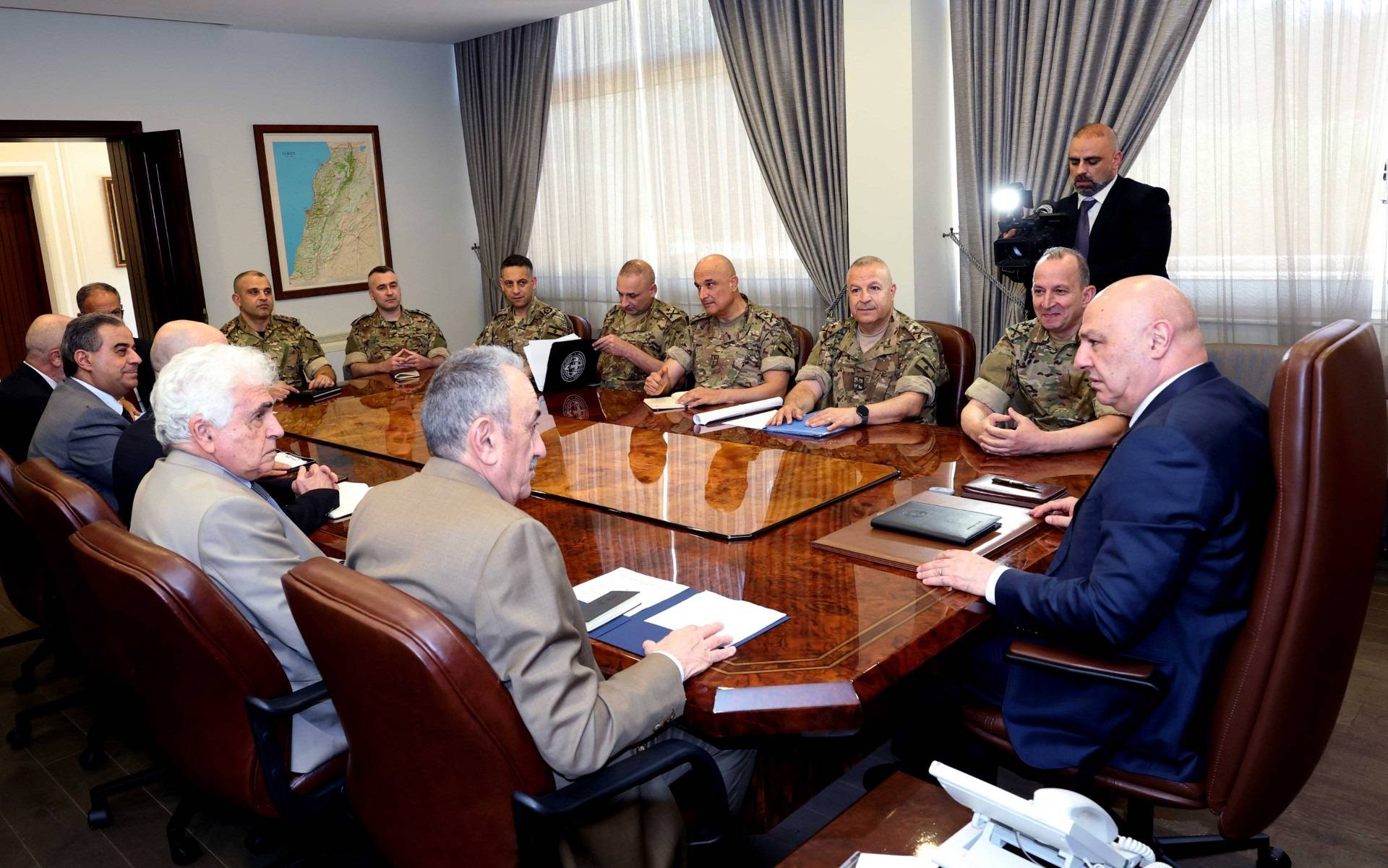
President Joseph Aoun meeting with the Lebanese negotiating delegation before heading to Washington (Lebanese Presidency)


Aoun pointed out that "the state is responsible for the fate of every inch and every citizen. There is no distinction between one inch and another, or one citizen and another. We made difficult decisions based on our national responsibilities. We cannot continue to pay prices for any other party."

"Lebanon's decisions must be made within its legitimate institutions. Lebanon must defend its interests, sovereignty, and stability, which is why we said we would not accept anyone else negotiating on our behalf or in our name, nor becoming a bargaining chip in others' calculations," he stated.

Regarding the uproar caused by Trump's suggestion of a meeting between him and Israeli Prime Minister Benjamin Netanyahu at the White House, Aoun stated that "the idea of this meeting is fundamentally ruled out, but social media and others sometimes indulge in baseless scenarios."

Attempts to Overthrow the Government

Regarding the possibility of opponents of the framework agreement between Lebanon and Israel resorting to overthrowing the government, he said: "Changing the government is guided by constitutional frameworks. However, using the street to overthrow the cabinet is rejected. Furthermore, institutions play their role, always within the limits of available capabilities."

He stressed that "the government's performance is excellent, and the ministers are productive."
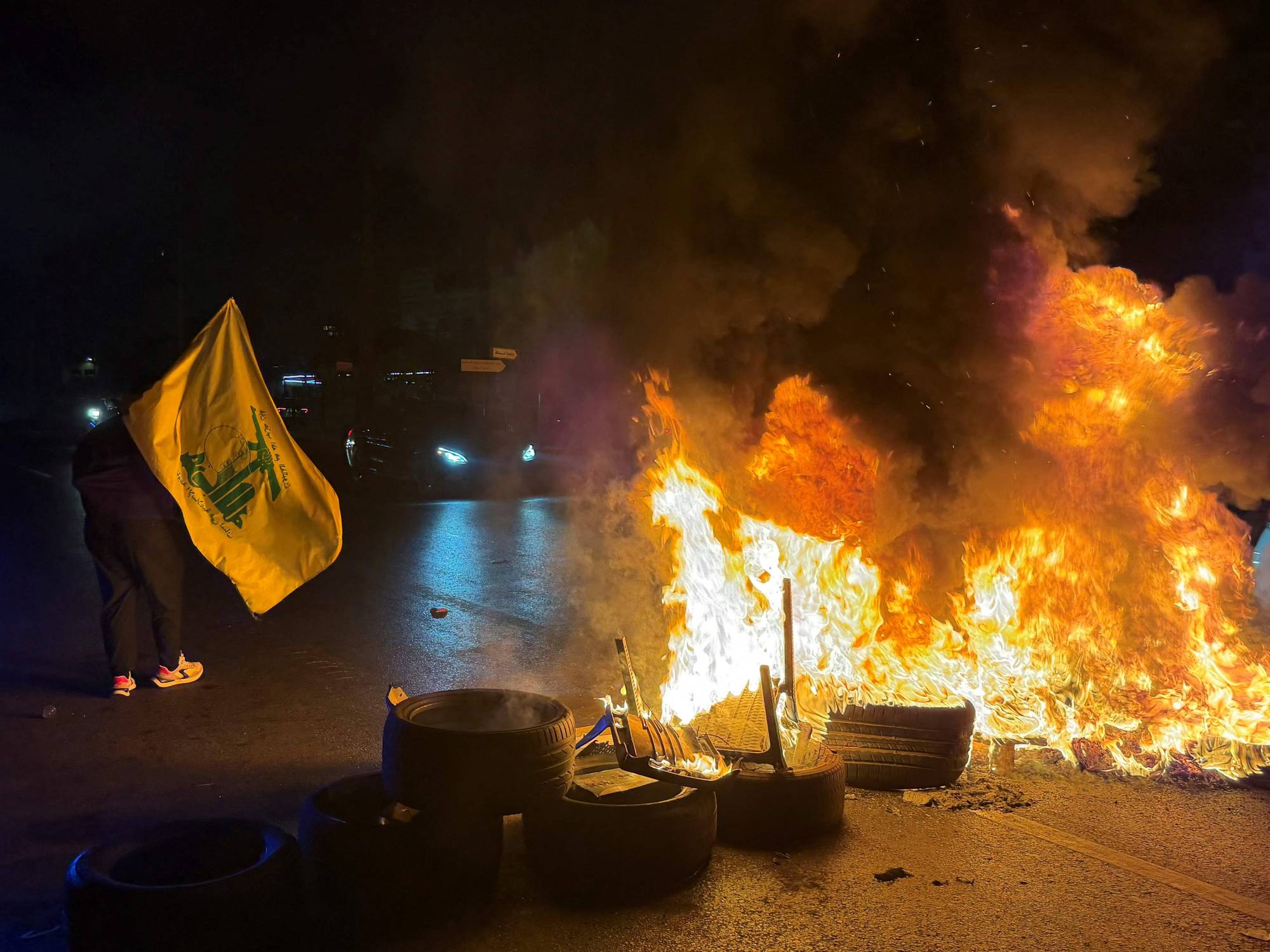
 

Hezbollah supporters block the old airport road in the southern suburbs of Beirut, with burning tires to protest against the trilateral agreement that was signed between the US, Israel and Lebanon on June 27, 2026. (Photo by Ibrahim AMRO / AFP)


Regarding his ties with Hezbollah, Aoun said: "We did not choose to sever ties with anyone. Our offices are open to everyone without exception."

"There is an objection to a choice made by the state to shorten the period of occupation and the suffering of the people. Whoever has another option to achieve this goal should present it, and we will discuss it. The option of continued war is not an option," he told Asharq Al-Awsat.

On the inclusion of a ceasefire in Lebanon in the first clause of the American-Iranian Memorandum of Understanding and its impact on the framework agreement, he said: "We welcome any assistance that aligns with Lebanon's interests. America is the only one capable of exerting pressure on Israel or persuading it. And Iran is the only one capable of influencing Hezbollah and its decisions. Of course, while affirming that Lebanon is the one negotiating on all matters related to it."

Regarding Lebanese Parliament Speaker Nabih Berri's opposition to the framework agreement with Israel, Aoun said: "Speaker Berri is a statesman, and we share what are considered red lines, which are not compromising civil peace, the reputation and role of the army, and not resorting to street protests."

He also noted that his relationship with Prime Minister Nawaf Salam is excellent.

Relationship Between Aoun and the Army Commander

Asked about the army's cohesion given Lebanon's circumstances and about rumors of renewed tensions between him and Army Commander General Rodolphe Haykal, the Lebanese president replied that "the army is cohesive and has not faltered. It is already implementing government decisions, naturally within the available capabilities."

"The army and all security institutions are doing everything they can. My relationship with General Haykal is excellent. There is no truth to the claims circulated by some media outlets."
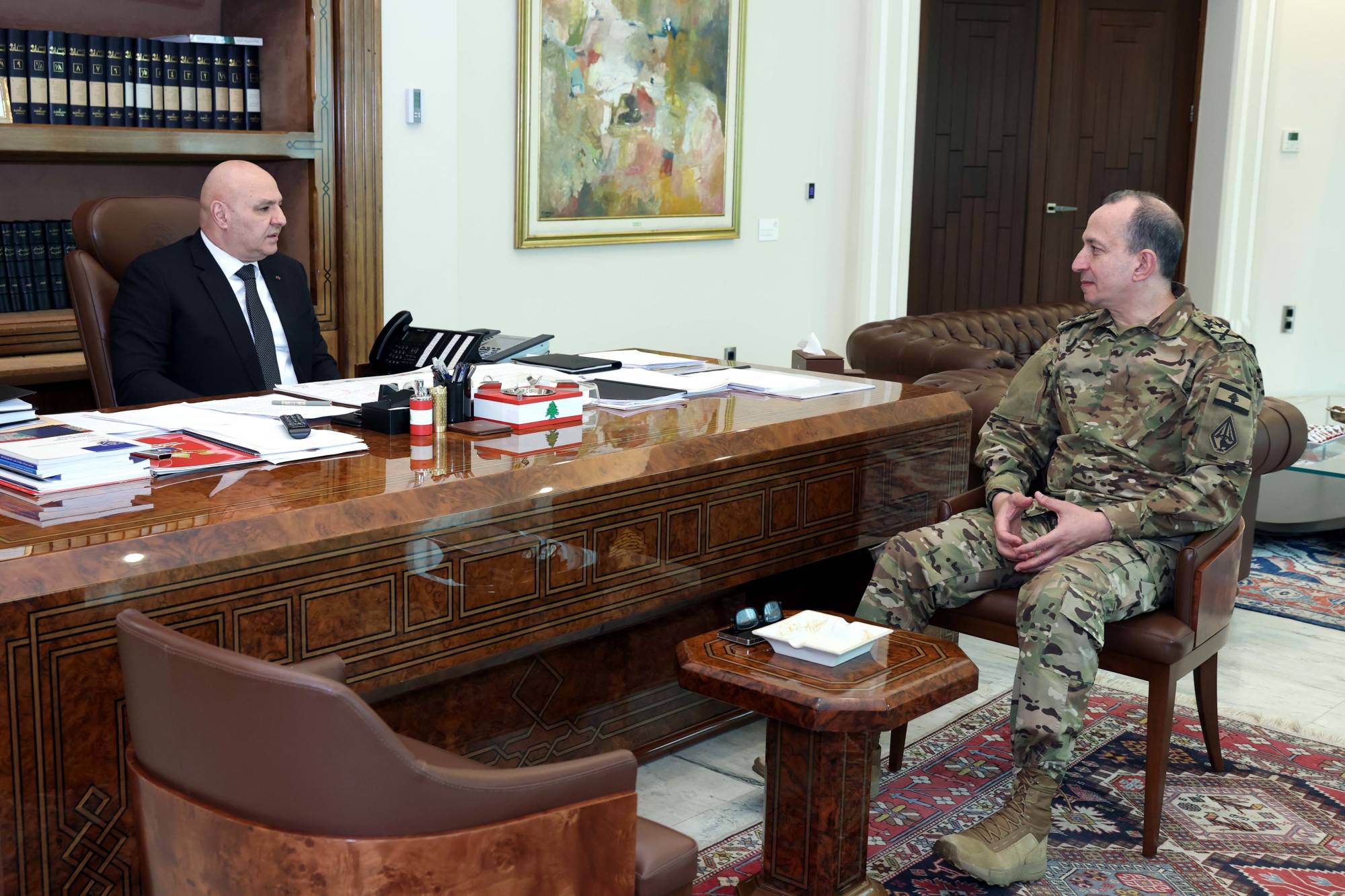
 

President Joseph Aoun meeting with Army Commander General Rodolphe Haykal (Lebanese Presidency)


Aoun also expressed his satisfaction with Arab support for Lebanon. He said: "Saudi Arabia, as always, has not hesitated to provide any assistance we request to support our efforts in restoring our rights and sovereignty."

"I would like to thank the Saudi leadership, especially Crown Prince Mohammed bin Salman, for the decision to resume Lebanese exports. I also want to thank the Qatari government for assisting Lebanon, and the same applies to the United Arab Emirates, which allowed its citizens to visit Lebanon."

When asked if he was concerned about his safety, Aoun replied with a smile: "God is the guardian. No one dies before their time comes."



Israel Allocates $434 Million for 34 New West Bank Settlements

Israeli Finance Minister Bezalel Smotrich speaks at a press conference regarding settlements expansion for the long-frozen E1 settlement, that would split East Jerusalem from the occupied West Bank, near the Israeli settlement of Maale Adumim in the Israeli-occupied West Bank, August 14, 2025. (Reuters)
TT

Israel Allocates $434 Million for 34 New West Bank Settlements

Israeli Finance Minister Bezalel Smotrich speaks at a press conference regarding settlements expansion for the long-frozen E1 settlement, that would split East Jerusalem from the occupied West Bank, near the Israeli settlement of Maale Adumim in the Israeli-occupied West Bank, August 14, 2025. (Reuters)

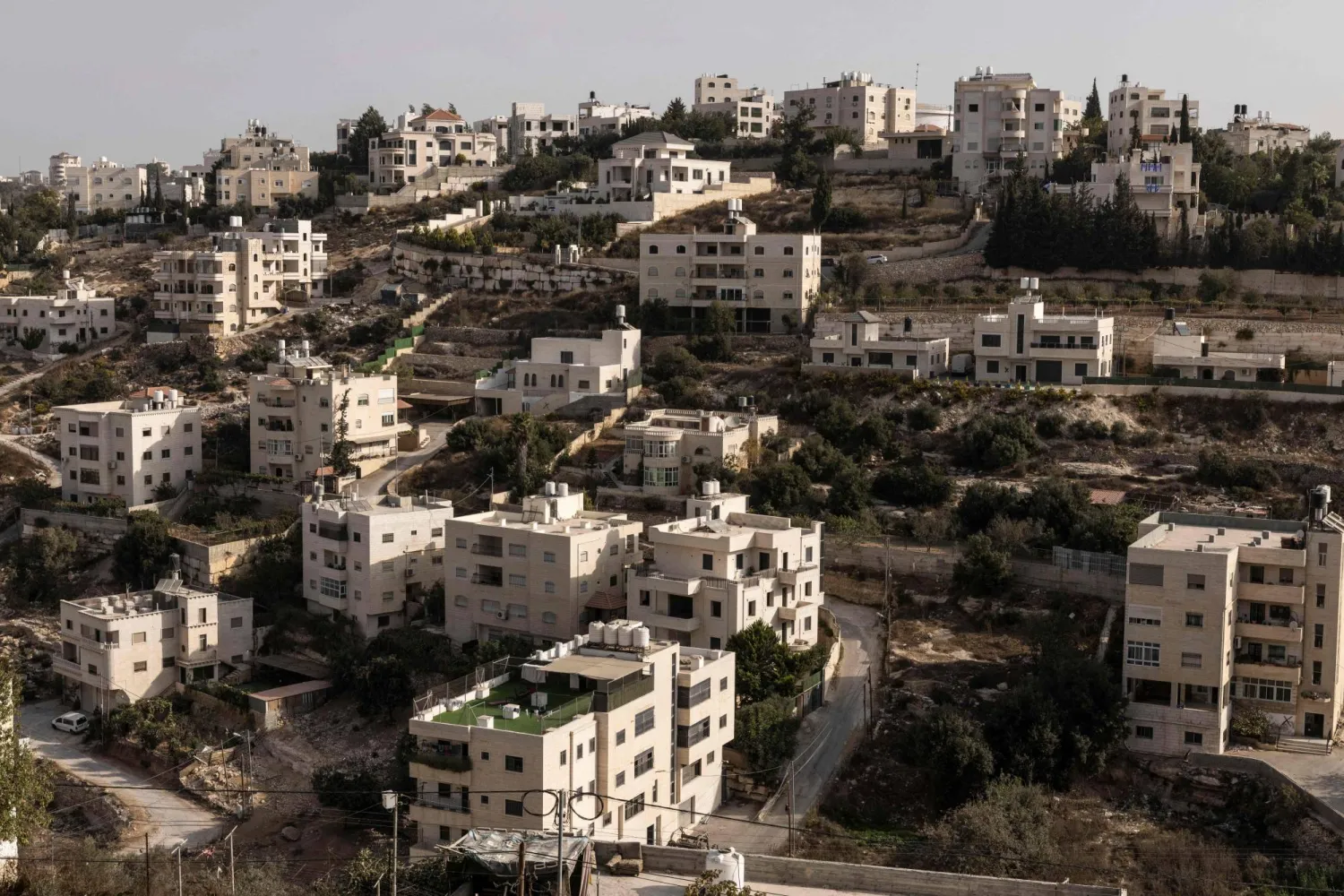
Israel's security cabinet approved ‌a budget of 1.3 billion shekels ($434 million) for establishing 34 new settlements in the occupied West Bank, right-wing Finance Minister Bezalel Smotrich said on Tuesday, adding to tensions over territory widely viewed as central to a potential Palestinian state.

UN bodies, Palestinians and most countries view the settlements as illegal under international conventions - a stance disputed by Israel - and a primary obstacle to peace.

Smotrich, who has long opposed Palestinian ‌statehood, is head of ‌the Religious Zionism party that ‌draws ⁠much of its support ⁠from settlements and is running in the upcoming legislative election on October 27.

The planned settlements would bring the total established under his four-year tenure to 103.

Smotrich said another 1.075 billion shekels would be approved to pave roads to the new settlements.

Last ⁠month, government ministers referred the settlement ‌funding plan to the security ‌cabinet.

Smotrich called the cabinet's decision historic and a "day of ‌celebration for Israel and settlements", thanking Prime Minister Benjamin ‌Netanyahu for his support.

Opinion polls point to Netanyahu losing in the October election.

"We are strengthening the security of the State of Israel, killing the idea of establishing ‌a terrorist state in the heart of the country, and strengthening our hold ⁠on ⁠the homeland in Judea and Samaria," Smotrich said in a statement, using the biblical term for the West Bank.

There has been a rise in settler violence in recent months against Palestinians and their property. About 700,000 Israeli settlers live among 2.7 million Palestinians in the West Bank and East Jerusalem.

Israel has not extended sovereignty to the occupied West Bank, while refuting international objections to the settlements and arguing that it is a disputed territory where Jews have lived for thousands of years.


Sudan Risks Deeper Hunger Crisis Due to War, Aid Cuts and Hormuz Disruption, Says WFP

A Sudanese woman peels beans inside a shelter in the al-Rahmaniya camp for displaced people near the city of al-Obeid in the southern Kordofan region on July 9, 2026. (AFP)
TT

Sudan Risks Deeper Hunger Crisis Due to War, Aid Cuts and Hormuz Disruption, Says WFP

A Sudanese woman peels beans inside a shelter in the al-Rahmaniya camp for displaced people near the city of al-Obeid in the southern Kordofan region on July 9, 2026. (AFP)

Sudan risks sliding backwards into deeper hunger as conflict, aid funding cuts and rising agricultural costs driven by disruption linked to the Iran war threaten to reverse gains made after famine took hold in parts of the country, a senior World Food Program official said on Tuesday.

The war between Sudan's army and the paramilitary Rapid Support Forces, now in its fourth year, has displaced millions and devastated much of the country.

Aid ‌agencies have ‌repeatedly warned of worsening food insecurity and limited humanitarian access.

Sudan remains ‌the ⁠world's largest humanitarian ⁠crisis, with around 5 million people facing emergency or catastrophic levels of hunger, even after an intensive aid response helped reduce the number of people in famine-like conditions, Carl Skau, the WFP's acting executive director, told Reuters.

"It's a massive crisis, both in terms of numbers, but also the gravity," he said, adding that more than 100,000 people were still facing famine-like conditions, placing them in the highest level of the ⁠UN-backed IPC hunger classification.

"With these kinds of numbers in ‌IPC (Phase) 5 starvation it is extremely, extremely serious," ‌he said.

Across Sudan, nearly 19.5 million people face high levels of acute food insecurity, according ‌to the IPC.

Skau said recent fighting around al-Obeid in North Kordofan ‌had raised fears the city could suffer a fate similar to el-Fashir in Darfur, where conflict and siege conditions have trapped civilians and hindered aid deliveries.

In recent days, however, violence has eased somewhat, raising hopes aid deliveries can be expanded from 100,000 to 250,000 people around ‌al-Obeid.

The WFP is also increasingly concerned about renewed fighting over the past week in Darfur, which has forced the ⁠closure of the Tine ⁠border crossing, a route from Chad into Darfur.

Throughout the country WFP has reduced the number of people it assists from 5 million a year ago to about 3.5 million and reduced rations in many areas, including in Tawila in Darfur, as it faces a $646 million funding gap after cuts from major donors, including the United States, European countries and Britain.

"We're not heading in the right direction here," Skau said. "If anything, we are falling backwards."

Skau also warned that soaring diesel prices and fertilizer shortages linked to the closure of the Strait of Hormuz could further undermine Sudan's food security during the current planting season.

Sudan relies heavily on fertilizer imports from Gulf countries, while much of its agriculture depends on irrigation pumps, which may be too expensive for farmers to run.


Israel Says Ready to Move on Pilot Zones amid New Lebanon Talks

A motorcade delegation arrives on the first day of talks between the Lebanese and Israeli delegations in Rome © Andreas SOLARO / AFP
TT

Israel Says Ready to Move on Pilot Zones amid New Lebanon Talks

A motorcade delegation arrives on the first day of talks between the Lebanese and Israeli delegations in Rome © Andreas SOLARO / AFP

Israel said it was ready to move forward with plans to withdraw troops from two areas of south Lebanon, as the two countries held a new round of talks in Rome on Tuesday.

US-brokered negotiations were taking place in the Italian capital over a framework agreement sealed last month after five rounds of talks in Washington, with Lebanese negotiators hoping for progress on an Israeli withdrawal.

The framework deal emerged after war broke out between Israel and Iran-backed militant group Hezbollah on March 2 against the backdrop of the wider Middle East war.

It calls for an end to the war in Lebanon, disarmament of the Lebanese movement, the deployment of Lebanese troops in the south and for Israeli forces to steadily withdraw from the country in two "pilot zones".

Israeli Foreign Minister Gideon Saar said Tuesday that his country was "ready to move forward implementing these two pilot zones".

"I hope and tend to believe that this round of discussions in Rome will promote it."

The Lebanese presidency had announced on Monday that its delegation to Rome had been instructed "to demand the immediate start of Israeli forces' withdrawal from the two pilot zones before any further discussion".

AFP journalists saw delegation vehicles entering the US embassy compound in the heart of Rome under tight security on Tuesday morning ahead of the talks, while the embassy declined to comment when asked.

According to a Lebanese diplomatic source familiar with the content of the talks, "the Lebanese army is ready to gradually take control of the localities from which the Israeli army would withdraw".

But Hezbollah rejects the agreement outright despite Lebanese government pressure, lowering expectations of success in the negotiations.

Orna Mizrahi of the Institute for National Security Studies (INSS) in Tel Aviv said Israel was "willing to withdraw gradually", but on the condition that "that there will be no presence of Hezbollah in the areas that Israel is withdrawing from".

She added that Israel also seeks to ensure "that the Lebanese army will have the ability... to keep it as a neutralized zone and a neutralized place that Hezbollah cannot come in again."

A US military delegation began discussions with the Lebanese army in Beirut on Saturday on the process for Israeli withdrawal from one of these "pilot zones".

- Limited prospects -

The framework agreement was concluded after a fragile ceasefire came into effect last month in the war between Hezbollah and Israel.

The Israeli army has nonetheless continued limited strikes in the south and has been carrying out demolitions in villages it occupies, according to official Lebanese media.

Lebanon's state-run National News Agency reported a strike on the southern town of Nabatieh al-Fawqa on Tuesday.

Israel's strikes and ground invasion have killed more than 4,300 people since the war started in early March, according to Lebanese authorities.

"The chances of a breakthrough in Rome are quite limited," Karim Bitar, a lecturer at Sciences Po Paris, told AFP.

"What we might see instead is a kind of opportunity to show that the process is still in place... that there are negotiations continuing despite the opposition and the obstacles that are beginning to emerge."

Tehran had demanded the ceasefire in Lebanon in order to conclude a memorandum of understanding with Washington on June 17.

But the region has seen a renewed escalation in recent days, with the US carrying out a third consecutive night of strikes against Iran ahead of the planned reimposition on Tuesday of its naval blockade on Iranian ports with ongoing attacks.

Iran wants to establish a link between negotiations over the regional war and Lebanon, "but we have the wish to disconnect it," said Mizrahi.

Tehran's priorities remain the Strait of Hormuz and the nuclear file, she added.

"The Iranians are using Lebanon as an excuse. They will always use it as an excuse," she said.

Hezbollah drew Lebanon into the regional war on March 2 by launching missiles at Israel in support of Iran.

Bitar, for his part, said that the risk of major fighting returning to Lebanon as a result of the regional escalation "is, of course, not negligible".

"But I think that Iran today will think twice before asking Hezbollah to launch new strikes against Israel," he said.

Tehran "wants to maintain Hezbollah as a long-term deterrent tool and does not want to use it immediately to open a new front," he said.