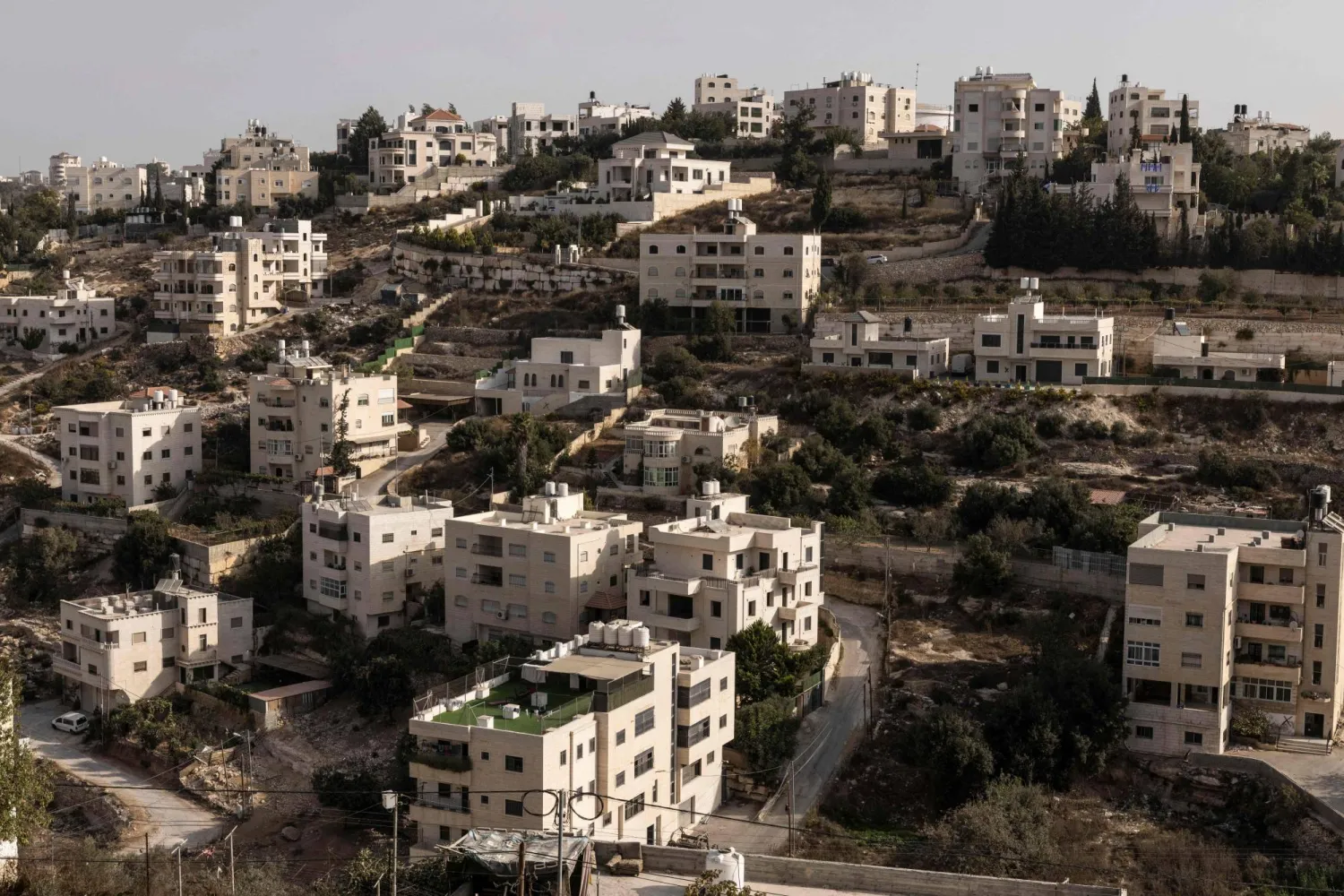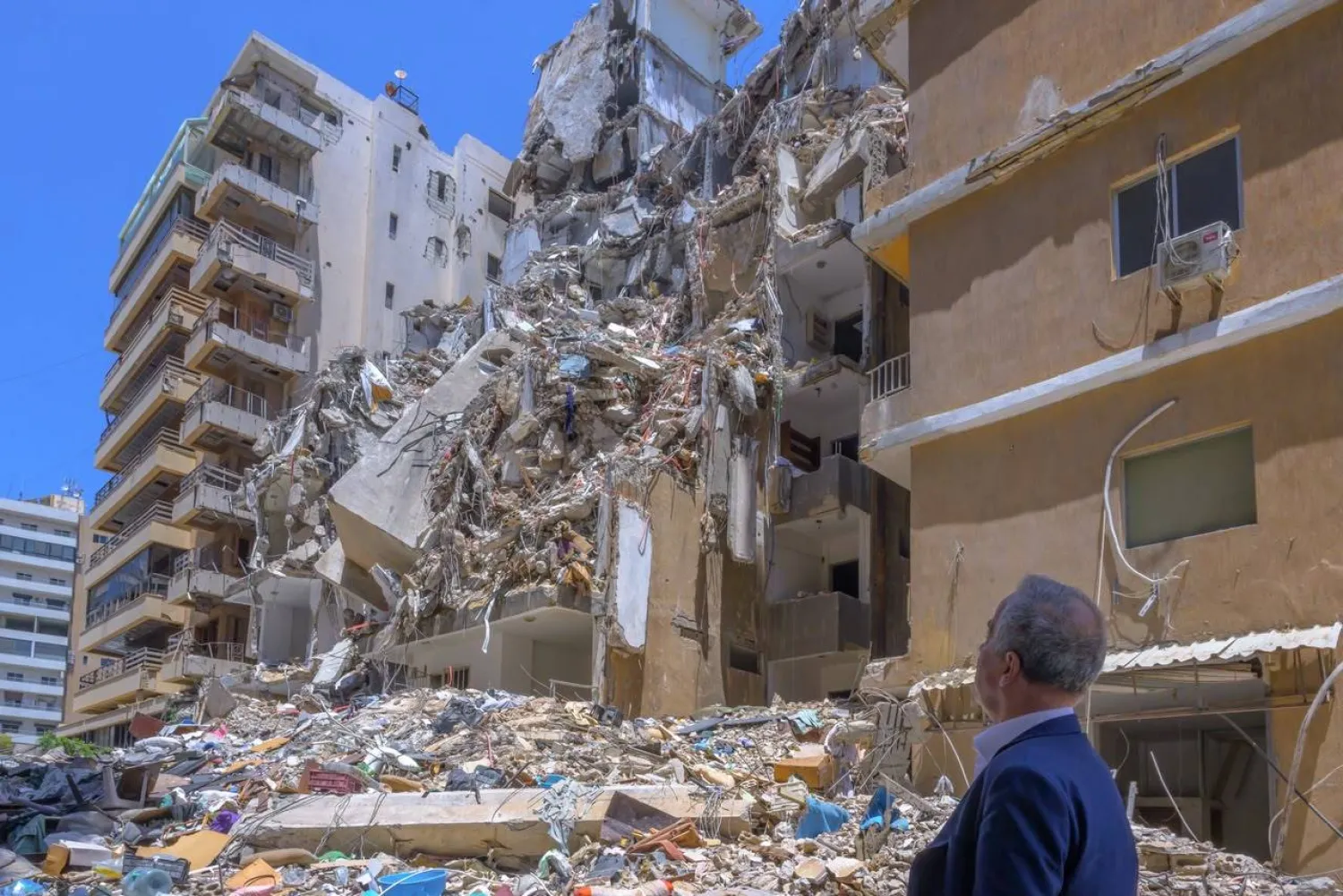

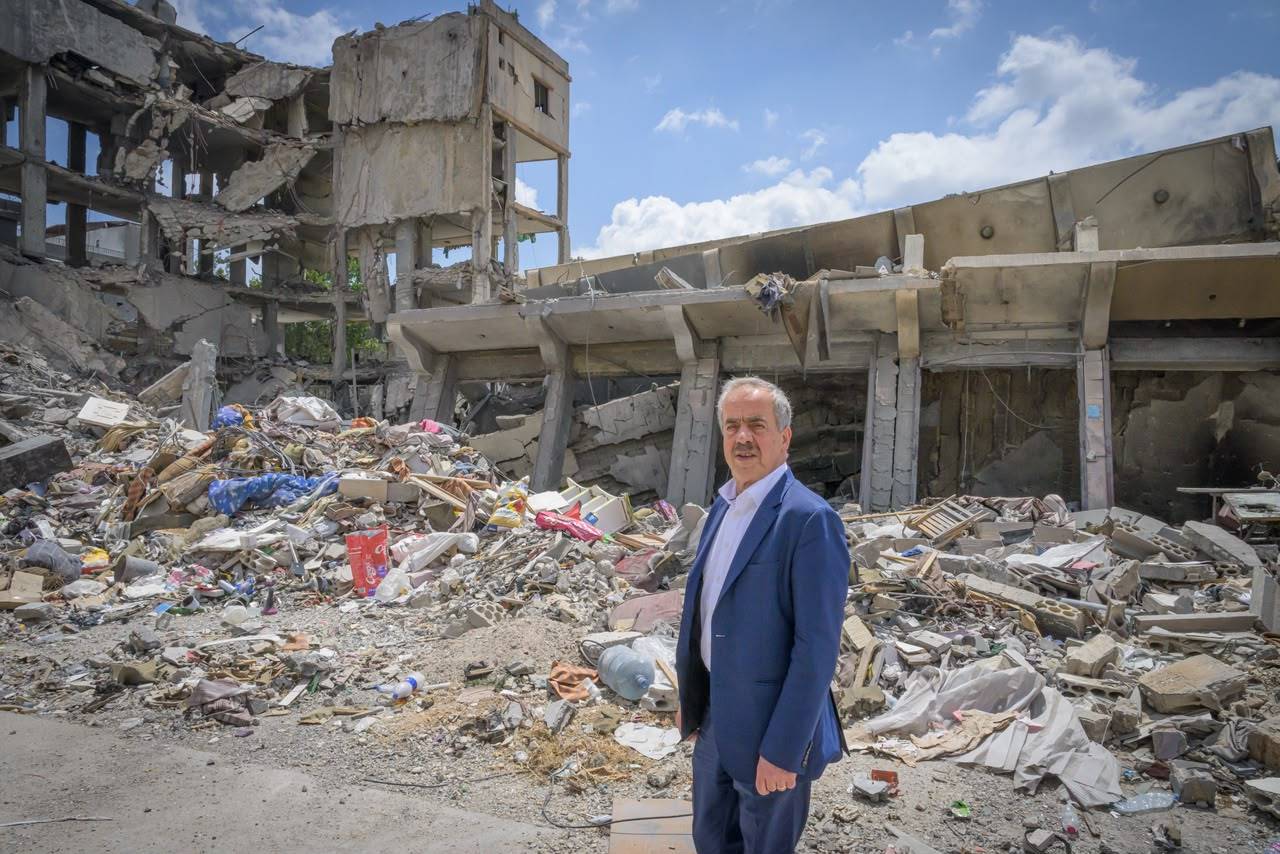
These small stones were once walls and roofs that made those beneath them believe they were protected from summer heat, winter cold and treacherous winds.
Under those roofs, mothers held their children close and cooked meals to stave off hunger. Children left for school and grew up under their parents’ eyes, amid their grandparents’ smiles and photographs hanging on the walls.
That was before the hurricane. It is no longer.
These stones were once apartment buildings whose residents imagined they were permanent homes and safe shelters.
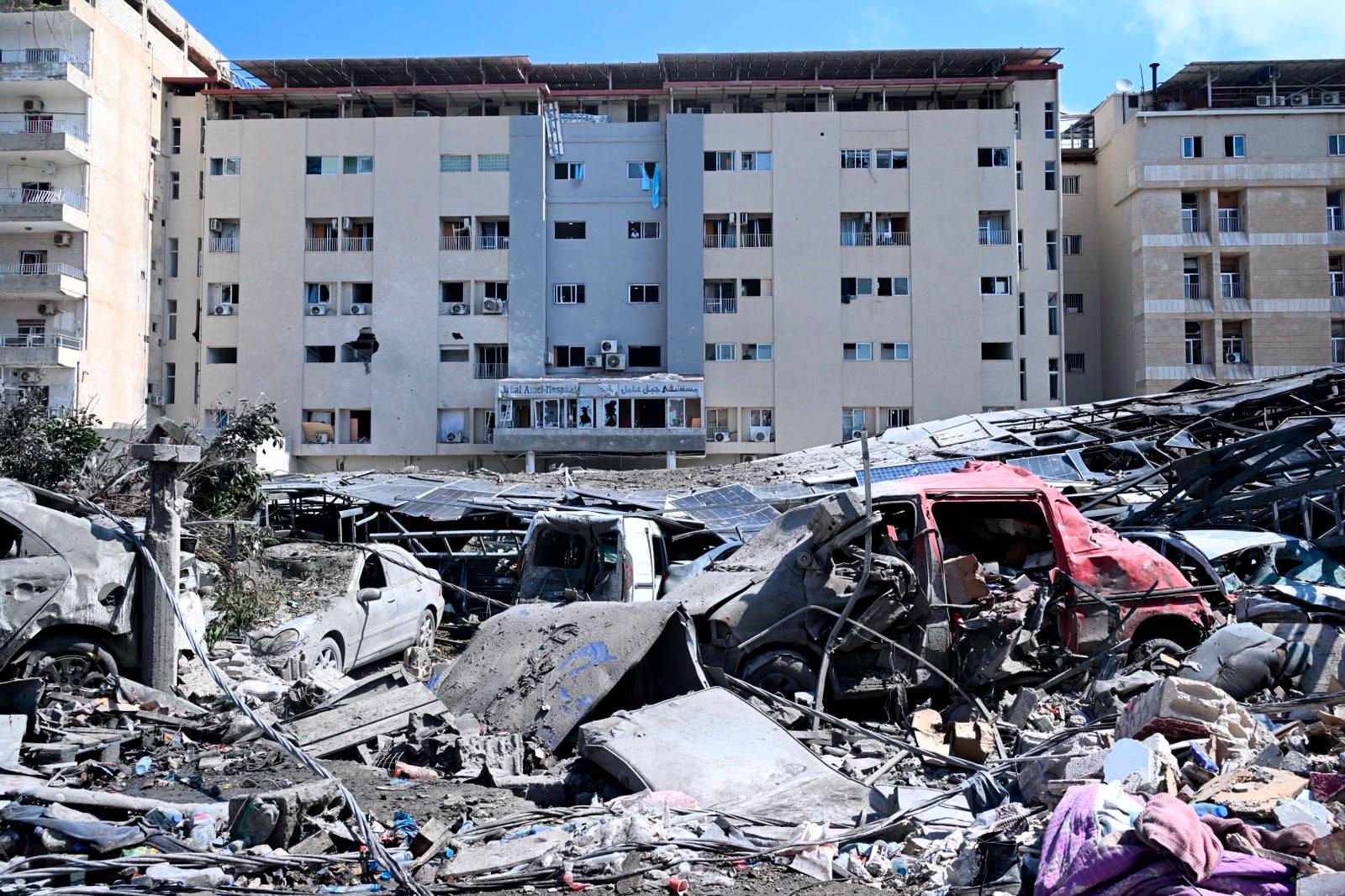
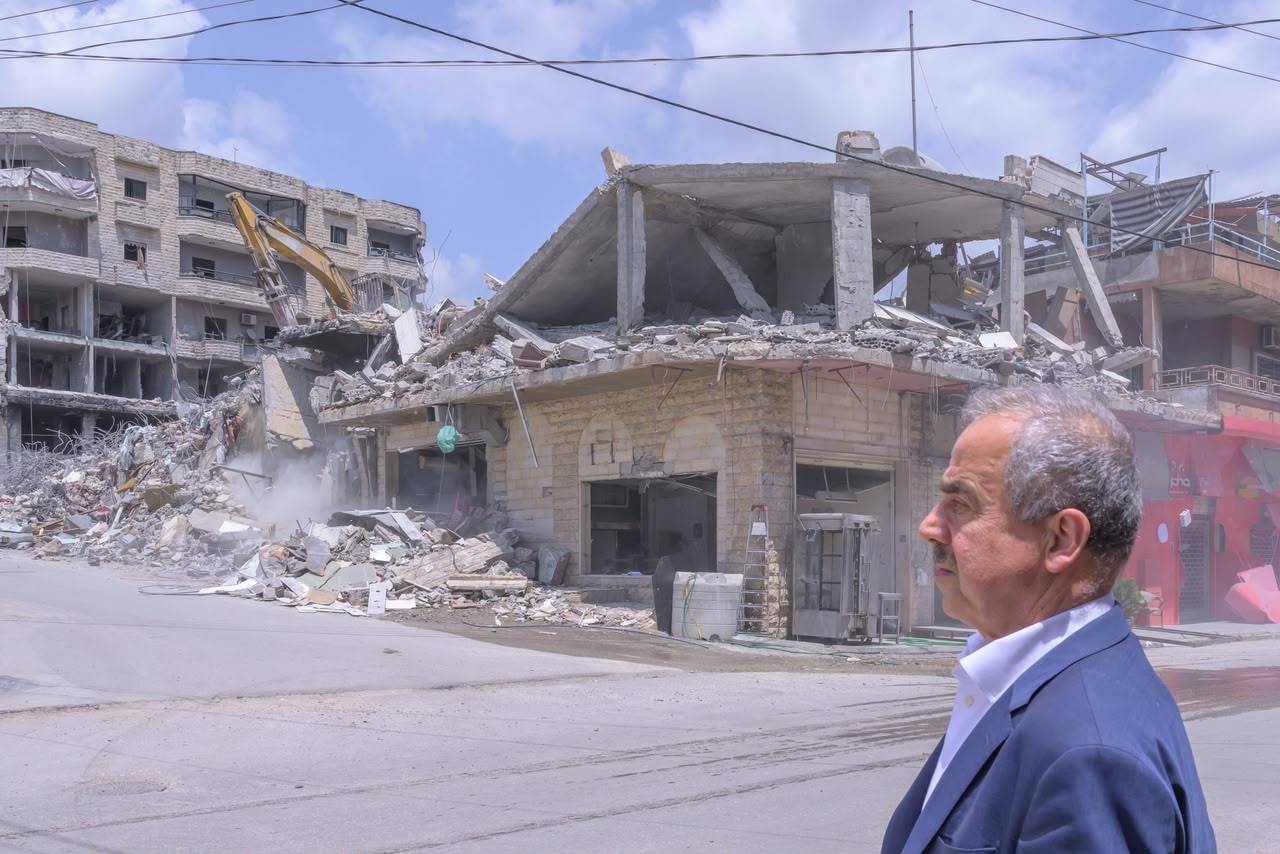
A colleague explains the ruins. A gutted, burned apartment means a drone struck it in an assassination operation. A mound of rubble means a fighter jet tore down the building, burying those who failed to escape.
You stare at debris tangled with electricity cables. Here are the remains of a balcony where someone once drank tea and rested after working in a field or garden. There are the remains of beds made for sleep, and perhaps for dreams. A coffee pot has lost its purpose forever. The windows died with their walls.
How difficult it is to live near a man named Benjamin Netanyahu. It became harder after the “Sinwar Flood.”
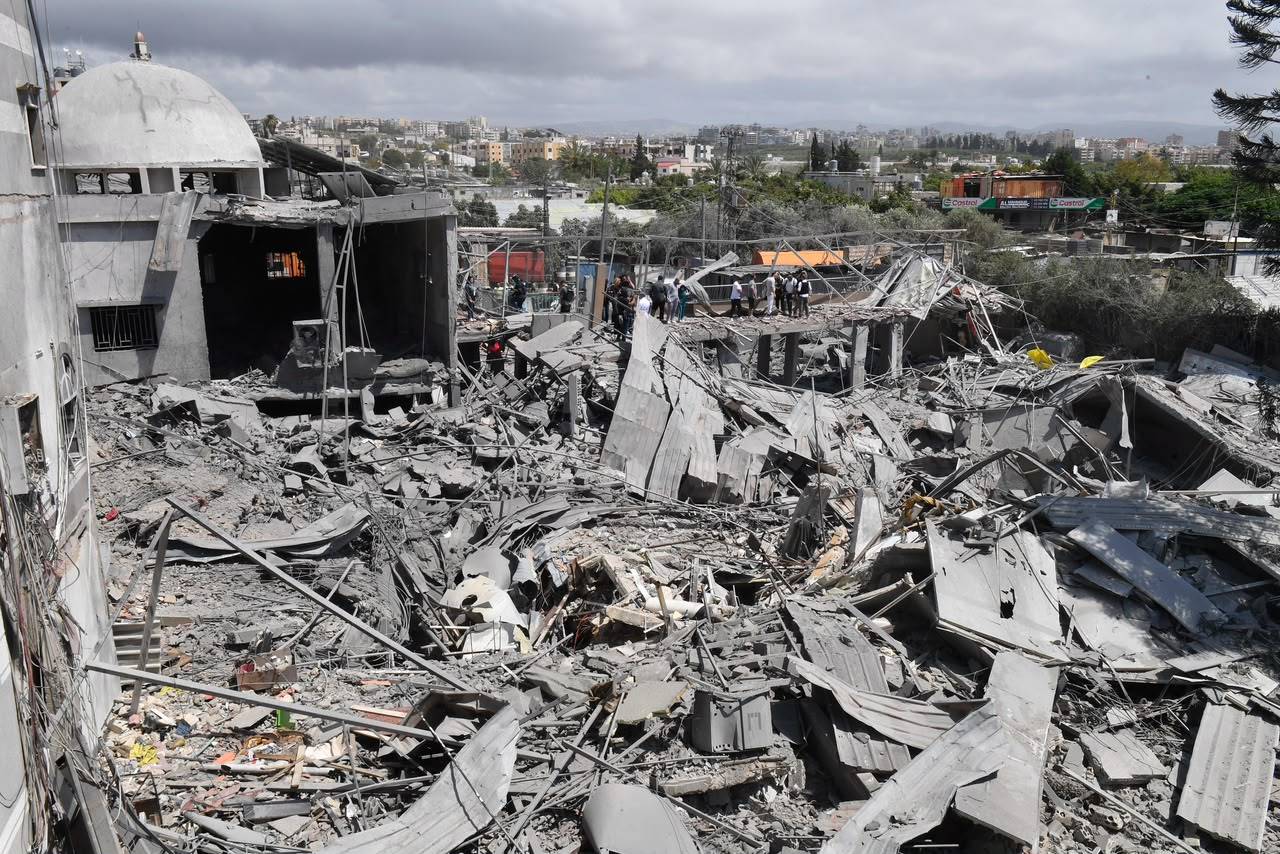
A Lebanese army soldier advised us not to go farther. The road leads to Ali al-Taher hill, he said. The occupation has turned it into a killing zone and spares nothing that moves.
In the south, people say the hill, whose outskirts the Israeli army has approached, contains tunnels and operations rooms used by Hezbollah fighters. They say Israel is preparing to seize it as soon as the restraints Donald Trump imposed on its movements begin to loosen.
Ali al-Taher has acquired unusual symbolic importance. Experts believe Israel may be willing to bear the losses required to capture it.
We followed the soldier’s advice and settled for inspecting the city’s wounds, including its commercial markets, which the occupation army had condemned to death, leaving what resembled a mass grave.
Then came a buzzing sound from the sky.
My colleague Thaer Abbas said it was an Israeli drone. It circled overhead as if reminding those below that they lived at its mercy, that it could erase them whenever it chose, monitor their movements and count their breaths.
I had heard drones over Beirut before. But near Ali al-Taher, the sound was like knives moving through arteries.
It reminds those beneath it that the occupation’s reach is long. It reminds them they lost the war.
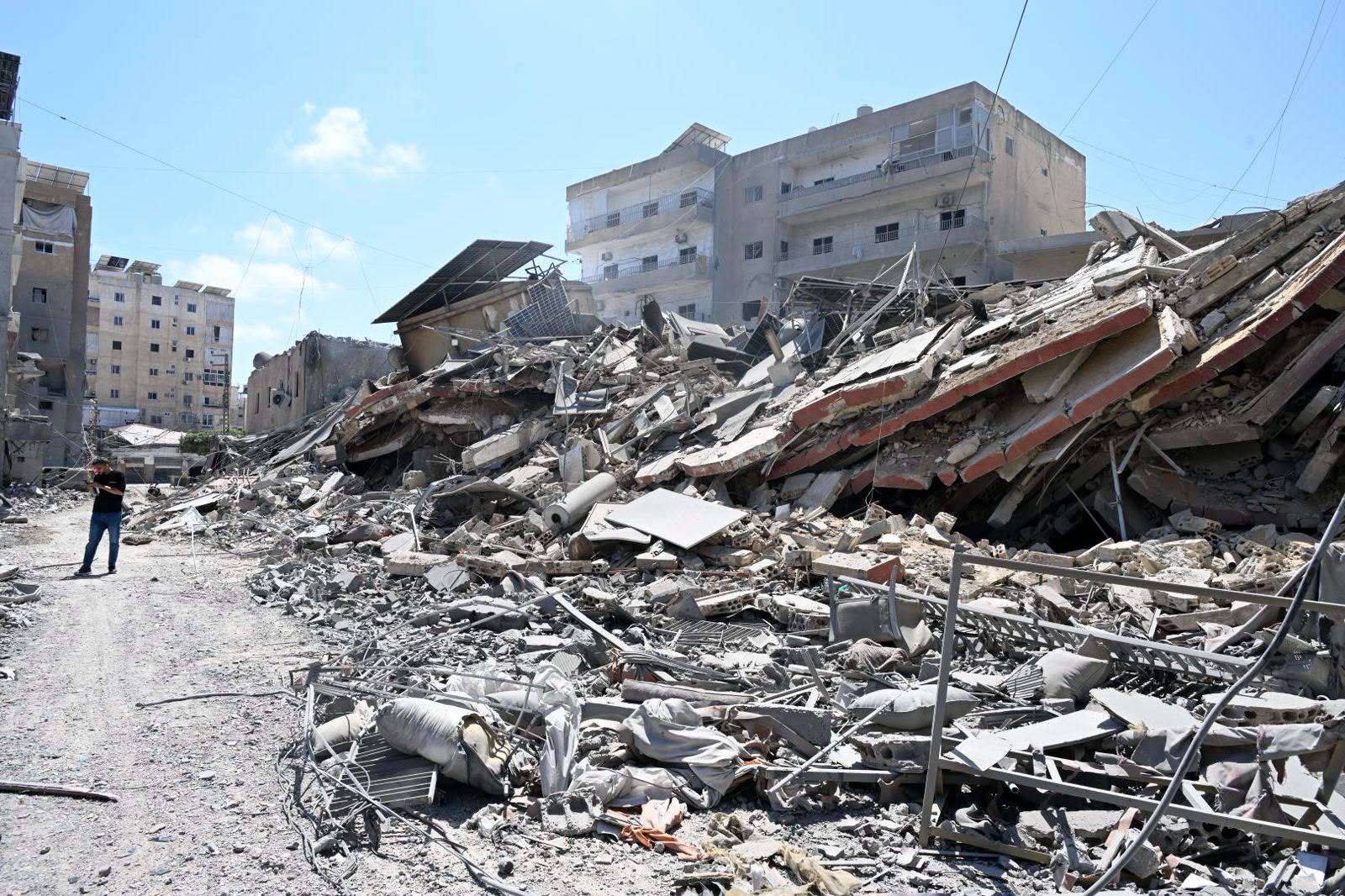
In Nabatieh, people say that what the city endured, despite its horror, was far less severe than what happened to the border villages now in the Israeli army’s grip.
The Israeli army perfected their complete or near-complete erasure, making the return of residents impossible. It left no roof and no wall. It did not spare the trees or electricity poles.
It is frightening to hear that dozens of border villages now resemble Gaza.
Bodies are said to remain beneath the rubble of crushed villages. Drones strike at bulldozers whenever they try to approach, preventing families from recovering their loved ones and shrouding them with handkerchiefs soaked in tears and handfuls of soil.
How cruel for a homeland to become a grave, or a grave in the making.
A man familiar with the map began listing the villages and what remained of them. He feared another round in which Israeli forces would advance towards Ali al-Taher, perhaps encouraging them to move towards other hills.
Israel’s ambitions in Lebanon, he reminded us, are old, particularly its ambitions over the country’s water.
A visitor may hear that the fate of the “Ali al-Taher Strait” is tied to that of the Strait of Hormuz.
Anyone following events needs no reminder of the Iranian thread linking southern Lebanon to the region’s wider crisis. The issue goes beyond Lebanon’s appearance in the first clause of the US-Iranian memorandum of understanding under the heading of a ceasefire.
The Iranian connection did not begin with the memorandum. It is deeper and older.
On the road to Tyre and from there to Nabatieh, portraits tell the story: Hassan Nasrallah and his comrades, Khomeini, Khamenei senior with Khamenei junior, and Qassem Soleimani.
There are also portraits of Nabih Berri. We passed near his stronghold in Msayleh, where we had previously visited and interviewed him.
I felt sorrow as I watched Lebanese army soldiers. The Israeli army had destroyed the military’s positions south of the Litani River and killed dozens of its troops.
The army’s story is a tragedy within a country whose story is itself a tragedy.
How difficult it is for an army to be strong in a fragile country, one accompanied by division since its birth and unable to escape it at every major national juncture.
The Lebanese army does not lack competence or courage. What it has always lacked is the firm backing of a unified political decision.
It is repeatedly called upon to carry out difficult missions beyond its capabilities and equipment, without a clear and unambiguous political mandate.
The story did not begin in recent years.
It began when the late Lebanese army commander, General Emile Boustany, signed the Cairo Agreement with Palestinian leader Yasser Arafat.
Lebanon’s authorities were forced to surrender part of the country’s sovereignty to avoid a civil war that would come later.
Lebanon was effectively assigned the role of an open front against Israel while the other fronts fell silent, particularly the Syrian Golan front after the 1973 war.
Southern Lebanon was left suspended on the high-voltage line of military conflict with Israel.
In 1982, Israel invaded Lebanon and occupied Beirut. The Lebanese National Resistance Front, known as Jammoul, emerged.
In the mid-1980s, Hafez al-Assad ordered it removed in favor of the “Islamic Resistance” represented by Hezbollah.
The Lebanese-Israeli border was transformed into an Iranian-Israeli border, with the 2006 war becoming one episode in that confrontation.
For decades, Lebanon’s tragedy was marked by collapses and assassinations.
The grave of Kamal Jumblatt. The grave of BaShir Gemayel. The grave of Rene Moawad. The grave of Rafic Hariri.
Everyone who tried to reclaim Lebanese decision-making was beheaded, despite their different positions and methods.
On the return journey, I remembered a southerner with whom I had maintained a dialogue for more than three decades.
He was Mohsen Ibrahim, the former secretary-general of the Organization of Communist Action and the Lebanese National Movement.
Ibrahim acknowledged that “the National Movement burdened Lebanon with more than it could bear when it went too far in embracing the Palestinian resistance.”
One day, he surprised me by saying: “Hezbollah is also burdening Lebanon with more than it can bear.”
He spoke years after the assassination of Rafic Hariri and Hezbollah’s military intervention in Syria to save Bashar al-Assad’s government.
On the way back, we saw a UNIFIL convoy leaving, never to return.
The international presence along the Lebanese-Israeli border was sometimes useful but always powerless.
The force operated amid Israeli violations it could not prevent and above Hezbollah tunnels being prepared for the next war, which it could do little but ignore.
Lebanon today faces a predicament more difficult than any it has known.
After the “Sinwar Flood,” Hezbollah chose to enter the battle in “support of Gaza.” After the assassination of Iranian Supreme Leader Ali Khamenei, it chose to wage a war of “revenge.”
The results of both wars can be seen in the occupation of parts of southern Lebanon.
Israel changed its military doctrine after the “Flood.” It no longer accepts living alongside what it calls threats across its borders.
It chose instead to enter the territory of others and establish “safe zones.”
It has clearly decided to remove Lebanon from the military side of its conflict.
That has coincided with international pressure on Lebanon to extend its authority across all its territory through its legitimate forces alone.
That means disarming Hezbollah, or restricting its weapons, as the softer formulation puts it.
Neither Hezbollah nor Iran accepts this.
Hezbollah’s insistence on retaining its weapons has deepened estrangement and prompted talk of other formulas for coexistence, or of a softer form of divorce.
Southern Lebanon hangs from a rope stretching between the situation at “Ali al-Taher” and the conflict in the Strait of Hormuz.
Lebanon itself hangs over a crisis among its constituent communities, threatening to confirm that it lost the war in the south and is preparing to lose it in the capital as well.