Lebanon, Israel Move Toward Implementing Withdrawal Agreement, US Officials Say

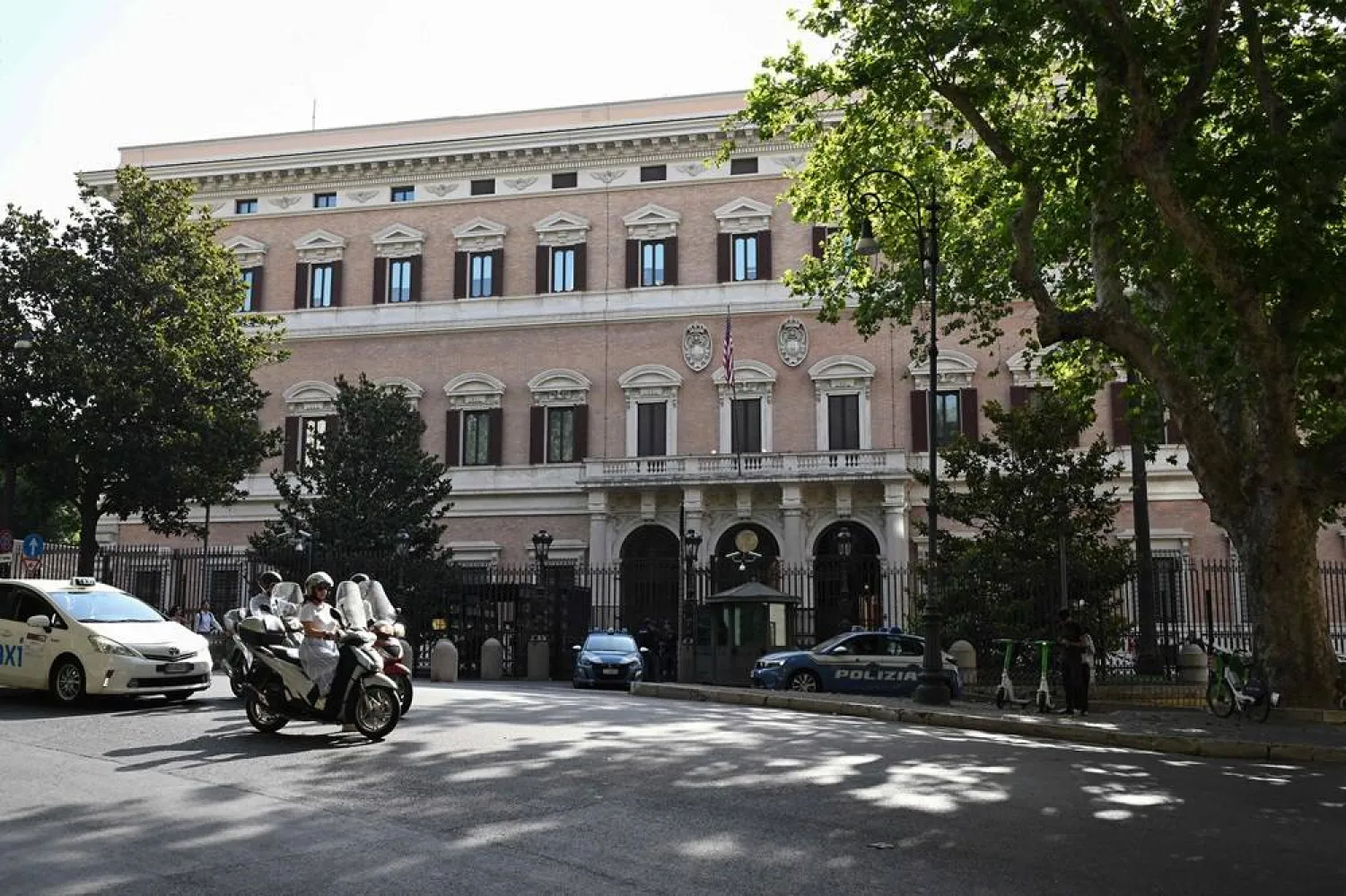
This photograph shows the US embassy in Rome on July 14, 2026, on the first day of talks between the Lebanese and Israeli delegations on the backdrop of a regional escalation between Washington and Tehran. (AFP)
TT

Lebanon, Israel Move Toward Implementing Withdrawal Agreement, US Officials Say

This photograph shows the US embassy in Rome on July 14, 2026, on the first day of talks between the Lebanese and Israeli delegations on the backdrop of a regional escalation between Washington and Tehran. (AFP)

After two days of US-mediated talks in Rome, Lebanon and Israel took steps toward implementing “pilot zones” in southern Lebanon where Israeli forces would withdraw and turn over control to the Lebanese army, the US State Department said Wednesday. 

The State Department said in a statement that the talks were “productive” and the parties “agreed on the structure and guidelines for the pilot zone process, to be finalized and implemented in the coming days.” 

There was no immediate statement from Lebanon or Israel on the outcome of the negotiations. 

Lebanon and Israel announced a “framework agreement” on June 26 laying out a plan for Israeli forces to withdraw from the large swathes of southern Lebanon they are occupying, in exchange for disarmament of the Iran-backed Hezbollah group. 

The deal was supposed to begin with two “pilot zones” where the Israeli military is to turn over control to the Lebanese army, which would clear the areas of any Hezbollah presence. 

However, implementation on the ground had stalled ahead of this week’s talks in Rome. 

Lebanese President Joseph Aoun, who is slated to visit Washington on July 21, said in a statement ahead of the Rome talks that instructions had been given to the Lebanese delegation “to demand the immediate withdrawal of Israeli forces from the two pilot zones before any further discussions.” 

Wednesday's statement did not specify where the pilot zones would be, but Lebanese and Israeli officials previously said they would include the towns of Froun, Ghandouriyeh and Zawtar. 

The designated zones generated some controversy in Lebanon, because Israeli troops were not present in most of the selected area to begin with, raising questions about how a withdrawal could take place. The Lebanese army had pushed for pilot zones that were larger and included more area occupied by Israeli forces. 

The latest Israel-Hezbollah war began when Hezbollah fired missiles across the border on March 2, two days after the US and Israel attacked Iran. 

Hezbollah and Iran had sought to link the end of the war in Lebanon to the outcome of broader US-Iran talks. The Lebanese government, trying to minimize Iran’s influence, aimed to keep the two tracks separate and negotiate a ceasefire directly with Israel. 

The June 26 Lebanon-Israel deal also envisions steps toward an eventual peace agreement between the two countries, which technically remain in a state of war nearly 80 years after Israel’s establishment. 

The State Department said that following implementation of the pilot zones, “We will move to expanded technical talks ... with the aim of reaching a comprehensive agreement between Israel and Lebanon.” 

Hezbollah has been vehemently opposed to the direct Lebanon-Israel talks and has said it will not abide by the agreement and has no plans to disarm. Israeli officials, meanwhile, have said publicly that they plan an extended occupation of southern Lebanon. 


Yemeni Foreign Ministry Welcomes Joint Qatari-German Condemnation of Houthi Attacks

11 March 2025, Yemen, Sanaa: An Armed Houthi carries a gun during a pro-Palestine rally in Sanaa. (dpa)
TT

Yemeni Foreign Ministry Welcomes Joint Qatari-German Condemnation of Houthi Attacks

11 March 2025, Yemen, Sanaa: An Armed Houthi carries a gun during a pro-Palestine rally in Sanaa. (dpa)

Yemen’s Ministry of Foreign Affairs and Expatriates welcomed on Sunday the joint statement by Qatar and Germany, which strongly condemned in the ongoing attacks carried out by Houthi militias in Yemen and against Saudi Arabia.

In a statement, the ministry commended both countries for expressing full solidarity with the Yemeni government and Saudi Arabia, and for reaffirming their firm commitment to Yemen's unity, sovereignty, independence, and territorial integrity.

The ministry praised the two nations' call on Iran to cease arming and supporting the militias, as well as their emphasis on the need for the Houthis to immediately halt all military actions and stop threatening and targeting civilian maritime navigation.

The ministry stressed that the threat posed by the Iranian-backed Houthi militias is no longer confined to Yemen and the region, but has become a direct threat to international peace and security.

It urged Yemen’s partners and the international community to translate these stances into practical, decisive measures, foremost among them enforcing the arms embargo against the militias, drying up their sources of funding, and holding them accountable for their crimes, adding that the security of Yemen, the region, and the world is indivisible


Yemen Army Neutralizes 86 Houthis, Destroys 64 Military Vehicles

Government forces are pressing ahead with counterattacks in Marib and Al-Jawf. (Military media)
TT

Yemen Army Neutralizes 86 Houthis, Destroys 64 Military Vehicles

Government forces are pressing ahead with counterattacks in Marib and Al-Jawf. (Military media)

Yemeni government forces announced on Sunday that 86 Houthi fighters and commanders were neutralized, and 64 military vehicles and pieces of equipment were destroyed or damaged, during 639 strike operations carried out across multiple fronts in recent hours.

In a statement, Yemeni Armed Forces spokesperson Majid Al-Nuzaili said the operations were conducted with air support from the Saudi-led coalition, targeting Houthi militia positions, gatherings, fortifications, and weapon caches.

The operations consisted of 24 airstrikes and 560 field artillery, 27 drone, and 28 rocket launcher strikes.

Al-Nuzaili added that government troops, backed by the Popular Resistance, are continuing offensive operations and counterattacks on the Marib, Al-Jawf, Taiz, and Lahij fronts as part of Operation Dawn of Yemen.

Forces are pressing ahead with counterattacks in Marib and Al-Jawf while clearing liberated areas of landmines and explosive devices, he said.

Meanwhile, in southwestern Taiz, troops are fighting to break the siege on the city, repel Houthi attacks and infiltration attempts, and recapture several areas.

Al-Nuzaili also confirmed that army forces repelled a Houthi assault and foiled an infiltration attempt on the Lahij fronts in southern Yemen.


Syria Destroys 400 Mn Captagon Pills in Major Drug Haul

Syrian authorities burn seized narcotics, including captagon pills, on Sunday, Nov. 22, 2026. (SANA)
TT

Syria Destroys 400 Mn Captagon Pills in Major Drug Haul

Syrian authorities burn seized narcotics, including captagon pills, on Sunday, Nov. 22, 2026. (SANA)

Syrian authorities on Sunday announced the destruction of large quantities of narcotics, including 400 million captagon pills seized by security forces in multiple operations.

"Large quantities of narcotic and psychotropic substances seized during various security operations were destroyed in batches," the drug enforcement department announced in a statement carried by state news agency SANA.

It added that the quantities destroyed included "400 million captagon pills, 12.2 tons of hashish, in addition to 2.3 tons of cannabis plants, six kilograms of heroin, as well as 5.4 million narcotic pills".

"Tools and equipment used in smuggling, concealment, transport, and manufacture, including chemical substances," were also destroyed.

Synthetic stimulant captagon became Syria's largest export after the civil war began in 2011, flooding the region and becoming a key source of illicit funding for now ousted Syrian president Bashar al-Assad.

Syria's new authorities who took power in December 2024 have been working to combat the captagon trade.

Khaled Eid, the head of the drug enforcement department, announced in June that authorities "carried out 1,550 operations to seize and foil" drug smuggling attempts since Assad's fall, according to SANA.

He said authorities dismantled 90 international smuggling networks, shut down 17 captagon manufacturing plants, and seized 697 million captagon pills and 15 tons of hashish during those operations.