
Komala: A Frequent Target of Iranian Attacks in Iraqi Kurdistan

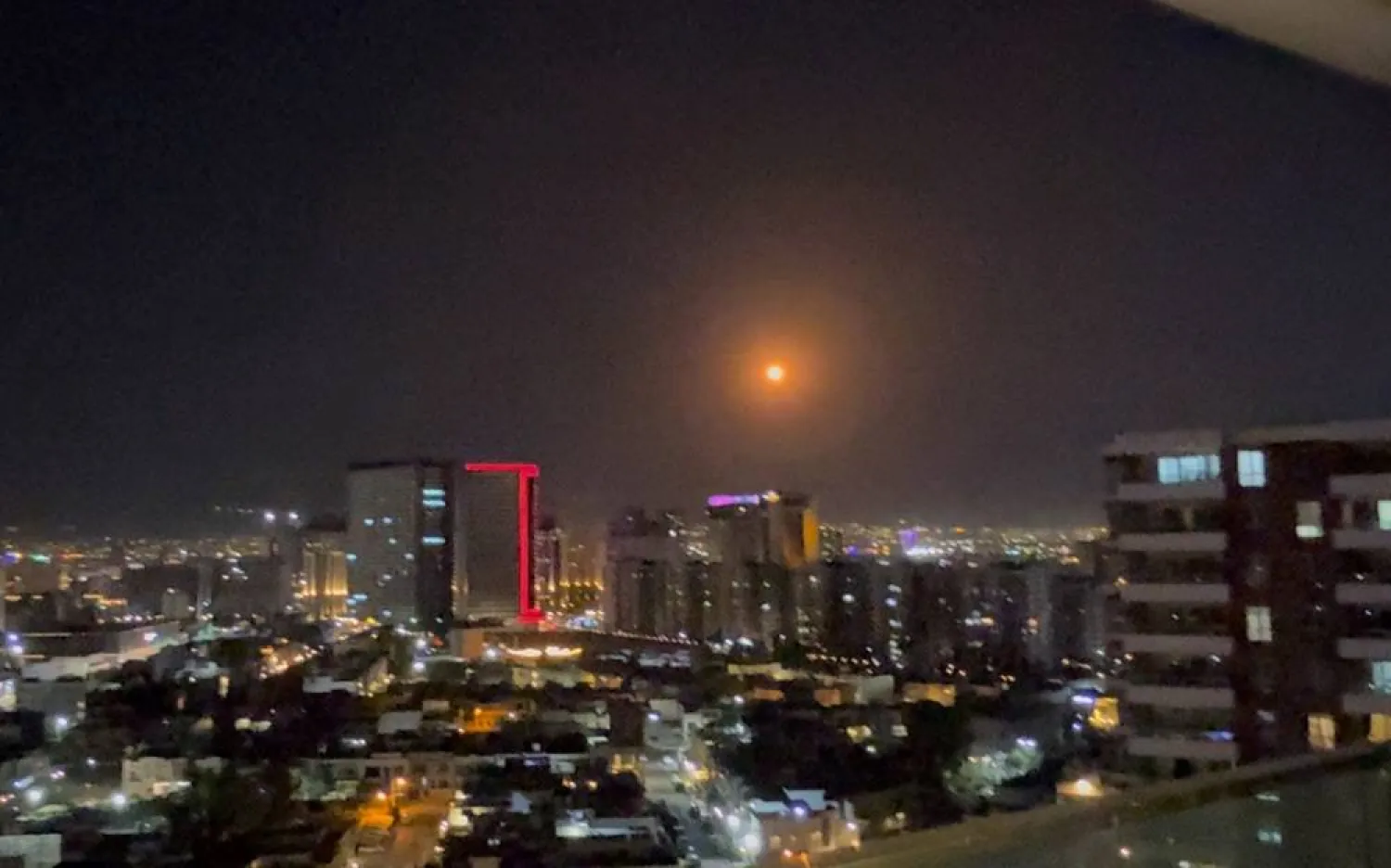
A drone is intercepted in the sky over Erbil, Iraq, July 15, 2026, in this screengrab obtained from a social media video. (Dlawer/X/via Reuters)
TT

Komala: A Frequent Target of Iranian Attacks in Iraqi Kurdistan

A drone is intercepted in the sky over Erbil, Iraq, July 15, 2026, in this screengrab obtained from a social media video. (Dlawer/X/via Reuters)

At least nine people were killed and others wounded on Friday in a missile and drone attack suspected of having been carried out by Iran against an Iranian Kurdish opposition group in the Iraqi Kurdistan Region, a group official said.

The attack targeted positions belonging to the Komala Party of Iranian Kurdistan in the Zargwezela area near Sulaymaniyah, the official said, requesting anonymity for security reasons.

The group said Iran was behind the strike, the official added. Tehran did not immediately claim responsibility.

Iran has previously attacked Iranian Kurdish opposition groups based in the Kurdistan Region.

Abdullah Azarbar, a member of the Politburo of the Komala Party, said the attack began at around 6 a.m. and involved eight large bunker-busting missiles.

Nine members of the group’s Peshmerga forces were killed and three others seriously wounded, he added. Three missiles struck the headquarters where the casualties occurred.

A security source had earlier said a party headquarters in the Surdas subdistrict of Sulaymaniyah province had been hit by missiles. Authorities opened an investigation to determine the circumstances of the attack and identify those responsible, the source said.

The Kurdistan Region Security Agency said seven missiles struck three areas in Sulaymaniyah province early on Friday.

Four landed in Zargwezela, one in Qasardi village and two near Tal Kobani in the Qaradagh area, the agency said. Its teams were still assessing casualties and material damage.

The Kurdistan Region Counter-Terrorism Service had earlier said coalition forces intercepted and destroyed eight explosive-laden drones over Erbil early on Friday. No casualties were reported.

Residents of Sulaymaniyah and Halabja provinces said they heard loud explosions in the early hours of the morning.

The Kurdistan Region Presidency condemned the missile and drone attacks on Sulaymaniyah and Erbil provinces, calling them a “dangerous development and a flagrant violation” of Iraqi sovereignty.

It warned that continued attacks could threaten Iraq’s stability and undermine efforts to strengthen security and peace in the region.

Komala repeatedly targeted

The Komala Party of Iranian Kurdistan is one of Iran’s oldest opposition groups. Founded in the late 1960s as a leftist Kurdish movement, it rose to prominence during the unrest that followed Iran’s 1979 revolution.

The group later entered into armed conflict with the new authorities over Kurdish autonomy and political freedoms.

After years of fighting inside Iran, Komala moved much of its operations and many of its bases to Iraq’s Kurdistan Region, where it established political and military headquarters and camps.

It has since faced repeated Iranian attacks, particularly by Iran’s Revolutionary Guards, which accuses Iranian Kurdish opposition parties of seeking to destabilize the country.

Komala combines political opposition to Tehran with advocacy for Kurdish rights in Iran. Tehran says such groups pose a security threat.

The 2022 “Woman, Life, Freedom” protests renewed attention on Iranian Kurdish opposition parties, although most remained based outside Iran.

Since the war between Iran and the United States began in February, no independent tally has established a final figure for the number of attacks on Komala bases.

Available reports, however, indicate that Iranian Kurdish opposition headquarters in Iraq’s Kurdistan Region were hit by a wave of missile and drone strikes during the conflict.

According to statements by the party and its allies, sites belonging to Iranian Kurdish opposition groups were repeatedly attacked, including bases linked to Komala and other parties in Erbil and Sulaymaniyah provinces.

The Coalition of Political Forces of Iranian Kurdistan also said missile strikes had targeted Peshmerga positions.

Human rights reports and Kurdish sources said bases belonging to Iranian Kurdish opposition parties, including Komala, were among the targets of dozens of missile and drone attacks during the war.

Dozens of Israeli Settlers Attack Flashpoint West Bank Village

Israeli settlers jump over the garden wall as they make their way towards a Palestinian home under construction in the village of Qusra, south of the city of Nablus in the Israeli-occupied West Bank, which has faced escalating settler violence over the past month, on August 29, 2026. (AFP)
TT

Dozens of Israeli Settlers Attack Flashpoint West Bank Village

Israeli settlers jump over the garden wall as they make their way towards a Palestinian home under construction in the village of Qusra, south of the city of Nablus in the Israeli-occupied West Bank, which has faced escalating settler violence over the past month, on August 29, 2026. (AFP)

Dozens of Israeli settlers attacked the Palestinian village of Qusra in the northern occupied West Bank on Saturday, residents and the military said, after nearly three weeks of tension in the area.

Earlier in August a group of rogue settlers began blocking supplies from entering Palestinian houses on the outskirts of the village near Nablus, trapping residents inside and drawing domestic and international condemnation.

Weeks later, Israeli forces continue to operate in the area while settlers still roam the surrounding hills.

On Saturday, Qusra resident Yussef Abdul Kareem Hassan told AFP that a handful of villagers were doing work on a house when they were approached by a small group of settlers.

The settlers then called for backup and returned with dozens more, Hassan said, adding that they had surrounded the Palestinians inside the house and began throwing stones.

AFP footage of Qusra on Saturday showed dozens of Israeli forces deployed to the site.

The Israeli military said soldiers and border police forces were dispatched "following reports that Israeli rioters had arrived in the area and that violent clashes had occurred, including stone-hurling toward Palestinians and additional civilians."

"Upon their arrival, the security forces identified dozens of rioters who had barricaded themselves inside a Palestinian home while Palestinian residents were inside," a military statement said, adding that it was "aware of reports of Palestinian injuries".

It said forces had worked to remove the settlers from the house, separate the groups, and confiscate vehicles "that were suspected of having been used to reach the area."

The vehicles would be used as evidence in a police investigation that has been opened, it said, adding that forces continued to operate in the area "to prevent further disturbances and restore order".

"The security forces strongly condemn all forms of violence," it said.

Violence by Israeli settlers towards Palestinians in the West Bank has persisted for years, often with little or no legal consequence, but recent months have seen a surge in attacks.

More than 500,000 Israelis live in settlements in the Palestinian territory, which are illegal under international law, among some three million Palestinians.

Israel has occupied the West Bank since 1967.

According to an AFP tally based on data from the Palestinian health ministry, Israeli forces or settlers have killed at least 1,103 Palestinians in the West Bank, including both fighters and civilians, since the start of the Gaza war in October 2023.

Israeli figures show at least 48 Israelis, including civilians and security personnel, have been killed in Palestinian attacks or during Israeli military operations during the same period.


Syria: Local Factions Clash Overnight in Sweida

Syrian army soldiers stand on the chassis of a mine-clearing tank of the Syrian Ministry of Defense's military engineering department during a demining operation in Qarah in the Damascus countryside on August 23, 2026. (Photo by Bakr ALkasem / AFP)
TT

Syria: Local Factions Clash Overnight in Sweida

Syrian army soldiers stand on the chassis of a mine-clearing tank of the Syrian Ministry of Defense's military engineering department during a demining operation in Qarah in the Damascus countryside on August 23, 2026. (Photo by Bakr ALkasem / AFP)

Armed clashes broke out in the Syrian city of Sweida late on Friday following a dispute between a group of factions that escalated into gunfire and the use of various weapons and projectiles, according to local sources and media reports cited by the German news agency dpa.

Syria TV quoted local sources as saying the clashes took place between a faction known as the “Security Office” of the National Guard, affiliated with Salman al-Hijri, the son of Hikmat al-Hijri, and local factions from the western countryside of Sweida.

A loud explosion was heard over the city. It was caused by a rocket-propelled projectile exploding in the air.

According to the sources, gunfire continued accompanied by explosions caused by RPG rounds and grenades near the provincial government building.

The Sweida 24 network reported that Ghaith Qantar, a commander in the security office, was wounded by gunfire during the clashes. It said the fighting also damaged several homes and sparked panic among civilians.

Sweida province continues to see intermittent clashes between Syrian government security forces and forces aligned with cleric Hikmat al-Hijri, despite a ceasefire that took effect on July 20, 2025.

Government security forces and al-Hijri’s forces share control of the province following the deadly violence that erupted on July 13 last year and killed more than 2,000 people, according to local estimates. The city of Sweida remains under the control of forces loyal to al-Hijri.


Israel Seeks New Rules of Engagement with Hezbollah Over Ali al-Taher

A Lebanese woman inspects damage caused by Israeli airstrikes on the southern Lebanese town of Arabsalim (AP)
TT

Israel Seeks New Rules of Engagement with Hezbollah Over Ali al-Taher

A Lebanese woman inspects damage caused by Israeli airstrikes on the southern Lebanese town of Arabsalim (AP)

Israel’s escalation in southern Lebanon on Thursday appeared aimed at establishing new rules of engagement with Hezbollah, under which it would launch airstrikes deeper into Lebanese territory if the group sought to prevent Israeli forces from advancing toward the strategic Ali al-Taher Heights.

This has unfolded alongside Iranian rules of engagement centered on threats of military intervention if Beirut or its southern suburbs are targeted.

A Lebanese woman was killed on Thursday in an Israeli strike on the southern Lebanese town of Arabsalim. The Israeli military said the strike was in response to Hezbollah launching two drones toward its forces in Ali al-Taher.

The strikes on the town marked a notable escalation after nearly two weeks in which detonations and airstrikes had remained confined to towns inside the Yellow Line and its surroundings, extending into Lebanese territory.

Rules of engagement with Hezbollah

Security sources in southern Lebanon viewed the latest escalation as an Israeli attempt to establish rules of engagement with Hezbollah by expanding the scope of strikes deeper into the south whenever Hezbollah fighters confront Israeli military attempts to seize the strategic heights.

The escalation has recurred whenever the Israeli military announces that its forces in the area have come under attack, the sources told Asharq Al-Awsat.

That was the case in mid-August, when the Israeli air force carried out deadly strikes on the towns of Ansar and Deir al-Zahrani in response to what it said was the wounding of three of its soldiers in Ali al-Taher.

Hezbollah has not claimed responsibility for any military operation against Israeli forces in the area, in line with a decision to maintain secrecy, according to sources familiar with the group’s political and media operations.

Israeli statements, however, point to Hezbollah military activity in the strategic heights whenever Israeli military vehicles attempt to advance there. Israeli media have reported that five explosive-laden drones have targeted Israeli troops in the area since the beginning of August.

Gradual encroachment

Israel insists on seizing the strategic heights east of the city of Nabatieh. Its efforts, however, have met with Hezbollah’s refusal to evacuate the area and hand over its facilities to the Lebanese army, in addition to Iranian threats to intervene militarily if Israel launches a large-scale operation.

Lebanese sources said the United States had curbed Israel’s push to seize the area through a major military operation, prompting Tel Aviv to pursue control through gradual encroachment.

Over the past two weeks, the Israeli military has stepped up operations aimed at “isolating” the Ali al-Taher Heights from their surroundings. It has repeatedly struck buildings within a three-kilometer radius, carrying out airstrikes on Nabatieh al-Fawqa, Dawhat Kfar Rumman and neighboring areas. The attacks destroyed dozens of homes, villas and other buildings in the area.

Detonations and incursions

The military activity has coincided with detonations and incursions deeper into Lebanese territory. The Israeli military carried out demolition operations in the towns of Haddatha, Talloussa and Mansouri, while Israeli forces advanced from Haddatha into Aita al-Jabal and set fire to areas on the town’s outskirts.

Israeli artillery also shelled Houla and Wadi al-Slouqi alongside machine-gun fire.

Lebanese officials have condemned the continued Israeli strikes on the south despite the two countries signing a US-sponsored framework agreement in June and engaging in direct negotiations. Hezbollah categorically rejects the talks and has also refused to surrender its weapons.

The Israeli military said on Friday that troops from the Golani Brigade combat team “continue to operate in the security zone in southern Lebanon to eliminate threats.”

“Over recent weeks, the troops have destroyed more than 400 terrorist infrastructure sites and located numerous weapons, including anti-tank missiles, anti-aircraft missiles, explosive devices, firearms and mortar shells,” it said in a statement.

Iranian rules of engagement

Since the ceasefire, Israeli military operations have been confined to southern Lebanon, while Iranian officials have threatened intervention if Beirut or its southern suburbs are targeted.

The latest remarks came from Major General Mohsen Rezaei, secretary of Iran’s Supreme National Security Council, in a television interview broadcast on Thursday night by Hezbollah-affiliated Al-Manar television.

Rezaei said Israel was “no longer capable of attacking Beirut’s southern suburbs or Beirut,” attributing this to “the losses Hezbollah inflicted on Israel over the past three or four months” and to Iran’s threat, which he said had been fully effective.

He said Beirut and its southern suburbs constituted a “red line for Iran,” adding that Tehran was “monitoring developments with the utmost seriousness” and that “Israel will find itself compelled to withdraw from the Lebanese territory it entered.”

Rezaei said Iran “does not interfere in the details of Hezbollah’s military structure or its field decisions,” adding that the group “now has military personnel capable of managing its affairs and making its own decisions, particularly with the rise of two new generations of young commanders.”