
Hezbollah Threatens Beirut Airport Shutdown in Defense of Iranian Flights

Hezbollah Threatens Beirut Airport Shutdown in Defense of Iranian Flights
TT

Hezbollah Threatens Beirut Airport Shutdown in Defense of Iranian Flights

Hezbollah Threatens Beirut Airport Shutdown in Defense of Iranian Flights

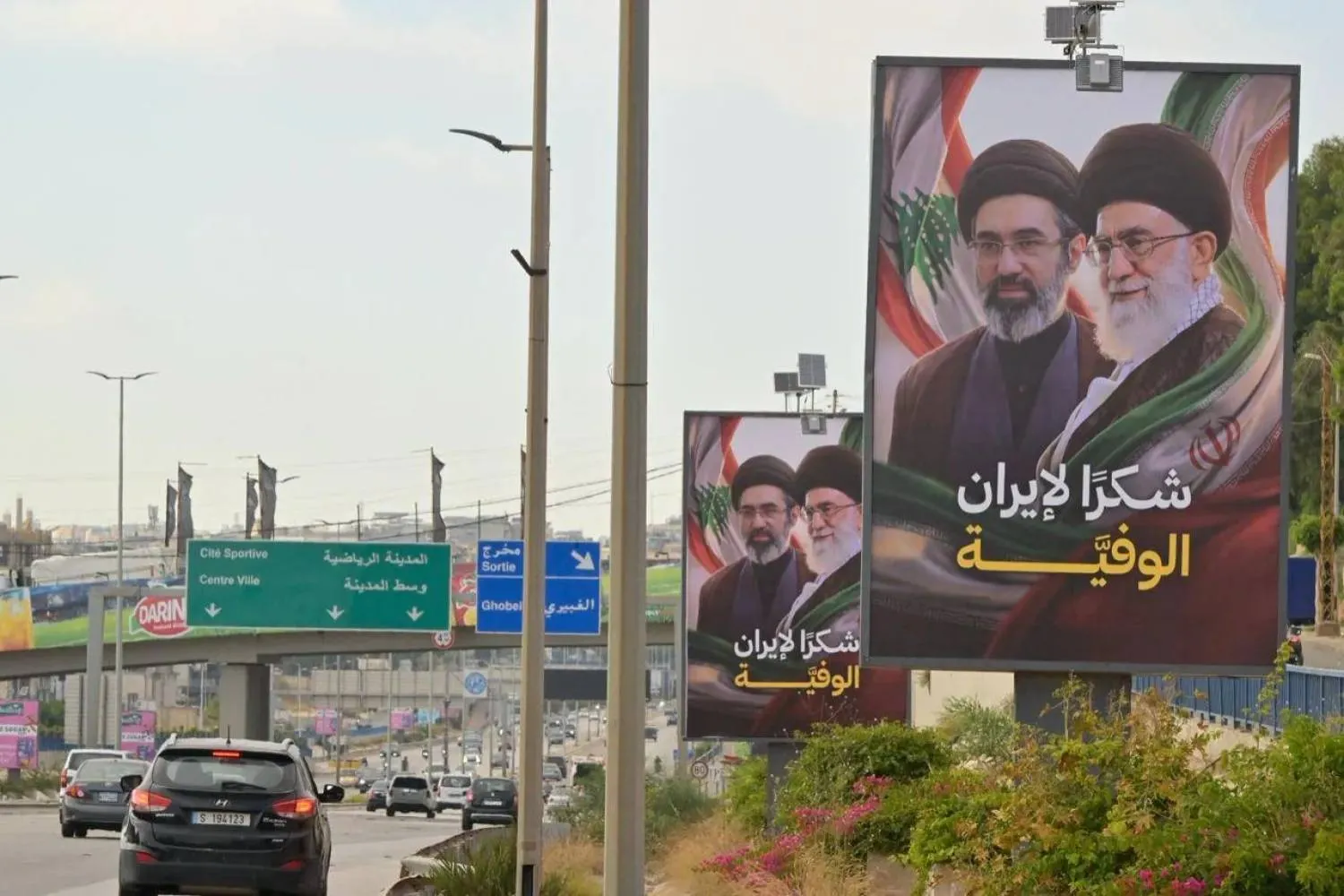
Hezbollah has opened a new front in its confrontation with the Lebanese state, with Mahmoud Qamati, deputy head of the group's Political Council, threatening to prevent aircraft from landing at Beirut's Rafik Hariri International Airport if the government's measures targeting Iranian flights continue.

Qamati's remarks came as Hezbollah stepped up its criticism of the government's policy, particularly its commitment to the framework agreement and indirect negotiations with Israel, while rejecting any attempt to separate Lebanon's course from Iran's.

In an interview with Hezbollah's Al-Manar television channel, Qamati said the issuance of visas to Iranian nationals and diplomats had nearly come to a halt, adding that Iranian aircraft were still barred from landing at Beirut airport. He argued that the government's measures were targeting Iran and its representatives in Lebanon.

Qamati said Hezbollah had so far shown patience in seeking a solution but would resort to “many peaceful methods” if the situation continued.

“Then no aircraft will land in Beirut, and no ambassador will remain in Lebanon,” he said.

He called on Lebanon’s General Directorate of General Security to resolve the issue and described the authorities’ conduct as unacceptable.

Hezbollah has repeatedly rejected government efforts to separate Lebanese decision-making from regional considerations. It opposes the framework agreement and the state’s negotiations with Israel, as well as any approach that places the Lebanese file solely in state hands and reduces Iran’s influence in Lebanon.

Gov’t Stands By Decisions

Sources at Lebanon’s Foreign Ministry told Asharq Al-Awsat that Qamati’s remarks would not change decisions already taken by the government.

The authorities would continue implementing the measures as sovereign and security decisions, they said.

The sources said the ban on Iranian aircraft was imposed after Israeli threats to target Beirut airport.

Visa requirements for Iranian nationals were reinstated after incidents showed that members and commanders of Iran’s Revolutionary Guards were present in Lebanon, prompting tighter entry procedures on national security grounds.

The sources said the visas were subject to strict criteria because of Lebanon’s delicate circumstances.

The government had decided to bar Iranian nationals from entering Lebanon after an Israeli operation targeted Iranians in Beirut, whom Tehran later identified as Revolutionary Guards commanders.

Previous Protests

Hezbollah has previously challenged government measures involving Iran.

In February 2025, it launched a political and public campaign against Prime Minister Nawaf Salam’s government after an Iranian aircraft was prevented from landing at Beirut airport.

The group organized protests near the airport demanding that the decision be reversed, but the government maintained its position.

The ban on Iranian aircraft was first imposed by the previous caretaker government during the 2024 war after Israeli threats to target the airport, when Hezbollah-aligned Public Works Minister Ali Hamieh held office.

Hezbollah Rejects Disarmament

Hezbollah also continued its campaign against the framework agreement and renewed its refusal to surrender its weapons.

Hezbollah lawmaker Hassan Ezzedine on Tuesday criticized President Joseph Aoun and the political leadership, saying that insisting on disarming the “resistance” and pursuing direct negotiations threatened national unity and served Israeli objectives.

“Disarming the resistance is tantamount to taking the lives of those who carry this rifle to defend the homeland,” Ezzedine said.

He said linking an Israeli withdrawal, reconstruction, and economic aid to disarmament amounted to accommodating Israeli demands.

Ezzedine accused the political leadership of “abandoning part of Lebanese territory ... and handing the south to the Israeli enemy,” describing this as “treason and a clear crime.”

He said the authorities had “defeated themselves” by making concessions before negotiations and held them responsible for compromising Lebanese sovereignty.

The central aim of the framework agreement was to disarm the “resistance” in a way that served Israel’s security, he said.


Iraq Closes Three Iran Crossings, Pursues Those Behind Attacks on Saudi Arabia

Travelers at the Shalamsheh border crossing between Iraq and Iran after Iraqi authorities ordered its closure as a precautionary measure following the latest drone attacks on Saudi Arabia on September 12, 2026 (Reuters)
TT

Iraq Closes Three Iran Crossings, Pursues Those Behind Attacks on Saudi Arabia

Travelers at the Shalamsheh border crossing between Iraq and Iran after Iraqi authorities ordered its closure as a precautionary measure following the latest drone attacks on Saudi Arabia on September 12, 2026 (Reuters)

Iraq closed three border crossings with Iran on Saturday, officials told AFP, after a drone attack on a Saudi Arabian pipeline that both Riyadh and Baghdad said was launched from Iraq.

An Iraqi security source and a government official told AFP that authorities ordered the closing of three border crossings with Iran.

The security source said the decision was "part of an intelligence effort to track down the perpetrators and prevent their escape... and to hinder the smuggling of drones through these crossings".

Both sources, who spoke on condition of anonymity because they were not allowed to speak to the media, could not specify when the crossings would reopen.

The closed crossings are Shalamsheh in Basra province, al-Shib in Missan and al-Mandali in the central province of Diyala.

Other border crossings with Iran are still open.

A security official said that "security forces found drone launchers near the Iraq-Iran border in the al-Tib" region, a remote part of Missan, close to the al-Shib crossing. A second security source gave the same account.

Military spokesperson Sabah al-Numan said the prime minister had approved "Iran's request to conduct a joint investigation into finding drone launch platforms near the Iraq-Iran border".

The government's security media cell said earlier that authorities "have started administrative and security reorganization operations at several border crossings".

It added that they had stepped up "intelligence activities" to determine "the breaches and violations that took place at these crossings".

It later announced that passengers stranded for hours at two crossings were permitted to pass.


Al-Halbousi Condemns Attacks on Saudi Arabia

Iraqi Speaker of parliament Mohammed al-Halbousi speaks with the news media as he departs the Department of State after meeting with Secretary of State Mike Pompeo, in Washington, on March 28, 2019. (AP)
TT

Al-Halbousi Condemns Attacks on Saudi Arabia

Iraqi Speaker of parliament Mohammed al-Halbousi speaks with the news media as he departs the Department of State after meeting with Secretary of State Mike Pompeo, in Washington, on March 28, 2019. (AP)

Speaker of the Iraqi Council of Representatives Haibat Al-Halbousi strongly condemned the attacks targeting the Kingdom of Saudi Arabia that originated from within Iraqi territory.

In a statement issued on Saturday, Al-Halbousi rejected the use of Iraq's territory or airspace to threaten Saudi Arabia's security or that of any neighboring state, describing such actions as unacceptable violations that contradict Iraq's national interests, stated foreign policy, and regional relations.

Al-Halbousi emphasized the critical need to restrict weapons exclusively to the state and its constitutional institutions under the authority of the commander-in-chief of the Armed Forces.

He stressed that enforcing state control over arms is vital to reinforcing national sovereignty, preserving domestic stability, and preventing Iraq from being drawn into wider regional conflicts.


Lebanese Army Detains Bashar Assad’s Relative on Weapons and Drugs Charges

Ousted Syrian President Bashar Assad - File Photo
TT

Lebanese Army Detains Bashar Assad’s Relative on Weapons and Drugs Charges

Ousted Syrian President Bashar Assad - File Photo

Lebanese authorities have detained a relative of ousted Syrian President Bashar Assad along with the son of a notorious drug dealer in northeast Lebanon on charges of carrying weapons and drugs, officials and the Lebanese army said Saturday.

Suleiman Assad and Ali Zeiter, son of Noah Zeiter, the suspected drug trafficker arrested last year, were detained Friday near the northeastern city of Baalbek, said the two judicial officials, who spoke on condition of anonymity because they were not authorized to speak to the media. Suleiman Assad is the son of Hilal Assad, a cousin of the ousted president, The AP news reported.

A number of Syrian officials and relatives of Assad have fled from Syria to other countries including Lebanon, after the five-decade Assad family rule came to an end in December 2024, when the opposition seized power. Bashar Assad and his younger brother, Maher, have been living in Russia.

The Lebanese army said in a statement that it detained three people, including a Syrian citizen who did not have documents proving that he is staying legally in Lebanon.

The army said they had weapons with them along with hashish, a drug that is processed from cannabis that are widely planted in northeast Lebanon. The army did not release the names but the initials of their first and family names matched those of Assad and Zeiter. The army said they were questioned under the supervision of judicial officials.

The arrest of Suleiman Assad comes weeks after Lebanon handed over to Syrian authorities a retired major general who commanded a division in Bashar Assad’s army.