


Lebanon Army Says Israeli Forces Fired Near Soldiers in South

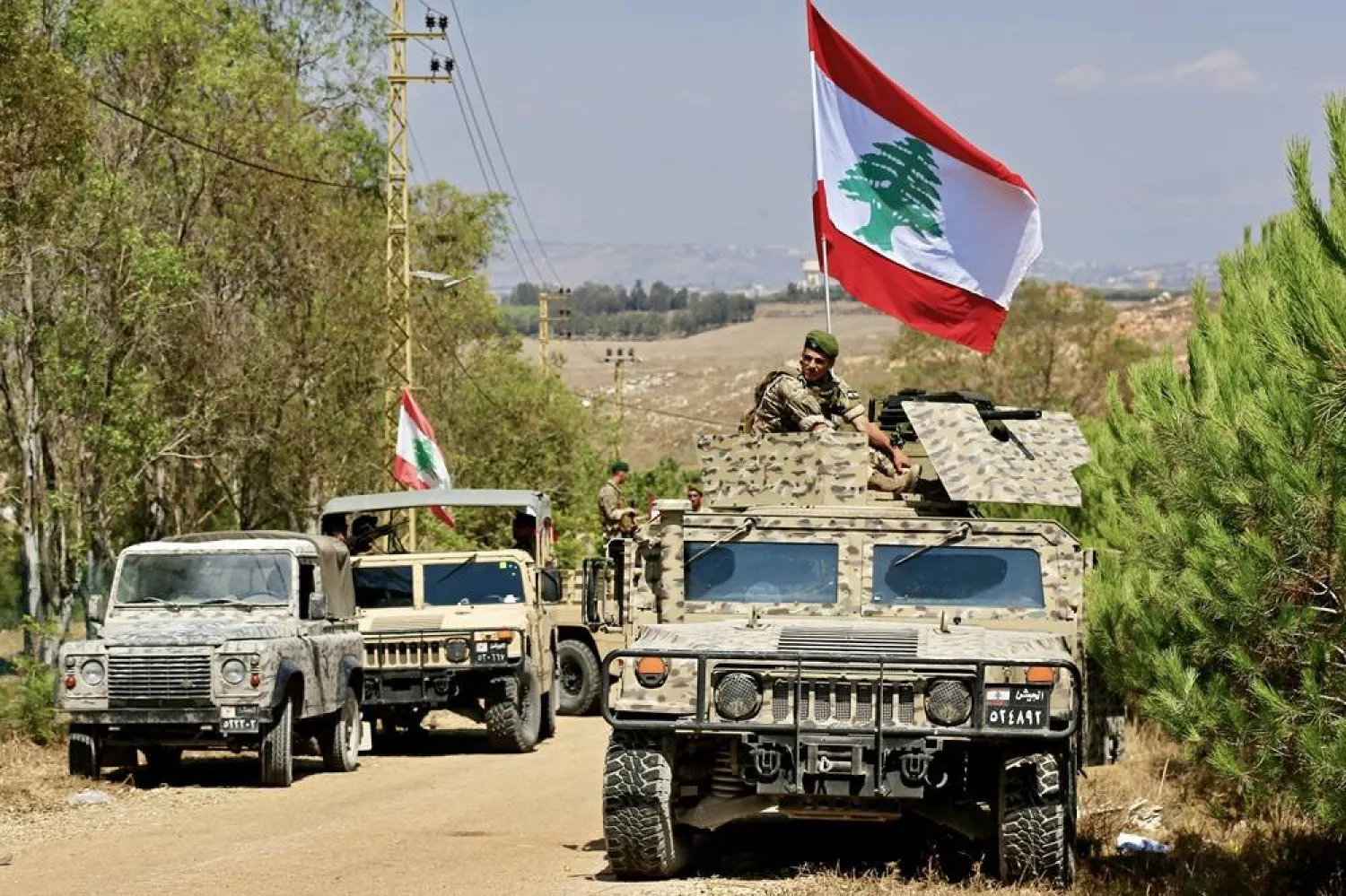
Soldiers of the Lebanese army enter Zawtar al-Gharbiya, Lebanon, 21 July 2026. (EPA)
TT

Lebanon Army Says Israeli Forces Fired Near Soldiers in South

Soldiers of the Lebanese army enter Zawtar al-Gharbiya, Lebanon, 21 July 2026. (EPA)

Lebanon's military said Tuesday that Israeli troops fired near its soldiers deploying in a so-called "pilot zone" that Israel is to withdraw from under a US-backed agreement, with Israel saying it only fired "warning shots".

The announcements came as the Lebanese army said it was deploying in those areas, and as President Joseph Aoun visited Washington, which sponsored the deal with Israel, for a meeting with his US counterpart Donald Trump.

Israel invaded Lebanon during its recent war with the Iran-backed Hezbollah group, and it has continued to occupy parts of the country despite a ceasefire.

To date, Israeli troops have only controlled the outskirts of one of the so-called pilot zones, with their occupation of other areas yet to be addressed.

The Lebanese military already has a presence in the other two pilot zones.

"Military units began deploying this morning to Zawtar al-Garhbiya" in the Nabatieh region, the army said in a statement.

An AFP correspondent saw military vehicles, one of them flying the Lebanese flag, entering the village which sits on the edge of what Israel has dubbed the "security zone".

But the Lebanese army later said Israeli forces "opened fire in the vicinity of these units," adding that the incident would hinder the deployment.

The Israeli military said it had only fired "warning shots into the air" after Lebanese soldiers entered an area that was "not part of the pilot area", and that no injuries were reported.

Insisting its troops were only deployed in Zawtar al-Gharbiya, the Lebanese army command said Israel "should address any problem through the Military Coordination Group for Lebanon (MCG4L) and through the approved coordination and communication channels, instead of carrying out attacks".

In a separate incident, the Lebanese Red Cross said that two rescuers were wounded and an ambulance severely damaged when a landmine exploded near a convoy heading to search for a missing person in an occupied area.

The Red Cross said it had received the required permits before entering, and that it was working to provide a safe passage for the wounded paramedics.

Lebanese state media also said Israeli forces briefly detained and released three men from the southern village of Shebaa near the border whose residents largely stayed despite the war.

Israel's invasion came after Hezbollah dragged Lebanon into the wider Middle East war in March with rocket attacks on Israel in support of Iran.

Lebanon and Israel signed their framework agreement last month which aims for Israel's gradual withdrawal from Lebanon and the disarming of Hezbollah, with Lebanon's army taking over security in the south.

Hezbollah has repeatedly rejected the deal and refuses to disarm, while there is no timetable for Israel's full withdrawal.

- 'Test' -

The US State Department on Monday evening announced that the Lebanese army had begun ensuring security in the villages of Zawtar al-Garhbiya, Froun and Srifa.

Israeli forces are not present in the latter two villages, which straddle the edge of the security zone, while they had deployed to the outskirts of Zawtar al-Garhbiya.

The Israeli military announced that it would "adjust its force posture in one of the pilot areas".

The Lebanese army's deployment into Israeli-occupied lands, which cover an area up to 10 kilometers (6 miles) deep into Lebanon's territory, constitutes a major test for the government, with experts expressing doubt over its ability to disarm Hezbollah.

Military expert Hassan Jouni said the military's deployment will be "a real test, first and foremost, of the Israeli army's seriousness about withdrawing" and "Hezbollah's position on the ground regarding this issue, as it rejects the principle of pilot zones and the agreement itself".

"The biggest challenge will be continuing withdrawals from other pilot zones that are actually occupied" by Israel, he added.



Hezbollah Denies Any Link to Cell Dismantled in Syria

A man waves Hezbollah flag at the Tahrir Square in Baghdad on September 26, 2026, to mark the second anniversary of killing of Hezbollah's former chief Hassan Nasrallah, in a major strike by Israel on Beirut's southern suburbs in Lebanon. (AFP)
TT

Hezbollah Denies Any Link to Cell Dismantled in Syria

A man waves Hezbollah flag at the Tahrir Square in Baghdad on September 26, 2026, to mark the second anniversary of killing of Hezbollah's former chief Hassan Nasrallah, in a major strike by Israel on Beirut's southern suburbs in Lebanon. (AFP)

Hezbollah denied on Wednesday any connection to a cell that Syrian authorities said they had dismantled in the country's south and which they accused of being affiliated with the Lebanese group.

A statement from the Iran-backed movement's media office said it "categorically denies any relationship or connection between Hezbollah and the alleged cell" and emphasized that "it has no presence whatsoever on Syrian territory and has no involvement in any security or military activity there".

On Tuesday, Syria said intelligence services and security forces "thwarted a sabotage plot in the Yarmuk basin in Daraa (province) and arrested a Hezbollah-affiliated cell composed of three individuals".

Authorities said the cell attempted "to prepare rocket launch platforms with the aim of carrying out attacks to destabilize security and stability", without specifying the target.

The Yarmuk basin area, where state media has previously reported Israeli incursions and shelling, borders the Israeli-occupied Syrian Golan Heights, as well as Jordan.

Earlier on Tuesday, Israeli Prime Minister Benjamin Netanyahu had said there were "indications" that Israel's enemies could try to attack ahead of elections scheduled for late October.

Syria's new authorities, who ousted longtime ruler Bashar al-Assad in 2024, are hostile to Hezbollah, which is a sworn enemy of Israel and fought on Assad's side during the Syrian civil war.

Authorities have previously said they dismantled several Hezbollah-linked cells preparing attacks in Syria, accusations the group has denied.

In Wednesday's statement, Hezbollah accused Israel of seeking to disrupt ties between Lebanon and Syria.

It called on Syrian authorities "to identify the real beneficiary of escalating tensions between the two countries, namely the Israeli enemy".

Last month, Hezbollah's chief Naim Qassem said he had no objection to meeting openly with Syria's leadership.

In June, responding to a question about whether he would sit at the table with Hezbollah, Syrian President Ahmad al-Sharaa said that "if this serves Lebanon's interests and safeguards Syria's interests, why not".


US Removes Syria from Arms Export Ban

A large Syrian flag flutters above Tishreen Park in Damascus on June 4, 2025. (AFP)
TT

US Removes Syria from Arms Export Ban

A large Syrian flag flutters above Tishreen Park in Damascus on June 4, 2025. (AFP)

The Trump administration is removing Syria from a list of countries that are not allowed to purchase or import US weaponry, a step that is part of a monthslong process of easing sanctions on the new government in Damascus and its leaders.

In a notice published Wednesday in the Federal Register, the State Department said it was amending its International Traffic in Arms Regulations, or ITAR, so that Syria no longer was among the nations subject to a policy of denial for licenses and other approvals needed for the sale of US weapons and munitions.

The change effective Thursday means that arms sales requests from Syria will now be considered on a case-by-case basis.

President Donald Trump acted last year to ease economic sanctions on Syria that had been in place for decades during now-ousted President Bashar al-Assad’s rule. In August, Secretary of State Marco Rubio rescinded Syria’s designation as a state sponsor of terrorism, helping paving the way for the latest step in drawing closer to the current government.

The State Department has also announced plans to reopen the US Embassy in Damascus. It has been closed for 14 years.

With Syria’s removal from the ITAR blacklist, only seven countries remain subject to the policy of denial for licenses for US arms exports: Belarus, China, Cuba, Iran, Myanmar, North Korea and Venezuela.

Syria’s interim President Ahmad al-Sharaa overthrew the Assad government nearly two years ago and has embarked on a policy of change that has impressed the Trump administration. His moves have led to hopes of eventual stability in a country that was wracked by civil war and the ISIS insurgency that engulfed northeast and western Iraq for years.

Wednesday’s withdrawal of US forces from Iraq may mean that the Syrian government plays a greater role in preventing an ISIS resurgence.


Blast at Syrian Gas Pipeline, Power Stations Hit

The explosion put three power stations out of service, the Syrian Electricity Company said in a statement. (SANA)
TT

Blast at Syrian Gas Pipeline, Power Stations Hit

The explosion put three power stations out of service, the Syrian Electricity Company said in a statement. (SANA)

A blast at a gas pipeline near the Syrian capital Damascus late Wednesday sparked a massive fire and put three power stations out of service.

It came two days after an explosion caused by sabotage at a gas pipeline in the country's east.

The official SANA news agency first reported Wednesday's explosion saying a "detonation was heard in Eastern Ghouta, near Damascus".

A government source told AFP it was an "explosion in a gas pipeline near the Tishrin power plant" that sparked a "huge fire".

Tishrin is a 630-megawatt hydropower project located on the Euphrates River.

The explosion put three power stations out of service, the Syrian Electricity Company said in a statement.

"The shutdown of these plants will lead to a decrease in the amount of electricity produced and a temporary increase in rationing hours," it said.

The explosions come at a time of rising protests over rising fuel prices, which authorities blame on the regional war with Iran.

Syria's oil, gas and electricity production have been heavily affected by the civil war that ravaged the country between 2011 and 2024.

Syria used to produce 30 million cubic meters of gas per day for electricity generation, compared to only 8.5 million now.

The domestic gas needs are estimated at between 22 and 25 million cubic meters per day, according to Energy Minister Mohammad al-Bashir.