Lebanon Army Condemns Israeli Attacks Preventing Deployment in South

A woman sits next to a cooking gas canister by the rubble of her destroyed house in the village of Zawtar al-Gharbiyeh in southern Lebanon on July 26, 2026. (AFP)
TT

Lebanon Army Condemns Israeli Attacks Preventing Deployment in South

A woman sits next to a cooking gas canister by the rubble of her destroyed house in the village of Zawtar al-Gharbiyeh in southern Lebanon on July 26, 2026. (AFP)

The Lebanese army on Sunday condemned ongoing Israeli military activities in the country's south that it said were preventing its full deployment under a framework deal reached with Israel last month.

"Israeli occupation forces continue their attacks and violations of current understandings and of international laws through the systematic destruction and bulldozing of homes, bombardment and sweeps with automatic weapons in several southern areas," an army statement said.

"The continuation of these attacks obstructs the army's full deployment according to current agreements and prevents the return of residents to their villages and towns," it added.

Under a US-sponsored agreement signed last month, Lebanon's army is to disarm Hezbollah and the Israeli military is to withdraw from "pilot zones" where Lebanese forces will subsequently deploy.

The deal came more than three months after Hezbollah drew Lebanon into the Middle East with rocket fire at Israel in support of Tehran, triggering major Israeli airstrikes and a ground invasion that Lebanese authorities say have killed more than 4,300 people.

First responders deploy near a heavily-damaged mosque in the village of Zawtar al-Gharbiyeh in southern Lebanon on July 26, 2026. (AFP)

Lebanon's army also accused Israeli soldiers of "opening fire near army positions in Kfar Tibnit, Nabatieh al-Fawqa and Zawtar al-Garhbiyeh, which hinders the implementation of its missions".

While violence has declined since the signing of a US-Iran memorandum last month on the regional conflict, and the Lebanon-Israel framework deal, Lebanon continues to report intermittent Israeli strikes and artillery shelling on the south, as well as the detonations of buildings in southern villages.

This week, Lebanon's army began deploying to Zawtar al-Gharbiyeh, one of the "pilot zones" under the framework agreement, and in recent days local residents have begun checking on their homes there.

Israeli forces were previously present on the outskirts of the village.

An AFP correspondent on Sunday saw heavy damage and Lebanese soldiers in the streets as some residents inspected their homes.

"When I entered my home, I felt sadness. The destruction hurt me," said resident Ihsan Yaghi, surrounded by walls blackened from fire and rooms strewn with debris and rubble.

"Our homes used to be filled with life," she told AFP, but vowed that "we will rebuild."

A Lebanese soldier stands in front of a destroyed house after deploying in the village of Zawtar al-Gharbiyeh, southern Lebanon, Sunday, July 26, 2026. (AP)

"We stand with the (Lebanese) army," she said, adding that "we want to feel safe. It's time for the state to take care of us, we're tired."

The army statement said its soldiers "continue to accompany the return of residents" to Zawtar al-Gharbiyeh.

The military's deployment in the south is a key test for the government, with Hezbollah refusing to disarm.

In a meeting last week with US President Donald Trump at the White House, Lebanese President Joseph Aoun emphasized "the urgent need for a full Israeli withdrawal from Lebanese territory".

Hezbollah, meanwhile, continued to criticize the Lebanese authorities over the framework agreement.

Member of the party’s parliamentary bloc MP Hassan Fadlallah said the state “was unable to stop the Israeli attacks or make such a goal a priority in its political and diplomatic efforts.”

He added that Israel continues to exploit the framework agreement to maintain its occupation and violations.

“Priority should be the liberation of remaining occupied land, the return of residents to their villages, the reconstruction of damaged areas and ending the Israeli attacks,” he went on to say.

Moreover, he said the Hezbollah was not in a confrontation with the Lebanese army. “The main confrontation remains with Israel,” he stressed, while reiterating the party’s opposition to the Lebanese state’s policies.

The party is committed to civil peace and rejects any internal clash, the MP asserted.


Cairo: Saudi Arabia’s Security Is an Integral Part of Egyptian and Arab National Security

An aerial view of a road and Nile River surrounded by buildings and houses is pictured through a plane window, in Cairo, Egypt, November 6, 2024. (Reuters)
TT

Cairo: Saudi Arabia’s Security Is an Integral Part of Egyptian and Arab National Security

An aerial view of a road and Nile River surrounded by buildings and houses is pictured through a plane window, in Cairo, Egypt, November 6, 2024. (Reuters)

Egypt strongly condemned on Friday the ongoing attacks targeting Saudi Arabia, the latest of which were strikes on civilian and economic facilities in the capital, Riyadh, which caused material damage to the King Abdullah Financial District.

Cairo said that "this constitutes a flagrant violation of the rules of international law and international humanitarian law, an unacceptable assault on the sovereignty of the sisterly Kingdom of Saudi Arabia, and a threat to its security, stability, and the safety of its citizens."

In a Foreign Ministry statement issued Friday, Egypt underscored "the need for an immediate halt to these irresponsible acts that undermine regional security and stability," underlining "its categorical rejection of continued attacks targeting the Kingdom's territory."

Cairo renewed its full solidarity and steadfast support for the Kingdom in all measures it takes to protect its security, sovereignty, and the safety of its citizens and residents, adding that "Saudi Arabia’s security is an integral part of Egyptian and Arab national security."


Abdelatty: We Are Working to Hold Hamas to Its Commitments on Confining Weapons

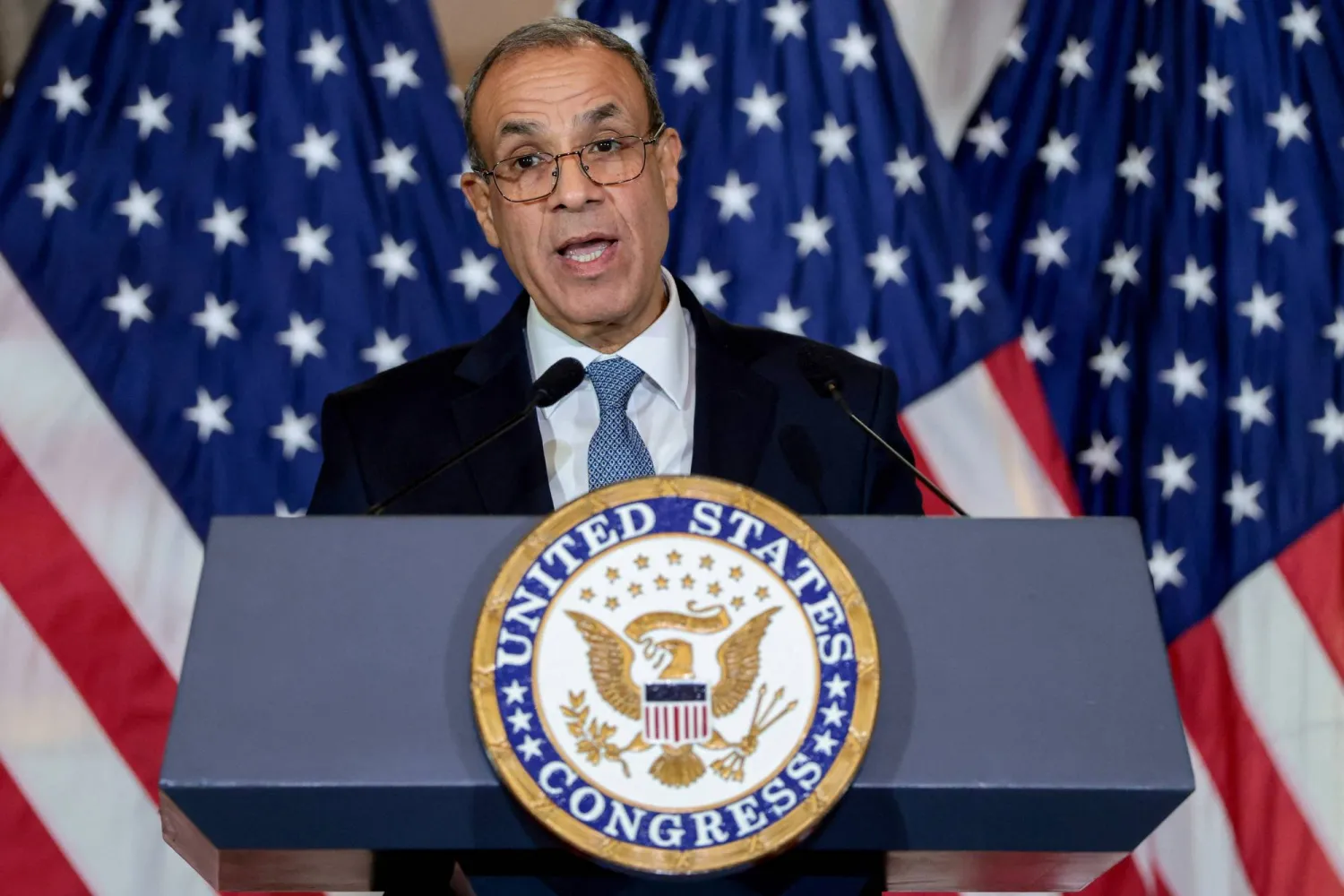
 Egyptian Minister of Foreign Affairs, Dr. Badr Abdelatty speaks at a Congressional Gold Medal in honor of Anwar Sadat, former President of Egypt, at the US Capitol in Washington, US, DC, November 18, 2026. (Reuters)
Egyptian Minister of Foreign Affairs, Dr. Badr Abdelatty speaks at a Congressional Gold Medal in honor of Anwar Sadat, former President of Egypt, at the US Capitol in Washington, US, DC, November 18, 2026. (Reuters)
TT

Abdelatty: We Are Working to Hold Hamas to Its Commitments on Confining Weapons

 Egyptian Minister of Foreign Affairs, Dr. Badr Abdelatty speaks at a Congressional Gold Medal in honor of Anwar Sadat, former President of Egypt, at the US Capitol in Washington, US, DC, November 18, 2026. (Reuters)
Egyptian Minister of Foreign Affairs, Dr. Badr Abdelatty speaks at a Congressional Gold Medal in honor of Anwar Sadat, former President of Egypt, at the US Capitol in Washington, US, DC, November 18, 2026. (Reuters)

Egyptian Foreign Minister Dr. Badr Abdelatty stressed, in exclusive statements to Asharq Al-Awsat, that Cairo is pressing ahead with efforts to push Palestinian factions, foremost among them Hamas, toward implementing understandings on confining and handing over weapons.

He stressed that transitioning to the second phase of US President Donald Trump's plan to end the war in Gaza requires all parties to honor their commitments, primarily completing the Israeli withdrawal and ensuring the flow of humanitarian aid.

Speaking on the sidelines of his visit to Washington and meetings with senior US lawmakers, Abdelatty said: "The Egyptian side has put forward numerous ideas, and significant efforts are underway regarding the implementation of Palestinian factions' commitments, including Hamas, to confine and surrender weapons."

He added that this step represents vital progress in resolving one of the most complex issues in the arrangements for the next phase of Trump's Gaza plan.

He dismissed suggestions of any maneuvering by Palestinian factions regarding their pledge to hand over weapons.

"We are focusing on what was previously agreed upon in the Cairo meetings, and Hamas leaders have stated they favor confining and handing over weapons," he said, hoping for a "positive response from the Israeli government."

Abdelatty’s remarks underscore Egypt's stance and its push to translate broad political understandings into actionable commitments, particularly on the weapons file, which remains one of the thorniest obstacles to post-war governance and security arrangements in Gaza.

Moving forward requires a clear timeline for handing over the arms and an agreed-upon mechanism to oversee the process, while Israel’s position remains a decisive factor in determining whether these pledges become concrete steps on the ground.

Displacement is a ‘red line’

Abdelatty stressed that Egyptian efforts to implement Trump's plan do not signal any shift in Cairo's core principles regarding the Palestinian cause.

Egypt remains steadfast in supporting the Palestinians' right to self-determination and an independent state with East Jerusalem as its capital, rejecting any attempts to force them off their land, he added.

"Egypt’s positions are well-known and unwavering: full support for the Palestinian people until they secure all their legitimate rights, including self-determination and the establishment of an independent state with East Jerusalem as its capital," he told Asharq Al-Awsat.

"This is our stance and we will not deviate from it. Palestinians have the right to remain on their land; we will not accept displacement, as this is a red line for Egyptian foreign policy."

These assurances reflect Cairo's determination to separate security arrangements concerning factional weapons from the broader political track, which it insists must culminate in an independent Palestinian state.

Egypt is also working to ensure that talks over security arrangements do not become a substitute for addressing political and humanitarian priorities, chiefly future governance in Gaza, reconstruction, and the residents' right to stay on their land.

Outreach in Congress

Abdelatty’s remarks came during a visit to the US capital featuring a series of meetings with Republican and Democratic congressional leaders, aimed at strengthening Cairo's partnership with Washington and rallying support for implementing the second phase of Trump's Gaza plan. Discussions also tackled regional crises spanning Iran, Sudan, and the Red Sea.

During a meeting with US House Speaker Mike Johnson, he underscored the importance of strategic ties between Cairo and Washington and Congress's role in backing bilateral cooperation.

He stressed the need to complete the Israeli withdrawal from Gaza and ensure humanitarian aid delivery, while also supporting diplomatic efforts to resolve the crisis with Iran and safeguarding freedom of navigation in the Red Sea and the Bab al-Mandeb Strait.

Abdelatty also met with Republican Senator Jim Risch, Chairman of the Senate Foreign Relations Committee, reviewing Egyptian efforts to de-escalate regional tensions, developments in Gaza and the West Bank, and the Iranian crisis, as well as avenues to boost bilateral economic, trade, and investment cooperation.

In a post-meeting statement, Risch affirmed the importance of the partnership with Egypt in addressing regional crises, pointing specifically to the ongoing conflict in Sudan, working toward lasting peace in the Middle East, and strengthening bilateral ties.

Abdelatty held talks with Rep. Gregory Meeks, the ranking Democrat on the House Foreign Affairs Committee, Democratic Senator Jeff Merkley, and Democratic Rep. Brad Schneider. Their discussions centered on developments in the Middle East and the Horn of Africa, boosting political and economic cooperation, and preventing regional confrontations from widening.

Coordination regarding the Muslim Brotherhood

Separately, Abdelatty revealed to Asharq Al-Awsat that Egypt is coordinating with the US and European countries on designating the Muslim Brotherhood as a terrorist organization, stressing that Cairo's position rests on national judicial rulings that it is moving forward to enforce.

"This is a principled stance; rulings have been issued by the Egyptian judiciary - known for its independence and integrity - and these rulings designating the group as terrorist will be enforced," he said.

"These are decisions made at the national level, and there is certainly coordination between Egypt and countries worldwide, particularly Europe and the United States, to reinforce this designation."

Abdelatty’s comments carry weight given shifts in US policy toward the Muslim Brotherhood over the past year and moves within the Trump administration to expand legal and financial measures against the group's branches and affiliated networks.

The FM did not disclose details regarding the coordination mechanisms or the specific European countries involved, nor did he clarify whether consultations focus on intelligence sharing, tracking funding networks, or pushing for further legal designations.


Trump Urges Aoun to Seize Opportunity for a ‘New Era’ for Lebanon

US President Donald Trump and his Lebanese counterpart Joseph Aoun meet at the White House in July. (dpa)
TT

Trump Urges Aoun to Seize Opportunity for a ‘New Era’ for Lebanon

US President Donald Trump and his Lebanese counterpart Joseph Aoun meet at the White House in July. (dpa)

US President Donald Trump urged his Lebanese counterpart Joseph Aoun to seize the opportunity before Lebanon to launch a "new era."

Praising the decisions made by the Lebanese government, Trump underlined his desire for continued partnership between the US and Lebanon.

Trump’s remarks came in a congratulatory cable sent to Aoun marking Lebanon’s independence, which falls on November 22.

“On behalf of the American people, I extend my warmest congratulations to you and the Lebanese people as you celebrate the 83rd anniversary of Lebanon’s independence on November 22,” Trump wrote.

“Lebanon has an opportunity to embark on a new era of renewal under your leadership as it moves toward greater sovereignty, stability and peace with its neighbors. I commend the courageous decisions taken by your government and urge you to seize this opportunity,” he said.

“I look forward to the continued partnership between our two countries as you work to shape a brighter future for generations to come,” Trump added.

His message came amid intensifying US diplomatic contacts regarding the implementation of the framework agreement between Lebanon and Israel. These efforts unfold alongside ongoing disputes over the Israeli withdrawal and security arrangements in the South, as well as discussions on the future of the international presence once the mandate of the United Nations Interim Force in Lebanon (UNIFIL) expires at the end of this year.

Aoun and Trump held talks at the White House last July, addressing ways to consolidate stability in Lebanon, secure an Israeli withdrawal, and strengthen the capabilities of the Lebanese Army. They also tackled economic cooperation and reconstruction.

Aoun underscored the importance of the Lebanese state restoring its full sovereignty, while both sides agreed to maintain coordination across security, political, and economic files.

Meanwhile, Lebanese Defense Minister Michel Menassa stressed during a meeting with US Ambassador Michel Issa, the need to implement the framework agreement, starting with a halt to Israeli attacks and a withdrawal from Lebanese territory, to allow the army to complete its deployment and extend state authority.

The officials discussed political and security developments in Lebanon and the region, as well as the tripartite meetings and negotiations tied to the framework agreement.

Discussions also covered proposals for UNIFIL's future after its mandate ends and potential frameworks for the next phase. They also covered the outcomes of US Ambassador to the United Nations Mike Waltz’s recent visit to Beirut and the issues he raised with Lebanese officials.

Menassa expressed appreciation for US assistance provided to Lebanon and its military, stressing the importance of sustained support for the armed forces as they confront challenges.