UN Peacekeepers in Lebanon Find Ammonium Nitrate Explosives in Southhttps://english.aawsat.com/arab-world/5300982-un-peacekeepers-lebanon-find-ammonium-nitrate-explosives-south
UN Peacekeepers in Lebanon Find Ammonium Nitrate Explosives in South
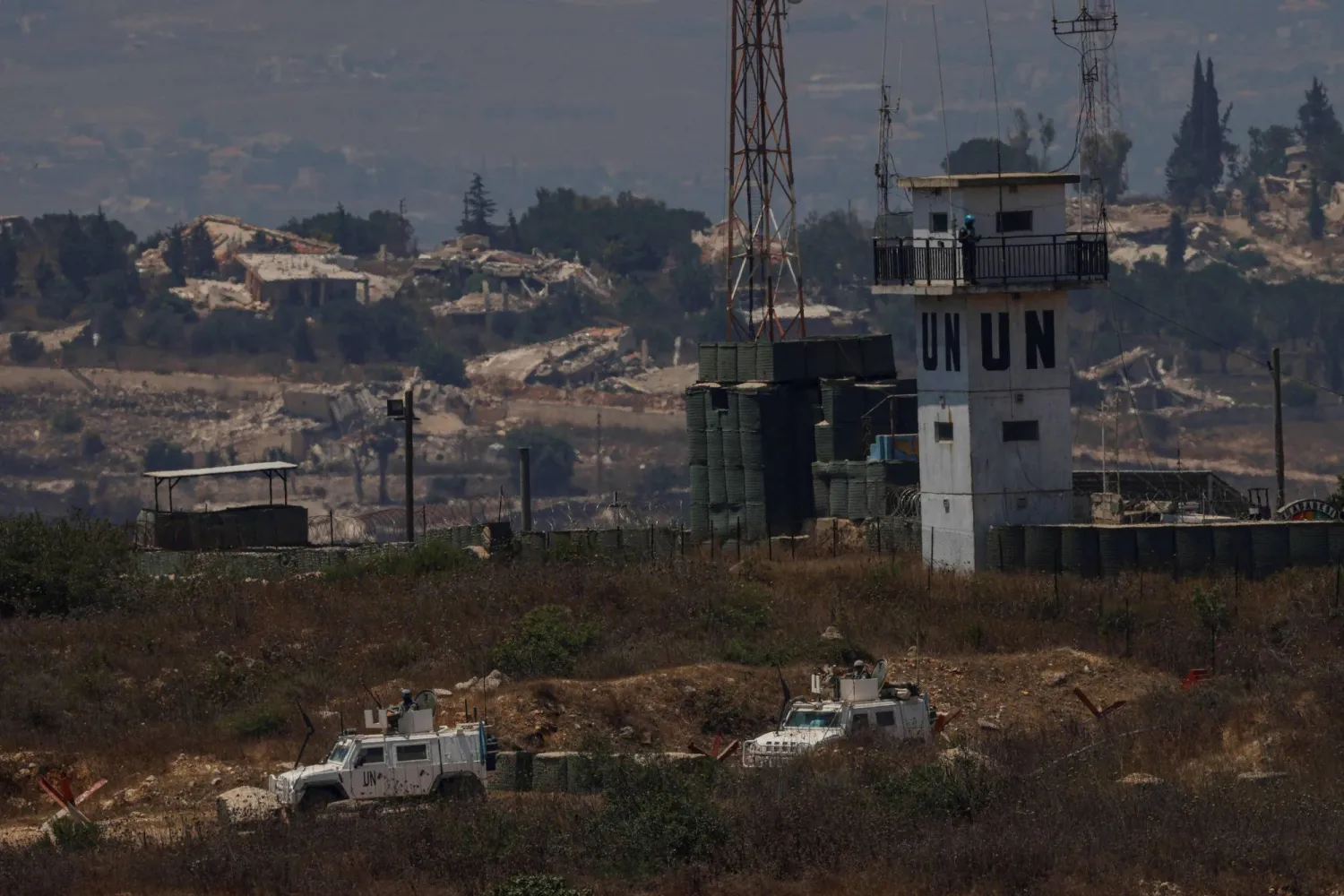
This picture, taken from a position in northern Israel, near the border with Lebanon, shows United Nations Interim Force in Lebanon (UNIFIL) armored vehicles driving past destroyed buildings in southern Lebanon on July 22, 2026. (AFP)
TT
TT
UN Peacekeepers in Lebanon Find Ammonium Nitrate Explosives in South
This picture, taken from a position in northern Israel, near the border with Lebanon, shows United Nations Interim Force in Lebanon (UNIFIL) armored vehicles driving past destroyed buildings in southern Lebanon on July 22, 2026. (AFP)
UN peacekeepers said Tuesday they had found around four tons of mainly ammonium nitrate explosives this month in a south Lebanon border village under Israeli occupation.
On July 2 during a "routine route check" near Houla, "peacekeepers found 385 containers abandoned inside a building, containing approximately 4,000 kilograms of explosive material, consisting mainly of ammonium nitrate compounds", the United Nations Interim Force in Lebanon (UNIFIL) said in a statement.
UNIFIL specialists "later carried out on-site procedures to render the material inert, making it safe and removing the risk it posed".
A source with knowledge of the matter told AFP on condition of anonymity that the containers had Hebrew writing on them and were "likely used for demolitions".
Houla is part of a strip of territory running around 10 kilometers (six miles) deep inside Lebanon along the border where Israeli forces, who invaded during the latest war with Hezbollah, have been operating and have warned residents not to return.
Iran-backed Hezbollah drew Lebanon into the Middle East war on March 2 with rocket fire at Israel in support of Tehran, triggering major Israeli airstrikes and a ground invasion.
While violence has declined since last month's US-Iran memorandum on the regional conflict, and a separate framework deal between Lebanon and Israel, Lebanon has reported ongoing Israeli demolitions and detonations of buildings in border villages and towns.
Lebanon's state-run National News Agency has reported Israeli detonations in Houla on four occasions this month.
On July 8, the Houla municipality condemned "in the strongest terms the crimes the Israeli enemy is carrying out of burning, blowing up and destroying homes, public buildings and private property".
Ammonium nitrate, used in fertilizers as well as in explosives, triggers grim memories in Lebanon.
On August 4, 2020, a stockpile of the chemical exploded at Beirut's port, after being stored haphazardly for years.
The blast killed more than 220 people, injured over 6,500 others and laid waste to swathes of the capital.
Syrian State Media: Armed Groups Ban UN Delegation from Entering Sweidahttps://english.aawsat.com/arab-world/5331065-syrian-state-media-armed-groups-ban-un-delegation-entering-sweida
Syrian State Media: Armed Groups Ban UN Delegation from Entering Sweida
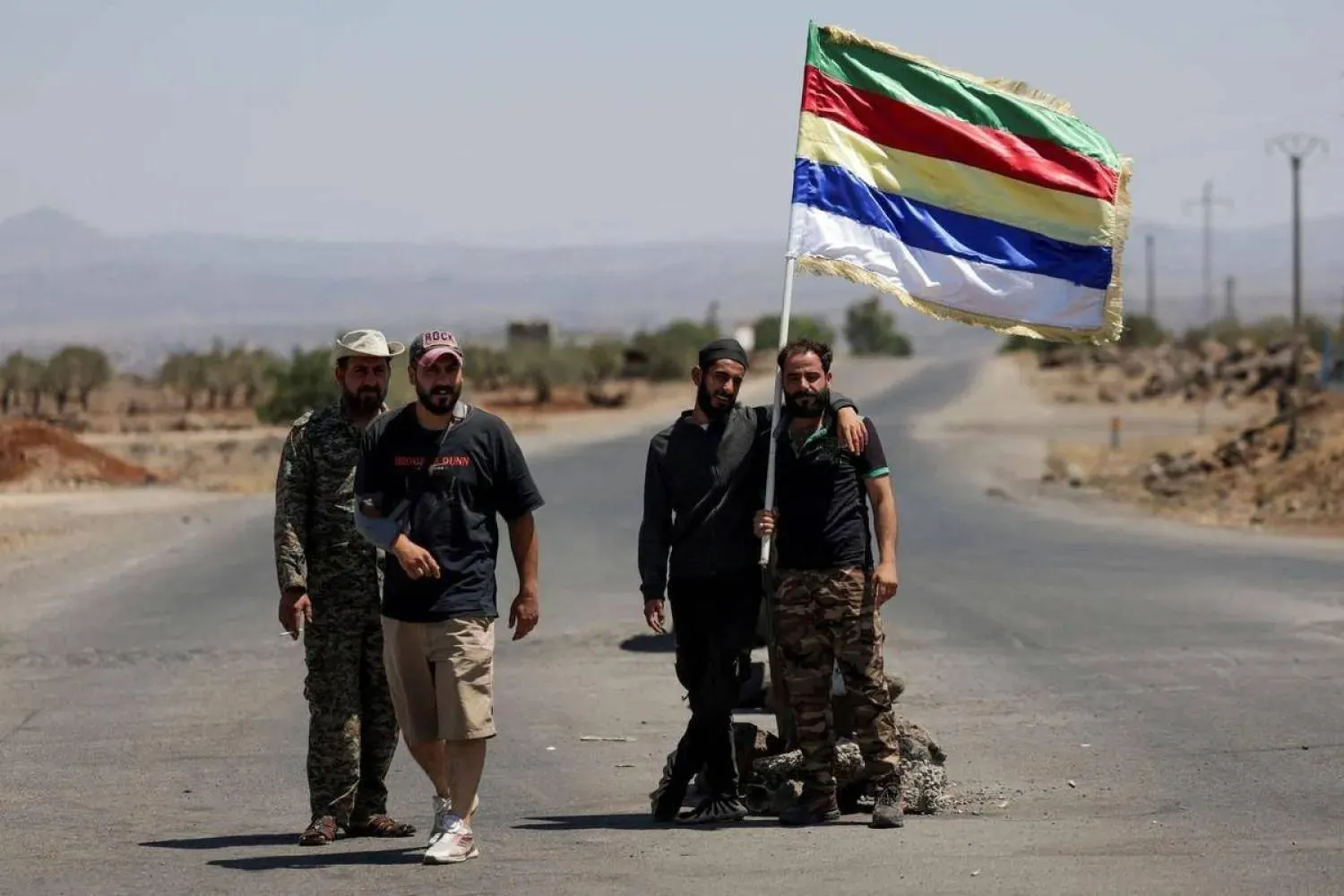
Members of the National Guard affiliated with Sheikh Hikmat al-Hijri in Sweida (File photo: Sweida 24).
Groups described by Syrian state media as operating outside the law prevented a joint UN humanitarian delegation from entering the southern Syrian city of Sweida on Sunday, citing a lack of coordination with them, according to Syria’s Al-Ikhbariya television channel.
The delegation included representatives of the UN Office for the Coordination of Humanitarian Affairs (OCHA) and international organizations. Its visit had been coordinated with the Sweida branch of the Syrian Arab Red Crescent, whose team was expected to accompany the delegation on field visits to Sweida city, Shahba and the village of Ara.
Al-Ikhbariya reported that the groups stopped the delegation at the Umm al-Zeitoun checkpoint for two to three hours before informing its members that entry was prohibited.
The delegation had earlier passed through the Al-Matouna checkpoint, operated by the Sweida Security Directorate.
The broadcaster also recalled that groups affiliated with Druze spiritual leader Sheikh Hikmat al-Hijri had blocked commercial trucks carrying essential goods and fuel from entering Sweida province on September 10.
According to Al-Ikhbariya’s correspondent at the time, the restrictions on commercial convoys coincided with the groups preventing approximately 12,000 students from reaching examination centers to sit special make-up exams for students in Sweida.
French Foreign Minister Discusses Post-UNIFIL Arrangements in Beiruthttps://english.aawsat.com/arab-world/5331060-french-foreign-minister-discusses-post-unifil-arrangements-beirut
French Foreign Minister Discusses Post-UNIFIL Arrangements in Beirut
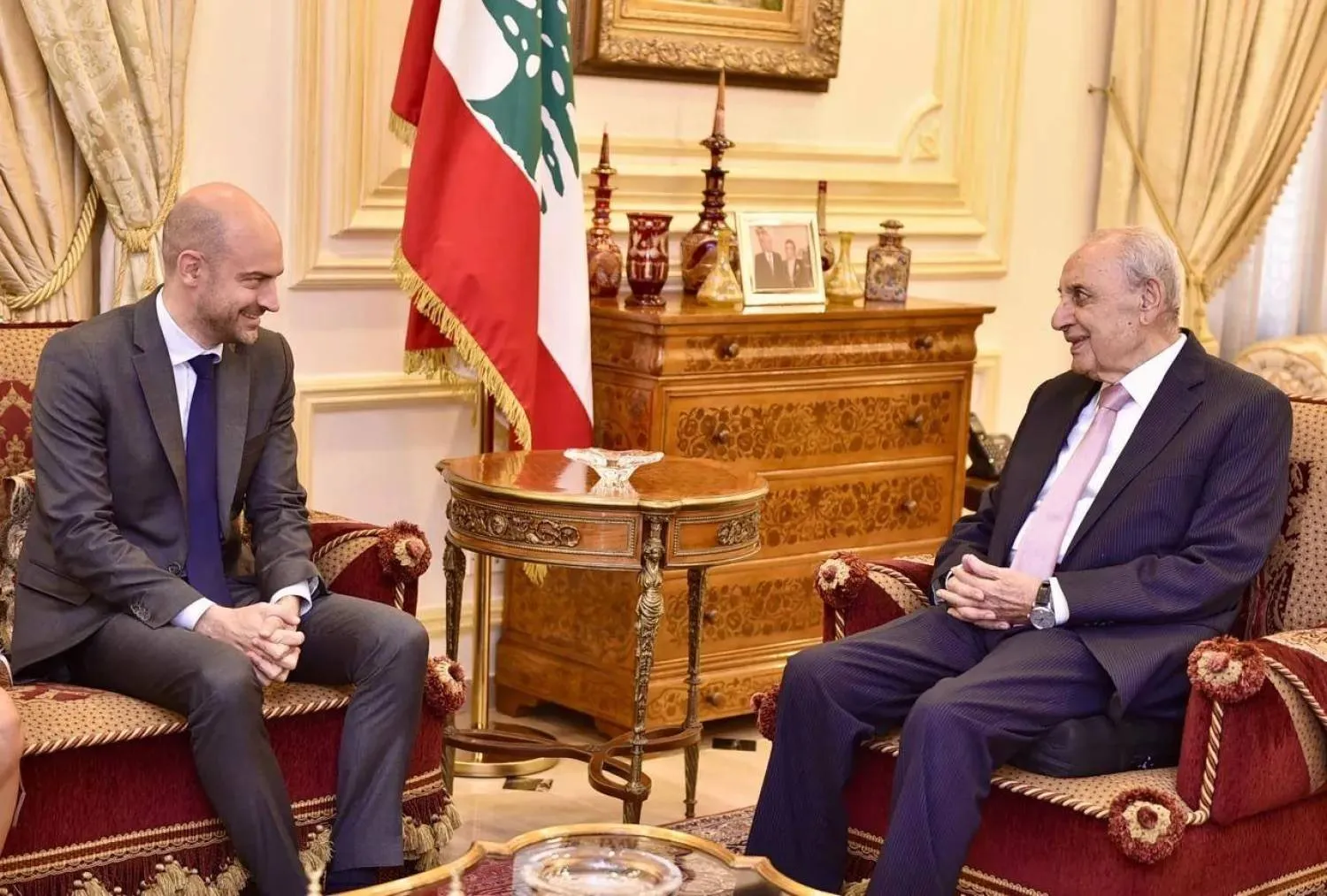
Lebanese Parliament Speaker Nabih Berri meets French Foreign Minister Jean-Noel Barrot (Lebanese Parliament Speaker’s Office).
French Foreign Minister Jean-Noel Barrot continued talks in Beirut on Sunday over the future of the international presence in South Lebanon after the UN peacekeeping mission's mandate ends, as Paris seeks to prevent a security vacuum and preserve international oversight of UN Security Council Resolution 1701.
Accompanied by Alice Rufo, French Minister Delegate to the Minister of the Armed Forces and Veterans, Barrot met Prime Minister Nawaf Salam and Parliament Speaker Nabih Berri, a day after holding talks with President Joseph Aoun.
The discussions focused on strengthening international support for Lebanon, securing Israel’s full withdrawal from Lebanese territory and reinforcing the Lebanese Army amid concerns that the departure of the United Nations Interim Force in Lebanon (UNIFIL) could leave a security vacuum before Resolution 1701 is fully implemented.
At the Grand Serail, Salam received the French delegation in the presence of French Ambassador Patrick Durel and Culture Minister Ghassan Salameh.
The prime minister stressed the need to preserve an international presence in South Lebanon capable of monitoring developments, reporting on violations and maintaining communication under a new Security Council mandate.
Such arrangements, he argued, were essential to preventing a security vacuum or the emergence of a new security situation along the border.
Salam welcomed France’s continued support, particularly its efforts to secure Israel’s complete withdrawal and help Lebanon extend state authority across its territory through its own forces.
He also emphasized the importance of strengthening the Lebanese Army’s capabilities so it could assume its security responsibilities.
The talks addressed recovery and reconstruction in the south, including restoring essential services, helping residents remain in their communities and reinforcing the presence of state institutions.
Economic discussions focused on the government’s financial and economic reforms and the importance of reaching an agreement with the International Monetary Fund.
Barrot reaffirmed France’s commitment to Lebanon’s sovereignty and stability, pledging continued support for the state and its armed forces.
He also expressed Paris’ readiness to help shape future international security arrangements while supporting reforms, economic recovery and reconstruction.
Berri insists on preserving UNIFIL’s role
Later Sunday, Berri received the French delegation, accompanied by Durel, for discussions covering political and security developments, bilateral relations and Lebanon’s determination to maintain UNIFIL’s presence.
Berri thanked France and President Emmanuel Macron for their support, paying tribute to the sacrifices of French peacekeepers and the contribution of UNIFIL personnel over more than 48 years in implementing international resolutions, particularly Resolutions 425 and 1701.
He emphasized that the peacekeepers’ role extended beyond military and security operations to humanitarian, cultural, economic and social activities.
According to Berri, Lebanese authorities and the public were united in their support for keeping the international force in place.
He called for coordinated French, European, international and regional efforts to prevent a vacuum if UNIFIL’s mandate expires before Resolution 1701 has been fully implemented.
Berri maintained that Lebanon had complied with the resolution while Israel continued to violate its provisions, carry out military operations and occupy parts of South Lebanon.
International efforts, he argued, should focus on ending Israeli attacks and compelling Israel to implement UN resolutions rather than undermining them.
Aoun open to alternative arrangements
During Saturday’s meeting with Barrot and Rufo, Aoun welcomed French diplomatic efforts at the United Nations and Security Council to establish arrangements that would prevent a security vacuum.
While reiterating Lebanon’s preference for extending UNIFIL’s mandate, he expressed willingness to consider alternatives that would preserve an international presence in the south.
Aoun stressed the importance of avoiding a situation in which the Lebanese Army would find itself in direct confrontation with Israeli forces in occupied areas.
The discussions come as Lebanon and its international partners prepare for UNIFIL’s departure following a Security Council decision in August 2025 to end the mission’s mandate by the close of 2026.
France and Italy announced in June their intention to work toward establishing a multinational force to succeed the UN mission.
Paris has since underlined the need for a new international framework to support Lebanese sovereignty and prevent a security vacuum that could threaten stability in South Lebanon.
Hezbollah’s Actions Raise Fears of Internal Escalation in Lebanonhttps://english.aawsat.com/arab-world/5331055-hezbollah%E2%80%99s-actions-raise-fears-internal-escalation-lebanon
Hezbollah’s Actions Raise Fears of Internal Escalation in Lebanon
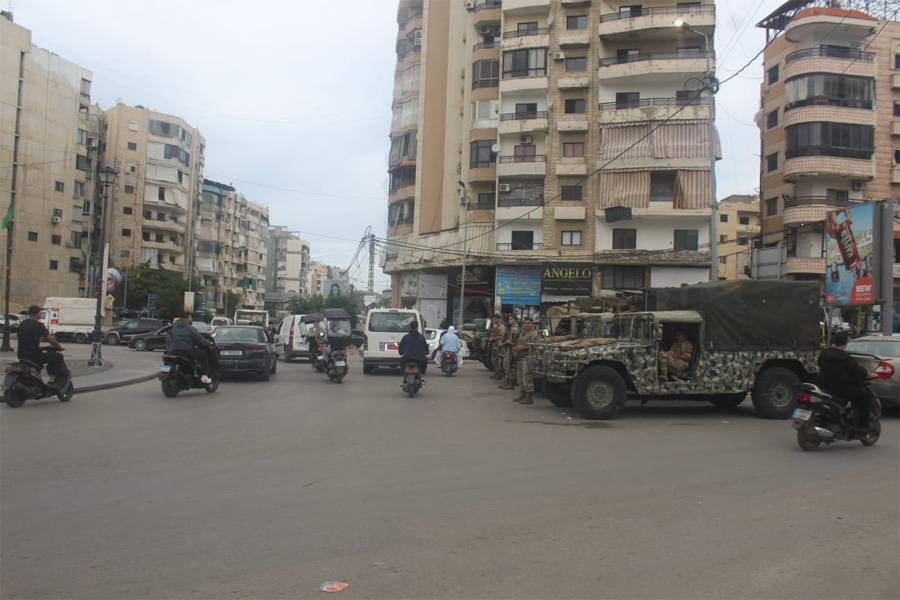
A Lebanese army patrol in Beirut. (Lebanese Army)
Fears of renewed internal tensions are growing in Lebanon as Hezbollah steps up its confrontational rhetoric toward the authorities and its supporters take to the streets of Beirut and its southern suburbs.
Against a backdrop of regional upheaval and mounting pressure on Iran, the developments have raised questions about whether Hezbollah is seeking to challenge the government’s authority or preparing further moves at home in response to shifting regional dynamics.
Ministerial sources told Asharq Al-Awsat that while the possibility of escalation remained a concern, there was no indication that any such move was imminent. The sources insisted that security agencies would continue enforcing government decisions, regardless of Hezbollah’s objections, and ruled out concessions over recent security and judicial measures.
They described the Iran-backed group’s increasingly defiant statements, particularly over a seized explosives shipment last week, as a reaction to the authorities’ actions rather than a reason to reconsider them.
President Joseph Aoun is due to chair a meeting of security chiefs at the presidential palace Monday afternoon to review recent developments, including the explosives shipment.
Prime Minister Nawaf Salam, meanwhile, reaffirmed that lasting stability depends on extending state authority throughout Lebanon, even if gradually, through its own security forces. Decisions on war and peace, he stressed, must remain exclusively with the state and its constitutional institutions.
Salam contacted Army commander Gen. Rodolphe Haykal and Internal Security Forces chief Maj. Gen. Raed Abdallah to commend the reinforced security presence across Greater Beirut following nighttime gatherings that had unsettled residents.
He also met Justice Minister Adel Nassar and Prosecutor General Rami al-Hajj to follow up on investigations into the explosives seized at Dahr al-Baidar and subsequent incidents, including efforts to arrest those involved in possessing or transporting illegal weapons.
He stressed that all action would be governed by the law.
The Lebanese army deployed at an entrance to Beirut's southern suburbs. (Lebanese Army)
Government refuses to back down
The government’s determination to retain exclusive control over weapons was echoed by Foreign Minister Youssef Raggi during the 52nd meeting of foreign ministers of the Organization of Islamic Cooperation in Iraq.
Raggi recalled the August 2025 decision to impose state monopoly over arms and extend state authority across the country.
He argued that sovereignty could not coexist with competing armed forces, nor could stability be achieved while decisions affecting the country were taken outside state institutions.
The increasingly tense atmosphere has also prompted warnings from Lebanese political figures.
MP Ibrahim Mneimneh suggested that the mobilization of Hezbollah supporters could be intended to prepare the ground for action at the right circumstances.
In remarks to Asharq Al-Awsat, he argued that Hezbollah appeared to be seeking a return to the situation that prevailed before the government’s decisions on weapons monopoly, while demonstrating that those measures carried little practical weight.
He did not rule out a link to Iran’s regional calculations or the broader political and security arrangements taking shape in the region.
For Mneimneh, the decisive issue was how the state would respond to any challenge. Unless it seriously addressed weapons outside its control, he cautioned, “Lebanon would remain hostage to the same circumstances.”
He urged the authorities to begin implementing their decisions, particularly the pledge to keep Beirut free of weapons, describing it as an “essential step toward restoring state authority in the capital.”
Lebanese Forces MP Antoine Habchi, for his part, accused Hezbollah of invoking the threat of civil war to buy time.
“Any internal fighting at this stage would be disastrous for Hezbollah itself, calling for the government’s decisions to be implemented without ambiguity,” he urged.
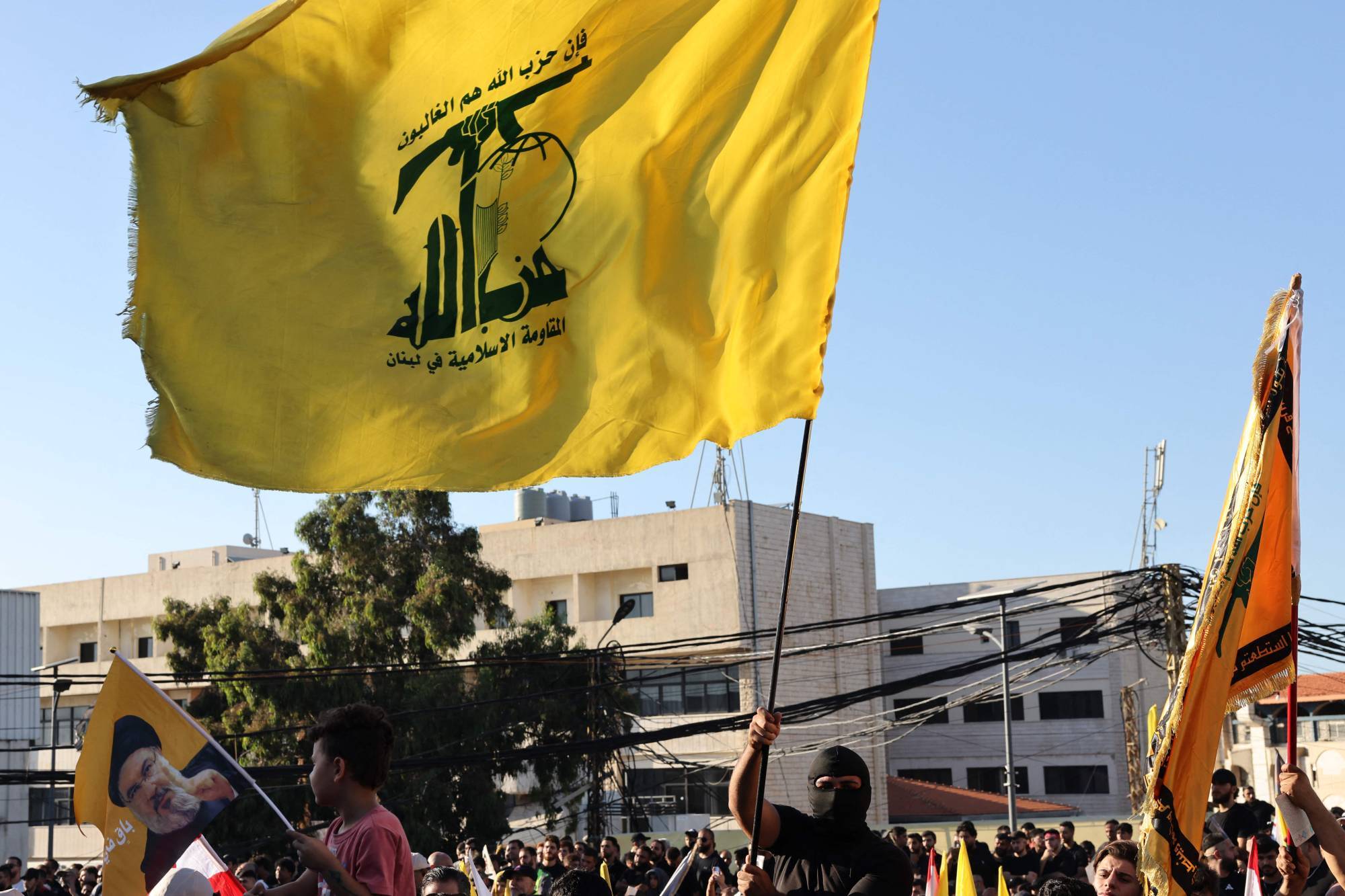
A Hezbollah supporter raises the party's flag at a demonstration in Beirut's southern suburbs. (AFP)
Tensions on the ground
The Lebanese Army has deployed heavily in Beirut for several days, particularly around the southern suburbs and their entrances, amid concerns that Hezbollah supporters could stage further demonstrations.
The deployments coincide with ongoing investigations into the explosives seized at Dahr al-Baidar and a warehouse containing expired medicines.
On Friday evening, young men on motorcycles attempted to obstruct an Internal Security Forces patrol during a raid on the warehouse near the entrance to the southern suburbs. The army intervened, allowing the patrol to seal the premises.
Although Hezbollah denied any connection to the warehouse, reports alleged that a son of its secretary-general, Naim Qassem, was a partner in the business.
MP Paula Yacoubian repeated the allegation on Al Jadeed television Sunday, saying the other partner was the candidate backed by the Shiite political alliance for Lebanon’s pharmacists’ syndicate.
Qassem’s son denied involvement, saying the case was now in the hands of the relevant security and judicial authorities.
Hezbollah nevertheless protested the raid, insisting that operations in sensitive areas follow previously agreed coordination procedures - an apparent reference to arrangements that existed before the government’s recent decisions concerning its weapons.
The confrontation followed another dispute over a truck carrying around 780 kilograms of explosives seized by authorities at a Dahr al-Baidar checkpoint. Hezbollah acknowledged ownership of both the truck and its cargo, demanding their return and the release of those detained.
Hezbollah MP Hassan Fadlallah initially declared that the group “would not tolerate measures targeting it to satisfy US demands.”
On Sunday, he shifted responsibility for the mounting tensions onto the state, accusing the authorities of pushing Lebanon toward internal confrontation under American pressure.
He questioned who stood to benefit from such a confrontation and why the government appeared determined “to provoke tensions rather than defuse them.”
لم تشترك بعد
انشئ حساباً خاصاً بك لتحصل على أخبار مخصصة لك ولتتمتع بخاصية حفظ المقالات وتتلقى نشراتنا البريدية المتنوعة