
Egyptian Source Denies New Gas Deal with Israel

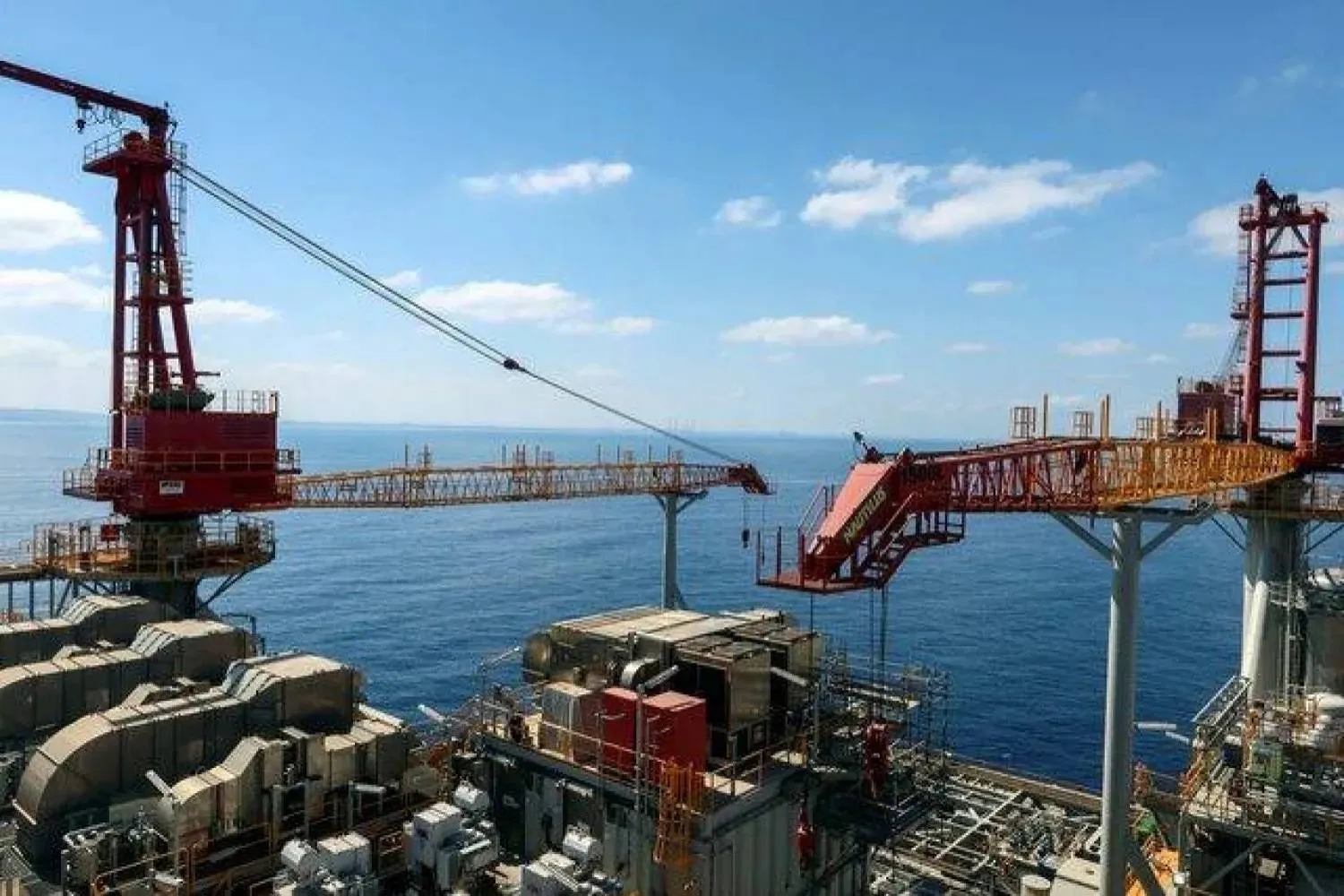
The Leviathan natural gas platform off the coast of Israel (Reuters)
TT

Egyptian Source Denies New Gas Deal with Israel

The Leviathan natural gas platform off the coast of Israel (Reuters)

An Egyptian government source has denied reports that Egypt has signed a new natural gas deal with Israel, telling Asharq Al-Awsat that recent claims of a potential $20 billion agreement are “incorrect.”

The denial follows a report published on July 24 by the energy industry newsletter Middle East Economic Survey (MEES), which said that Israel’s Isramco and the UAE’s Mubadala Energy had signed a non-binding memorandum of understanding (MoU) with an Egyptian importer to export natural gas from Israel’s Tamar field.

According to the report, the proposed agreement could cover exports of up to 80 billion cubic meters of gas from the Tamar field, with an estimated value of $20 billion. It also said Chevron, the US operator of the field, is expected to join the agreement alongside other Israeli companies.

The Egyptian official, who spoke to Asharq Al-Awsat on condition of anonymity, said the Ministry of Petroleum and Mineral Resources would issue a detailed statement clarifying reports circulated by Arab and local media about the alleged deal.

MEES said the MoU would initially cover the period 2031–2038, with an automatic extension through 2043 if the Tamar production license is renewed, a step the publication described as largely procedural.

The newsletter added that the memorandum remains non-binding and would require a final agreement, approval from the Israeli government, and export licenses issued under Israeli law before it could take effect.

Egypt and Israel signed their first agreement for the supply of Israeli natural gas in February 2018, covering 32 billion cubic meters valued at an estimated $7.5 billion. The deal was amended in October 2019, reducing the volume to 25.3 billion cubic meters over 14 and a half years, with deliveries beginning in the second half of 2020.

In December last year, Israel concluded its largest-ever gas agreement with Egypt, worth up to $35 billion, to export natural gas over a 15-year period. Under the deal, 130 billion cubic meters of gas will be supplied from the Leviathan field, whose reserves are estimated at around 600 billion cubic meters.

Egypt and Israel have maintained gas cooperation for years. Egypt first agreed to export gas to Israel through the Arish-Ashkelon pipeline in 2005, but supplies were suspended in 2012 after repeated attacks on the pipeline in Sinai. Gas flows between the two countries resumed in 2020.

The two countries’ shared border and geographic proximity have given their gas partnership a competitive advantage. In September last year, Egyptian Petroleum Minister Karim Badawi said Israeli gas was “cheaper than gas imported from other regions.”

Despite tensions since the outbreak of the Gaza war in October 2023, Egyptian Prime Minister Mostafa Madbouly said last August that commercial gas agreements with Israel would not affect Egypt’s position on the Palestinian issue.

Egypt’s imports of Israeli gas rose 30.5 percent year on year in May 2026, reaching their highest level in more than a year, according to data published by the Energy Research Unit.

Egypt imported about 1.1 billion cubic feet per day - equivalent to a monthly total of 933 million cubic meters -compared with 843 million cubic feet per day (740 million cubic meters) in May 2025.

Israeli gas flows to Egypt gradually returned to normal beginning in April, following the sharp decline recorded in March as a result of regional tensions stemming from the Iran war.


Ben-Gvir Publishes Video of 'Gallows Site for Hanging Palestinians'

Ben-Gvir publishes video of «site designated for hanging Palestinians» (X)
TT

Ben-Gvir Publishes Video of 'Gallows Site for Hanging Palestinians'

Ben-Gvir publishes video of «site designated for hanging Palestinians» (X)

Far-right Israeli national security minister Itamar Ben Gvir published a video in which he boasts about the construction of a site where Palestinians convicted of "terror" offences will be executed by hanging – without including Jewish extremists accused of similar crimes.

According to the British newspaper The Guardian, Ben-Gvir, who has previously attracted international sanctions and condemnation for his activities, said the new execution site would be equipped with viewing booths for families of victims to watch the hangings.

Ben Gvir published the video on social media of a visit he made to the site (whose location was not disclosed) while photos published by Israeli media showed a bulldozer and construction work, said to be near a prison. The extremist minister was seen pointing to the foundation work, boasting that this is where "terrorists will be executed", as he described it.

The newspaper noted that Ben Gvir earlier this year celebrated his 50th birthday in a noose-themed cake.

“I promised to worsen the conditions of terrorists in prisons – we kept it,” said Ben-Gvir in the video. “I promised to pass the Death Penalty for Terrorists law – we did. And now the death row and hanging facility are also starting to take shape.”

The Guardian stated that reports about the construction of gallows – which will be used to execute Palestinians convicted of «terror» crimes in military courts only, not Jewish extremists – come after a new law was passed earlier this year.

The law obliges military courts to impose the death penalty as the only available punishment, unless the court finds special circumstances justifying a life sentence. Practically, Jewish Israelis are protected from the death penalty under a clause that limits the law's application to murders committed “with the intent to deny the existence of the State of Israel”.

It noted that Ben Gvir – who was previously convicted of incitement to racism, obstructing a police officer in the line of duty, and supporting the banned terrorist movement “Kach” – has served as Israel's National Security Minister since 2022, with the exception of a two-month hiatus last year.

Ben Gvir is considered one of the main drivers of Israel's new death penalty law and has a long history of extremist statements and provocative actions.

The death penalty law – one of two laws passed by Israeli lawmakers this year – has drawn widespread international condemnation since its approval in the Knesset by a majority of 62 votes to 48, due to criticism suggesting it is “discriminatory”.

Commenting on the law's approval, Erika Guevara-Rosas, a senior director at Amnesty International, said: “It also dismantles fundamental safeguards to prevent the arbitrary deprivation of life and protect the right to a fair trial, and further empowers Israel’s system of apartheid, which is maintained by scores of discriminatory laws against Palestinians,” said Erika Guevara-Rosas, a senior director at Amnesty International, when the law was passed”.

In recent months, Ben Gvir has been sanctioned by France and Ireland, in addition to sanctions imposed by the United Kingdom last year. He also faced widespread criticism just a few days ago for calling for a policy of punitive killing in Gaza, at a rate of 30 to 40 people per night.

Ben Gvir said: “I think we should be doing 30 to 40 targeted assassinations per night ...There are people there who don’t deserve to live ... They are not even people”.

French Foreign Minister Jean-Noël Barrot on Wednesday described Ben Gvir's statements as «unacceptable and inhumane,» while German Chancellor Friedrich Merz expressed strong condemnation of «Minister Ben Gvir's inhumane calls, which violate international law”.

UN Secretary-General Antonio Guterres also described Ben Gvir's statements as “appalling”, “outrageous”, “dehumanizing” and “dangerous”.

The video emerged amid growing wider international condemnation of Israel’s behavior, including the issuing of new tenders for the massive E1 settlement block outside Jerusalem, which was denounced by the UK foreign secretary, Ed Miliband, as an “unacceptable and destructive act” that risked separating the West Bank from East Jerusalem. He summoned Israel’s charge d’affaires in protest.

“The UK has been clear privately and publicly in our opposition to E1 and our support for a two-state solution as the only way to ensure long-term security and peace for both Palestinians and Israelis,” Miliband said. “All settlements damage that prospect and are a flagrant breach of international law.”


Türkiye Denies Military Presence at Abu al-Duhur Airbase Before or During Israeli Strike

A satellite image shows craters on the runways of the Abu al-Duhur airbase near Syria's Aleppo after an Israeli attack, August 19, 2026. (Pleiades Neo © Airbus DS 2026/Handout via Reuters)
TT

Türkiye Denies Military Presence at Abu al-Duhur Airbase Before or During Israeli Strike

A satellite image shows craters on the runways of the Abu al-Duhur airbase near Syria's Aleppo after an Israeli attack, August 19, 2026. (Pleiades Neo © Airbus DS 2026/Handout via Reuters)

Türkiye has reaffirmed its support for Syria’s efforts to develop its military capabilities and infrastructure and preserve its unity and sovereignty, while denying that any Turkish delegation was present at the Abu al-Duhur military airbase before or during Tuesday’s Israeli strike.

A Turkish Defense Ministry official described the attack as an attempt to destabilize Syria, undermine its security, unity and territorial integrity, and damage its infrastructure.

Speaking at the ministry’s weekly briefing Thursday, the official said any attack violating Syria’s sovereignty and territorial integrity was unacceptable, stressing that no Turkish military delegation had been at the base before or during the strike.

The official urged Israel to halt such “reckless” attacks and abide by international law, adding that Türkiye would continue to support Syria in building its military capabilities and infrastructure under the principle of “one state, one army.”

Israeli Prime Minister Benjamin Netanyahu’s office said after the strike that Israel had warned Syria against allowing a Turkish presence at Abu al-Duhur.

“Our message was very clear: Don’t do it,” it said, adding that Damascus had ignored the warning.

The Turkish presidency rejected the allegations as “baseless,” accusing Netanyahu of promoting them ahead of Israel’s October elections and calling on the international community to curb Israeli actions threatening regional peace and stability.

Syrian Foreign Minister Asaad al-Shaibani told Axios that Damascus had previously informed Israel there were no plans to establish a Turkish military base at Abu al-Duhur, which was being rehabilitated for use by the Syrian Air Force.

Al-Shaibani said Turkish military personnel had previously visited the airbase as part of broader training and military cooperation, but denied any Turkish buildup there. The facility was largely empty and work had not yet begun, he added.

There was no intention to establish a Turkish base, permanent Turkish military presence or deploy Turkish troops there, al-Shaibani underlined, saying Israel had no legitimate justification for bombing the facility.

He stressed that Syria remained open to negotiations with Israel on de-escalation, provided any agreement addressed both sides’ security concerns and respected Syrian sovereignty.

Türkiye-Israel relations have grown increasingly strained since Israel’s 2010 raid on the Mavi Marmara, part of the Gaza-bound Freedom Flotilla. US mediation later helped repair ties, culminating in a meeting between Turkish President Recep Tayyip Erdogan and Netanyahu in New York on September 19, 2023.

Relations deteriorated sharply after the Gaza war erupted on October 7, 2023. Ankara has accused Israel of committing “genocide” in Gaza and suspended trade.

The rivalry intensified in Syria after Bashar al-Assad’s fall in December 2024 and Türkiye strengthened political, economic, defense and security ties with President Ahmed al-Sharaa’s government.

Israel, concerned about Türkiye’s military presence in Syria, previously struck the Hama military airport, claiming Ankara planned Turkish air and ground bases at Palmyra, the T4 military airbase in Homs province and the Menagh military airbase in the Aleppo province.


Experts to Asharq Al-Awsat: Expanded Yemeni Army Deterrence Operations Pave Way for Wider Battle

Yemeni Defense Minister Lt. Gen. Taher al-Aqili during a meeting with military commanders in Marib. (SABA)
TT

Experts to Asharq Al-Awsat: Expanded Yemeni Army Deterrence Operations Pave Way for Wider Battle

Yemeni Defense Minister Lt. Gen. Taher al-Aqili during a meeting with military commanders in Marib. (SABA)

Military escalation in Yemen is entering a new phase after the National Defense Council ordered an expansion of air and missile deterrence operations against the Houthis, a move military experts say lays the groundwork for shifting from repelling attacks to striking their sources.

Experts told Asharq Al-Awsat that the deployment of government drones marks a significant change in the balance of power. They believe government forces may possess more advanced drones that have yet to be deployed, while cautioning that the confrontation remains tied to regional tensions and calculations in Iran and the United States.

From defense to preemptive strikes

Brig. Gen. Yasser Saleh, a Yemeni military and strategic expert, said the National Defense Council’s directive aims to neutralize Houthi missile and drone capabilities amid the group’s continued escalation on battlefronts and attacks on vital facilities and infrastructure.

Government operations initially focused on repelling attacks because forces lacked sufficient air defense systems to intercept missiles and drones, Saleh explained.

Raising the level of deterrence would mean conducting preemptive strikes against launch sites and other sources of fire, reducing the Houthis’ ability to mount further attacks, he added.

Saleh described the deployment of government drones as a major development because ground forces require close air support. Drones can conduct reconnaissance, identify targets and strike enemy movements, potentially becoming a key asset if developments lead to a decisive battle.

Government forces are currently using small loitering drones and others capable of dropping munitions, while they are believed to possess more advanced aircraft capable of carrying guided missiles, flying longer distances and striking targets deep inside Houthi-held territory, he said.

Unifying government forces would also allow simultaneous operations on multiple fronts, preventing the Houthis from choosing the time and place of battle or concentrating their forces on a single axis, Saleh went on to say.

Possible offensive

Brig. Gen. Mohammed Al-Kumaim, a Yemeni military expert, said expanded deterrence operations could pave the way for the use of strategic-range drones alongside advanced rocket launchers with ranges of 40 to 60 kilometers.

Potential targets could include command, control and communications centers, supply and reinforcement routes, and missile and drone launch sites.

Al-Kumaim described heavy fire against forward Houthi positions as “preparatory fire” that typically precedes offensive operations, particularly as the group continues to mass forces across several fronts.

He called the deployment of drones a “qualitative shift,” although those seen so far have limited range and capabilities.

Government forces are believed to possess other systems that have yet to enter combat, including the Naqam, Ayban and Shaheen, as well as specialized units trained to operate them.

Al-Kumaim said government forces are better organized than they were in 2022, with a unified operations room and stronger coordination among military fronts and formations.

Rebuilding deterrence

Political and military expert Abdul Wahab Buhaibeh said the council’s directives shift government forces from reacting to Houthi attacks toward seizing the initiative.

He expects longer-range drones to be deployed for reconnaissance, intelligence gathering, artillery and missile fire correction, as well as direct strikes.

The directives also include heightened readiness, stronger early-warning capabilities, intensified intelligence operations and tighter security and maritime measures to track weapons-smuggling routes to the Houthis, alongside preparations for possible ground operations.

Buhaibeh described the approach as a multidimensional strategy combining air and missile operations with security, intelligence and maritime efforts to rebuild deterrence after years in which the Houthis benefited from their relative superiority in missiles and drones and divisions among their opponents.

Yemen and the regional conflict

The experts agreed that Yemen’s escalation cannot be separated from the broader regional conflict.

Saleh said Tehran could push its allies to widen the confrontation if fighting with Washington resumes, while Buhaibeh warned that continued Houthi control of Hodeidah and the Red Sea coast gives Iran leverage over international shipping.

Speaking to AFP, Yemen’s information minister had warned of a Houthi plan to seize coastal areas near the Bab el-Mandeb Strait.

Three Houthi military sources and a spokesman for government forces stationed near the strait also told the agency that the group was planning to advance toward those areas.

Saleh said mounting domestic pressure on the Houthis, combined with regional tensions, could lead to a broader confrontation and potentially pave the way for what he called a “battle of liberation.”

Al-Kumaim, meanwhile, stressed the need for a decisive move before Yemen’s crisis again becomes part of potential US-Iran arrangements, saying the situation is heading toward further escalation but remains dependent on regional and international developments.