
Iraq’s financial crisis has entered a more critical phase, with government officials acknowledging that the state is struggling to pay employees on time and politicians urging Iran-aligned factions to press Tehran to exempt Iraqi oil from restrictions in the Strait of Hormuz.
Regular salary payments are a key measure of economic and social stability in Iraq. Millions of state employees, pensioners, contractors, and welfare recipients depend on government payments as their main source of income.
Those payments also sustain local markets and purchasing power, the main engine of commerce in a country heavily dependent on oil revenue.
Oil provides more than 90% of Iraq’s public revenue, while salaries, wages, and social protection programs account for the bulk of government spending.
In recent years, strong oil revenue has helped maintain relatively high domestic consumption, driving investment in services, particularly shopping malls, restaurants, and cafes.
But that growth has drawn persistent criticism over alleged links between some investments, money laundering, and influence-peddling. Successive governments have also faced accusations of failing to curb corruption or to establish full control over border crossings.
The crisis comes as the government of Prime Minister Ali al-Zaidi promotes an economic program centered on the “Development Road” project and expanded partnerships with the private sector and international companies.
The plan aims to reshape Iraq’s economy and diversify revenue after decades of dependence on oil and the public sector.
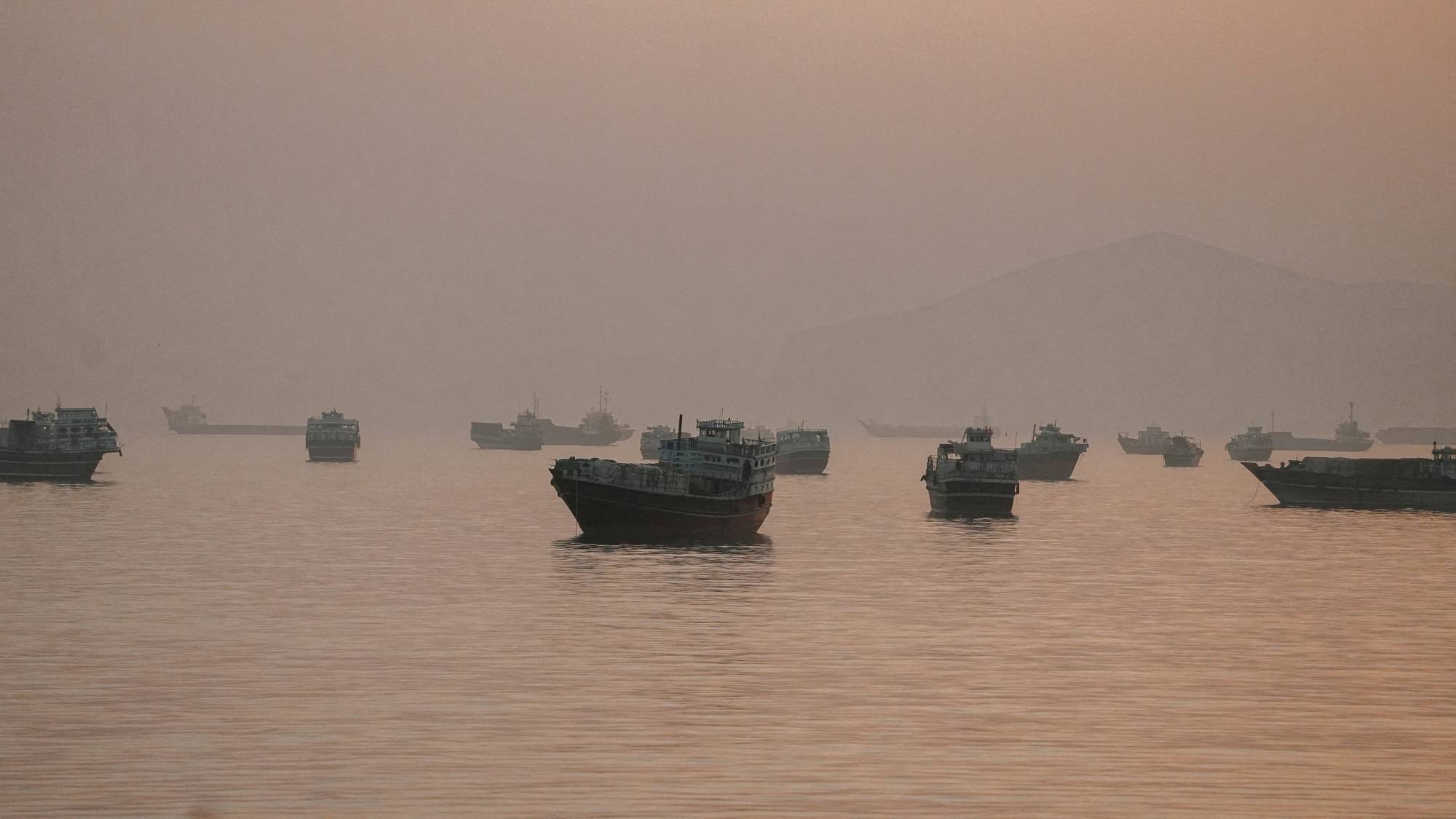
But the closure of the Strait of Hormuz and the resulting drop in Iraqi oil exports have exposed the risks of relying on a single main export route.
Iraq has no fully developed alternative for shipping oil through neighboring countries. Projects involving routes through Türkiye, Syria, Jordan and Saudi Arabia have faced political objections in recent years.
As oil revenue falls, the government is under mounting pressure to find enough cash to cover essential spending.
The squeeze coincides with an anti-corruption campaign that authorities say has uncovered wide-ranging cases involving senior and mid-level officials. Iraqis commonly use the phrase “big whales” to describe powerful figures believed to stand behind corruption networks.
Official Admission
The first public acknowledgment of the crisis came after the government delayed its usual announcement authorizing salary payments, fueling concern among Iraqis as reports of multibillion-dollar corruption cases continued to mount.
“There is no money,” Health Minister Abdul Hussein al-Musawi said in televised remarks, adding that the prime minister was “at a loss over how to secure the monthly salaries.”
Finance Minister Faleh al-Sari said the government needed about 8 trillion Iraqi dinars to cover salaries, but had only around 3 trillion dinars available.
He said salaries were being paid late and in installments as funds became available.
Government spokesman Haider al-Aboudi said in televised remarks on Friday that Iraq could turn to domestic and foreign borrowing if the Strait of Hormuz remained closed.
He said the government had signed agreements during its latest visit to Türkiye on implementing the Development Road project and was working to keep Iraqi oil flowing despite regional crises.
“Geopolitical changes have affected Iraqi foreign policy, which is based on economics and non-alignment,” he said.
Al-Aboudi said the regional crisis had dealt a severe blow to Iraq’s economy and that Baghdad and Ankara had formed joint committees to prepare a comprehensive study on Iraqi oil exports.
Temporary Fix
Financial adviser to the Iraqi PM Mazhar Mohammed Saleh warned that any expansion of domestic borrowing should be handled with extreme caution.
“Resorting to domestic borrowing and expanding it carries a range of consequences that must be taken into account,” Saleh told Asharq Al-Awsat.
“If borrowing becomes necessary, it should remain within carefully studied limits and be directed toward temporary needs or projects that generate economic returns, rather than repeatedly financing operating expenses,” he said.
“Expanding this approach could increase the public debt burden and create a crowding-out effect, limiting the private sector’s access to investment financing as borrowing and bank credit costs rise.”
Saleh said carefully managed foreign borrowing could provide temporary relief during the transition until oil revenue returned to more stable levels.
But he said it must be paired with fiscal and economic reforms that tackle the roots of the crisis and reduce future dependence on debt.
Political analyst Iyad al-Samawi said fiscal reform should go beyond cutting spending and controlling the public payroll to include a serious review of loss-making state-owned companies.
“State-owned companies were not created to burden the public budget or survive on government subsidies,” he told Asharq Al-Awsat. “They were meant to be productive tools, engines of development, and a source of support for the national economy.”
“Fiscal reform is not limited to rationalizing spending, controlling salaries or halting government expenditure,” he said. “It requires a serious review of loss-making state-owned companies that drain public funds year after year.”
Call to Iran-Aligned Factions
Iraqi politician Dhafir al-Ani called on parties close to Iran to press Tehran to exempt Iraqi oil shipments from any restrictions on passage through the Strait of Hormuz.
His appeal came as the health minister warned of the government’s financial shortfall.
In a post on X, Al-Ani described the minister’s remarks as “a resounding cry.”
“Can the Iran-aligned loyalists ask Iran to allow Iraq to export its oil through the Strait of Hormuz so Iraqis can secure their salaries and medicine?” he wrote.