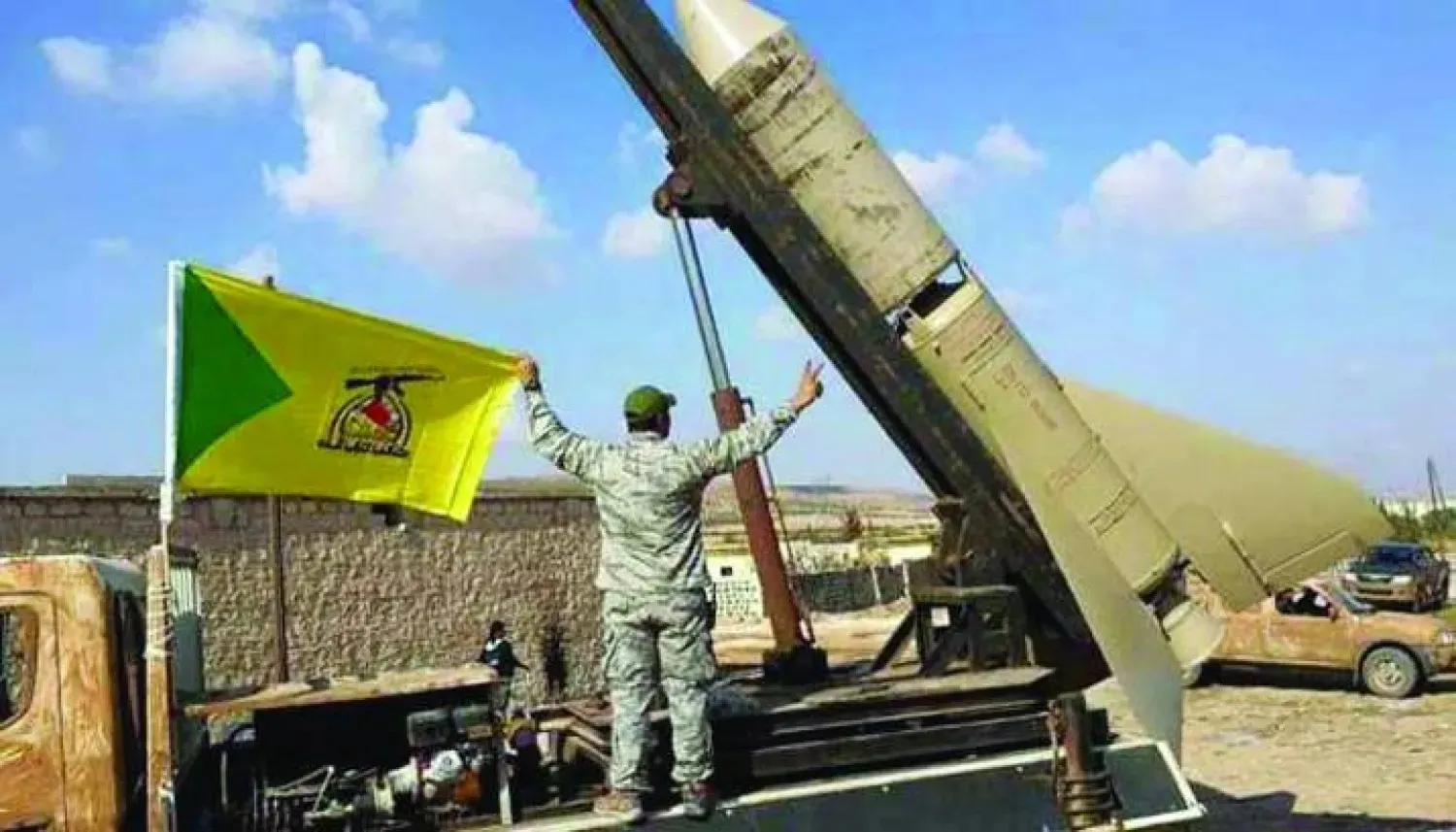

Iraq’s Kataib Hezbollah has doubled down on its refusal to surrender what it calls the “weapons of the resistance,” vowing instead to expand its military arsenal in a direct challenge to a government deadline for disarming armed factions by the end of September.
The group’s stance underscores the widening rift between the Iraqi government and Iran-aligned factions, which have become one of its most pressing security threats and risk exposing the country to attack if they launch fresh strikes against neighboring states.
Neighboring countries have already warned Iraqi authorities that any new attacks launched from Iraqi territory would trigger direct, targeted military strikes against armed factions inside Iraq.
Kataib Hezbollah Secretary-General Abu Hussein al-Hamidawi issued the latest rejection late on Monday, pledging in a statement to “continue jihad for the sake of God and deter every aggressor, making them pay many times the price of their aggression.”
Al-Hamidawi said the group would neither abandon nor surrender its weapons, but would instead “develop them and expand its arsenal.”
He also called for efforts to “cleanse our security environment” and urged strict compliance with security procedures and secrecy measures suited to the scale of the challenges, “to deter anyone who wishes us harm in the wars of this period.”
In April 2026, the US State Department offered a $10 million reward for information about al-Hamidawi, who has been on the US terrorism list for years over accusations that he planned and carried out attacks against US forces and diplomatic facilities in Iraq and the Middle East.
Several armed groups have joined the disarmament process over the past two months, including the Sraya al-Salam affiliated with the Sadrist movement, Asaib Ahl al-Haq and the Imam Ali Brigades.
Kataib Hezbollah and Harakat al-Nujaba, however, continue to reject the move, placing Prime Minister Ali al-Zaidi’s government under mounting pressure as the scheduled withdrawal of international coalition forces approaches at the end of September.
That date is also the government’s deadline for completing the disarmament campaign.
The challenge is compounded by sustained US pressure on Baghdad to confront Iran’s armed allies, as well as domestic demands from those who say the factions undermine Iraq’s stability and threaten its security.
Government sources have insisted that disarming the factions is a domestic Iraqi matter. Several sources, however, said al-Zaidi asked Iranian officials during his visit last month to help secure their disarmament, but Tehran rejected the request.
A source close to the ruling Coordination Framework confirmed that Iraq had made the request and cast doubt on al-Zaidi’s ability to press ahead.
The source said the fate of the factions and Iran’s wider network of allies was tied to the outcome of the current confrontation between Washington and Tehran, whether through a victory for one side or some form of settlement.
“Otherwise, al-Zaidi’s government is incapable of taking serious steps in this direction,” the source said.
The source said the disarmament steps taken so far were initiated by influential cleric Moqtada al-Sadr and several faction leaders, not imposed through government pressure or coercion.
“The same applies to the factions that object,” the source said. “If they do not surrender their weapons voluntarily, the government will not be able to force them to do so.”
The government and political figures are making intensive efforts to persuade the factions not to launch attacks, the source said, particularly after warnings that neighboring countries could retaliate.
Media and security reports say Iraqi authorities are preparing tighter measures in the coming days to prevent rockets or drones from being launched at neighboring countries.
The measures include increased surveillance in parts of the southern province of Basra and in desert areas around Najaf, Samawa and Anbar in western Iraq.
The reports said security commanders could face severe penalties if they fail to stop faction movements or attacks.