


Netanyahu Says No Israeli Withdrawal from Gaza Until Hamas Has Been Completely Disarmed

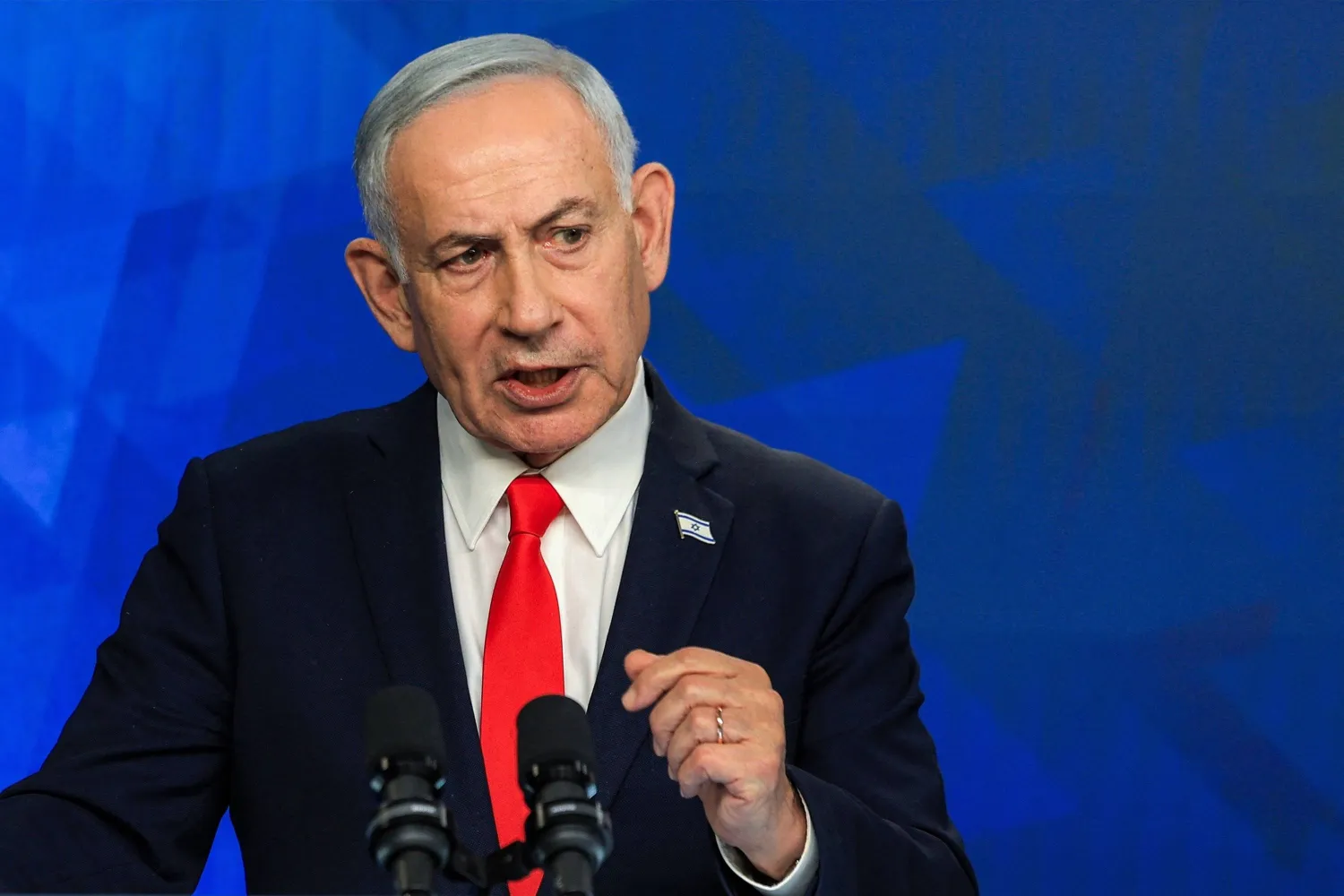
Israel's Prime Minister Benjamin Netanyahu gives a news conference in West Jerusalem, Israel, June 15, 2026. (AFP)
TT

Netanyahu Says No Israeli Withdrawal from Gaza Until Hamas Has Been Completely Disarmed

Israel's Prime Minister Benjamin Netanyahu gives a news conference in West Jerusalem, Israel, June 15, 2026. (AFP)

Prime Minister Benjamin Netanyahu said Tuesday that Israel will not withdraw from its current lines in Gaza until Hamas has completely disarmed and pushed back on a recent deal announced by US President Donald Trump.

Netanyahu's remarks cast more doubt on the deal to disarm Hamas, which was seen as a potential breakthrough for ending the war. It also marked a rare public display of friction with the Trump administration.

The agreement called for Hamas to begin disarming and for Israel to halt its strikes and begin withdrawing from the roughly 60% of Gaza it currently controls. It was based on an October ceasefire agreement that ended major military operations and brought about the release of the remaining hostages held in Gaza but has stalled on other fronts.

Netanyahu, who faces a tough battle for reelection in October, reiterated his stance that disarmament should come first. He said Israeli forces would continue to “do whatever is necessary to protect themselves, our territory, and our citizens.”

The Trump administration “sent us a draft. We did not agree. It is not our draft. We sent our comments. ... This is our position,” Netanyahu said in a video posted on social media.

At least 1,252 people have been killed in Gaza since the ceasefire took effect, according to the territory’s Health Ministry.

The ministry, part of the Hamas-led government, maintains detailed casualty records that are seen as generally reliable by UN agencies and independent experts. It does not give a breakdown of civilians and militants but says women and children make up most of the dead.

Israel says its strikes are against fighters who endanger its soldiers, took part in the Oct. 7 attack or carry out other violations. Five Israeli soldiers have been killed since the ceasefire.

The US-backed ceasefire agreement last October called for Hamas to be disarmed and for Israel to withdraw. An International Stabilization Force was to be deployed, and an independent Palestinian administration was to oversee governance and reconstruction.

Israel says everything hinges on Hamas giving up its weapons, while Hamas says Israel must end its strikes and begin withdrawing from the territory. Each side accuses the other of violating the truce.

Gaza remains largely shattered. Most of its 2 million Palestinians are displaced, many living in tent camps where poor conditions and overcrowding have led to rodent infestations and outbreaks of infectious diseases such as chickenpox.



Portugal Says Israel Undermining Palestinian State Through Settlement Expansion

Palestinian Foreign Affairs and Expatriates Minister Varsin Aghabekian Shahin (L) and Portuguese Foreign Minister Paulo Rangel (R) attend a press conference after a meeting at Necessidades Palace in Lisbon, Portugal, 14 September 2026. (EPA)
TT

Portugal Says Israel Undermining Palestinian State Through Settlement Expansion

Palestinian Foreign Affairs and Expatriates Minister Varsin Aghabekian Shahin (L) and Portuguese Foreign Minister Paulo Rangel (R) attend a press conference after a meeting at Necessidades Palace in Lisbon, Portugal, 14 September 2026. (EPA)

Portugal's ‌foreign minister said on Monday that Israeli settlement expansion and economic pressure in the occupied West Bank and East Jerusalem were undermining prospects for a viable Palestinian state.

Foreign Minister Paulo Rangel said Israel's E1 settlement plan was "extremely pernicious" because ‌it would ‌divide the West Bank, ‌isolate ⁠East Jerusalem and ⁠was incompatible with a two-state solution.

Israel's withholding of Palestinian tax revenues amounted to a "brutal strangulation" of the Palestinian Authority's finances, preventing the economy from ⁠functioning, he said after meeting ‌Palestinian Foreign ‌Minister Varsen Aghabekian Shahin in Lisbon.

‌Rangel also cited the closure ‌of Christian schools in East Jerusalem as evidence of worsening conditions there.

Portugal recognized the State ‌of Palestine a year ago.

Rangel said the two-state ⁠solution ⁠was the only way to guarantee peaceful coexistence between Israelis and Palestinians.

Israel said last week it was closing Britain's consulate in East Jerusalem in response to plans by the UK, France and Canada to block imports from Israeli settlements in the West Bank.


UN Warns Key Humanitarian Network in Sudan Could ‘Collapse within Weeks’

A Sudanese woman, who fled the conflict in Geneina in Sudan's Darfur region, talks to her relative through a fence next to makeshift shelters, in Adre, Chad August 5, 2023. (Reuters)
TT

UN Warns Key Humanitarian Network in Sudan Could ‘Collapse within Weeks’

A Sudanese woman, who fled the conflict in Geneina in Sudan's Darfur region, talks to her relative through a fence next to makeshift shelters, in Adre, Chad August 5, 2023. (Reuters)

The United Nations warned on Monday that a key system for bringing aid into conflict-torn Sudan risked collapsing completely unless it receives more funding immediately.

"The entire humanitarian system could collapse within weeks if we don't act now," said Amy Pope, head of the International Organization for Migration.

"Without new funding, we won't be able to get help where it's needed most."

The war between Sudan's regular army and the paramilitary Rapid Support Forces (RSF) that erupted in April 2023 has killed more than 200,000 people, aid workers estimate, and created the world's largest hunger and displacement crisis.

The IOM stressed that the Common Humanitarian Pipeline logistics system it runs allows a network of more than 100 national and international NGOs to bring desperately needed shelter and other non-food aid into the African country.

Since the start of the war, it said, the system had reached 2.84 million people.

But it warned that the reach had been shrinking due to falling funds, even as the needs remain at an all-time high.

While the pipeline helped get aid to more than one million people in 2024, only 330,000 had received assistance like shelter and emergency support kits through the system so far in 2026, the IOM said.

"Without immediate donor support, current shelter, sanitation and emergency household relief items are expected to be depleted by the end of September," the UN's migration agency said in a statement.

"The warehousing and operational capacity that keeps the pipeline functioning can only be sustained until December 2026," it stressed.

The IOM said it would need $15 million just to maintain the pipeline at its 2026 minimum capacity for the next 12 months, while it would require $42 million to return to its 2024 level.

It said cutting off access to shelter assistance carried far wider risks.

"Prolonged exposure to weather, disease and insecurity can heighten risks of gender-based violence, family separation and eviction in overcrowded sites," it pointed out.

"Shelter is the foundation from which protection, health and recovery can begin," Pope insisted.

"When the pipeline stops, it is not simply warehouses that become empty. The entire humanitarian response becomes harder to deliver."


Lebanon’s Divide Over Israel Talks Reaches Religious Leaders

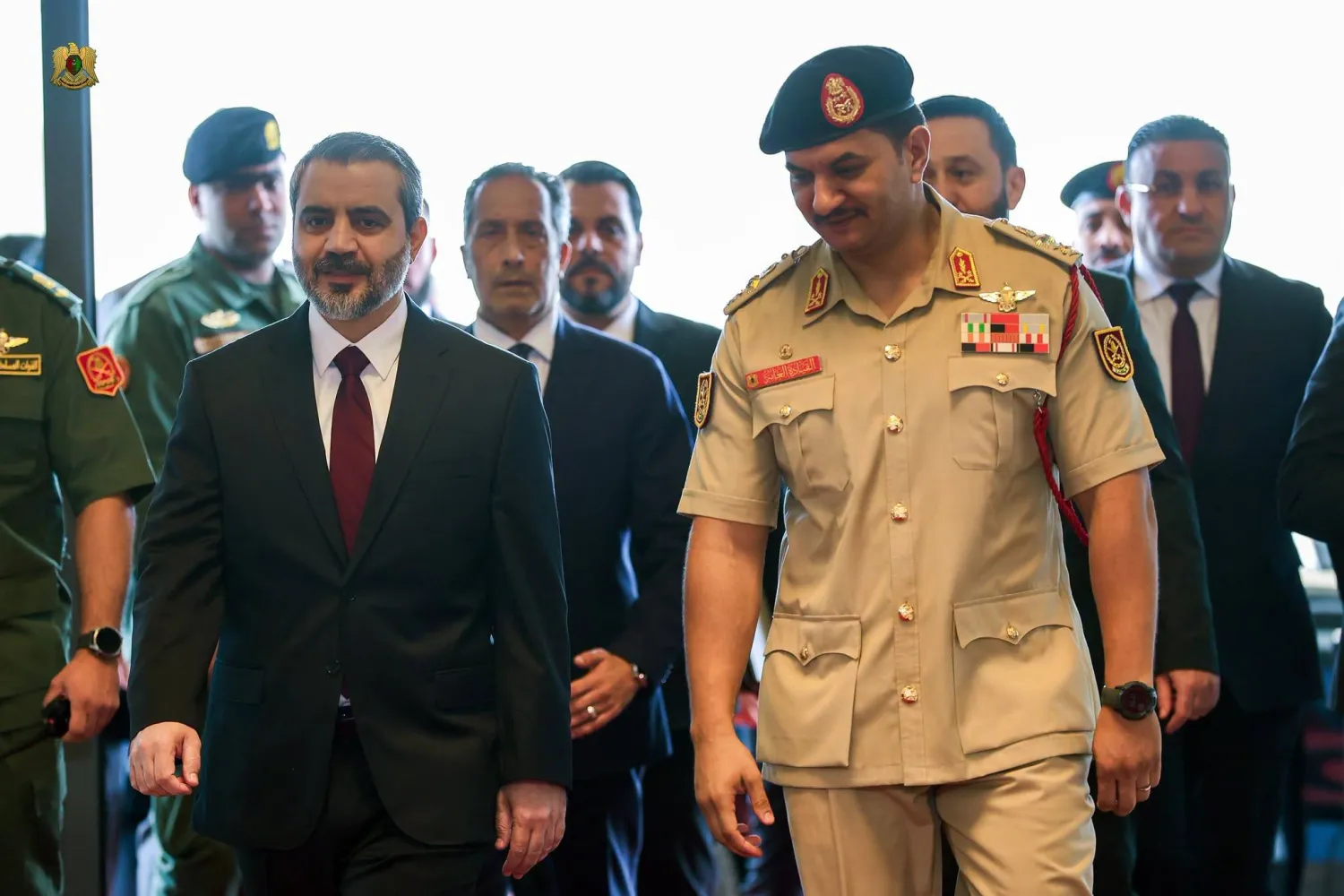
Lebanese President Joseph Aoun and an accompanying delegation tour the southern city of Nabatieh on Saturday (EPA)
TT

Lebanon’s Divide Over Israel Talks Reaches Religious Leaders

Lebanese President Joseph Aoun and an accompanying delegation tour the southern city of Nabatieh on Saturday (EPA)

Lebanon’s divisions over negotiations with Israel have reached its religious leadership, with Maronite Patriarch Beshara al-Rahi backing state efforts to establish a monopoly on arms and pursue talks, and Jaafari Mufti Sheikh Ahmed Qabalan accusing the state of colluding against South Lebanon.

The split turns political disagreements over the government’s policies into a sectarian dispute as talks stall - with an eighth round of negotiations with Israel in Rome postponed until early next month - and the Israeli army continues strikes in the south.

Lebanon’s Shiite religious establishment, Hezbollah and the Amal Movement have long opposed direct negotiations, but Qabalan’s attack was the strongest since the talks began.

President Joseph Aoun has repeatedly pledged to protect Lebanon’s sovereignty, secure an Israeli withdrawal and return residents to occupied areas in the south through negotiations, which he sees as the only available alternative to war.

On Sunday, on the anniversary of the assassination of President-elect Bachir Gemayel, Aoun renewed his pledge to build “a strong and just state,” capable of safeguarding its independent decision-making, sovereignty and citizens’ dignity.

Christian Support for Official Position

Al-Rahi said in his Sunday sermon that placing all weapons under state control “is not the triumph of one side over another, nor a confrontation with a sect or group, but the affirmation of a single national authority.”

“The state cannot function with two decision-making authorities, nor can sovereignty be complete when there are multiple authorities,” he added.

Backing the presidency’s approach, al-Rahi called for negotiations and mediation to produce tangible results, including an end to attacks, Israeli withdrawal and stability under credible guarantees protecting Lebanon’s rights and sovereignty. Negotiations, he said, should not become “an open-ended process with no horizon.”

Qabalan Attacks the State

Qabalan took the opposite position after Aoun visited Nabatieh and pledged state support for the south, saying Israeli withdrawal, the return of prisoners and displaced residents, and reconstruction were national priorities.

In a message published by the state-run National News Agency (NNA), Qabalan accused the executive branch of “strangling and besieging” the south and “colluding against it.”

He warned of what he called government-driven “sedition,” accusing the executive branch of threatening national partnership and seeking to abandon the southern front, which he described as central to Lebanon’s sovereignty and existence.

“The issue today is not that the executive authority does not want to defend the south,” Qabalan said, “but rather the totality of policies that strangle the south, besiege it, drain it and deprive it of every means of life.”

He added that Lebanon’s security was indivisible and called for national action to prevent what he described as “the worst internal strife,” accusing the authorities of giving Israel enough time to continue destroying the south.