



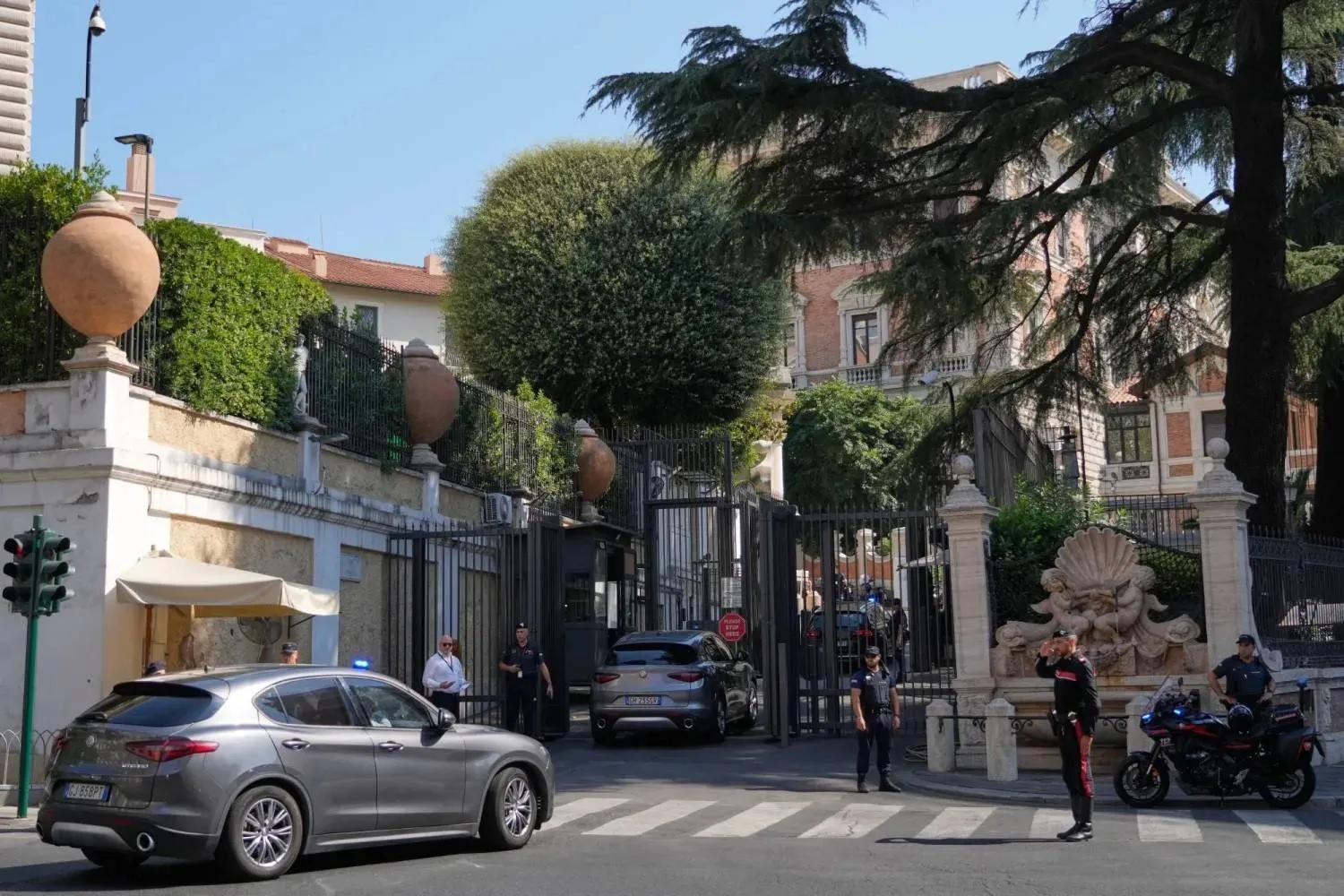

The third round of Lebanese-Israeli negotiations in Rome ended without tangible progress, as Lebanon pressed for concrete steps to implement the so-called framework agreement.
Lebanese officials acknowledge that any breakthrough will take time and require sustained negotiating effort.
The talks unfolded amid continued Israeli escalation in southern Lebanon. The Lebanese delegation made clear that cementing the ceasefire was the immediate priority, alongside securing phased Israeli withdrawals from southern areas — the essential gateway to any further implementation of the agreement.
Captives
Sources familiar with the talks said the process remained difficult and that the seventh round produced no clear results, apart from reviving discussions on the land border.
They told Asharq Al-Awsat that the Rome sessions were divided into three parallel tracks: military, political, and legal-border. The format was designed to address technical and political issues simultaneously, with the issue of captives taking center stage.
Lebanon faces a major obstacle: there is no official, complete list of prisoners or missing persons. Some disappeared during the war, while others are known to be held by Israel, including civilians and Hezbollah members.
Lebanon called for a clear distinction between civilians detained from their villages and homes, whose immediate release it demanded, and Hezbollah captives.
The sources described the issue as complex but said the current round had brought a more positive approach. Work is underway to involve the International Committee of the Red Cross in line with humanitarian standards and international law.
Zawtar al-Sharqiya proposed after Khiam and Bint Jbeil rejected
The proposed pilot zones also dominated the political track.
Lebanon again demanded full compliance with the ceasefire, while negotiations continued for a third straight day over new areas to test the agreement’s implementation mechanism.
The Lebanese delegation proposed Zawtar al-Sharqiya after Israel rejected earlier proposals involving Khiam and Bint Jbeil. The talks, however, ended without a final agreement.
Zawtar al-Sharqiya had already been listed as a pilot zone in the previous round, alongside Froun and Srifa. So far, Israel has withdrawn only from Zawtar al-Gharbiya.
The verification mechanism remains unresolved
The sides also continued discussions over who would monitor and verify implementation in the pilot zones.
No final formula has been agreed upon.
The sources said some countries had been ruled out, including the United States, while others, including Italy, were under consideration.
Government pushes southern recovery plan
Alongside the negotiations, the Lebanese government is pressing ahead with efforts to accelerate recovery in the south.
Prime Minister Nawaf Salam chaired a meeting to review return and recovery efforts.
Salam was briefed on the latest work in southern areas, particularly progress in survey operations and field measures. He also reviewed the temporary crossing project in Qaaqaiyat al-Jisr, which will reconnect the Nabatieh and Bint Jbeil districts.
He instructed the relevant authorities to speed up the project, citing its importance in easing movement, supporting the return of residents to their villages and restoring economic and social ties between the two areas.
The move reflects the state’s effort to match the negotiating track with action on the ground, reinforce stability and support the gradual return of life to southern Lebanon.


