Syria Sentences Bashar Al-Assad to Death in Absentia Over Atrocities

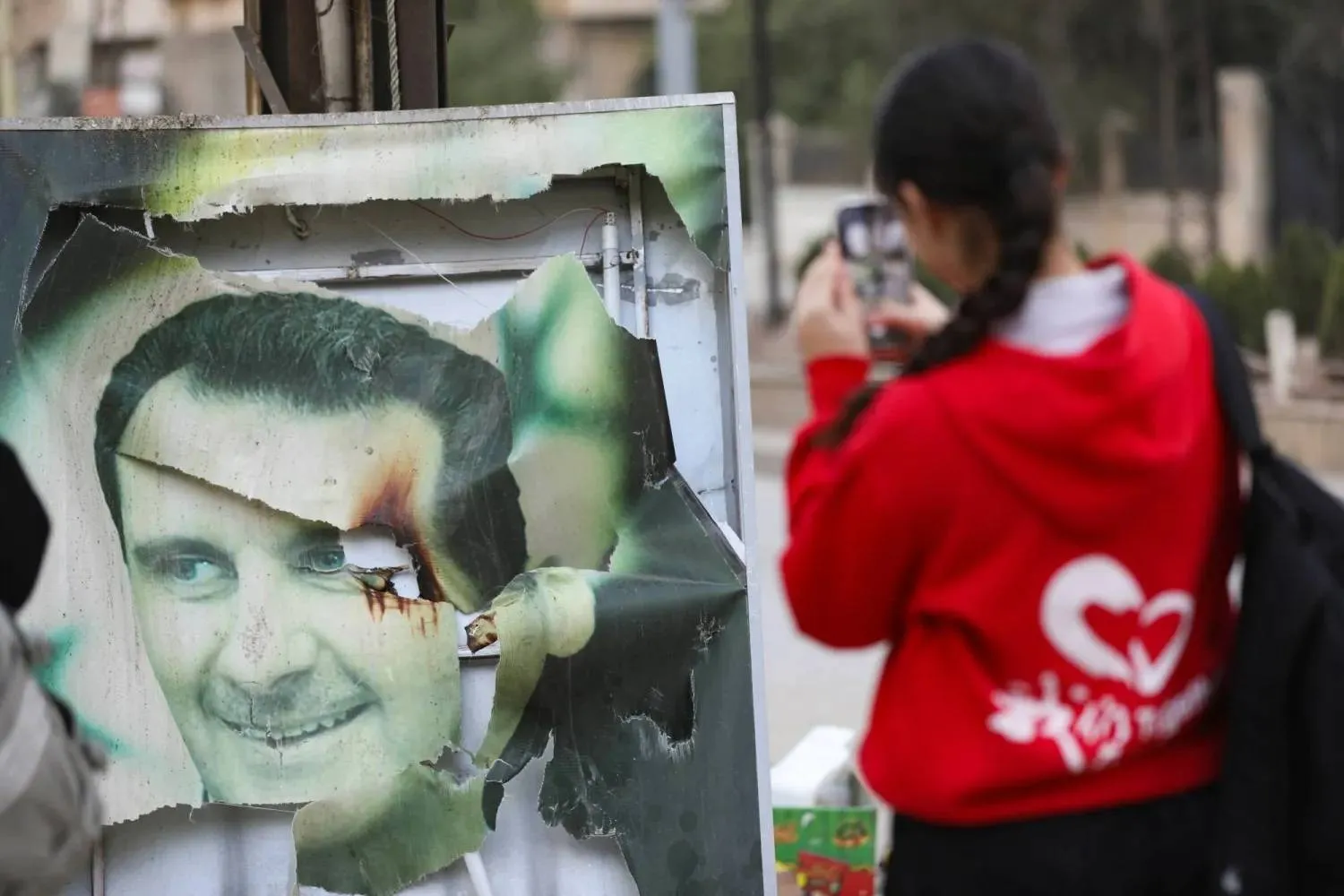
A woman uses her mobile phone near a damaged picture of ousted Syrian ruler Bashar al-Assad as people celebrate, after the Syrian opposition announced that they have ousted President Bashar al-Assad, in Qamishli, Syria December 8, 2024. REUTERS/Orhan Qereman
TT

Syria Sentences Bashar Al-Assad to Death in Absentia Over Atrocities

A woman uses her mobile phone near a damaged picture of ousted Syrian ruler Bashar al-Assad as people celebrate, after the Syrian opposition announced that they have ousted President Bashar al-Assad, in Qamishli, Syria December 8, 2024. REUTERS/Orhan Qereman

A Syrian court on Tuesday sentenced former ruler Bashar al-Assad to death after a trial in absentia, convicting him of atrocities committed during the country's nearly 14-year civil war. 

It is the first such ruling under Syria's transitional leaders who ousted Assad in December 2024, vowing to provide justice and accountability for crimes committed under his rule. 

Assad fled to Moscow as opposition forces closed in on Damascus after a lightning offensive. 

At a court in Damascus, Judge Fakhr al-Din al-Aryan convicted Assad for crimes including "premeditated murder, the intentional killing of more than one person, the intentional killing of children under 15 years... torture, torture leading to death, and deprivation of liberty on multiple occasions -- classified as crimes against humanity and war crimes". 

"He is therefore sentenced to death." 

Syria in April began proceedings against Assad and other officials accused in person and in absentia of atrocities during the country's civil war, which erupted with the former authorities' brutal repression of peaceful pro-democracy protesters. 

More than half a million people were killed and millions displaced, while tens of thousands of people disappeared, many into the country's brutal prison system. 

The court also sentenced six former military and security officials in absentia to death including Assad's brother Maher, who ran the army's elite Fourth Division and also fled the country. 

Those convicted included former defense minister Fahd al-Freij and Louay al-Ali, who headed military intelligence in Daraa province in 2011. 

- Torture - 

The court convicted the officials for crimes including murder, incitement to murder, torture leading to death and repeated deprivation of liberty, also considered "crimes against humanity" and "war crimes". 

Former security official Atif Najib -- the only one in the dock -- was also sentenced to death for "crimes against humanity" committed when he was head of political security in Daraa province, the cradle of the country's 2011 uprising. 

Najib, a cousin of Assad who was arrested in January last year, was convicted for crimes including murder, "the intentional killing of children under 15", and "torture leading to death". 

The acts attributed to him are "crimes against humanity", the court said as it handed down "the harshest punishment against him, which is the death penalty". 

Syria's uprising began in Daraa in March 2011, after 15 students were arrested for allegedly writing anti-government slogans on the city's walls. 

Residents said the students were tortured, leading to a protest to demand their release that ended in bloodshed. 

Security personnel suppressed peaceful demonstrations with force and fired live ammunition to disperse sit-ins at several locations. 

Najib was dismissed after the crackdown, as the protests spread to other provinces. 

Aryan said Najib had denied the charges against him and showed "no remorse". 

Some of Najib's victims were present at the courthouse, including two who were teenagers in 2011 and expressed their opinions to The Associated Press. 

“Today we reached a point where the blood was not wasted,” said Mouawiya Sayasneh, about those who died in the crackdown. Fifteen years later, “there is happiness that Atef Najib was sentenced to death,” he said. 

Another man, Nayef Abazeid, who was detained at the age of 13 in 2011, expressed his satisfaction with the sentence, adding that “our biggest happiness will be when Bashar Assad is executed.” 

Assad took the Syrian presidency in 2000 after the death of his father Hafez. 


US to Honor Sadat with Congressional Gold Medal 45 Years After His Assassination

Late Egyptian President Anwar Sadat. (Egyptian Presidency)
TT

US to Honor Sadat with Congressional Gold Medal 45 Years After His Assassination

Late Egyptian President Anwar Sadat. (Egyptian Presidency)

Forty-five years after the assassination of former Egyptian President Anwar Sadat, Washington is preparing to honor him at a special ceremony in the US Capitol.

Sadat’s family will receive the Congressional Gold Medal, one of the highest civilian honors in the US, on Wednesday in recognition of his legacy and role in advancing peace in the Middle East.

“History is increasingly vindicating my father’s legacy in the eyes of younger generations who did not live through his presidency,” his daughter Rokaya Sadat told Asharq Al-Awsat.

The ceremony follows legislation signed by US President Donald Trump on December 13, 2018, awarding Sadat the medal in recognition of “his heroic achievements and courageous contributions to peace in the Middle East.”

Congress has formally invited the family to attend the presentation at the Capitol, underscoring the enduring significance of Sadat’s political legacy in the US.

The Congressional Gold Medal recognizes outstanding achievements and contributions by individuals, institutions and groups deemed worthy of the distinction by Congress.

The honor comes more than four decades after Sadat’s death and brings renewed attention to his landmark visit to Jerusalem in 1977, which paved the way for the Camp David Accords in 1978 and the Egyptian-Israeli peace treaty in 1979, both reached through US mediation.

Sadat shared the 1978 Nobel Peace Prize with Israeli Prime Minister Menachem Begin following the Camp David Accords.

Rokaya Sadat expressed pride in the continued international recognition of her father as a world leader, saying developments in the Middle East had vindicated his strategic vision.

She maintained that the peace initiative he launched nearly half a century ago has safeguarded Egypt and spared it the devastation of regional conflicts and wars.

“Sadat was criticized when he chose the path of peace, but today’s regional reality answers all his critics,” she told Asharq Al-Awsat. “Egypt enjoys security and stability thanks to his courageous historic decision, even though he paid for it with his life.”

Effat Sadat, chairman of the Sadat Democratic Party, a member of Egypt’s Senate and the late president’s nephew, said he was preparing to travel to Washington to represent the family at the ceremony.

In a statement Monday, he described the congressional tribute as a historic moment and a source of pride for all Egyptians.

The recognition extended beyond the Sadat family, reflecting international appreciation for an Egyptian leader who had the courage to make consequential decisions and change the course of Middle Eastern history, he stressed.

Effat Sadat added that honoring the former president 45 years after his death demonstrated that the impact of historic decisions outlives those who make them, and that leaders with courage and vision leave legacies transcending time and geography.

Anwar Sadat was born on December 25, 1918, in Egypt’s Menoufia governorate in the Nile Delta.

He became president in 1970, succeeding Gamal Abdel Nasser, and remained in office until his assassination in 1981.

Sadat was killed by extremist military personnel during a parade commemorating the October 6, 1973, Arab-Israeli war.


Palestinian Woman Killed, 10 Wounded in Israeli Settler Gunfire

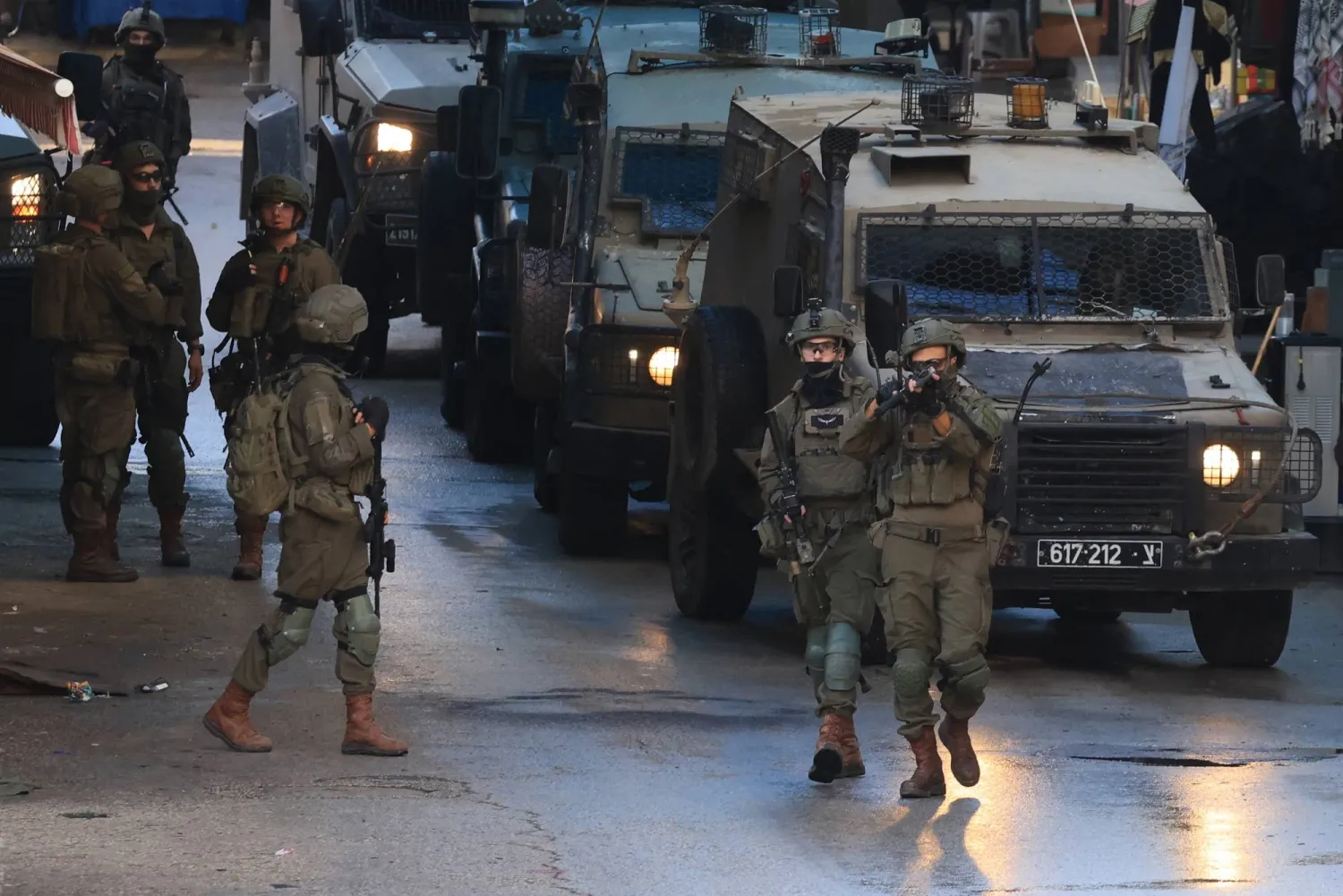
Israeli troops take position during a military raid in the Old City of Nablus, northern West Bank, 08 November 2026. (EPA)
TT

Palestinian Woman Killed, 10 Wounded in Israeli Settler Gunfire

Israeli troops take position during a military raid in the Old City of Nablus, northern West Bank, 08 November 2026. (EPA)

Palestinian official television said on Tuesday that a Palestinian woman was killed and 10 others wounded by what it described as gunfire from Israeli settlers in the village of Duyuk al-Tahta, west of Jericho in the Israeli-occupied West Bank.

Yahya Mufreh, director of the ‌emergency department ‌at Jericho Government Hospital, told ‌reporters ⁠the elderly woman had died ⁠after being shot in the head.

The Israeli military said the violence followed what it described as an attack on the outskirts of Jericho on Monday evening, in which ⁠Palestinians drove their vehicle into ‌an Israeli vehicle ‌before getting out with weapons and attacking its ‌occupants.

It said rocks were then ‌thrown at the Israelis, who opened fire to "remove the threat."

There were Israeli and Palestinian casualties, it said, without giving further ‌details or specifying whether the woman reported killed by Palestinian officials ⁠was ⁠among those shot.

The latest reported violence comes amid heightened tensions in the area following the arrival of a group of Israeli settlers who moved into Palestinian homes in the Jericho area in early November, preventing some Palestinian residents from accessing their properties and raising fears of further settler attacks.


Iraq Orders Army to Enter Jurf al-Sakhar as Confrontation with Kataib Hezbollah Escalates

A member of the Popular Mobilization Forces holds a flag of the Kataib Hezbollah group during a protest to condemn air strikes on their bases, outside the main gate of the US Embassy in Baghdad, Iraq December 31, 2019. (Reuters)
TT

Iraq Orders Army to Enter Jurf al-Sakhar as Confrontation with Kataib Hezbollah Escalates

A member of the Popular Mobilization Forces holds a flag of the Kataib Hezbollah group during a protest to condemn air strikes on their bases, outside the main gate of the US Embassy in Baghdad, Iraq December 31, 2019. (Reuters)

Iraq ordered the army to enter later this week the main stronghold of the Iran-backed Kataib Hezbollah group, following a push by the prime minister to disarm the fighters.

Iraq has been facing mounting US pressure to curb Iran's influence and rein in Tehran-backed armed groups, which Washington designates as terrorist organizations -- a difficult task in a country long caught between the two rivals.

On Monday, PM Ali al-Zaidi "ordered the armed forces to enter" Jurf al-Sakher, government spokesman Haidar al-Aboudi told the state news agency INA, adding that "a deadline has been set for the armed faction to exit the area".

A security source told AFP that the deadline was Friday.

The decision came after the government said on Saturday that an investigation committee had confirmed oil smuggling in the Jurf al-Sakhar area, south of Baghdad.

It ordered those implicated, without identifying them, to be referred to the judiciary, and dismissed nine officials, including from the security, intelligence and oil sectors.

But Kataib Hezbollah said in a statement on Sunday that al-Zaidi's office was "fabricating lies", adding that it was being subjected to "the largest blackmail operation aimed at forcing" it to abandon its weapons.

Tensions have surged between al-Zaidi and the faction since the premier vowed to ensure that armed groups would hand over their weapons to the state -- a long-standing US demand.

- Caught between rivals -

Successive Iraqi governments have long struggled to balance relations between the US and Iran, whose influence has grown significantly in Iraq since the 2003 US-led invasion that toppled former ruler Saddam Hussein.

Whenever tensions rise between Washington and Tehran, their repercussions are often felt in Iraq, a country still trying to move past decades of conflict and instability.

Al-Zaidi, who came to power early this year, has pursued closer ties with Washington, with Iraqi political sources telling AFP that his relationship with Tehran has been strained.

Al-Zaidi paid a surprise visit to Iran earlier this month, with Foreign Minister Fuad Hussein saying that it aimed to help narrow the differences between Tehran and Washington, without elaborating, as efforts to end the Middle East war have stalled in recent weeks.

Washington accuses Iran of using Iraq's economy to evade sanctions, and has previously sanctioned Iraqi individuals, including an oil official and businessmen, for blending Iraqi and Iranian oil.

Pro-Iran armed groups have long targeted US interests in Iraq and stepped up their attacks across the region in support of Tehran during the Middle East war, triggered by US-Israeli strikes on Iran.

- Confrontation -

Senior Iraqi politicians told AFP that al-Zaidi had repeatedly said he was ready to "confront" groups if they do not disarm.

A senior Iraqi politician said that "it has become personal" between al-Zaidi and Kataib Hezbollah, adding that political leaders were working to defuse tensions.

Kataib Hezbollah has recently issued several statements criticizing the prime minister, accusing him of corruption and threatening his government.

The group has maintained a presence in Jurf al-Sakhar for more than a decade, after helping recapture the area from the ISIS group.

The vast area, which includes villages and agriculture lands, has since mostly become a militarized zone controlled by the Iran-backed armed group, with little publicly known about what lies inside.

It was the target of the first strike in Iraq blamed on the United States during the Middle East war.