Eight Muslim Countries Condemn Israel’s Rejection of Trump’s Gaza Plan

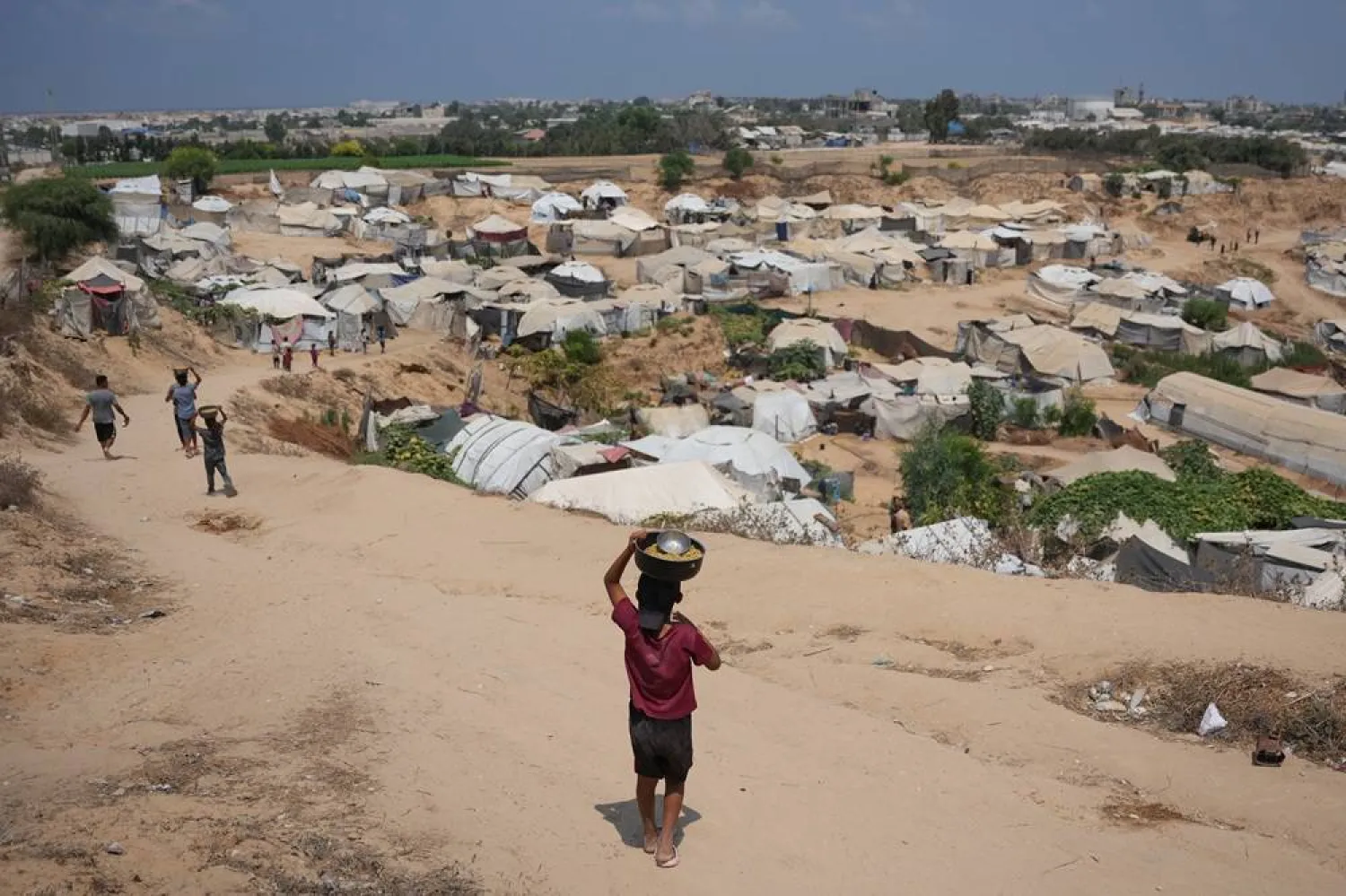
 Displaced Palestinian children carry food portions in Deir al-Balah, central Gaza Strip, Friday, Aug 14, 2026. (AP)
Displaced Palestinian children carry food portions in Deir al-Balah, central Gaza Strip, Friday, Aug 14, 2026. (AP)
TT

Eight Muslim Countries Condemn Israel’s Rejection of Trump’s Gaza Plan

 Displaced Palestinian children carry food portions in Deir al-Balah, central Gaza Strip, Friday, Aug 14, 2026. (AP)
Displaced Palestinian children carry food portions in Deir al-Balah, central Gaza Strip, Friday, Aug 14, 2026. (AP)

The foreign ministers of eight Muslim countries on Sunday condemned Israel's rejection of a recently released roadmap for fully implementing US President Donald Trump's Gaza peace plan.

The foreign ministers of Saudi Arabia, Egypt, Jordan, Pakistan, Indonesia, Türkiye, Qatar, and the United Arab Emirates said the rejection amounts to a “direct repudiation” of the peace plan, “jeopardizes its implementation, and fundamentally undermines the collective efforts to achieve a just and lasting peace.”

“Such rejection confirms that Israel now bears responsibility for obstructing the efforts to bring peace in Gaza and the rest of the Occupied Palestinian Territory,” they said in statement.

The roadmap, which has been accepted by the Palestinian factions, is the conclusion of extensive efforts exerted by the mediators, namely Egypt, Qatar, Türkiye, the US, the High Representative of Gaza and the Board of Peace and constitutes a vital milestone for the decommissioning of weapons concurrently with the withdrawal of Israeli forces, the deployment of the International Stabilization Force, the transfer of the administrative authority to the National Committee for the Administration of Gaza and the reconstruction of Gaza as stipulated in the Comprehensive Plan, they went on to say.

Rejecting the roadmap is “an explicit refusal to proceed with the implementation of the peace plan, and directly threatens to derail the extensive efforts exerted by Trump to bring an end to the war in Gaza and establish the conditions for lasting peace.”

The ministers underscored “the importance of sustained and active US engagement to ensure and enforce Israel’s full compliance with the commitments and arrangements envisaged under the peace plan and its roadmap, and to prevent further obstruction of their implementation.”

“Israel bears direct and full responsibility for any consequences resulting from its continued rejection, obstruction, delay or non-compliance, including any resulting deterioration of the situation on the ground and disruption of ending the war in Gaza,” they added.

They underlined the urgent need for the full and immediate implementation of the peace plan in order to address the grave humanitarian situation, ensure security and stability for all in Gaza, and pave the way for reconstruction and recovery and advancing a just and lasting peace grounded in the Palestinian right to self-determination and statehood in accordance with international law, paving the way for security and stability for all countries and peoples of the region.

They categorically rejected any attempt to deny or foreclose Palestinian statehood including through unilateral actions.

“A just, lasting and comprehensive peace only will be achieved by the implementation of two-state solution, by the realization of an independent and sovereign Palestinian State based on the 1967 borders, with East Jerusalem as its capital in accordance with international law and relevant United Nations resolutions,” they added.

“Any attempt to deny or foreclose Palestinian statehood therefore directly undermines the prospects for peace, security and stability throughout the region,” they warned.

The ministers underscored the importance of the continued role of the Board of Peace and call all parties to support its efforts for the implementation of the roadmap and advancing the second phase of Trump’s peace plan.

The ministers called on the Board of Peace, with the active support and engagement of the US, to take immediate and concrete measures within its mandate to uphold the integrity of the peace plan and prevent any party from obstructing its implementation.


Syria: Israeli Forces Shell Quneitra Countryside

Israeli forces advance into Quneitra countryside (Archive - Reuters)
TT

Syria: Israeli Forces Shell Quneitra Countryside

Israeli forces advance into Quneitra countryside (Archive - Reuters)

Israeli forces fired several artillery shells on Wednesday at the area around eastern Tell al-Ahmar in the southern Quneitra countryside in southern Syria.

The Syrian Arab News Agency (SANA) said that “occupation forces fired two projectiles that landed on agricultural land around eastern Tell al-Ahmar, causing no injuries".

Israel continues to violate the 1974 Disengagement Agreement through repeated incursions into southern Syria, raids on and arrests of civilians, land bulldozing and shelling, among other attacks, the agency said.

Syria has repeatedly called for Israeli forces to withdraw from its territory, stressing that all measures taken by Israel are null and void and have no legal effect under international law. Damascus has also urged the international community to fulfil its responsibilities and compel Israel to withdraw fully from southern Syria.


Iraq Closes Sheeb Border Crossing with Iran to Check Security

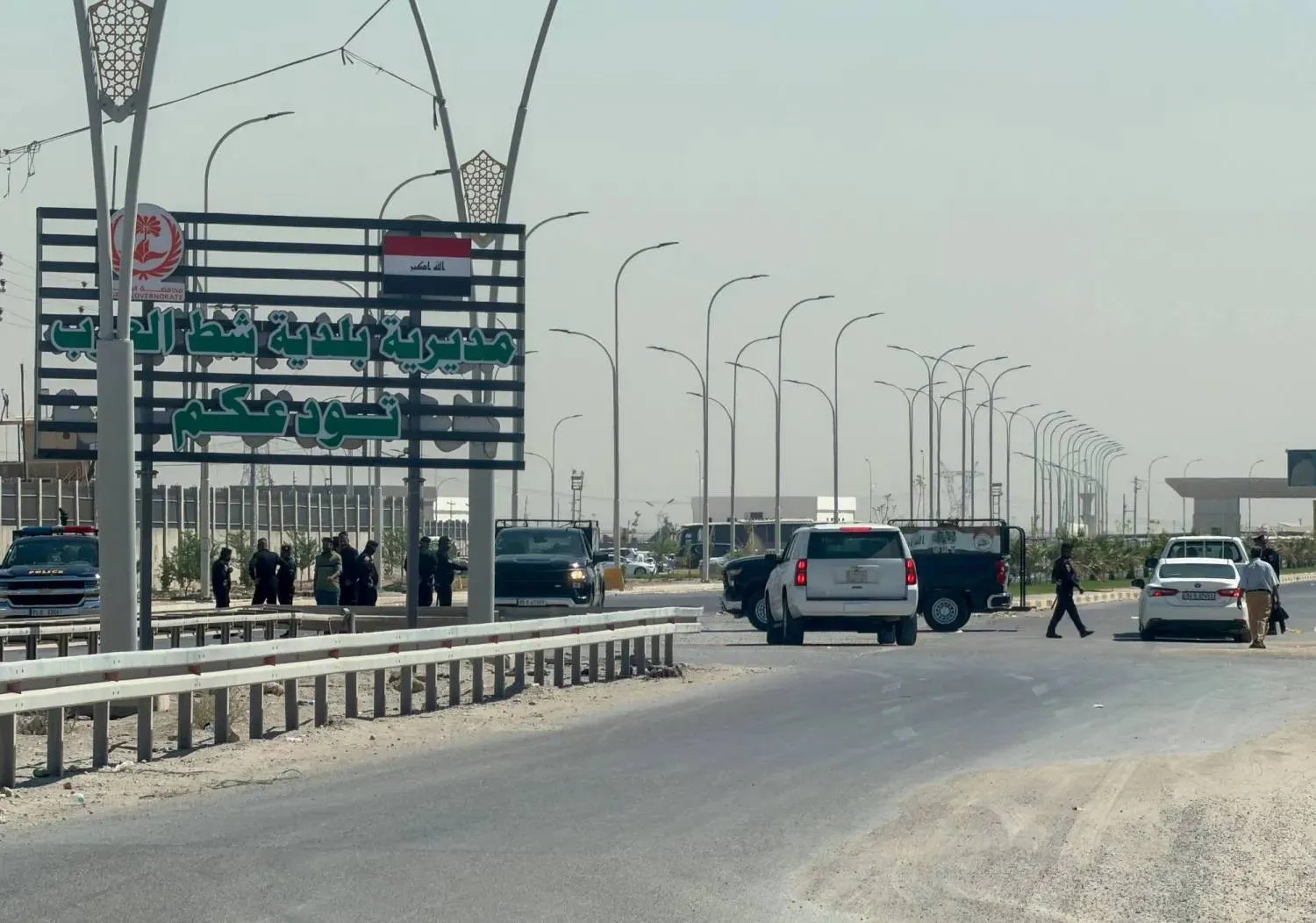
 Security personnel stand near the Shalamsheh border crossing between Iraq and Iran, after Iraqi authorities ordered its closure as a precautionary measure following the latest drone attacks on Saudi Arabia, in Basra, Iraq, September 12, 2026. (Reuters)
Security personnel stand near the Shalamsheh border crossing between Iraq and Iran, after Iraqi authorities ordered its closure as a precautionary measure following the latest drone attacks on Saudi Arabia, in Basra, Iraq, September 12, 2026. (Reuters)
TT

Iraq Closes Sheeb Border Crossing with Iran to Check Security

 Security personnel stand near the Shalamsheh border crossing between Iraq and Iran, after Iraqi authorities ordered its closure as a precautionary measure following the latest drone attacks on Saudi Arabia, in Basra, Iraq, September 12, 2026. (Reuters)
Security personnel stand near the Shalamsheh border crossing between Iraq and Iran, after Iraqi authorities ordered its closure as a precautionary measure following the latest drone attacks on Saudi Arabia, in Basra, Iraq, September 12, 2026. (Reuters)

Iraq has closed the busy Sheeb border crossing with Iran to review security and install detection equipment to stop the smuggling of prohibited materials, ‌an Iraqi ‌border official said ‌on ⁠Wednesday.

Sheeb would be ⁠closed to passengers, vehicles and commercial trucks until further notice, two other sources at the crossing said.

Iraq ⁠ordered the closure ‌of ‌another crossing with Iran, Shalamsheh, ‌in September as a ‌precaution after drone attacks on Saudi Arabia, two security sources said at ‌the time. Riyadh said the drones had been ⁠launched ⁠from Iraq.

The current security measures at Sheeb are weak and inadequate, the Iraqi border crossings official told Reuters.


Arab League Chief Condemns Israeli Attacks on South Lebanon, Urges Action

Arab League Secretary-General Nabil Fahmy listens to a Lebanese Army officer pointing out areas occupied by Israeli forces in Zawtar al-Gharbiyeh, South Lebanon, alongside Social Affairs Minister Haneen Sayed (AP). 
TT

Arab League Chief Condemns Israeli Attacks on South Lebanon, Urges Action

Arab League Secretary-General Nabil Fahmy listens to a Lebanese Army officer pointing out areas occupied by Israeli forces in Zawtar al-Gharbiyeh, South Lebanon, alongside Social Affairs Minister Haneen Sayed (AP). 

Arab League Secretary-General Nabil Fahmy condemned Israeli attacks on South Lebanon as “unacceptable,” calling for concrete Arab action to support the country, strengthen its army and help displaced residents return home.

Fahmy made the remarks during a visit to the southern city of Tyre, where he met senior Lebanese Army officers at the Benoit Barakat barracks, accompanied by Social Affairs Minister Haneen Sayed.

Fahmy said he had chosen Lebanon as one of his first foreign destinations since taking office to see firsthand the challenges facing its people.

His visit to the south, he explained, was meant to reassure residents that the Arab world and the international community recognized their suffering and were prepared to provide tangible support.

He pointed to a September resolution by the Arab League’s ministerial council that addressed Lebanon’s crisis and its underlying causes, particularly repeated Israeli attacks on civilians and infrastructure.

After touring the town of Zawtar and the city of Nabatieh, Fahmy described the destruction he witnessed as “distressing.”

He accused Israel of systematically demolishing residential areas, seizing land and seeking to displace civilians, potentially paving the way for further occupation.

Despite the devastation, he expressed confidence that Lebanese residents would remain attached to their land.

The Arab League was working with the Lebanese government to explore reconstruction efforts and ways to restore stability, he added.

While rebuilding would require action across several sectors, Fahmy stressed that Arab solidarity could not be limited to statements of condemnation.

“This is the beginning of a sustained process, not the end of the road,” he said, reaffirming the League’s commitment to Lebanon.

Army seeks support, post-UNIFIL arrangements

Brig. Gen. Nicolas Tabet, commander of the Lebanese Army’s South Litani Sector, welcomed the visit as a sign of Arab solidarity at a time of mounting security and humanitarian challenges.

He said Israeli attacks had left widespread destruction and displaced thousands of Lebanese, while continued occupation and security threats prevented families from returning safely to their villages.

The situation was also hampering the army’s deployment to the internationally recognized border.

Tabet called for Arab and international pressure to halt Israeli attacks, secure a full withdrawal from Lebanese territory and uphold the country’s sovereignty.

Despite difficult conditions and limited resources, the army remained committed to its duties, he said, urging the Arab League to mobilize diplomatic support, strengthen the military and help rebuild the south.

He also called for lasting security arrangements after the mandate of the United Nations Interim Force in Lebanon (UNIFIL) ends.

Such arrangements, developed with the UN and international partners, would be essential to preventing a security vacuum and implementing Security Council Resolution 1701.

Describing Fahmy’s visit as a rare and welcome gesture, Tabet said it offered reassurance that Lebanon had not been left to face its challenges alone.