Berri Puts War’s End in Washington’s Hands, Links Army Deployment to Israeli Withdrawal

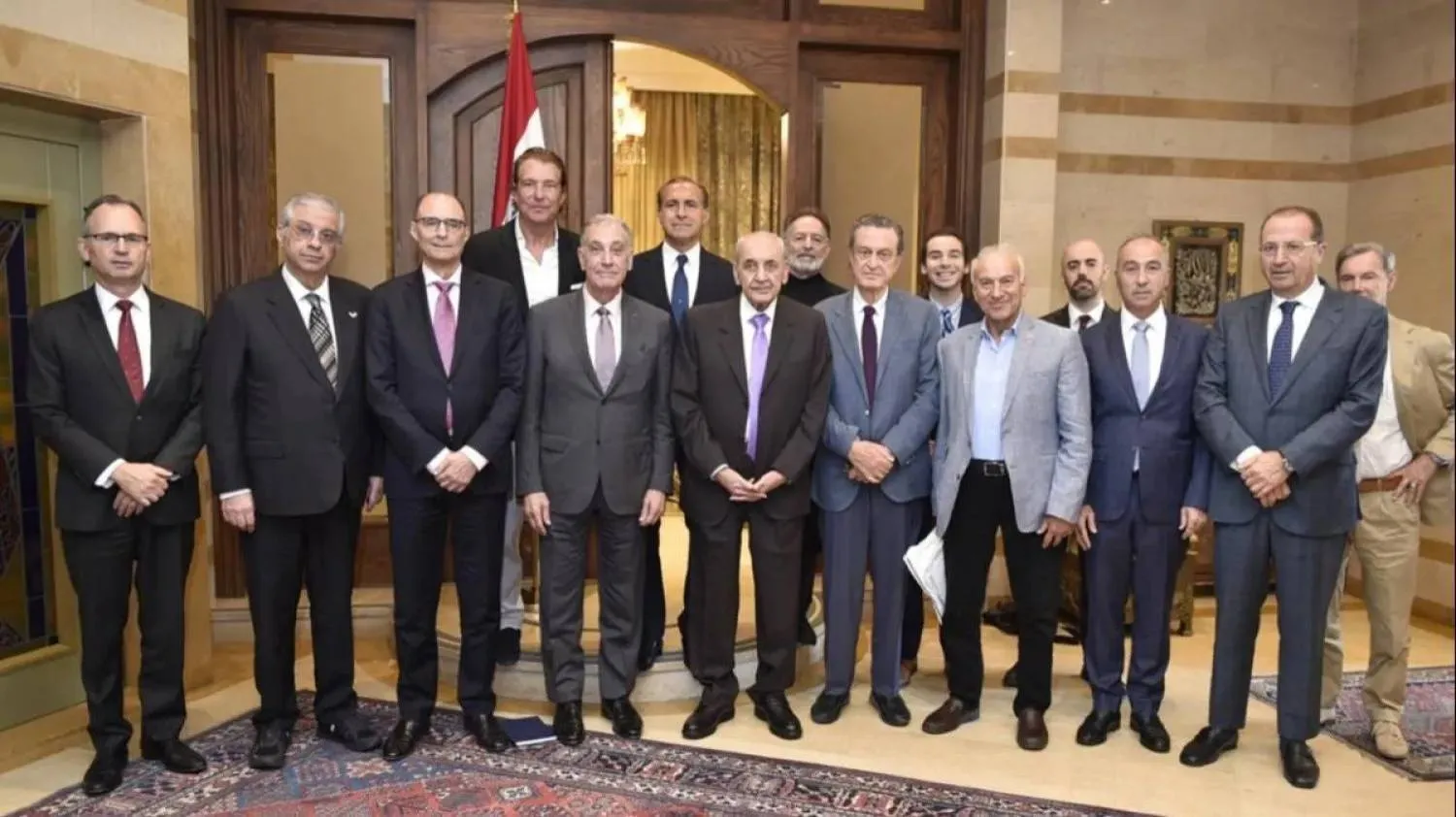
Parliament Speaker Nabih Berri receives a delegation from the American Task Force on Lebanon (ATFL) (Parliament Speaker’s Office)
TT

Berri Puts War’s End in Washington’s Hands, Links Army Deployment to Israeli Withdrawal

Parliament Speaker Nabih Berri receives a delegation from the American Task Force on Lebanon (ATFL) (Parliament Speaker’s Office)

Lebanese efforts are continuing on several fronts to advance negotiations and implement the “Framework Agreement,” as Parliament Speaker Nabih Berri tied the immediate deployment of the Lebanese army south of the Litani River to an end to Israel’s war, a ceasefire and an Israeli withdrawal to the international border.

Berri said only the United States and President Donald Trump could compel Israel to take those steps.

His remarks come as Israeli escalation continues in southern Lebanon, while uncertainty persists over the eighth round of Lebanese-Israeli negotiations, with no official date set.

Berri: The Army should be the sole security force

Berri made the comments during a meeting with a delegation from the American Task Force on Lebanon (ATFL), headed by Ambassador Edward Gabriel.

The talks covered political and field developments, Israel’s continued military operations and destruction of southern villages, as well as direct negotiations and the “Framework Agreement,” according to a statement from the parliament speaker’s office.

Berri said what was happening in the south was “unbearable,” citing the destruction of villages, attacks on civilians and violations of international and humanitarian laws and norms.

He said some of the destruction and attacks had surpassed “the crimes and massacres against people, buildings and heritage that have occurred and continue to occur in Gaza.”

Berri said the United States was the only country capable of ending the situation.

“The United States is the only country, and its president, Donald Trump, is the only president capable of compelling Israel to end its war, cease fire and withdraw to the international border in the south,” he said.

Berri, whom Hezbollah had previously tasked with negotiating on its behalf, linked those steps to Lebanon assuming security responsibility in the south.

“At that point, I guarantee the immediate deployment of the Lebanese army in the area south of the Litani,” he said.

He said the army should be the sole force responsible for security and the only armed force in the area.

Berri also said the area south of the Litani belonged to its residents, adding that southerners were eager to see the army protect their security and stability.

Ali al-Taher and US pressure

Gabriel described the meeting as “very good,” saying talks covered reform, Lebanon’s security situation and developments in the south, particularly the direct negotiations and the Framework Agreement.

He said the delegation saw strong interest from Berri in making progress on the “pilot zones” and a personal commitment to their success.

On the Ali al-Taher hill, Gabriel said Israel needed to make clear whether it accepted Lebanese army control of the position.

He said people in the south did not want war and wanted to return home, adding that he would convey Berri’s views to US policymakers.

Asked about US pressure on Israel, Gabriel said Trump was working very hard to push the Israelis to stop the death and destruction.

He said Trump had told the Israelis, “Enough, enough”, adding that he expected Washington to keep pressing Israel to end the war.

Eighth round: Tentative timing, low expectations

The timing of the eighth round of Lebanese-Israeli negotiations remains unclear.

Ministerial sources told Asharq Al-Awsat that a date under discussion for early September “remains tentative” and that official invitations have not yet been sent. They said invitations could be issued in the coming days.

The sources said Lebanon would attend any negotiating meeting but voiced limited optimism about the next round, given the current political and military conditions and Israel’s escalating positions.

“There are no high expectations for the outcome of the negotiations, especially before the next Israeli elections in October,” the sources said.

Still, they said Lebanon hoped the talks would produce positive results.

They said Israel’s positions were “clear and concerning to Lebanon” and that Washington needed “to exert pressure to deter Israel.”

Lebanon’s diplomatic outreach has taken on added importance in that context, including President Joseph Aoun’s visit to Rome.

Ministerial sources said the visit has two main objectives.

The first is to meet Pope Leo XIV and brief him on the latest developments surrounding the Framework Agreement, particularly the role he could play in supporting the political track.

The second is to meet with Italian President Sergio Mattarella and Prime Minister Giorgia Meloni to discuss what will follow the end of UNIFIL’s mandate if the international force cannot be extended.

The sources said the issue is linked to an earlier French-Italian initiative proposing that international forces could take on security responsibilities in the south if UNIFIL’s mandate is not renewed at the end of this year.

Houthi Escalation Drives Up Casualties, Threatens Widespread Humanitarian Collapse

The total number of casualties from the escalation through the end of October reached 9,730, including 7,959 injuries and 1,771 deaths. (Local media)
TT

Houthi Escalation Drives Up Casualties, Threatens Widespread Humanitarian Collapse

The total number of casualties from the escalation through the end of October reached 9,730, including 7,959 injuries and 1,771 deaths. (Local media)

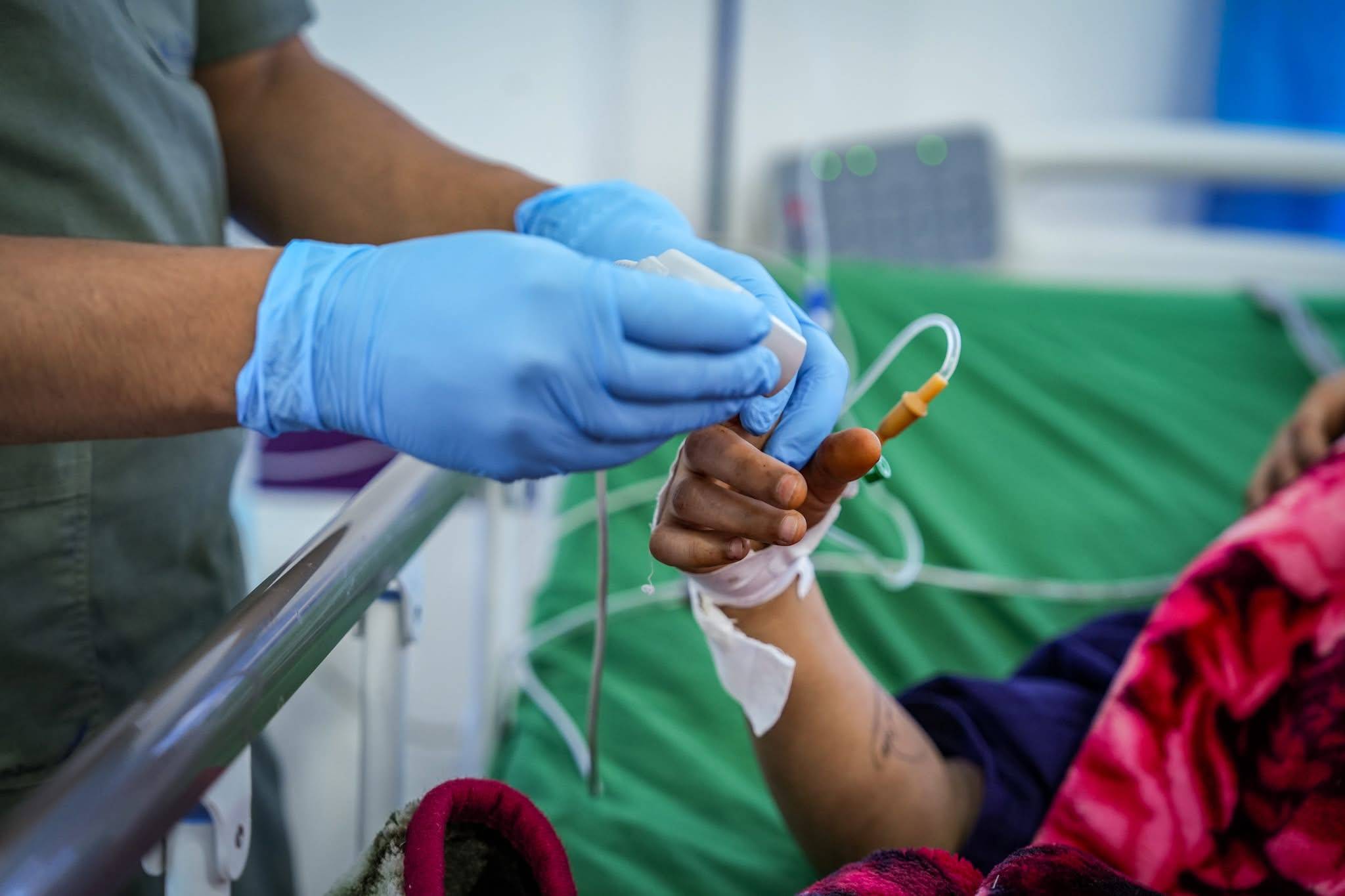
Local and international medical organizations in Yemen reported a sharp rise in daily casualties from the Houthi military escalation, to 132 from about 93 last week, with the Lahj governorate the hardest hit as fighting persisted and the Houthis targeted populated areas with missiles and drones.

The latest Health Cluster report put the total number of casualties recorded by the health emergency operations center through the end of October at 9,730, including 7,959 injuries and 1,771 deaths, an increase of 658 in just five days.

The southwestern province of Lahj accounted for 309 casualties, or 47% of the new cases. Marib recorded the highest fatality rate, with 36 deaths among 172 casualties, or 21%. Of those, 117 casualties, including 20 deaths, were reported on Oct. 30 alone in Al-Jubah and Harib districts and along the Al-Jawf front.

The Health Cluster, which comprises 31 health sectors, warned of deteriorating services along Yemen's western coast. All three partner-supported health facilities in Al-Waziyah district had stopped operating, while access restrictions prevented the collection of October data in Dhubab district.

The deterioration came as the number of displaced people exceeded 320,000, according to the International Organization for Migration (IOM), with most of the displacement occurring over the past two months.

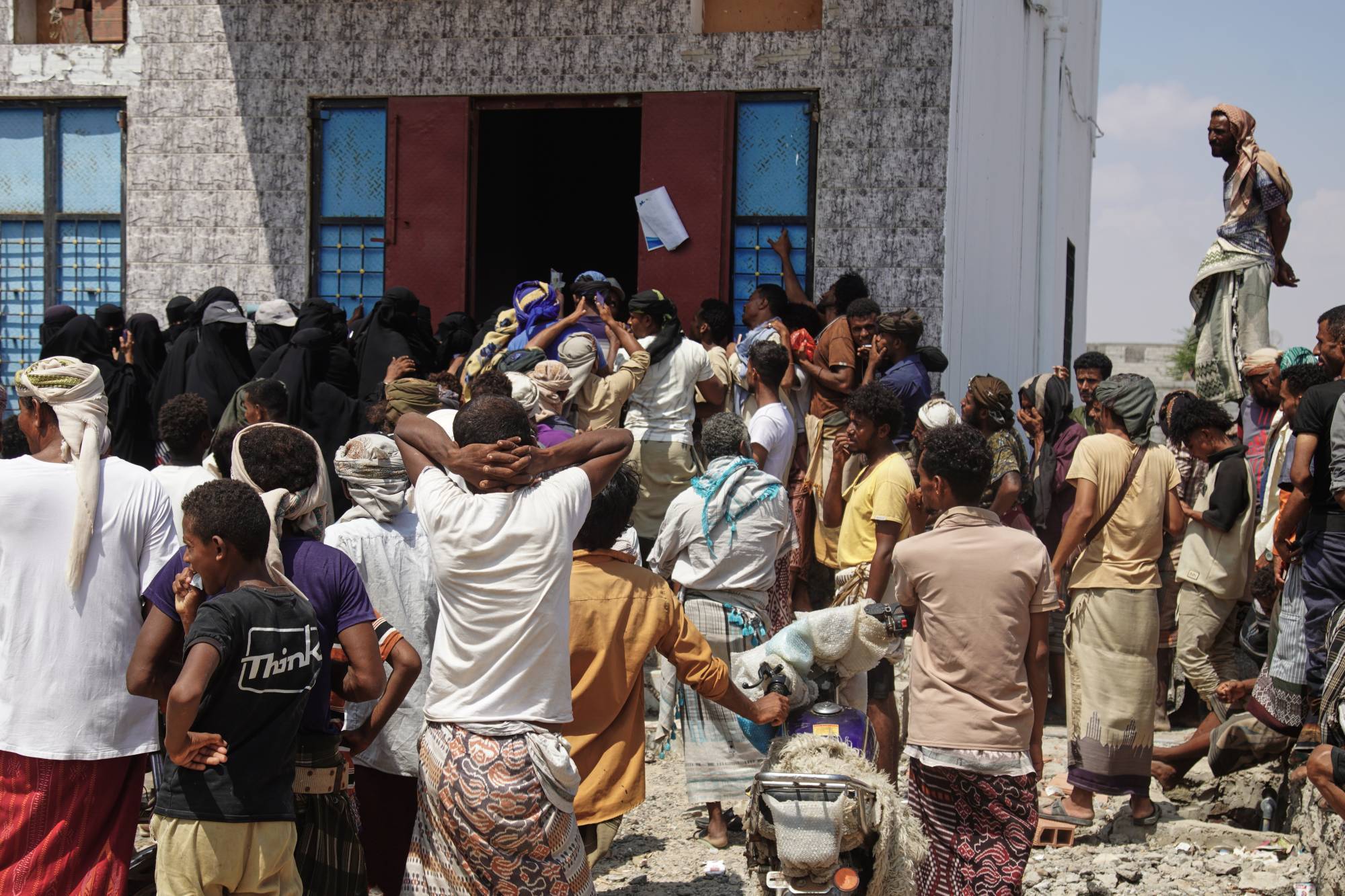
Yemenis displaced by Houthi attacks in Taiz gather to receive aid on the outskirts of Aden. (AP)

Diseases

Some 43,000 people have been displaced from Lahj's Al-Mudarabah and Al-Arah district since the start of last year, while the interim capital Aden currently hosts more than 56,000 displaced people. Prices of essential goods in Taiz have risen threefold to fivefold.

The report identified 28 new or reopened displacement sites sheltering 21,273 people without dedicated site management or humanitarian oversight. Another 105 sites, housing 74,456 people, were recorded in western Taiz districts that came under Houthi control during the same month.

The humanitarian response faces severe shortages. The World Health Organization (WHO) is funding just nine mobile medical teams against a target of 30 to 40, and four fixed health centers against a target of 25 to 35.

The report also highlighted an urgent need to coordinate with the Executive Unit for the Management of IDPs Camps to identify suitable locations for delivering services.

Cholera cases continued to fall across the five worst-affected provinces, dropping from 639 in epidemiological week 40 to 443 in week 43. Data for week 44, however, remained 23% incomplete.

The WHO consequently identified 23 districts with a combined population of 2.25 million as priorities for requesting a single dose of oral cholera vaccine from the International Coordinating Group.

Cholera cases continued to fall across the five worst-affected provinces. (UN)

Healthcare gaps

Restrictions have disrupted aid deliveries, forcing the cancellation of air bridge flights to Sanaa scheduled for Oct. 29 and Nov. 3.

The WHO's second pilot medical shipment, weighing 10 metric tons, also remains on hold pending coordination with the World Food Program for transport to Taiz.

The disruptions come amid a severe funding shortfall. Just 12% of the 90-day humanitarian response plan has been funded, with the WHO receiving $3.7 million of the $31 million required, leaving a $27.3 million gap.

Even if an additional $7.3 million under discussion with European donors and the Central Emergency Response Fund is approved, 65% of the plan would remain unfunded, threatening the response beyond year-end.

The report identified four critical, unfunded gaps in the care of injured patients: patient referral systems, a Level 2 surgical facility, expanded intensive care capacity, including fuel for 77 health facilities, and post-discharge rehabilitation services.

Without post-discharge rehabilitation, patients cannot be safely released from surgical wards, leaving beds occupied, reducing hospital capacity and preventing new patients from receiving treatment.


Iraq Braces for Possible US-Iran War with Emergency Military, Civilian Plans

A rocket is launched by an Iraqi faction. (Popular Mobilization Forces)
TT

Iraq Braces for Possible US-Iran War with Emergency Military, Civilian Plans

A rocket is launched by an Iraqi faction. (Popular Mobilization Forces)

Iraq has drawn up sweeping contingency plans for a possible military conflict between Washington and Tehran, deploying troops to border cities and giving commanders authority to respond to armed violations without seeking approval from the commander-in-chief, officials said on Friday.

The preparations also include possible shifts to remote learning and measures to accommodate people fleeing conflict zones.

Signs of imminent US strikes on Iran have mounted this week, fueling fears in Baghdad that Shiite armed factions could join the fighting on Tehran's side after updating their list of potential targets.

Borders under watch

A senior security official told Asharq Al-Awsat that Iraq had tightened surveillance of border cities on orders from the commander-in-chief, stepping up field monitoring and round-the-clock assessments of unusual movements.

The measures cover the Iranian border from Sulaymaniyah in Iraqi Kurdistan in the north to Basra in the south, near Kuwait and Iran, as well as army deployments along the Syrian border, said the official, who requested anonymity because he was not authorized to speak publicly.

Military commanders are paying particular attention to Basra amid fears that armed factions could operate in strategically sensitive locations with regional significance, the official said.

Another official, who attended a high-level meeting on the potential fallout from war last week, said Prime Minister Ali al-Zaidi had granted army commanders exceptional powers to confront armed violations by outlaw groups immediately, without referring decisions to him.

The commanders now have "exceptional powers to deter armed groups," the official said.

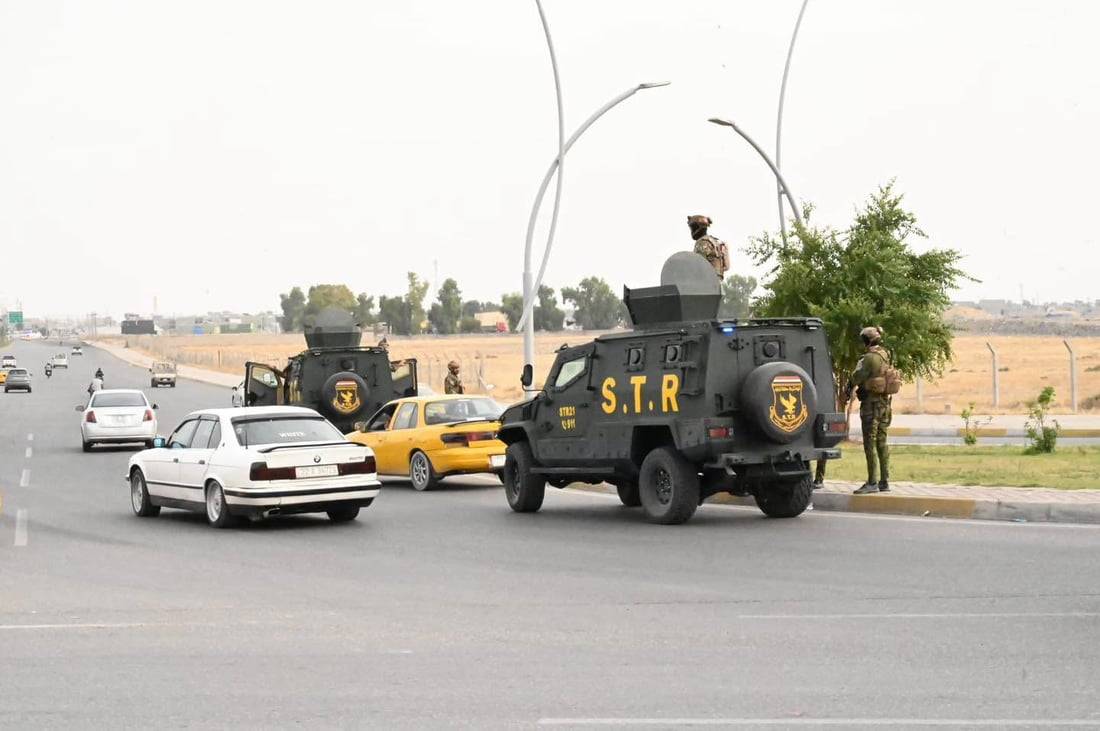
A military patrol in Kirkuk city on Friday. (Iraqi police)

Remote learning

Beyond military precautions, Iraq's Ministerial Council for National Security has discussed emergency measures that could see schools switch to remote learning, sensitive public-sector records moved and digitally preserved, and preparations made for an influx of people fleeing the fighting, a civilian official familiar with the discussions said.

The council, chaired by al-Zaidi as commander-in-chief, includes the national security adviser and the ministers of interior, defense, foreign affairs, finance and planning.

A government source, however, told Asharq Al-Awsat it was too early to decide on changes to schooling or government working arrangements.

The government first drew up emergency plans in March, when the war erupted following the killing of Iranian Supreme Leader Ali Khamenei, and has updated them regularly as circumstances changed, the source said.

Revolutionary Guards update target lists

But political officials speaking to Asharq Al-Awsat this week described an "unprecedented" level of alarm over reports that armed factions had updated their lists of targets on orders from Iran's Revolutionary Guards Corps.

On Wednesday, Iran's Tasnim news agency quoted Esmail Qaani, commander of the IRGC’s Quds Force, as saying resistance leaders had received a message from Supreme Leader Mojtaba Khamenei urging them to "confront the enemy without limits."

They had begun turning that message into action by issuing a written declaration of full allegiance, Qaani said.

One Iraqi official warned that al-Zaidi "could find himself heading the government of a country hostile to the United States if the factions enter the war this time."

US presidential envoy to Iraq Tom Barrack, in a statement after meeting al-Zaidi on Thursday evening, said the prime minister faced the toughest task of all: containing crises before they escalated.

Al-Zaidi, meanwhile, reaffirmed after a phone call with US President Donald Trump the same day that Iraq would not allow its territory to be used to attack neighboring countries.

Kurdish sources told Asharq Al-Awsat that Barrack was expected to brief officials in Erbil and Sulaymaniyah on Friday evening on the latest developments in the Iran crisis and the prospect of renewed military confrontation.

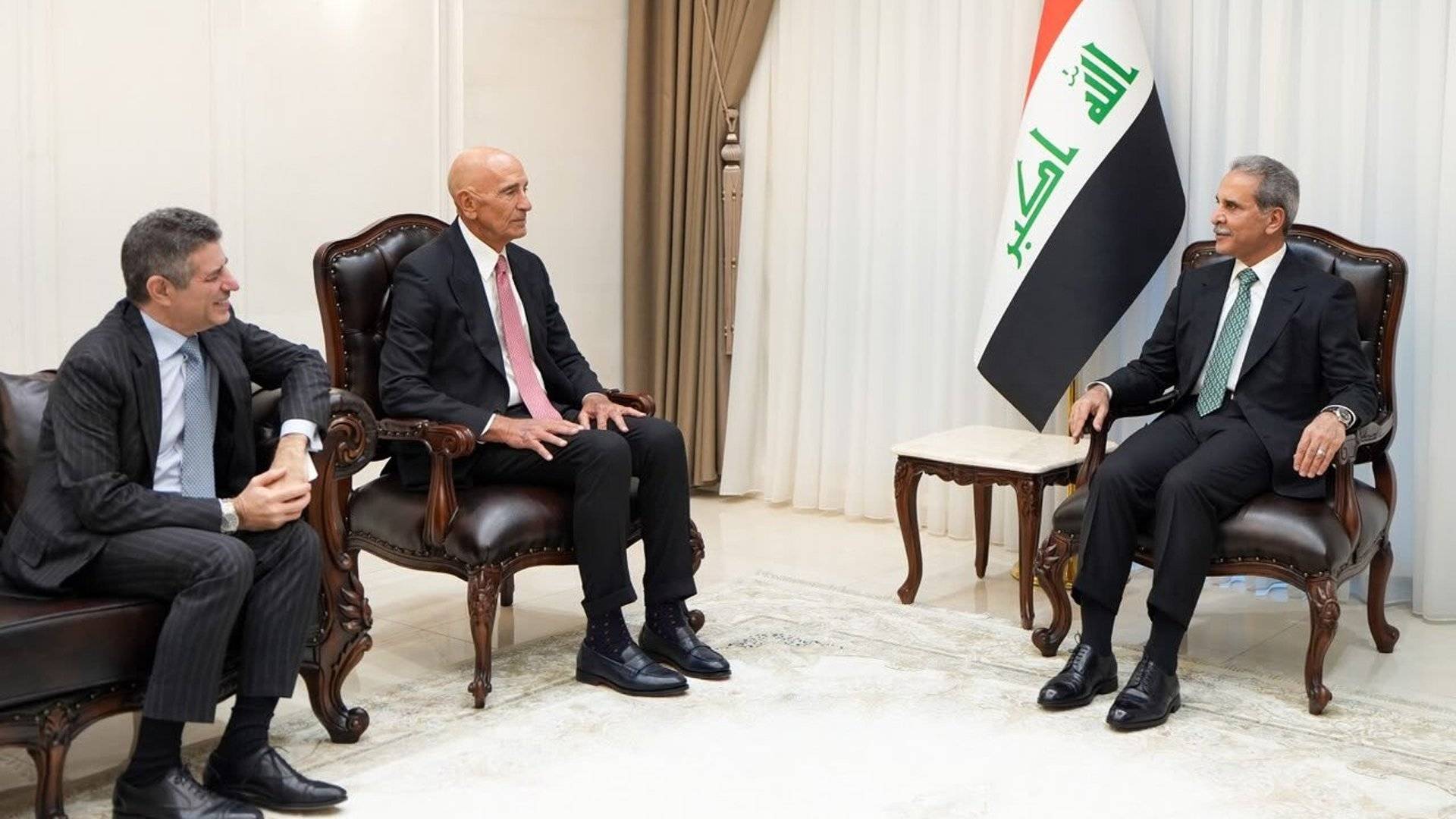
Head of Iraq's Supreme Judicial Council Judge Faiq Zidan meets with US envoy Tom Brack in Baghdad on Thursday. (Government media)

Ruling alliance fears fallout

Al-Zaidi has also briefed Iraq's ruling alliance on his preparations for possible US strikes.

A political source familiar with the discussions said the prime minister warned the Coordination Framework, which includes the country's leading Shiite political forces, that a US military operation against Iran could be imminent.

He also raised concerns that Iran-aligned factions with ties to parties in the alliance could launch deterrent operations on Tehran's orders.

Al-Zaidi hopes the ruling parties can restrain those groups, the source said, although some within the alliance fear an Iranian defeat could threaten their own political survival.

Kataib Hezbollah faces scrutiny over business interests

The war preparations come amid a stream of reports about the business activities of armed factions, as Baghdad faces mounting pressure to stop the groups from attacking neighboring countries.

Activists known to be close to the factions have circulated details of business networks and companies run by, or linked to, faction leaders and their relatives.

The reports, which are difficult to verify and focus particularly on Kataib Hezbollah, have stirred debate over whether influential actors are trying to undermine the factions' legitimacy by exposing their financial ambitions.

The scrutiny comes as the factions, which have long presented themselves as champions of resistance in Iraq, appear poised to join a military confrontation alongside Iran.


Houthi Ballistic Missile Attack Leaves Civilian Casualties in Taiz

Yemeni fighters sit on a pick-up truck mounted with a heavy machine-gun as they hold a position during clashes with Iran-backed Houthis in Yemen's northwestern Al-Jawf province on November 2, 2026. (AFP)
TT

Houthi Ballistic Missile Attack Leaves Civilian Casualties in Taiz

Yemeni fighters sit on a pick-up truck mounted with a heavy machine-gun as they hold a position during clashes with Iran-backed Houthis in Yemen's northwestern Al-Jawf province on November 2, 2026. (AFP)

Operation Dawn of Yemen has entered its second month, backed by presidential assurances that offensives will persist until state institutions are fully restored.

Meanwhile, a Houthi ballistic missile strike caused multiple deaths and injuries in Taiz, drawing immediate condemnation from the Yemeni government, which labeled the attack a "war crime."

The broader military confrontation has shifted into a volatile new phase of escalation as heavy fighting expands between government forces and the Houthis across the Taiz, Lahj, Marib, and Al-Jawf governorates. The widening conflict has heightened international concern for civilian safety and the security of vital shipping lanes in the Red Sea.

Chairman of Presidential Leadership Council Dr. Rashad Al-Alimi stressed in a council statement on Thursday that military operations will continue until their declared objectives are achieved, chief among them ending the Houthi coup, restoring state institutions, and extending state authority over the entirety of Yemeni territory.

The council said that since October 5, the armed forces have conducted more than 40,000 military targeting operations across various fronts. According to its tally, these operations resulted in neutralizing around 20,000 of the Houthi leaders and members, as well as destroying and disabling more than 5,000 military vehicles and pieces of equipment.

These figures reflect the vast scale of military operations conducted during the first month, while fighting continues across multiple axes, it added.

Several battles

On the ground, government forces recaptured key military positions in the Al-Sarari area and the Sanamat area of Al-Misrakh district in southwest Taiz governorate.

The field advances were achieved during offensive operations launched with the support of the Popular Resistance. The ground maneuvers coincided with a series of airstrikes and drone strikes targeting Houthi positions, troop gatherings, and combat vehicles.

Local sources said warplanes carried out a wave of airstrikes at dawn on Friday, hitting Houthi concentrations, fortifications, and hardware across the Hayfan district and the vicinity of Al-Turbah city. An official casualty and equipment damage toll from the aerial strikes has not yet been disclosed.

Numerous areas across Lahj governorate witnessed fierce fighting, which were concentrated on the frontlines of the Al-Zuraiqah region.

Military sources revealed that the Houthis executed a flanking attack targeting five positions, before defending forces, supported by the resistance, managed to recapture two of them.

Meanwhile, fighting continued in the Al-Madaribah district and the Kahboub mountains overlooking the Bab al-Mandeb Strait.

The fighting in Al-Zuraiqah resulted in the killing of 11 personnel from the joint forces and the injury of 23 others, according to an initial field toll. Casualty figures among the Houthis remained unknown, while fighting continued along with the arrival of military reinforcements from both sides.

The escalation expanded to the Marib and Al-Jawf governorates, where government forces announced advances across the Al-Dahidha heights and the Huwayshan mountains in eastern Al-Jawf.

Troops seized control of several positions, fortifications, and weapons during operations aimed at clearing the route toward the city of Al-Hazm.

Another massacre in Al-Waziyah

On the west coast, the Yemeni government's announcement that the Houthis used a United Nations building in the Al-Mokha district as a military operations center and a missile launchpad has triggered fresh concerns regarding the safety of humanitarian facilities and UN personnel.

The Ministry of Planning and International Cooperation warned that the group is exploiting the legal immunity of UN headquarters to cover its military activities, demanding that the UN investigate these accusations and work to evacuate gunmen and weapons from the building. The allegations could not be independently verified.

In another development, several people were killed and injured following an attack targeting the Al-Hadara popular market in the Al-Waziyah district in western Taiz, on Friday.

The health ministry of the unrecognized Houthi administration reported that at least 20 people were killed and 15 others wounded, while local authorities in Taiz blamed the militia for the attack.

Officials denied the incident was the result of coalition airstrikes, citing operations room reports confirming no military flights took place in the Al-Waziyah district that day.

Yemeni military spokesperson Majid Al-Nuzaili said the Houthis targeted the market with a ballistic missile, resulting in dozens of casualties.

He described the assault as a war crime reflecting the militia’s targeting of civilians following field losses or failed missile launches.