Are Defections Eroding Sudan’s Rapid Support Forces From Within?

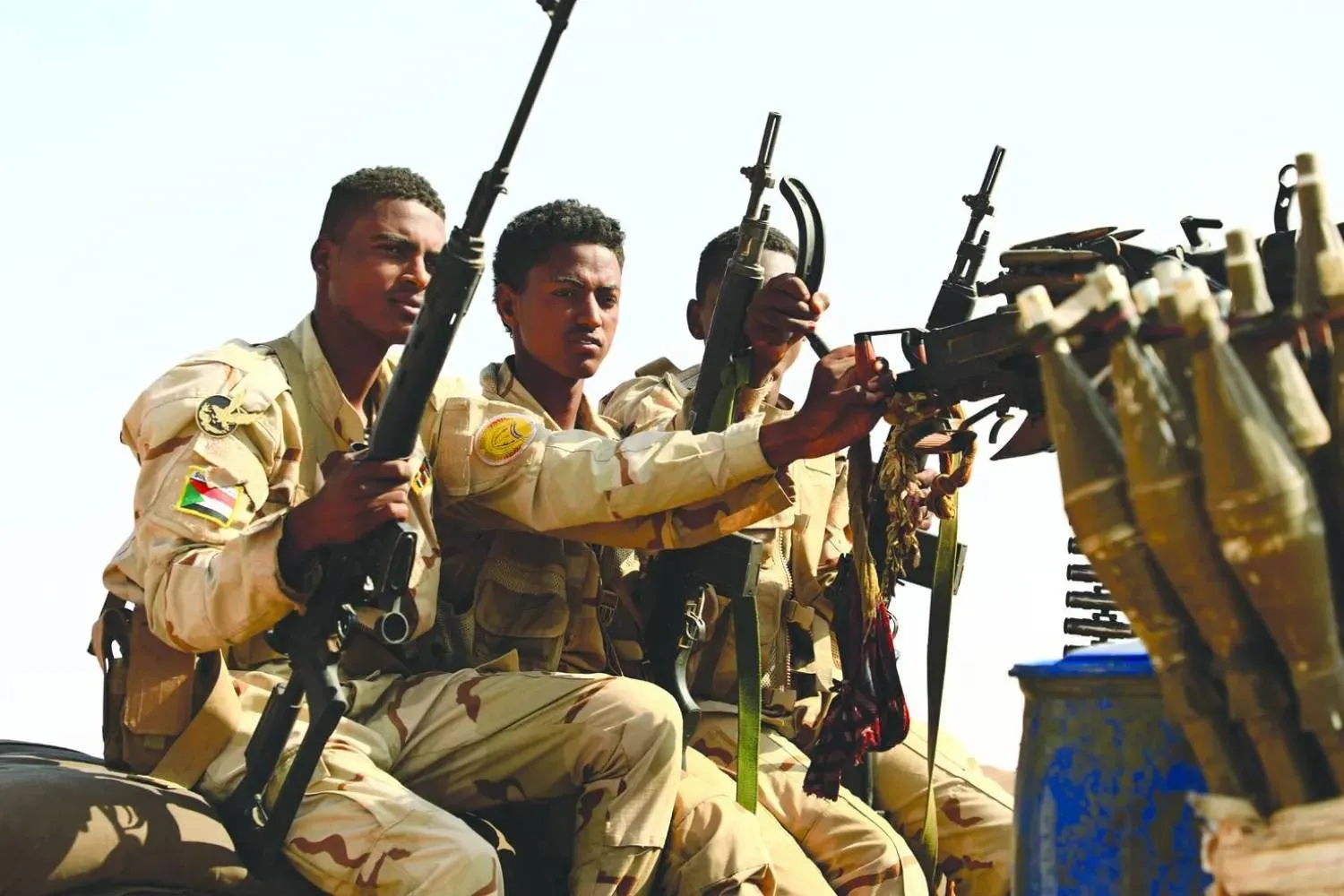
Rapid Support Forces fighters (File photo - AP)
TT

Are Defections Eroding Sudan’s Rapid Support Forces From Within?

Rapid Support Forces fighters (File photo - AP)

A force of dozens of fighters led by General Musa Khamsin has defected from Sudan’s Rapid Support Forces (RSF) and joined the army, the latest in a series of defections in recent months involving field commanders, fighters, and political officials from the RSF-led Sudan Founding Alliance (Tasis).

The defections are raising questions over what is happening inside the RSF: whether they mark the start of deeper military and political erosion, or remain limited losses that its leadership can contain and replace.

Khamsin said that after reaching army-held territory, his group had come from North Darfur and that Major General al-Nour Ahmed al-Qubba, one of the most prominent RSF defectors, had helped them reach Khartoum.

He also cited disappointment with the Tasis project, saying they had initially believed it would establish a new state but later reached a different conclusion.

Welcoming Khamsin and his fighters, al-Qubba said he expected more commanders and forces to defect. He urged RSF fighters in Darfur and Kordofan to join the army.

Army moves to absorb defectors

The latest defection comes as the army takes further steps to integrate former RSF members.

On Wednesday, it said it had completed the first phase of procedures to regularize the status of those who had joined its ranks. The process included taking an oath and completing security and administrative arrangements ahead of their deployment to army formations and units.

The army did not disclose how many people were involved.

Major General al-Walid Abdel Qader Ajabna, director of the army’s Administration Branch, welcomed the new arrivals and praised what he called their decision to “side with the state” and leave the RSF.

One of the most significant defections came in October 2024, when Abu Aqla Keikel, commander of the Sudan Shield forces and a senior RSF commander responsible for Gezira state in central Sudan, left the RSF and joined the army.

The trend gathered momentum this year.

In April, Major General al-Nour al-Qubba, one of the RSF’s most prominent commanders in Darfur, defected and joined the army. He later said he had been the “third man” in the RSF by military rank and had left with three groups, along with their vehicles and equipment.

More defections follow

Further defections followed.

In May, field commander Ali Rizqallah, known as al-Safna, announced his departure from the RSF after fighting on several fronts. Smaller defections were also reported in Kordofan.

The trend spread to Blue Nile state in southern Sudan, where Dhaifallah Adam, deputy commander of the Fourth Combat Group, defected in June.

He said his decision was driven by what he described as “racism and the absence of a cause or purpose for the war.”

The defections have also reached the RSF’s political circle.

Faris al-Nour, a former adviser to the RSF commander and a member of the Tasis alliance’s Presidential Council, resigned from the council and from his post as governor of Khartoum.

He was followed this month by Hamed Mohammed Khalifa, a Presidential Council member whom the alliance had appointed governor of the Kordofan region.

The resignations add a political dimension to the military defections, as Tasis seeks to present itself as the political framework for the RSF-led project and its allies.

Questions over loyalty

Journalist and political analyst Osman Mirghani said the developments represented a “major shift” that had moved beyond the military sphere into politics.

He said the defections reflected the “collapse of the political project” and declining belief among some RSF members that there was a genuine political cause worth fighting for.

Mirghani said the way the government and army received defectors, particularly al-Qubba, had encouraged others to follow, after seeing that the army was prepared to accept and absorb them.

At the same time, comments by Major General Ahmed Qajja, a senior RSF commander, have raised concerns within the group about the loyalty of some political and military figures.

Qajja recently said there was what he called a “fifth column” inside both the RSF and Tasis.

He said his forces had information raising suspicions about around 50% of political advisers, without providing evidence.

He also said he had information about politicians planning to defect and that a file containing their names was being prepared for submission directly to the RSF leadership. He added that there were similar concerns among military personnel.

Qajja called for tighter controls on the movements of senior leaders, saying: “No senior political figure should move without the commander-in-chief’s permission.”

He denied the existence of any agreement with the army and described joining it as “a betrayal of the cause.”

RSF still able to fight

Despite signs of internal strain, the RSF has not yet lost its ability to operate militarily.

It remains capable of mobilizing fighters, moving forces and launching attacks on several fronts, as seen recently in North Kordofan and Blue Nile, despite conflicting accounts from the two sides over the outcome of those battles.

That continuing capacity makes it difficult to treat the defections alone as evidence of an imminent military collapse.

As long as the RSF can recruit, move units and sustain operations across distant fronts, the impact of the defections remains uncertain.

Retired army Lieutenant Colonel al-Tayeb al-Malkabi cautioned against viewing them as proof that the RSF’s collapse was inevitable.

He described the defections as “an indicator that needs to be monitored.”

Their impact, he said, depended on the importance of the commander who defects, the size of the force leaving with him and the RSF’s ability to replace its losses.

Still, al-Malkabi said the defections were “not a good sign” for the RSF because of their potential effect on cohesion and troop movements, as well as their psychological and political impact.

What does the army gain?

The defections also raise questions about the army’s motives for absorbing former RSF members.

Is it mainly seeking to turn the defections into a political gain and weaken its rival from within, or is integrating them also a way to make up for any shortage in its own fighting forces?

With defections spreading from the battlefield into politics, public concern inside the RSF over the loyalty of some advisers and military personnel, and the army moving to absorb those leaving its rival, the picture remains mixed.

Pressure on RSF cohesion is growing, but the group has so far retained its ability to mobilize, fight and open new fronts.

The key test will be whether the RSF can replace those who leave and preserve cohesion in its command and control.

That will determine whether the current defections remain manageable losses or mark the start of a broader process of internal erosion.


Syria and Türkiye Move to Forge Strategic Partnership

Turkish Foreign Minister Hakan Fidan meets US Ambassador to Türkiye and special envoy to Syria and Iraq Tom Barrack, a day after Turkish-Syrian talks in Ankara (Turkish Foreign Ministry)
TT

Syria and Türkiye Move to Forge Strategic Partnership

Turkish Foreign Minister Hakan Fidan meets US Ambassador to Türkiye and special envoy to Syria and Iraq Tom Barrack, a day after Turkish-Syrian talks in Ankara (Turkish Foreign Ministry)

Syria and Türkiye are moving to forge a strategic partnership, deepening political and security coordination while expanding economic ties.

The two countries’ foreign and defense ministers held talks in Ankara on Tuesday on counterterrorism, defense cooperation and regional developments. They also reviewed final preparations for launching a joint high-level committee to oversee bilateral relations.

Strategic Coordination

Turkish Foreign Minister Hakan Fidan outlined plans to strengthen cooperation against terrorism and organized crime based on shared interests.

Fidan and Syrian Foreign Minister Asaad al-Shaibani, joined by Turkish Defense Minister Yasar Guler and his Syrian counterpart Murhaf Abu Qasra, also examined the integration of the Syrian Democratic Forces (SDF) into Syrian state institutions.

Fidan reaffirmed Türkiye’s support for the process under the principle of “one state, one army,” arguing that it would strengthen Syria’s sovereignty and territorial integrity.

He emphasized the need to end terrorism in Türkiye, Syria and Iraq, put an end to the denial of identities and allow everyone to participate in political life in an atmosphere of peace and stability.

Ankara remains committed to working closely with Damascus to ensure the process succeeds while extending bilateral cooperation into new areas, he added.

Türkiye is pursuing a process aimed at dissolving and disarming the Kurdistan Workers’ Party (PKK), including organizations Ankara considers affiliated with it, particularly the SDF, and withdrawing PKK elements from areas of northern Iraq.

The initiative, which Ankara calls “Terror-Free Türkiye,” also envisions what it describes as a “terror-free region.”

Talks with Barrack

On Wednesday, Fidan met US Ambassador to Türkiye and President Donald Trump’s envoy to Syria and Iraq, Tom Barrack, at the Turkish Foreign Ministry.

Diplomatic sources indicated that the meeting covered SDF integration and developments in Syria, Iraq and the wider region.

Al-Shaibani had met Barrack in Ankara on Tuesday. According to the Syrian Foreign Ministry, both officials underscored the importance of coordination and consultation to strengthen regional security and stability.

At a press conference following Tuesday’s talks, Fidan expressed confidence in Syria’s future, citing the determination of its people and the country’s growing contribution to regional stability, development and counterterrorism.

He detailed plans for cooperation between the two countries’ defense and security institutions to counter threats facing Syria, including attempts to divide the country and terrorist activity.

Türkiye was also working to help restructure the Syrian army and strengthen its security institutions, he noted.

Fidan cautioned that threats from terrorist organizations, particularly ISIS, and continued security unrest could disrupt trade and regional connectivity.

Expanding Economic Cooperation

Fidan highlighted the deepening bilateral relationship, pointing to numerous healthcare and education projects completed in Syria and an agreement to establish a joint Turkish-Syrian university in Damascus.

He also reiterated Ankara’s position that regional countries should take responsibility for addressing challenges in their own strategic and geographic surroundings rather than relying on outside powers.

Fidan accused Israel of seeking to destabilize Syria and urged an end to Israeli attacks on Syrian territory and compliance with the 1974 Disengagement Agreement.

For his part, al-Shaibani described Syria as a cornerstone of Middle East stability and Türkiye as an indispensable partner in maintaining it.

He put bilateral trade at nearly $3.7 billion in 2025, an increase of more than 40%.

Efforts were underway to ease Syrian product entry into the Turkish market, establish a legal framework to protect them, accelerate the rehabilitation of border crossings and prepare for the Qamishli crossing to begin operating soon, he explained.

Al-Shaibani announced an agreement to accelerate a railway project linking Türkiye to the Gulf through Syria and Jordan.

The electricity interconnection between Aleppo and the Turkish city of Cicek had also been rehabilitated, with work underway to increase its capacity.

Turning to strategic cooperation, al-Shaibani outlined discussions on expanding training and capacity-building, improving coordination against terrorism and organized crime, and creating conditions for the voluntary and sustainable return of Syrian refugees.

He stressed that these efforts were based on the principle of Syrian sovereignty over the country’s entire territory.


Is Eastern Libya Moving Toward Full Autonomy?

Osama Hammad attends a conference on combating terrorism and curbing irregular migration in Benghazi on November 3 (Government of Stability media office)
TT

Is Eastern Libya Moving Toward Full Autonomy?

Osama Hammad attends a conference on combating terrorism and curbing irregular migration in Benghazi on November 3 (Government of Stability media office)

The prospect of autonomy in eastern Libya has returned to the political forefront after the government appointed by the House of Representatives threatened to assert financial and administrative independence.

The move has revived questions about whether such an arrangement is feasible and what it could mean for the unity of state institutions and the management of resources and powers in a country divided for years.

The debate has widened among Libyan politicians, tribal leaders and activists since Benghazi-based Prime Minister Osama Hammad raised the possibility on Monday of allowing his government to independently manage resources and public facilities within the territory under its authority.

Hammad’s warning came in response to the Government of National Unity, headed by Prime Minister Abdul Hamid Dbeibeh, preventing a House of Representatives session from taking place in the western city of Zintan.

The incident renewed disputes over the powers of Libya’s rival institutions and the geographic and administrative limits of their authority.

Supporters of autonomy argue that it would protect the interests of eastern and southern Libya and allow the regions to manage their resources without being held back by the dysfunction of central institutions.

Critics, however, warn that such a move could entrench the country’s divisions in the absence of national consensus and constitutional guarantees governing the distribution of power and wealth.

The Federal System

Political analyst Abdullah al-Dibani believes Hammad’s government has the legal and executive means to pursue financial and administrative independence, or autonomy, as a way to protect citizens’ interests and ensure continued development.

Al-Dibani told Asharq Al-Awsat that the move draws its legitimacy from the government’s appointment by the elected House of Representatives, as well as the security stability, reconstruction projects and infrastructure development achieved in eastern and southern Libya.

He described the proposed move as a response to political deadlock and the disruption of legislative activity, aimed at preventing political disputes from holding the country’s resources and citizens’ livelihoods hostage.

Independent management of resources, he argued, could help ensure a fairer distribution of wealth and the continued provision of public services.

The debate echoes longstanding calls by Libyan politicians for a federal or quasi-federal system that would grant the country’s three historic regions - Cyrenaica, Tripolitania and Fezzan - greater powers to manage their own affairs.

Yet the proposal appears to lack consensus even among those who regard federalism as a possible solution to Libya’s current crisis.

Abu Bakr al-Qatrani, a leading figure in Libya’s federalist movement, argues that federalism already exists in practice because of the division between rival governments in the east and west, but that it has neither been enshrined in the constitution nor established democratically.

Libya abolished its federal system in 1963 under Constitutional Amendment Law No. 1 of that year, which established a unitary state.

In a Facebook post, al-Qatrani warned that adopting federalism would not address the roots of the crisis as long as disputes persisted over ministries and sovereign institutions, which he described as the real focus of the struggle among Libyan factions.

Complexities and Obstacles

Questions about Libya’s political future intensified after a video circulated showing young Libyans at a heritage festival organized by the Libyan Heritage and Wildlife Authority in Benghazi on Tuesday.

During a traditional dance, participants chanted slogans calling for Saddam Haftar, deputy commander-in-chief of the eastern-based Libyan National Army, to be installed as president of Libya.

They also displayed a banner featuring his photograph in civilian clothing alongside the word “President.”

Others, however, consider autonomy unlikely at present.

Among them is Dr. Aref Teer, a professor of political science at the Libyan Academy for Postgraduate Studies, who argues that threatening to assert financial and administrative independence does not necessarily mean it can be implemented at this stage.

He cited political, economic and social complexities, as well as the need for constitutional and institutional arrangements that could take decades to establish.

“Libyan public opinion does not appear receptive to the idea of dividing the country or undermining its unity,” he said, pointing to the historical symbolism of King Idris al-Senussi, whose legacy is associated with Libya’s declaration of independence and the unification of its regions in 1951.

Speaking to Asharq Al-Awsat, Teer stressed that the interconnected nature of Libya’s sovereign financial and economic institutions, together with the overlap of resources and revenues among regions, posed obstacles to establishing an independent financial administration.

These factors also raised questions about the place of Fezzan and southern Libya in any future arrangements, he added.

On the international front, Teer considered it unlikely that neighboring countries or the broader international community, including the United States, Britain, Russia and China, would accept such a move at present.

He did not, however, rule out a change in circumstances over the longer term if divisions persisted and efforts to reach a comprehensive political settlement continued to falter, potentially prompting rival parties to explore alternative administrative arrangements.

Between these competing positions, Mohamed al-Mubasher, chairman of the Libyan Council of Elders for Reconciliation, advocates an approach centered on citizens’ rights and the fair distribution of wealth.

“Libya’s problem is not a problem of maps,” he said, arguing that people across the country’s cities and regions share similar needs, including salaries, medicine, education and employment opportunities.

Al-Mubasher acknowledged that demands for federalism had legitimate motivations, particularly feelings of marginalization and the accumulation of unfulfilled promises.

But he questioned the value of changing the structure of the state without fair institutions and effective mechanisms for oversight and accountability, warning that corruption and favoritism could simply be transferred to the regions.

Instead, he proposed empowering municipalities by granting them meaningful authority and independent budgets, alongside transparent rules for distributing revenues.

He pointed to the interconnected nature of Libya’s economy, banking system, currency, oil wealth and social ties across regions as foundations for preserving the country’s unity.


Who Will Succeed al-Mirghani? Eldest Son Has First Claim to Religious Leadership as Party Succession Remains Contested

Abdullah al-Mirghani with Prime Minister Kamil Idris during a condolence gathering in Khartoum (Sudan News Agency/SUNA)
TT

Who Will Succeed al-Mirghani? Eldest Son Has First Claim to Religious Leadership as Party Succession Remains Contested

Abdullah al-Mirghani with Prime Minister Kamil Idris during a condolence gathering in Khartoum (Sudan News Agency/SUNA)

The death of Mohamed Osman al-Mirghani, who for decades led both Sudan’s Khatmiyya Sufi order and the Democratic Unionist Party, has opened the question of succession on two fronts.

Within the religious order, several senior representatives insist that his eldest son, Ali, has the first claim to its leadership. But the party presidency remains contested, with three of al-Mirghani’s sons competing for influence amid differences over the war and political alliances inside and outside Sudan.

Al-Mirghani succeeded his father, Ali al-Mirghani, as spiritual leader of the Khatmiyya order following his death in 1968, in a transition that proceeded smoothly and without major public dispute.

In 1982, following the death of party leader Sharif Hussein al-Hindi, he assumed the presidency of the Democratic Unionist Party, combining religious and political leadership until his death in Cairo on November 13.

A source told Asharq Al-Awsat that three of al-Mirghani’s sons — Abdullah al-Mahjoub, Mohamed al-Hassan and Jaafar al-Sadiq — were competing for leadership of the party and the religious order.

They draw support from different factions and groups inside Sudan and abroad, as well as from ties to regional actors that the source said were backing some of them.

According to the source, Abdullah al-Mahjoub enjoys the support of a regional state and Sovereignty Council Chairman Abdel Fattah al-Burhan.

Mohamed al-Hassan, meanwhile, is backed by another regional state and political forces opposed to the war, including parties that signed the Framework Agreement.

Jaafar al-Sadiq relies on forces within the Democratic Bloc alliance, which he chairs, despite having differed with some of the alliance’s positions in the past.

Eldest Son Has Priority

The source said Mohamed al-Hassan’s endorsement of his elder brother Ali as head of the Khatmiyya order had introduced a fourth name into the religious succession arrangements. Ali had remained outside the political disputes among his brothers.

Under longstanding traditions within the al-Mirghani family, the eldest son has priority in inheriting the sajjada, or spiritual leadership of the Khatmiyya order, unless he declines the position.

The party presidency, however, is governed by organizational and constitutional procedures whose interpretation has become a source of disagreement among party leaders.

The source said a group of senior representatives of the order was insisting that its leadership pass to Ali al-Mirghani as the late leader’s eldest son.

Following his father’s death, Mohamed al-Hassan publicly endorsed his elder brother’s succession as head of the Khatmiyya order.

He also signed a statement identifying himself as “President of the Democratic Unionist Party (Original),” having served as deputy party president during his father’s lifetime.

A source in the party’s organizational secretariat said Ali’s claim to the religious leadership rested on traditions dating back to the order’s founder, and that Mohamed al-Hassan’s endorsement amounted to recognition of that entitlement.

Under those traditions, family members, senior representatives of the order and its followers pledge allegiance to the eldest son, the source added.

Who Will Lead the Party?

Regarding the party presidency, the organizational secretariat source, in remarks carried by a Sudanese newspaper, said Mohamed al-Hassan was authorized to manage party affairs until its general congress convenes.

The source cited a decision issued by his father in 2013 dissolving the party’s organizational bodies and establishing an interim steering committee, chaired by Mohamed Osman al-Mirghani with Mohamed al-Hassan as his deputy, to prepare for the general congress.

Following the party president’s death, responsibility for continuing to manage party affairs and completing the establishment of its institutions and organizational structures falls to his deputy on the steering committee, the source explained.

In remarks made before al-Mirghani’s death and reported by Sudan Tribune, the party’s deputy organizational secretary, Osama Hassouna, said Mohamed al-Hassan derived his constitutional and organizational legitimacy from decisions issued by his father following the Reference Conference.

In contrast, Mohamed Syed Ahmed, an adviser to the party president known as “al-Jakoumi,” said the party presidency was not hereditary.

He argued that choosing al-Mirghani’s successor was a matter for consultation and the relevant party institutions.

Jaafar al-Sadiq al-Mirghani, deputy party president and chairman of the Democratic Bloc alliance, renewed his pledge to uphold his father’s approach and mission and preserve the family’s religious and national legacy in a farewell address.

He did not address arrangements for either the political or religious succession. Some analysts, however, interpreted his emphasis on preserving the family’s legacy as an indication of his position on the succession.

Unionist leader Moataz al-Fahl told Asharq Al-Awsat that the succession question had not yet been settled, as party and religious leaders and the late leader’s sons remained occupied with mourning ceremonies.

He said Jaafar al-Sadiq, Abdullah al-Mahjoub and Ahmed al-Mirghani had traveled to Sudan to attend the funeral and had not discussed succession arrangements.

“Sayyid Mohamed Osman was too important a figure for his succession to be settled so quickly,” he said.

Disputes Predate His Death

Organizational disputes between Mohamed al-Hassan and Jaafar al-Sadiq date back several years before their father’s death.

They became public in 2022, when the brothers adopted differing positions on party management and political alliances.

In November that year, al-Mirghani issued a video directive instructing Jaafar al-Sadiq to continue his duties as deputy party president and address what he described as organizational “breaches of discipline.”

Mohamed al-Hassan’s faction, however, maintained that the 2013 decisions establishing the steering committee remained the basis of its organizational legitimacy.

The disputes resurfaced in June 2025, when decisions issued in the party president’s name called for restructuring the executive bureau and appointing Ahmed Saad Omar as its head, replacing Jaafar al-Sadiq.

The decisions drew objections from some Unionist leaders, while others maintained that they were legitimate.

An Opportunity to Reunite the Unionists

Political analyst Mohamed Latif said separating the religious leadership of the Khatmiyya order from the political leadership of the party could open the way to reunifying Unionist factions.

Some factions had distanced themselves from the original party because of its association with religious authority.

Latif told Asharq Al-Awsat that Mohamed al-Hassan’s endorsement of his elder brother Ali as head of the Khatmiyya order, alongside his own declaration that he was assuming the party presidency, marked a shift in the historic relationship between the two leadership roles. Their father had held both positions for decades.

Latif argued that the development could give the Unionist movement an opportunity to restore its unity and political role in Sudan.

He also noted that the call for an end to the war, which featured prominently in Mohamed al-Hassan’s statement, could pave the way for closer ties with civilian forces supporting a democratic transition.

The source who described the rivalry among al-Mirghani’s sons, however, warned that an escalation of their disputes could cost the family its historic influence within the party and lead to its leadership passing outside the al-Mirghani family.
The source pointed out that the presidency of the Democratic Unionist Party had been separate from leadership of the Khatmiyya order before Mohamed Osman al-Mirghani combined the two positions.

Political figures from outside the family had previously led the party, notably Ismail al-Azhari and Sharif Hussein al-Hindi.

As succession arrangements unfold, the Unionist movement faces organizational divisions and disagreements over the war and political alliances.

The party’s various factions have yet to reach a consensus on a leadership arrangement following al-Mirghani’s death.