


Syria Cautiously Welcomes Abdi’s Integration Announcement, Awaits Implementation

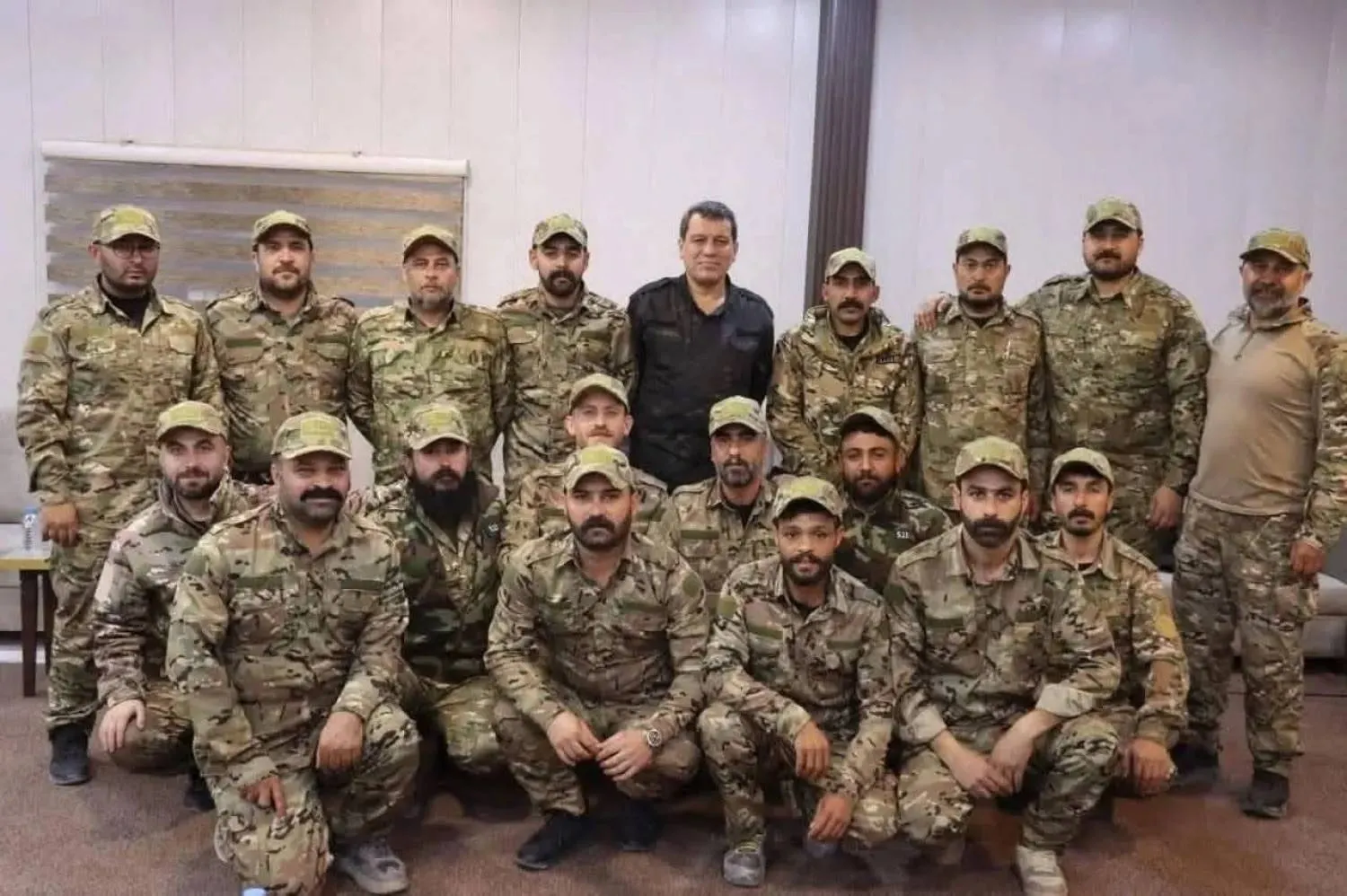
SDF Commander Mazloum Abdi with his fighters wearing the military uniform of the Syrian army in February. (Social media)
TT

Syria Cautiously Welcomes Abdi’s Integration Announcement, Awaits Implementation

SDF Commander Mazloum Abdi with his fighters wearing the military uniform of the Syrian army in February. (Social media)

Ahmed al-Hilali, deputy governor of Syria’s Hasakah province and spokesperson for the presidential team tasked with overseeing integration with the Syrian Democratic Forces (SDF), welcomed SDF commander Mazloum Abdi’s announcement on integration, describing it as an acknowledgment of the SDF’s dissolution.

He cautioned, however, that “there is a difference between announcing an integration decision and completing its implementation on the ground.”

Syrian Kurdish writer and political researcher Ali Tami told Asharq Al-Awsat that integration was “complex and intertwined and cannot be concluded with a statement.”

He also challenged Abdi’s assertion that fighters who had come to support the SDF had left the region, noting that thousands of foreign fighters and remnants of the former regime remained in Hasakah.

Al-Hilali and Abdi attended celebrations Thursday marking the 100th anniversary of the founding of Qamishli. In a speech, Abdi announced the “completion of the military, security and administrative integration” of his forces into Syrian state institutions under the January 29 agreement.

Late Thursday, al-Hilali told Syria’s Al-Ikhbariya television that Abdi’s remarks were “an important and positive development,” viewing them as a clear transition from understandings to actual implementation of integration into state institutions.

He explained that the announcement would translate into practical measures, including unifying institutions and administrative authority and restoring the state’s full powers, ensuring unified decision-making and Syrian sovereignty.

Abdi's remarks were aimed at ending “dual structures and parallel entities” and establishing “one state, one army and unified institutions,” he added.
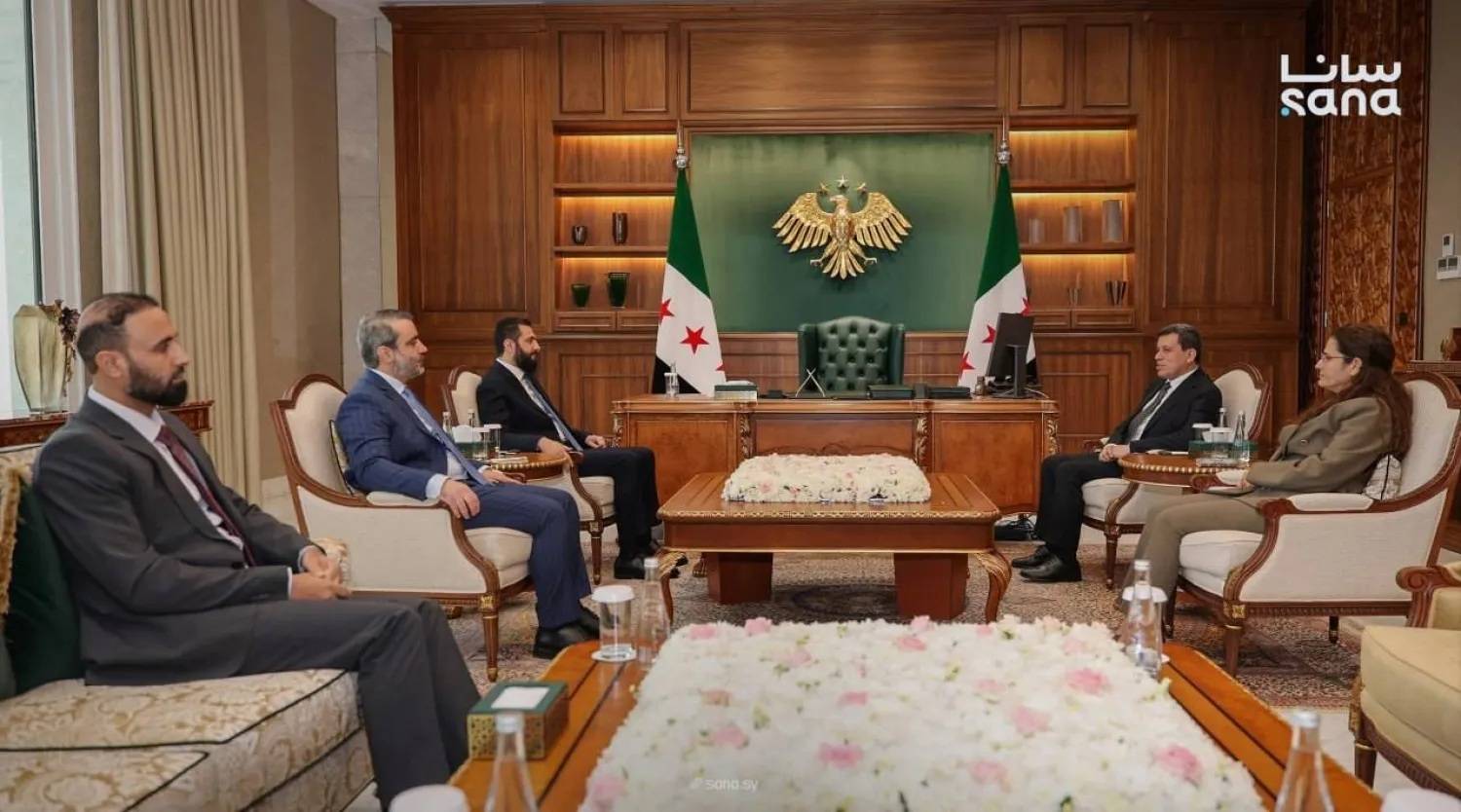
Syrian President Ahmed al-Sharaa and SDF Commander Mazloum Abdi meet in Damascus earlier in August. (SANA)

Implementation

Al-Hilali stressed that the issue could not be considered definitively resolved through statements alone.

“What was announced, together with earlier steps, such as removing partisan symbols and flags from institutions and public squares, confirms that the process is moving forward,” he noted.

While describing the announcement as a highly significant political step, he emphasized that it did not mean all stages of administrative, security and military implementation had been completed.

The objective now is to turn the decisions into a fully institutionalized reality in which Syrian state institutions become the sole authority, all institutions and bodies return to the state framework, and security, military and administrative decision-making is unified, he explained.

In separate remarks carried by Syria TV, al-Hilali said Abdi’s declaration that military and security integration had been completed as an acknowledgment of the SDF’s dissolution.

Integration declared complete

Abdi announced that the integration of military, service and administrative institutions into national state institutions had been completed and that “from now on, a new process begins.”

In areas formerly under the Kurdish Autonomous Administration, new institutions are being established in the name of the Syrian state while existing institutions will continue operating, he explained, urging residents to protect them.

Abdi also announced that forces from other “parts of Kurdistan” that had supported the SDF during Syria’s civil war had withdrawn under an agreement and at the SDF’s own request, an apparent reference to Kurdistan Workers’ Party (PKK) fighters.

Tami remained skeptical, arguing that the SDF had not formally announced its dissolution and that integration was too complicated to be settled by statements alone.

He maintained that the PKK controls the SDF and regards it as one of its instruments in confronting Türkiye, making it unlikely that the group would surrender its weapons before the direction of the peace process in Türkiye becomes clearer.

“In principle, we all support sparing the region further bloodshed, and integration is possible, but unfortunately the chances of success are very slim,” Tami lamented.

He also dismissed Abdi’s assertion that Kurdish forces that previously assisted the SDF had left the region as “illogical,” pointing to thousands of foreign fighters and former regime remnants still in Hasakah.

With efforts underway to ease tensions, integration continues to face major difficulties and challenges, he remarked.
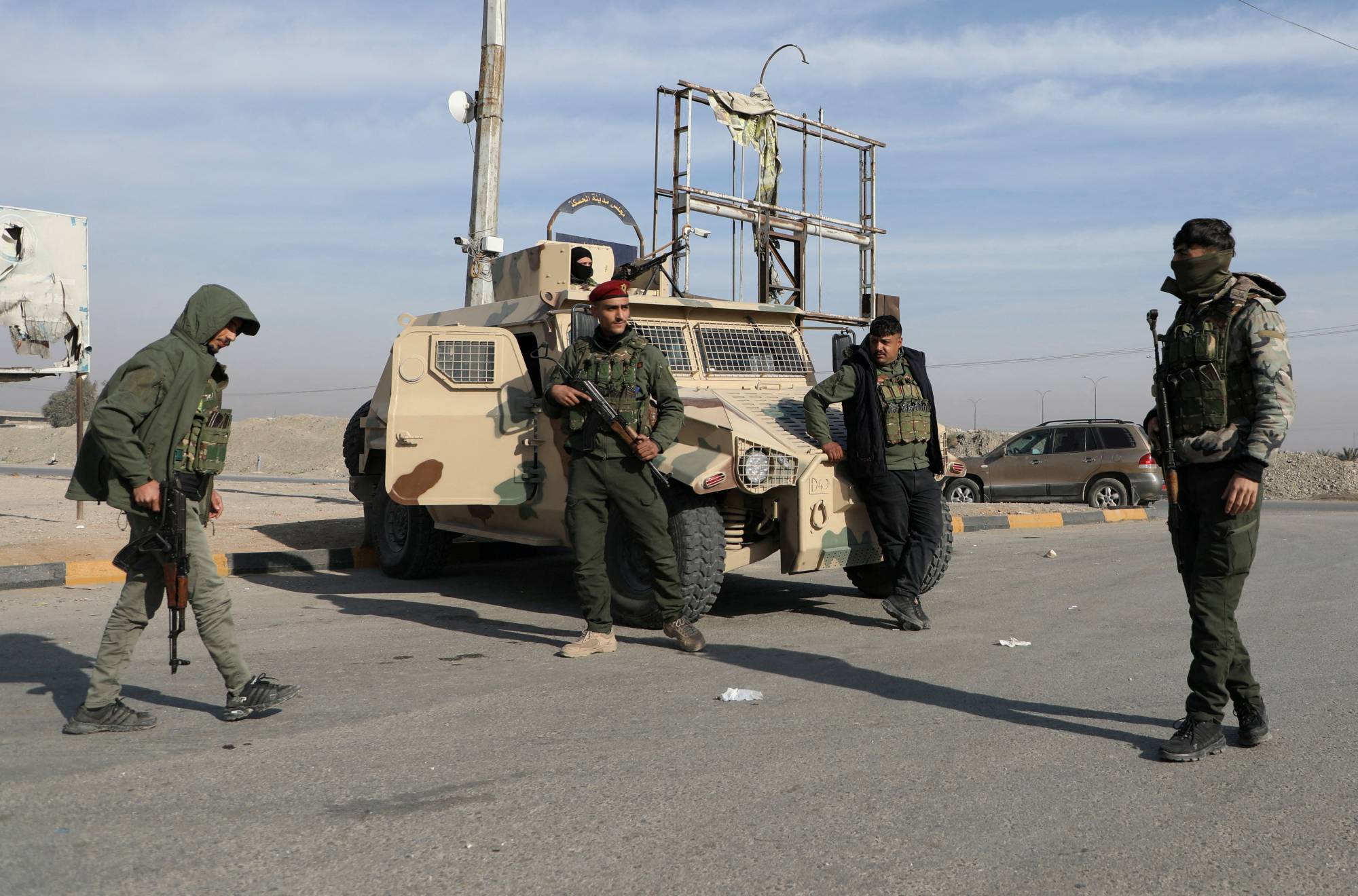
SDF fighters in Ain al-Arab. (Reuters file)

From Autonomous Administration to integration

The Autonomous Administration traces its origins to the Kurdish Supreme Committee, formed by Syria’s Democratic Union Party (PYD) and the Kurdish National Council following the July 12, 2012, Erbil agreement. Its armed structures included the People’s Protection Units (YPG), Women’s Protection Units (YPJ) and Asayish security forces, followed in 2015 by the Kurdish-dominated SDF.

The administration expanded between 2014 and 2023, accompanied by growth in its military, security and civilian institutions, which employ tens of thousands.

The SDF lost a significant portion of its territory during nearly two weeks of clashes with the Syrian army in late 2025 and early 2026, followed by the January 29 agreement.

The accord provides for a ceasefire and gradual integration of Kurdish-established military and civilian institutions into the Syrian state, the handover of border crossings and oil and gas fields, and the departure of foreign fighters.

In July, residents in Hasakah mobilized for several days to demand that the state extend its authority across the entire province, allow displaced people to return to their towns and villages, and end SDF dominance and its abuses against residents.



France, Iraq Deepen Energy, Defense Ties During Al-Zaidi Visit

 France's President Emmanuel Macron (R) shakes hand with Iraq's Prime Minister Ali al-Zaidi (L) during an agreement signing ceremony at the Elysee Palace in Paris on September 14, 2026. (AFP)
France's President Emmanuel Macron (R) shakes hand with Iraq's Prime Minister Ali al-Zaidi (L) during an agreement signing ceremony at the Elysee Palace in Paris on September 14, 2026. (AFP)
TT

France, Iraq Deepen Energy, Defense Ties During Al-Zaidi Visit

 France's President Emmanuel Macron (R) shakes hand with Iraq's Prime Minister Ali al-Zaidi (L) during an agreement signing ceremony at the Elysee Palace in Paris on September 14, 2026. (AFP)
France's President Emmanuel Macron (R) shakes hand with Iraq's Prime Minister Ali al-Zaidi (L) during an agreement signing ceremony at the Elysee Palace in Paris on September 14, 2026. (AFP)

France and Iraq on Monday called for a "diversification of export routes" for oil and gas in the Middle East in response to the instability generated by the conflict between the United States and Iran, following talks in Paris.

French President Emmanuel Macron and Iraq's Prime Minister Ali al-Zaidi stressed the importance of "regional interconnections" and export route diversification to "ensure regional energy security", in a joint statement.

Zaidi visited the Elysee Paris on his first trip to Europe since taking office in May and is also expected in Berlin on Tuesday.

The visit comes as the situation in the Middle East continues to deteriorate, with the Iran-backed Houthi militants cementing their hold on the Bab al-Mandeb Strait on Friday, adding to the crisis of Iran's effective closure of the Strait of Hormuz, and driving oil prices up.

On Monday, French energy giant TotalEnergies signed a memorandum of understanding with Iraq on liquefied natural gas supplies and agreed to discuss further energy projects.

TotalEnergies chief Patrick Pouyanne "affirmed the company's readiness to cooperate with Iraq in the oil and energy sectors", noting the company planned to increase its investments in Iraq to $16 billion from $12 billion, during a meeting with Zaidi.

The two countries, which in recent years have been involved in the fight against the ISIS extremist group, also agreed to deepen defense cooperation.

They signed a strategic roadmap on the acquisition of French military equipment as Iraq seeks to modernize its armed forces and strengthen its sovereignty capabilities.

French drone company Harmattan AI separately signed a letter of intent with Iraq's defense ministry concerning autonomous air-defense systems.

Several other agreements were signed in areas including development assistance, education, civil aviation and electricity infrastructure.


Taiz on Alert to Confront the Houthi Threat

A member of the Yemeni government forces, including National Army and Taiz Axis forces, sits in an armored vehicle at a position along the Kadha frontline west of Taiz in western Yemen on September 13, 2026. (AFP)
TT

Taiz on Alert to Confront the Houthi Threat

A member of the Yemeni government forces, including National Army and Taiz Axis forces, sits in an armored vehicle at a position along the Kadha frontline west of Taiz in western Yemen on September 13, 2026. (AFP)

Yemen’s Taiz governorate has raised its readiness to counter threats from the Houthi militia as the group intensifies its movements across the province's western, northern, and southern fronts in an attempt to achieve field breakthroughs.

These advances aim to tighten the siege on Taiz city and its liberated countryside, while threatening supply lines connecting the city to its western rural areas.

The mobilization coincided with fierce battles fought by government forces across several locations, during which they managed to recapture positions that the Houthis had infiltrated in the western part of the governorate.

Government troops also advanced toward new areas, while airstrikes targeted Houthi positions, reinforcements, and vehicles across multiple fronts.

The group has been attempting, since the start of the escalation in early September, to exploit the widening scope of confrontations along the western coast, southern Hodeidah, and western Taiz. These maneuvers aim to redraw the lines of contact around the governorate, allowing the militia to pressure Taiz city from several directions and sever supply and movement routes leading to the coastal areas.

During the past few hours, government forces announced the recapture of positions overlooking the Jurdad area in al-Shamayatayn district, as well as an advance toward the Ghail Bani Omar region.

These developments followed clashes with Houthi fighters who had infiltrated several locations in the western part of the governorate.

Official military sources said that government forces managed to seize Houthi military equipment during the operations, while inflicting casualties among Houthi ranks.

The government also intensified airstrikes on Houthi positions and movements in various parts of the governorate. According to military sources, the strikes targeted military vehicles and gatherings in the districts of Dhubab, al-Waziyah, and Hayfan, as well as a gathering of militants in the Al-Afeerah area of Jabal Habashi district, killing at least ten militants and destroying several vehicles and a medium-weapons ammunition cache.

Meanwhile, the local authority in Taiz moved to mobilize the internal front to counter the escalation.

Governor of Taiz Nabil Shamsan met with sheikhs, notables, dignitaries, and social figures in the al-Shamayatayn, as part of efforts to strengthen internal cohesion and unify the local stance behind government forces.

Shamsan stressed that Taiz will continue to stand firm against the Houthis, praising the role the governorate has played during the years of war in preserving state institutions, as well as the Saudi support provided to the government and the Yemeni people in confronting the group.

The Human Rights Ministry said 150 civilians have been killed and over 200 wounded between September 3 and 13 since the escalation intensified. Some 85,000 have been displaced.


Portugal Says Israel Undermining Palestinian State Through Settlement Expansion

Palestinian Foreign Affairs and Expatriates Minister Varsin Aghabekian Shahin (L) and Portuguese Foreign Minister Paulo Rangel (R) attend a press conference after a meeting at Necessidades Palace in Lisbon, Portugal, 14 September 2026. (EPA)
TT

Portugal Says Israel Undermining Palestinian State Through Settlement Expansion

Palestinian Foreign Affairs and Expatriates Minister Varsin Aghabekian Shahin (L) and Portuguese Foreign Minister Paulo Rangel (R) attend a press conference after a meeting at Necessidades Palace in Lisbon, Portugal, 14 September 2026. (EPA)

Portugal's ‌foreign minister said on Monday that Israeli settlement expansion and economic pressure in the occupied West Bank and East Jerusalem were undermining prospects for a viable Palestinian state.

Foreign Minister Paulo Rangel said Israel's E1 settlement plan was "extremely pernicious" because ‌it would ‌divide the West Bank, ‌isolate ⁠East Jerusalem and ⁠was incompatible with a two-state solution.

Israel's withholding of Palestinian tax revenues amounted to a "brutal strangulation" of the Palestinian Authority's finances, preventing the economy from ⁠functioning, he said after meeting ‌Palestinian Foreign ‌Minister Varsen Aghabekian Shahin in Lisbon.

‌Rangel also cited the closure ‌of Christian schools in East Jerusalem as evidence of worsening conditions there.

Portugal recognized the State ‌of Palestine a year ago.

Rangel said the two-state ⁠solution ⁠was the only way to guarantee peaceful coexistence between Israelis and Palestinians.

Israel said last week it was closing Britain's consulate in East Jerusalem in response to plans by the UK, France and Canada to block imports from Israeli settlements in the West Bank.