The Israeli strike on the Abu al-Duhur military base in northern Syria near the Turkish border last Tuesday, may have been intended to provoke Ankara and is considered a “very dangerous game,” US Special Envoy to Syria and Ambassador to Türkiye Tom Barrack said on Saturday.
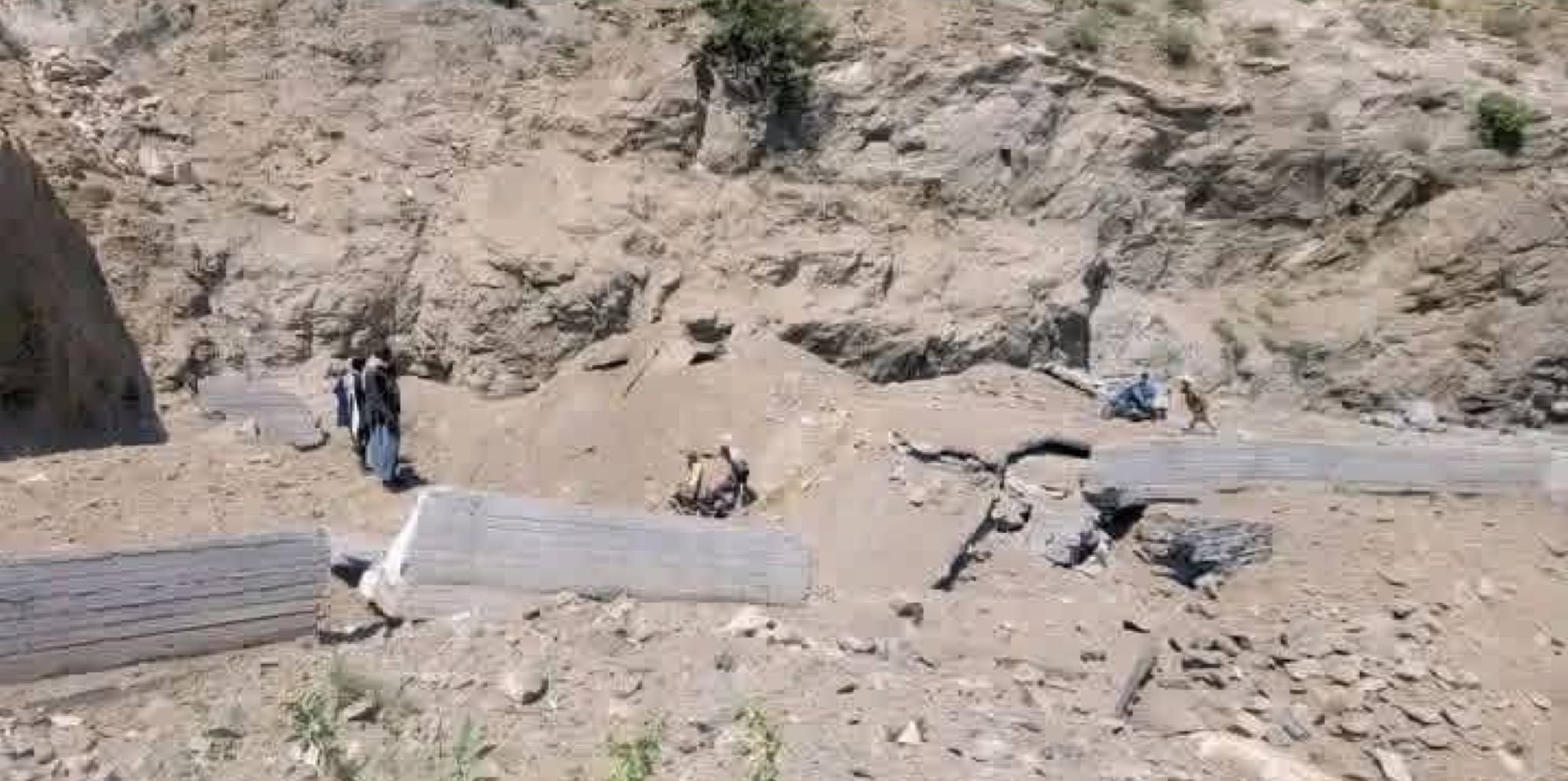
Eight Israeli airstrikes hit the airbase early Tuesday, targeting the runway and storage facilities, Syria’s state-run Al-Ikhbariya had reported.
In response, Ankara accused the Netanyahu government of using “cheap politics” for electoral gain and seeking to portray Türkiye as a new threat.
According to Barrack, the incident escalated from another Israeli strike in Syria into a moment that could have triggered a far more dangerous regional confrontation.
The ambassador invoked the downing of a Russian jet in late 2014 that escalated regional tensions.
In a YouTube interview with podcast host Mario Nawfal and in comments to PBS NewsHour, Barrack said the incident in which Israeli jets, without advance warning, struck the airbase in Syria - around 80 kilometers east of the Turkish border - intended to “bait” or provoke Ankara.
He described a situation in which fighter jets operate near a border without coordination or warning as a “very dangerous game.”
Last Tuesday, Israeli Prime Minister Benjamin Netanyahu’s office described the airstrikes as a warning to Türkiye against expanding its military presence in Syria or helping rebuild the Syrian armed forces.
In return, Syrian Foreign Minister Asaad al-Shaibani told Axios that Damascus had previously informed Israel there were no plans to establish a Turkish military base at Abu al-Duhur, which was being rehabilitated for use by the Syrian Air Force.
For its part, the Turkish presidency rejected the Israeli allegations as “baseless,” accusing Netanyahu of promoting them ahead of Israel’s October elections and calling on the international community to curb Israeli actions threatening regional peace and stability.
Barrack said Israel might have received intelligence indicating Turkish military personnel or military assets could be stationed at the Syrian base.
According to Barrack, Israel raised the concern with the United States about six days before the strike.
“We have some intelligence that there might be Turkish movement into this site, which we would be very concerned about,” Barrack said about the message delivered to Washington.
Barrack then confirmed reports that Mossad chief Roman Gofman had spoken with al-Shaibani several days before the strike to convey Israel’s concerns. He described the talks as a two-hour, in-depth conversation.
Despite those contacts, Israeli forces struck the base’s runways without Türkiye receiving advance warning of the operation.
Scenarios of Israeli Strikes on Abu Al-Duhur Base
According to Barrack, one possibility that led to the strikes on Abu al-Duhur is that “the Israelis were baiting the Turks.”
He directly linked this possibility to Israeli politics, saying that the strike may have been a “very aggressive but maybe a well-received pre-election concept.”
He added that another possible reason for the attack on Abu Duhur was a miscommunication between the Israeli military and the country’s intelligence agency.
Barrack said it was likely that Israel had intelligence suggesting Türkiye may be bolstering its presence in the area and “a commander somewhere in the field made a decision ‘We’re not going to let that happen’... What they didn’t do is tell us or Türkiye.”
Barrack said the Turkish leadership exercised “maximum restraint and patience” when they saw Israeli aircraft, and that they did not allow tensions to escalate into direct conflict.
He told PBS NewsHour that Türkiye had explicitly stated it has no aggressive intentions or posture toward Israel and does not want to participate in any military operation or direct conflict. “What the Turks want is a sovereign and independent Syria, and that is what we, Israel, and all the countries of the region want,” he said.
While the American diplomat acknowledged “Israel's legitimate security concerns,” he stressed that diplomacy and maintaining open channels of communication “are a priority under the current circumstances.”
Cheap Politics
For its part, Ankara said the Netanyahu government is seeking to portray Türkiye as a new threat as part of “cheap politics” aimed at gaining an electoral advantage.
Türkiye's Communications Directorate on Friday warned that Israel's increasingly aggressive threat rhetoric poses serious risks to regional and global stability.
It said the “cheap politics” pursued by Netanyahu and his associates, which it said was also designed to secure an advantage in elections, has no resonance in Israeli society, the region, the international community or Türkiye.
The directorate strongly rejected remarks by the Israeli Prime Minister's Office concerning President Recep Tayyip Erdogan.
The office on Friday called Erdogan an “antisemitic dictator.”
The directorate described the comments as an “impertinent rant” devoid of historical facts and political seriousness and another sign of the desperation of an administration seeking to evade accountability for war crimes and crimes against humanity.