
Arms Depots in Residential Areas Keep Libyans on Edge

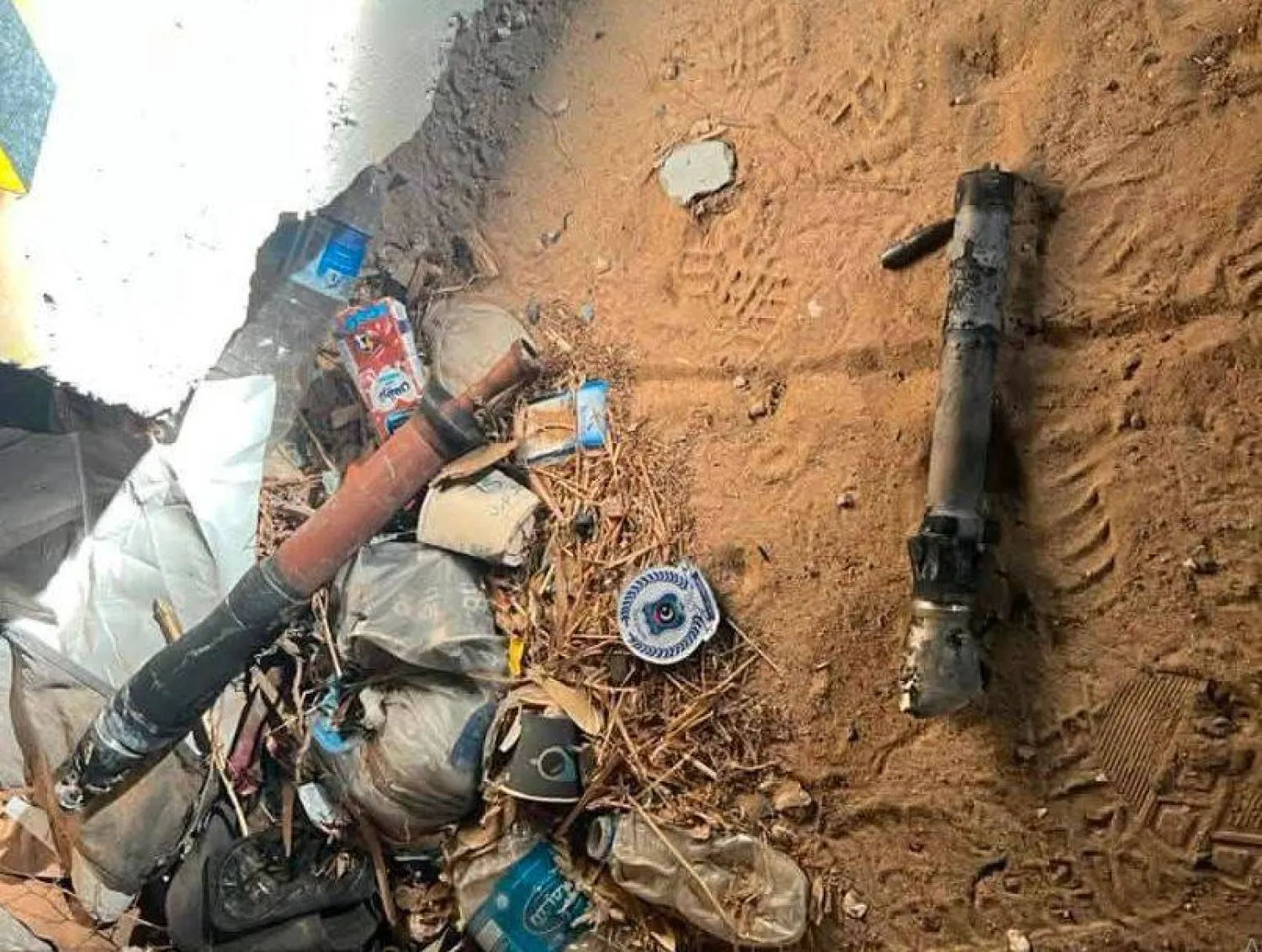
Remnants of ammunition after a weapons depot explosion in Misrata, western Libya, on Friday (Criminal Investigation Department)
TT

Arms Depots in Residential Areas Keep Libyans on Edge

Remnants of ammunition after a weapons depot explosion in Misrata, western Libya, on Friday (Criminal Investigation Department)

An explosion at a warehouse belonging to an armed group in the northwestern Libyan city of Misrata has revived fears over munitions stored among civilians despite an earlier order to remove such facilities from populated areas.

Weapons and ammunition depots inside residential areas have become a persistent challenge for Libya’s Government of National Unity (GNA) in the west and a growing concern for residents.

Friday’s blast in the Gharian area underscored the risks posed by ammunition depots run by armed groups inside residential neighborhoods. Residents have renewed calls for the facilities to be moved away from populated areas, fearing a repeat of earlier explosions that caused casualties and sparked widespread anger.
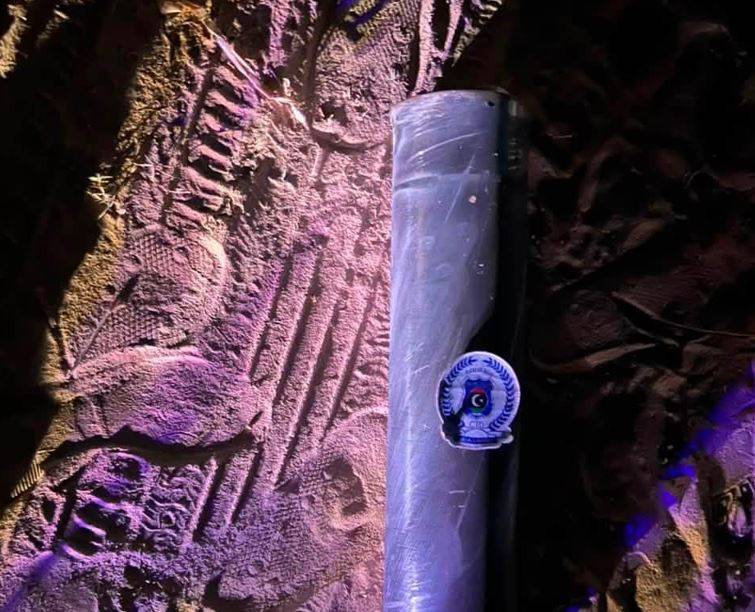
Ammunition found on Friday at the site of a weapons depot explosion in Misrata, western Libya (Criminal Investigation Department)

Salem Krawad, a Misrata notable, said public anger had “reached its peak because of the proliferation of weapons without decisive government action.”

“The danger is not limited to warehouses. It extends to homes containing shells, ammunition boxes, and light arms, raising fear among residents,” he told Asharq Al-Awsat.

Medical sources said the explosion at a warehouse belonging to an armed group calling itself the “Hurricane Brigade” caused injuries and panic after rockets and ammunition flew into the surrounding area, raising fears of further blasts.

By early Saturday, the operations room of the government-run Libyan Mine Action Center was still receiving reports from residents of intermittent ammunition explosions, a center source said.

The depots in the city were large and held various types of ammunition, the source added.

GNA Prime Minister Abdulhamid al-Dbeibah had not commented on the incident. He was visiting Misrata, where he toured a power station and attended a sports festival.

The head of the Government of National Unity attended a sports festival in Misrata but did not comment on the explosion (Dbeibeh's Office)

Interior Minister Emad al-Trabelsi ordered security agencies to survey and comb the areas around the blast site and remove remnants.

Local sources ruled out a deliberate attack as the cause of the explosion in Misrata. But the incident recalled a similar blast in August last year in the city’s al-Sukairat area that injured 16 residents.

That explosion sparked protests in Misrata, with residents demanding the removal of weapons and ammunition depots from residential areas.

Abdul Salam al-Zoubi, undersecretary at the Defense Ministry for regions and military affairs, then ordered the formation of a committee to identify alternative storage sites and clear existing depots from populated areas.

But the decision was never implemented, Krawad said, questioning why the depots remained in residential districts despite repeated calls to remove them.

Their continued presence “represents a latent danger threatening civilian lives and means an explosion could occur at any time,” he said.

Libya has faced widespread proliferation of weapons and ammunition since the fall of Muammar Gaddafi’s government in 2011, with military depots located near population centers. UN reports estimate there are about 20 million arms in the country, highlighting the scale of the challenge.
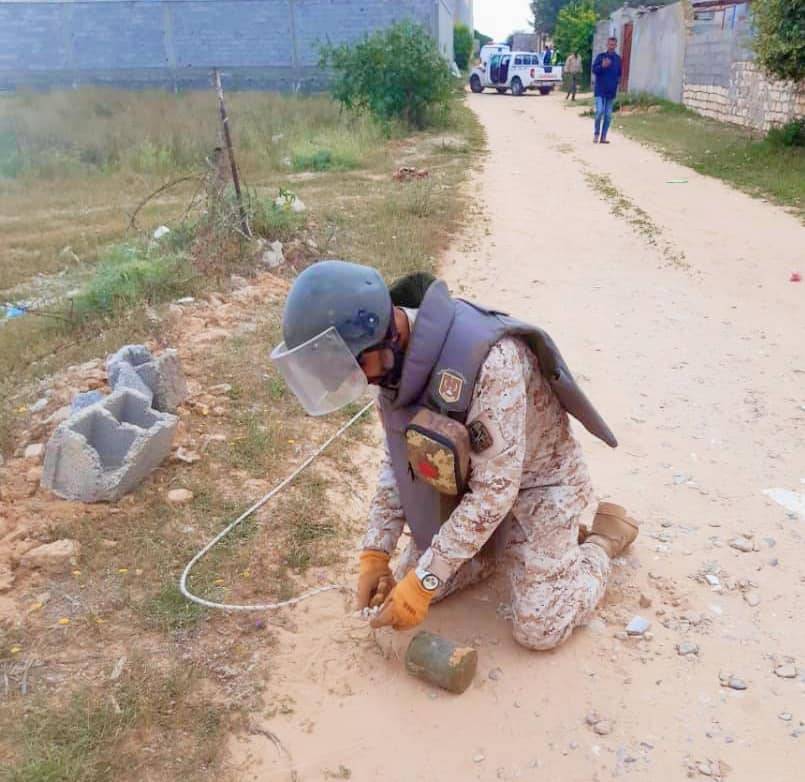
A member of the Military Engineering Department in Tripoli defuses a mine in the Al-Aqrabiyah area near a residential neighborhood (General Staff of the Government of National Unity Forces)

The danger goes beyond warehouse explosions. Official figures show that mines and explosive ordnance have caused 487 casualties since May 2020, including 175 deaths and 312 injuries. Eighty-seven of the victims were children.

Representatives of 10 countries and international partners to Libya warned at a meeting in Rome in May about unsafe ammunition storage, particularly depots near residential areas, saying they posed a continuing threat to civilians.

Despite the warnings, ammunition depots remain scattered through residential areas across Libya, according to the Libyan Mine Action Center. The risks increase in the south as temperatures rise, potentially raising the chances of improperly stored ammunition exploding.

Khaled Jibril, spokesperson for the Libyan Mine Action Center, renewed warnings that unsafe storage of ammunition and explosive remnants of war, especially near residential neighborhoods, posed a constant threat to civilians because explosions and other incidents could occur without warning.

Jibril told Asharq Al-Awsat that protecting civilians and reducing risks posed by ammunition and remnants of war required cooperation among the relevant authorities, with public safety prioritized and practical steps taken to stop haphazard storage and to move sources of danger away from populated areas.

The ongoing risks pose a challenge far beyond Misrata in a country still divided between two governments: The Tripoli-based GNA, headed by Dbeibah, and a parliament-appointed government, headed by Osama Hammad, that administers eastern Libya and southern cities.


Aoun from Nabatieh: No New Negotiations with Israel at Present

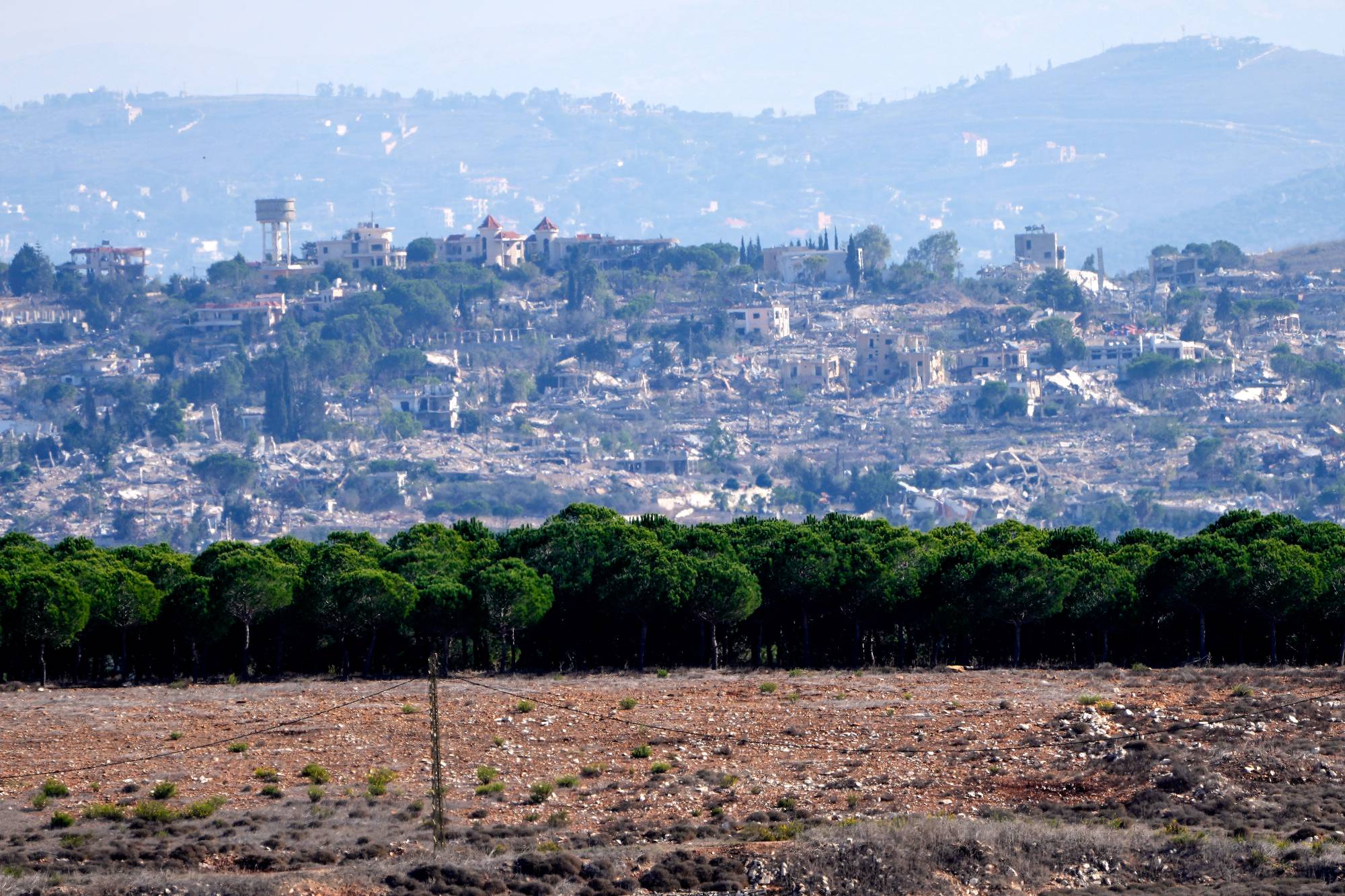
Smoke rises in Mansouri following Israeli strikes as seen from Naqoura, Lebanon, September 11, 2026. REUTERS/Raghed Waked
TT

Aoun from Nabatieh: No New Negotiations with Israel at Present

Smoke rises in Mansouri following Israeli strikes as seen from Naqoura, Lebanon, September 11, 2026. REUTERS/Raghed Waked

Lebanese President Joseph Aoun visited the country's south on Saturday, in a surprise trip to Nabatieh, a city close to the strategic Ali al-Taher ridge captured from Hezbollah and blown up by Israel.

Official Lebanese media said he arrived in Nabatieh unannounced and accompanied by security officials.

The National News Agency (NNA) quoted Aoun as saying that there would be no new negotiations with Israel at present, stressing that the withdrawal of Israeli forces, the return of prisoners and displaced people, and reconstruction remain national principles that Lebanon is committed to upholding.

Aoun expressed solidarity with locals who greeted him, according to footage broadcast by Lebanese media.

He praised staff at Nabatieh Governmental Hospital, saying they were risking their lives to provide medical services in the area, which most people have fled.

He spoke a day after a senior US diplomatic official said a new round of US-brokered talks between Israel and Lebanon, initially scheduled for next week, had been pushed back to October.

Fighting between Israel and Hezbollah had eased off between late June and last week, thanks to a US-sponsored framework agreement between the two countries as well as a memorandum of understanding between the United States and Iran in the wider Middle East war.

But the Israeli army has in recent days stepped up attacks again, particularly in the Nabatieh region.

On Thursday it blew up underground fortifications on Ali al-Taher ridge after seizing the site, which lies a few kilometers from Nabatieh city.

The explosion was large enough to trigger a tremor detected by seismic monitoring agencies.

Israeli strikes in the area have killed at least 29 people in the last few days, including 12 members of the same family.

The Lebanese army, which has deployed in Nabatieh city, warned on Wednesday that Israel's actions threatened the implementation of the framework agreement.

The agreement involves the disarmament of Hezbollah, a gradual withdrawal of Israeli forces from Lebanon's south and the deployment of the Lebanese army to the region, starting in test areas known as "pilot zones.”


Lebanon Moves to Protect Land Ownership in Occupied South

Smoke rises after Israeli demolition operations targeted the occupied southern Lebanese town of Khiam (AFP)
TT

Lebanon Moves to Protect Land Ownership in Occupied South

Smoke rises after Israeli demolition operations targeted the occupied southern Lebanese town of Khiam (AFP)

Lebanon’s government has approved a draft law banning property sales in Israeli-occupied parts of the south, seeking to prevent wartime displacement and destruction from being exploited to transfer land through intermediaries, front companies, or fictitious buyers.

The cabinet approved on Thursday, at the Finance Ministry’s request, “a ban on real estate sales in areas occupied by the Israeli army.”

Lebanese Finance Minister Yassine Jaber told Asharq Al-Awsat that the government’s decision to ban land sales in occupied southern areas was intended to protect property rights and prevent any attempt to transfer ownership to parties linked to the occupation.

He said the preventive measure would protect the land from sales conducted through indirect or deceptive means.

“The government was keen to take a clear measure in light of the concerns raised about this issue, preventing any sales that could effectively lead to land ownership being transferred indirectly to undisclosed parties,” Jaber said.

The aim, he added, was to prevent sales “to fictitious individuals or companies,” referring to the potential use of names or corporate entities as fronts for indirect purchases.

Jaber linked the decision to efforts to preserve and protect land ownership in the south, saying it was part of “strengthening the resilience of southern communities, preserving and protecting the land in every respect, and safeguarding coexistence.”

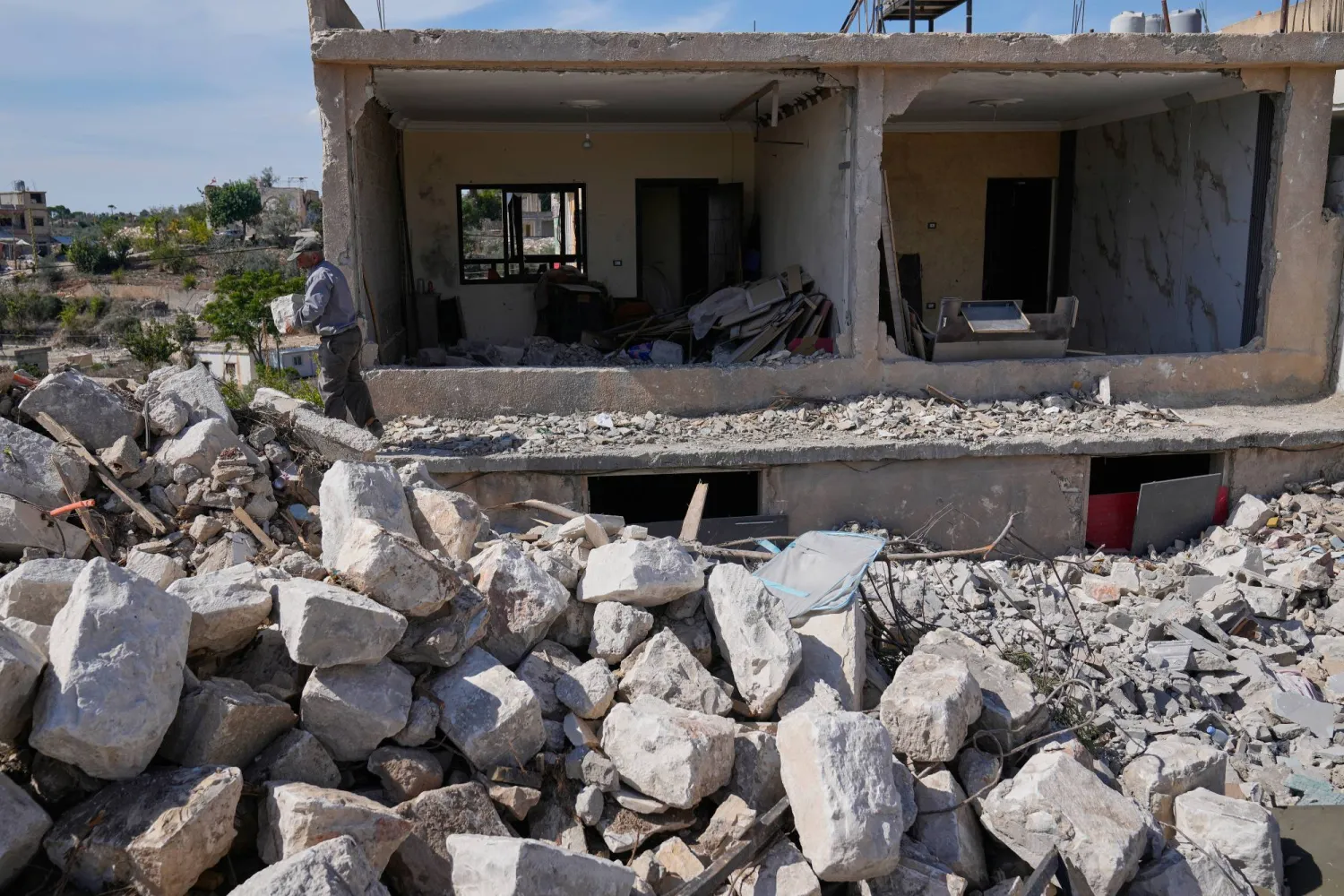
The draft law comes as southern areas face widespread destruction, while residents remain displaced and some are unable to return to their towns. The situation has raised concerns extending beyond physical damage to the future of property ownership and residents’ ability to return.

Lebanese MP Abdel Rahman al-Bizri said the protection of property ownership was part of an effort to prevent the destruction and displacement from becoming permanent.

“It is clear that the Israeli occupier is pursuing a scorched-earth policy and working to eliminate every possibility for people and communities to return to the occupied territories in southern Lebanon,” al-Bizri told Asharq Al-Awsat.

“The systematic destruction it is carrying out — whether of homes, infrastructure, crops, schools, clinics, shelters or hospitals — targets every element people need to live and build a functioning community.”

“This indicates a deliberate plan to ensure that these lands remain unfit for the residents’ return, even if the Israeli occupier withdraws from them,” he added, pointing to “repeated visits and tours of Lebanese territory by extremist groups from within Israeli society.”

“This recalls similar scenes in the Syrian Golan Heights and the West Bank,” al-Bizri said. “Despite the Israeli government’s denials, it raises concerns about possible parallel activity by the Israeli authorities and extremist movements.”

Al-Bizri said the Lebanese government had prohibited land sales as a pre-emptive and preventive measure, barring the sale of property in occupied areas to Lebanese and non-Lebanese buyers alike.

The measure was intended to prevent such transactions from becoming “an entry point for a broader process that could later be exploited,” he said, recalling “what happened historically in Palestine before the Nakba.”

“Sovereignty does not mean only the deployment of the Lebanese army and security forces. It also means the return of the state, with all its services, to those areas — from municipalities and schools to healthcare and social protection,” al-Bizri said, adding that a substantial part of the responsibility rested with the government itself.

“Preventing land sales is part of the confrontation and part of our insistence that this land is Lebanese and that we want to keep it Lebanese,” he said. “This must go hand in hand with the state’s return and presence across all Lebanese regions.”

Ayoub Hmayed, an MP from the Development and Liberation parliamentary bloc, told Asharq Al-Awsat that the government’s decision was a “precautionary measure” aimed at protecting the land and closing any loophole that Israel could exploit.

The measure “reinforces Lebanese sovereignty over Lebanese territory,” he said.

Hmayed said the decision’s importance stemmed, “as a matter of principle,” from the need to prevent sales or transfers of ownership that could be exploited under occupation.

On the demographic implications, Hmayed said the problem extended beyond land sales to the conditions created by the war and occupation, including residents’ displacement and the inability of some to return to their towns. If the situation persisted, he warned, it would “certainly produce a different reality” on the ground.

He said the ban provided additional protection to landowners even when their homes had been destroyed and they were unable to return.

“Preventing land sales protects these people, just as it reinforces Lebanese sovereignty over Lebanese territory,” Hmayed said.


Iraqi Army Commander Sacked After Drone Attacks Targeted Saudi Arabia

Iraqi Prime Minister Ali Al-Zaidi (Reuters)
TT

Iraqi Army Commander Sacked After Drone Attacks Targeted Saudi Arabia

Iraqi Prime Minister Ali Al-Zaidi (Reuters)

The office of Iraqi Prime Minister Ali al-Zaidi announced on Saturday the dismissal of the commander in charge of the southern Maysan province after Saudi Arabia said drones launched from Iraq hit the East-West pipeline and led to its closure.

The commander was fired following the "confirmation that the attacks targeting our brethren in the Kingdom of Saudi Arabia originated from a location within the governorate,” said al-Zaidi’s office.

The Saudi Foreign Ministry condemned "the targeting of the East-West pipeline in the Riyadh and Madinah regions by several drones coming from Iraq, which caused human injuries and damage.”

"The pipeline was stopped as a precaution, and the attacks resulted in some injuries," an Energy Ministry official told the SPA news agency earlier.

"At the request of the Iraqi Prime Minister... (Riyadh) has chosen not to respond at this stage and to support the efforts of the Iraqi government ... to prevent attacks launched from Iraq against the Kingdom and neighboring countries," the Foreign Ministry said.