


Death Journey from Kordofan Ends in Hunger in Omdurman

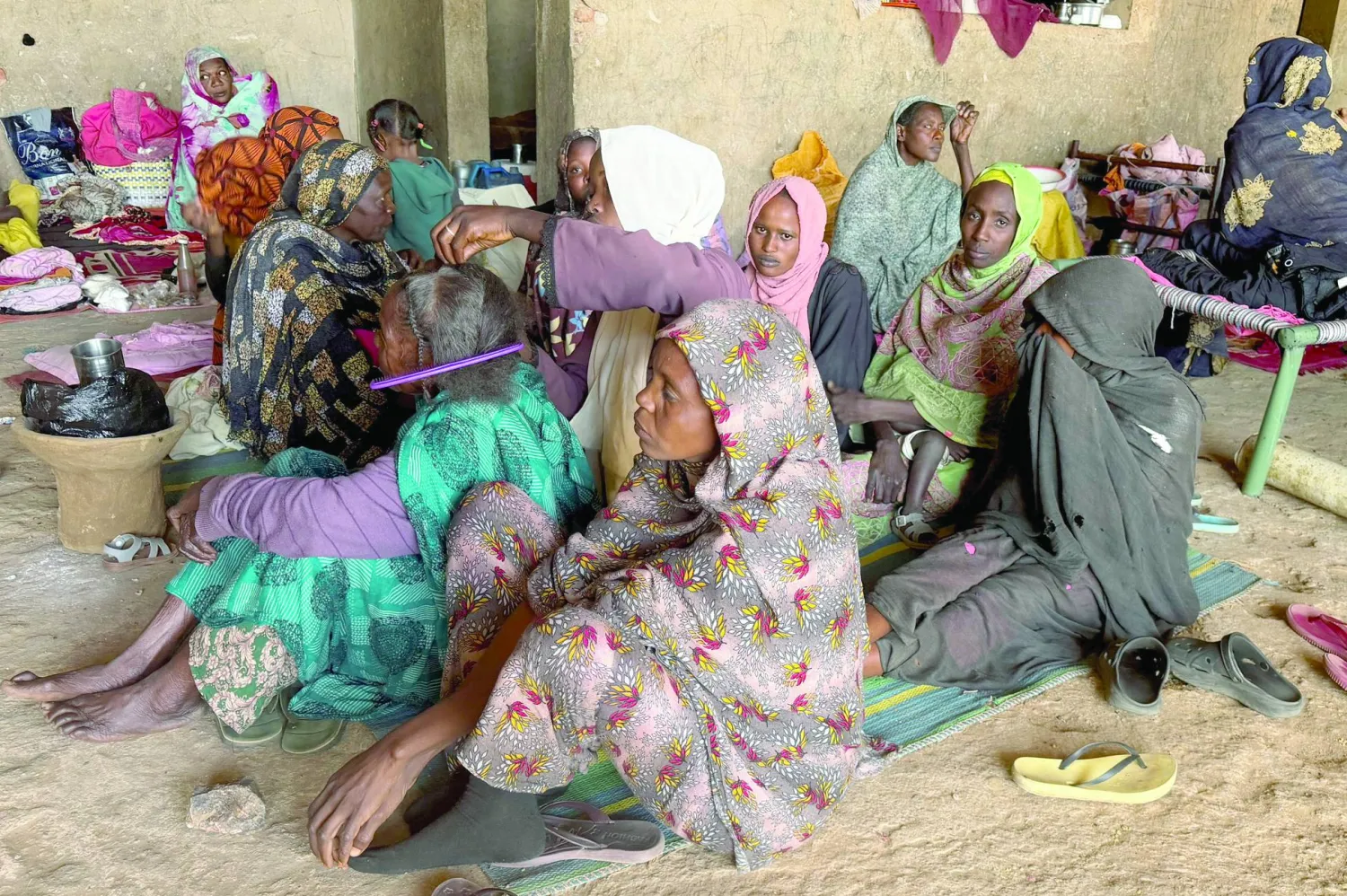
A displaced woman from Dalanj braids her grandmother's hair at a displacement registration center in El Obeid, North Kordofan State, Sudan, January 15, 2026. REUTERS/El Tayeb Siddig
TT

Death Journey from Kordofan Ends in Hunger in Omdurman

A displaced woman from Dalanj braids her grandmother's hair at a displacement registration center in El Obeid, North Kordofan State, Sudan, January 15, 2026. REUTERS/El Tayeb Siddig

A long journey marked by fear, hunger and thirst has been undertaken by large numbers of Sudanese families fleeing cities and towns in North Kordofan state, where fighting has flared again, for Omdurman, the second-largest city in the capital Khartoum.

Families that have lost children, relatives, and perhaps all their possessions have been forced to leave their homes and take difficult routes through mountains and valleys. Some have travelled on foot, while others have relied on animal-drawn carts or trucks. Others have become stranded before reaching safety.

Reports by local and international aid organizations said hundreds of families — with some estimates putting the number at more than 3,000 — have been displaced in recent weeks following a resurgence of military operations in parts of North Kordofan, amid what the reports described as “dire humanitarian conditions”.

After weeks of hardship, the families reached the far western outskirts of Omdurman “hungry and exhausted,” carrying what remained of their belongings and memories of the homes they had left behind.

Others had lost family members along the arduous journey. But reaching Omdurman did not end their ordeal. Displaced families face shortages of food and drinking water and a lack of humanitarian assistance, while cases of diarrhea, fever and infections are spreading among children, turning their escape from the war into an open-ended ordeal with no clear end in sight.

The Arduous Journey

The Sudanese Armed Forces and allied forces are seeking to expand their control in North Kordofan and secure the area around the state capital, El Obeid, while large numbers of the Rapid Support Forces are positioned west and south of the city.

Halima Dhow al-Bait said she fled with her family of nine from the Al-Jamama area of Sodari locality in North Kordofan after they were forced to leave their home at gunpoint.

Her journey took several days aboard cargo trucks and was arduous and exhausting, while some residents and neighbors became stranded in the mountains and among the trees.

“We arrived in Omdurman in a state of extreme exhaustion,” the Sudanese woman told Asharq Al-Awsat. “During the first few days, we received some food supplies, including oil, sugar and flour, but those supplies later stopped.”

Another displaced woman said: “During the journey, three of my children fell ill because of hunger, thirst and the hardships of the road.”

“We left our homes, our property and everything we owned. We left with nothing but the clothes we were wearing,” she said. “Our situation is now extremely difficult, and we are receiving no humanitarian assistance.”

“We saw death with our own eyes”

Sudan’s humanitarian crisis has deepened as a result of the war between the Sudanese army and the Rapid Support Forces, which has continued since April 2023, killing hundreds of thousands of people and displacing about 13 million others as refugees and internally displaced people, according to UN estimates.

Sayedah Khamis, a displaced woman from the town of Al-Jamama, recounted the details of her arduous journey.

“Our journey took about 13 days. At times we travelled on foot, and at others in donkey-drawn carts,” she said.

“We left because of the deteriorating security situation, violations and the looting of civilians’ property,” she added.

The displaced woman described the hardship of the journey and the harsh conditions her family endured throughout those days.

A New Reality

Renewed fighting in Sudan’s Kordofan region has displaced hundreds of families to El Obeid, Khartoum, Kosti and Omdurman. The crisis has also displaced about 200,000 people in North Darfur and a similar number in Blue Nile state.

Mohamed Ali, who was also displaced from Abu Hadid, said armed conflict forced his family to leave the area. They traveled for about two weeks through mountains and valleys, using different forms of transport and sometimes sleeping outdoors in harsh conditions amid insects and disease.

He said they lost several family members along the way and now urgently need food and clean drinking water, particularly as flies have contributed to illnesses among children.

Although the families’ displacement journey to Omdurman may have ended, their hardship continues. They have lost homes, property and relatives, and now face a daily struggle for food, water and healthcare. Their hope of returning home remains on hold until the violence ends, turning their escape from war into an ongoing fight for survival.



Syria Needs EU Support to Ensure Stability, Kallas Says

High Representative of the European Union for Foreign Affairs Kaja Kallas speaks prior to the Foreign Affairs Council meeting in Brussels, Belgium, 16 November 2026. (EPA)
TT

Syria Needs EU Support to Ensure Stability, Kallas Says

High Representative of the European Union for Foreign Affairs Kaja Kallas speaks prior to the Foreign Affairs Council meeting in Brussels, Belgium, 16 November 2026. (EPA)

European Union foreign ministers will discuss on Monday elevating their relationship with Syria as the war-torn country needs urgent support to ensure stability amid ‌escalating tensions ‌in the ‌region, ⁠the bloc's foreign policy ⁠chief said.

"We really see that Syria needs a lot of investments, to build ⁠up institutions and ‌its ‌reforms," Kaja Kallas ‌told reporters ahead of ‌a monthly foreign ministers meeting in Brussels.

"On the European side we ‌want to see Syrian refugees return but ⁠they ⁠need conditions to return. There's a lot we can do together because the stability of Syria is in our interest and the interest of region."


Jordan Bans Telegram App Over ‘Radicalization’ Claims

Jordanian military police stand guard outside Jordan's State Security Court in Amman, Jordan, November 15, 2026. (Reuters)
TT

Jordan Bans Telegram App Over ‘Radicalization’ Claims

Jordanian military police stand guard outside Jordan's State Security Court in Amman, Jordan, November 15, 2026. (Reuters)

Jordan announced a ban on the Telegram messaging app on Monday, citing concerns that it was being used to spread extremism, weeks after a deadly attack on a church.

"We announce the blocking of the Telegram app in Jordan, in the framework of efforts aiming to bolster digital security and protect users," the Jordanian security directorate said.

It said the move came "in the context of the commitment to protecting society and countering any uses that could contribute to and facilitate committing cyber crimes, threats, blackmail or spreading illegal content".

It also said it sought to counter "attempt to spread radicalization and extremism which affects national security".

The ban comes after the October 23 attack on a church in the southern Karak governorate that killed nine people and wounded dozens of others.

On Sunday, a court sentenced three men to death by hanging over the attack. Authorities described them as followers of a hardline extremist ideology.


Confrontation between Iraqi PM, Kataib Hezbollah Intensifies

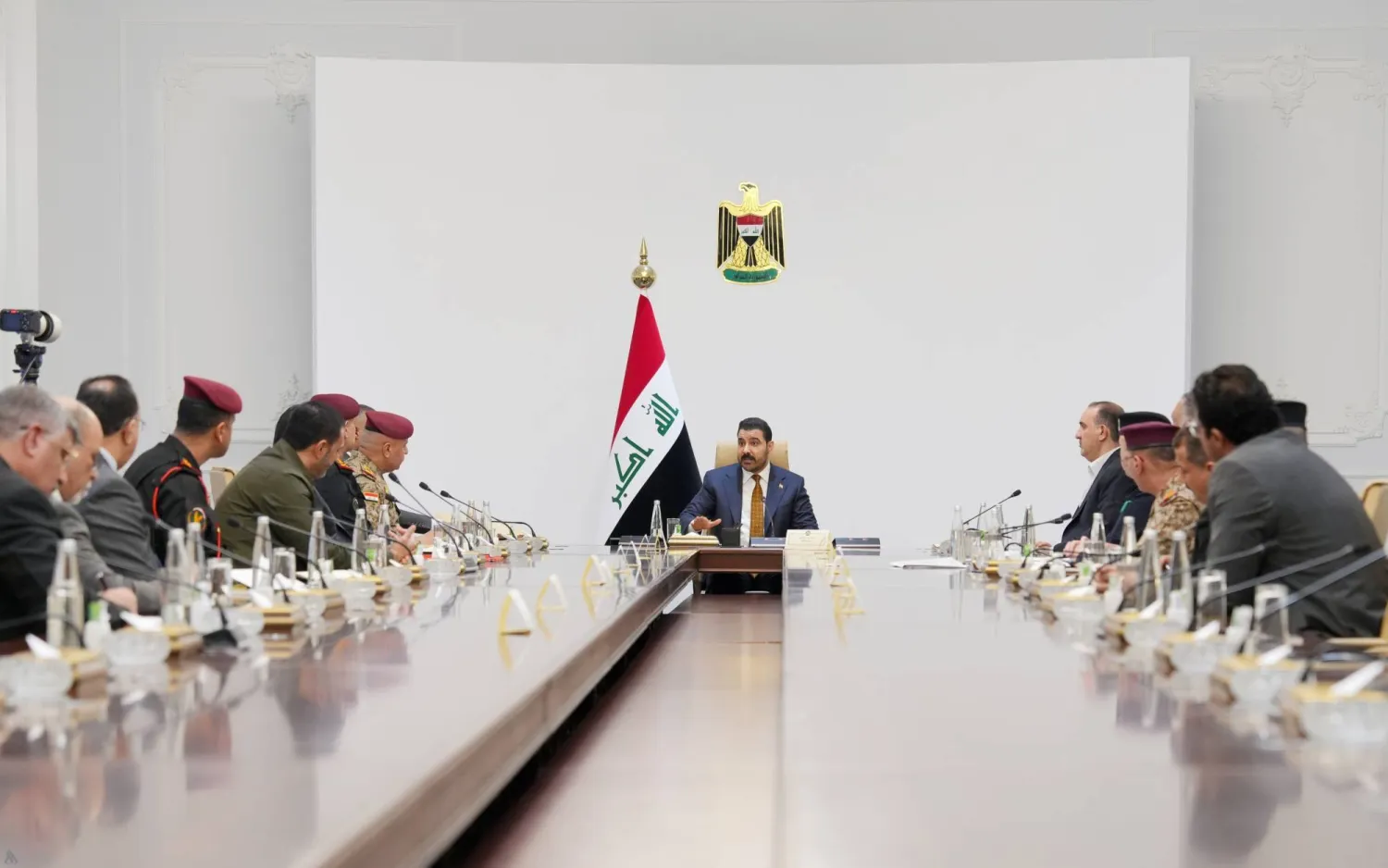
Iraqi PM Ali al-Zaidi chairs a security meeting on Sunday on oil smuggling in Jurf al-Sakhar. (INA)
TT

Confrontation between Iraqi PM, Kataib Hezbollah Intensifies

Iraqi PM Ali al-Zaidi chairs a security meeting on Sunday on oil smuggling in Jurf al-Sakhar. (INA)

Iraqi Prime Minister Ali al-Zaidi has won half the battle against armed factions by referring dozens of security and military officials across Babil province’s operational sectors to the judiciary for failing to halt oil smuggling in Jurf al-Sakhar, an area that has been held by the Kataib Hezbollah faction.

The government has made strides in its efforts to impose state monopoly over arms, including by offering government positions as incentives to several armed groups.

A number of those factions, including Kataib Hezbollah and Harakat al-Nujaba, have however refused to surrender their arms, arguing that they are “ideological” and tied to what is known as the “unity of arenas”, as promoted by Iran.

However, the sudden revelation that the armed faction, which has controlled Jurf al-Sakhar for years, was involved in smuggling oil passing near the area by puncturing pipelines has largely changed the equation.

The revelation was made after the security-political committee formed by al-Zaidi managed to enter the previously off-limits area to the authorities. There, it uncovered oil smuggling operations involving tanker trucks.

The development prompted al-Zaidi, who is also Commander-in-Chief of the Armed Forces, to issue several decisions viewed by experts as paving the way, for the first time, for a real confrontation with the armed factions to allow military units to enter the area.

According to a statement from the Office of the Commander-in-Chief of the Armed Forces, al-Zaidi chaired an emergency security meeting on Saturday evening to review the findings of a committee investigating oil smuggling in Jurf al-Sakhar.

The committee confirmed the accuracy of Federal Intelligence and Investigations Agency reports detailing oil smuggling operations, unauthorized refineries, and administrative irregularities.

“In light of the investigation’s findings, the Commander-in-Chief of the Armed Forces directed that all suspects involved in the oil smuggling operations be referred to the judiciary and that legal measures be taken against them,” it added.

He also decided to relieve the following officials in Babil of their duties: the police chief, the director of northern Babil police, the director of Babil intelligence and counterterrorism at the Ministry of Interior, the director of national security in Babil, the director of intelligence and security for Babil province at the Ministry of Defense, the director of Babil intelligence, the commander of the Popular Mobilization Forces (PMF) in Babil, the commander of the Energy Police’s Sixth Brigade at the Ministry of Interior, and the director of the Oil Pipelines Company at the Ministry of Oil.

“The Commander-in-Chief directed that operations commanders, provincial police chiefs, and directors of security and intelligence agencies bear full responsibility for any oil smuggling incidents occurring within their sectors of responsibility.”

He stressed the need to tighten oversight and security measures to prevent these practices and hold those negligent accountable, stressing that “not a single inch of Iraq, from Zakho to Basra, will remain a place where smuggling is practiced.”

Legal expert Ali al-Tamimi told Asharq Al-Awsat that “Iraq today faces the most dangerous threat to its sovereignty: weapons outside state control.”

He said the PM’s measures in Jurf al-Sakhar sparked widespread legal debate even though the moves align with the constitution.

“These referrals and dismissals are grounded in Article 78, which designates the prime minister as the direct executive responsible for the state's general policy and commander-in-chief of the armed forces,” he remarked.

He added: “Individuals who sabotage oil infrastructure are prosecuted as terrorists under the Anti-Terrorism Law and could gave penalties up to the death penalty.”