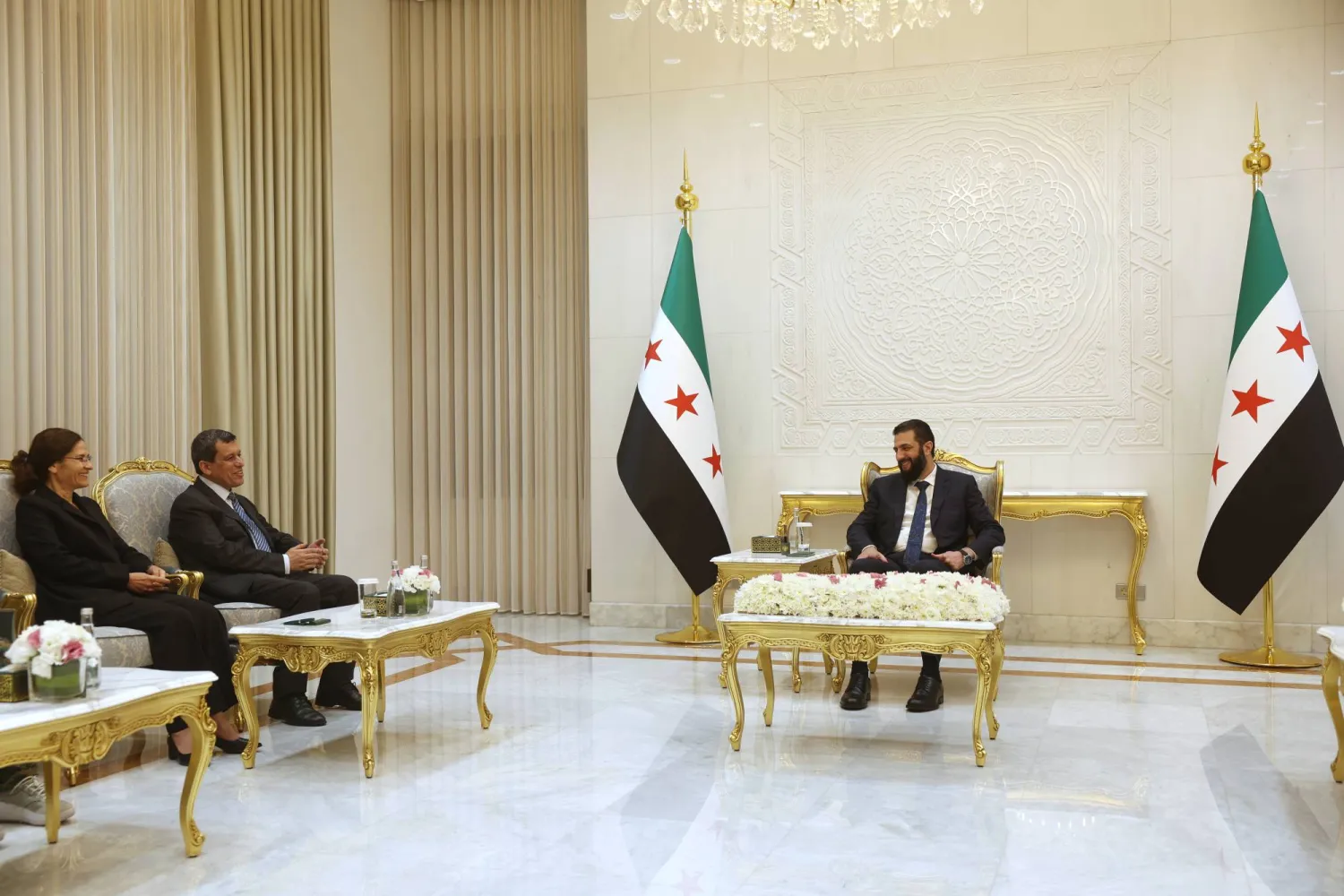

Syrian Kurdish political figures and a senior Arab official in Syria’s Hasakeh region welcomed the appointment of Syrian Democratic Forces (SDF) commander Mazloum Abdi as an adviser to the Syrian president, saying the move could speed up the integration process of Kurdish forces and help stabilize northern and eastern Syria.
A Kurdish politician who served in the former Autonomous Administration said the appointment could help “consolidate stability and security in northern and eastern Syria and across the country.”
An independent Kurdish politician also backed the decision, but said its impact on stability would depend on Abdi’s ability to influence armed groups formerly under his command.
A senior Arab dignitary in Hasakeh hoped that “the integration process will proceed quickly to strengthen security, safety and stability in the region, because that will have a positive impact on Syria as a whole.”
Syrian President Ahmed al-Sharaa issued a decree on Thursday appointing Abdi as a presidential adviser. The move came three days after Abdi announced the SDF's dissolution following the “completion of its mission.”
The decision closes a significant chapter in the history of the Kurds, who fought ISIS with US support during Syria’s civil war.
“We view this appointment positively and consider it an important step that could open the way to a new phase of dialogue and understanding,” said Abdul Karim Omar, a Syrian Kurdish politician who served as the Autonomous Administration’s representative in Damascus.
Omar told Asharq Al-Awsat that “placing a figure such as Abdi, who has a presence and a role in northern and eastern Syria, in an advisory position at the presidency could help bring views closer together, build trust and open broader channels of communication on national issues.”
He added that “genuine understandings between the two sides could lay the groundwork for gradual, mutually agreed institutional integration that preserves the particular character of the Kurdish regions and the rights of all their communities, while strengthening Syria’s unity and sovereignty.”
If backed by political will and serious dialogue, such steps could “help consolidate stability and security in northern and eastern Syria and across the country, and open a new chapter based on national partnership,” he stressed.
Abdi’s appointment and the dissolution of the SDF came as implementation of the January 29 agreement signed by al-Sharaa and Abdi.
The agreement provides for the integration of the military, security, and civilian institutions of the Kurdish Autonomous Administration, which the Kurds established during the conflict, into Syrian state structures. It also calls for handing over border crossings and oil and gas fields and for foreign fighters to leave the region.
Abdelaziz Tammo, President of the Independent Syrian Kurds Association, said the appointment “was expected” and sent a message that “the SDF and the other Kurdish military groups affiliated with the Kurdistan Workers’ Party (PKK) have come to an end and become part of the Syrian state, since their commander is now an adviser to the presidency.”
Tammo told Asharq Al-Awsat that the Syrian government “succeeded in resolving the issue of the SDF and the remaining PKK militias without bloodshed and gave them everything they requested.”
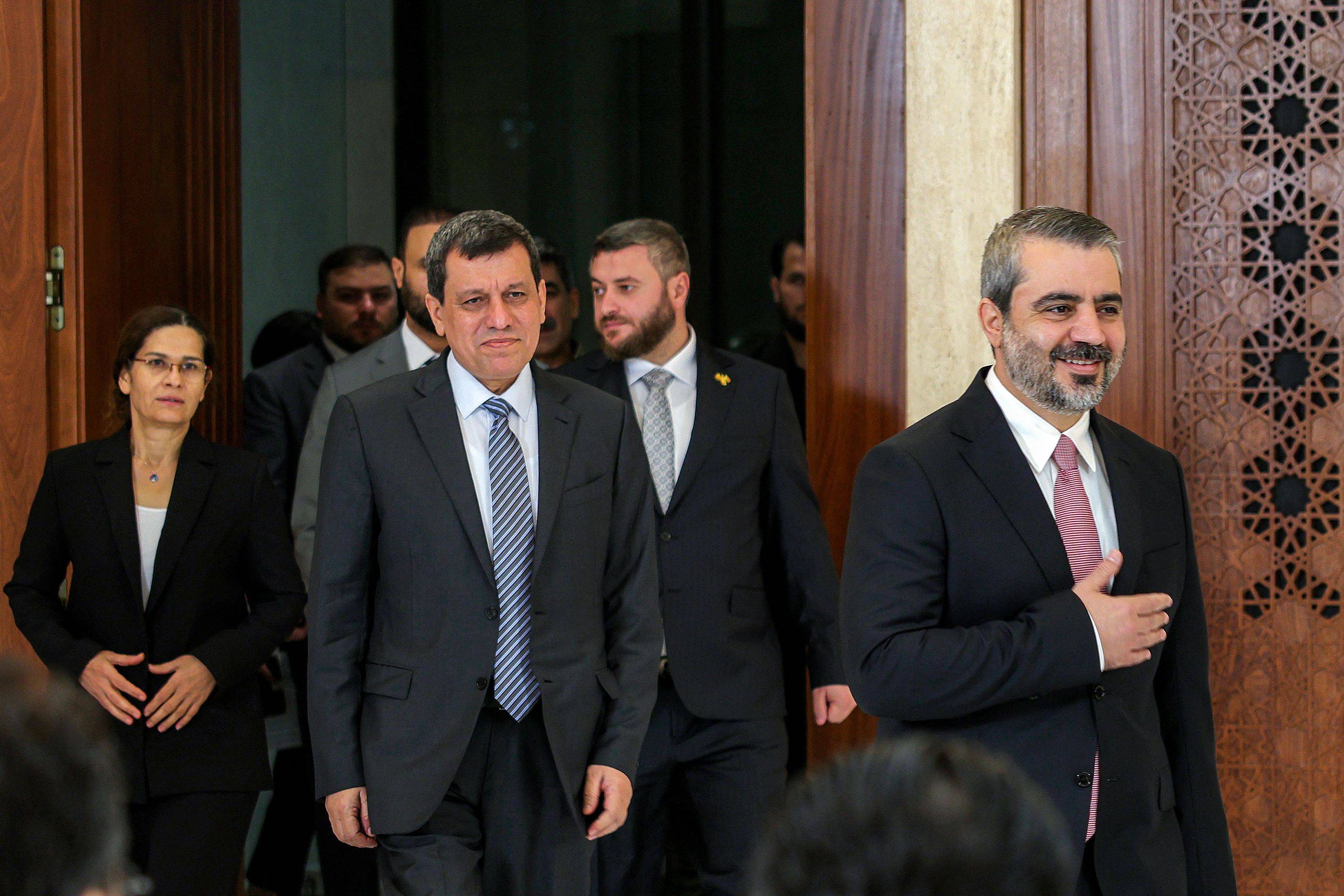
Through the January agreement, the Syrian government sought to reunify the country, strengthen security and stability in northern and eastern Syria, restore full state sovereignty and authority over its territory, unify the military and security sectors, integrate institutions, enforce the rule of law, and recover economic resources.
Tammo said security and stability in northern and eastern Syria would depend on Abdi’s influence over armed groups affiliated with the PKK that operated under the SDF umbrella, such as the People’s Protection Units (YPG) and Women’s Protection Units.
Following the dissolution of the SDF and Abdi’s appointment, Tammo said: “Anyone who does not comply with the decision is now outside the law, and the state can enforce the law against them.”
“There is no longer any reason for those militias to exist, particularly since PKK leader Abdullah Ocalan announced the dissolution of the party and all its affiliated formations,” he said.
“Since the parent party dissolved itself, the other formations linked to it should naturally dissolve themselves,” Tammo added.
Tammo said integrating the SDF into state institutions would not, by itself, have a major impact on the region because it also required social integration and a return to coexistence.
“The PKK and the SDF committed many violations against Kurds, Arabs and other citizens,” he noted. “To end this crisis, we need to activate the role of social capital, represented by community leaders and independent political figures, to heal wounds and address the consequences of those violations.”
He described the dissolution of the SDF as “a step in the right direction”, hoping it would be implemented on the ground.
In July, residents of Hasakeh mobilized for several days to demand that the state extend its control and authority across the province, allow displaced people to return to their cities and villages, and end the SDF’s dominance over the region and its abuses against residents.
Sheikh Mudar Hammad al-Asaad, director of the Association of Syria Refugees, said Abdi’s appointment “will open the way to accelerating the integration of the SDF and the Autonomous Administration into the Syrian state.”
Al-Asaad told Asharq Al-Awsat that he hoped integration would be implemented on the ground through the release of hundreds of detainees from SDF prisons, disclosure of the fate of missing people and the submission of lists identifying foreign fighters who fought alongside the SDF as a step toward removing them from Syria.
He also called for all government offices to be handed over to the state and for an end to military gatherings organized by some groups in the SDF’s name. Those groups continued to make arrests and operate checkpoints, provoking residents and stoking tensions.
“We hope the integration process will proceed quickly to strengthen security, safety and stability in Hasakeh, because that will have a positive impact on Syria as a whole,” al-Asaad said.
He stressed that Hasakeh “is the country’s breadbasket” and that restoring security and stability would allow the province’s infrastructure to be rehabilitated, agricultural and industrial projects to be established, and oil and gas projects to resume, benefiting all Syrians.
Restoring security and stability would also allow refugees and displaced people to return and halt the current wave of displacement, he said.