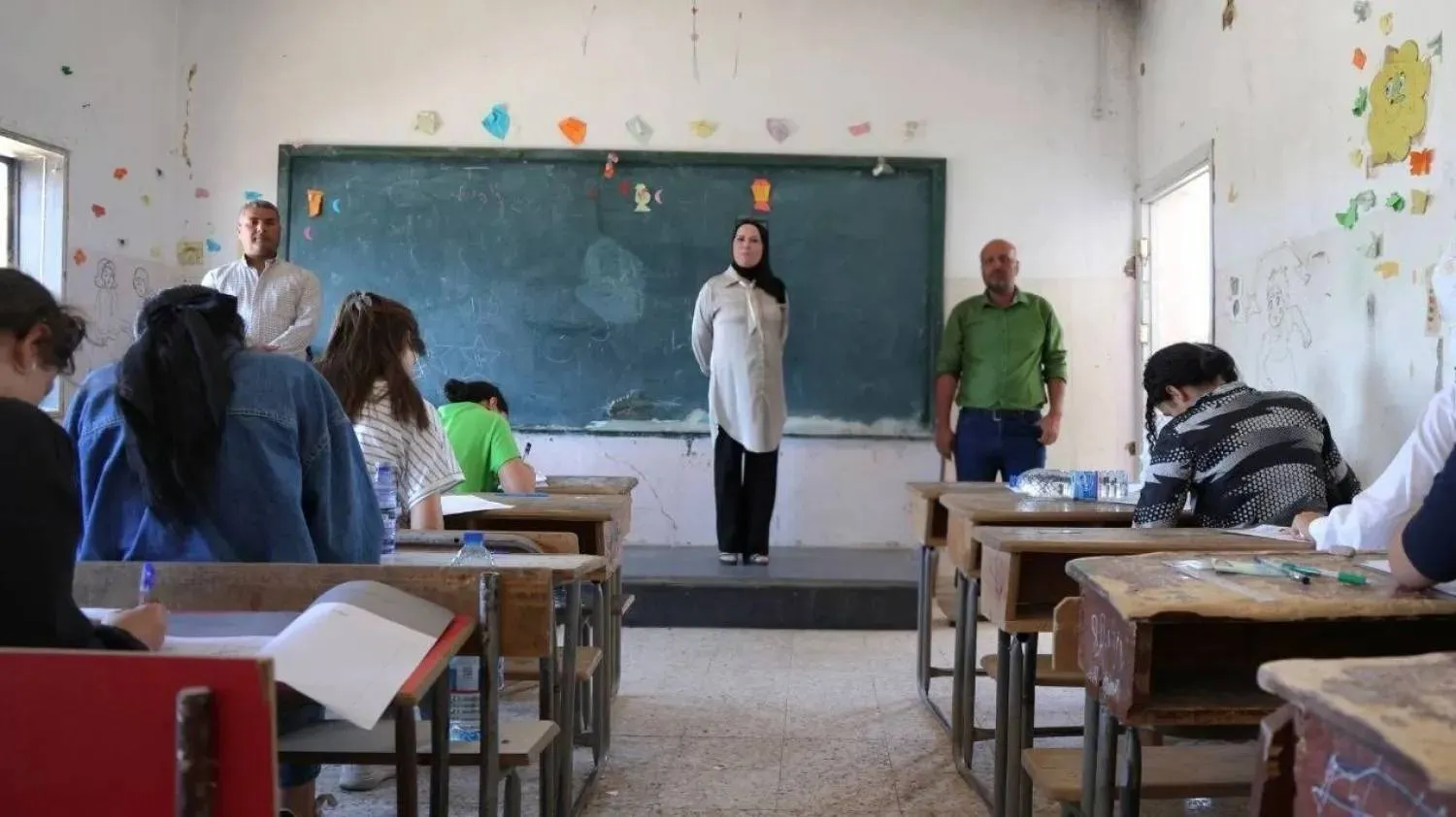

Armed factions in Syria's Druze-majority Sweida province have blocked students from travelling to sit for official exams, demanding they be held instead in the areas they control, drawing condemnation from the Damascus-appointed governor on Saturday.
The factions are part of the so-called “National Guard” that is affiliated with prominent Druze leader Sheikh Hikmat al-Hijri who control swathes of the province.
Sweida city and other parts of the southern province are run by local armed groups and are the last areas outside the grasp of Syria's new authorities, who have been trying to establish control over the entire country after toppling longtime ruler Bashar al-Assad in 2024.
Tensions have run high ever since clashes last year between the Druze and government-aligned forces that spiraled into some of the worst internecine violence the country had witnessed since Assad's fall.
The authorities had scheduled an exam session for Saturday in the government-controlled north of the province for students who were unable to take the test two months ago due to the ongoing tensions.
But Druze fighters in Shahba, north of Sweida city, said in a statement on Friday that "all roads are completely closed to the movement of students and proctors to examination centers outside the area", insisting that tests should be held in their areas instead, citing security concerns.
Sweida governor Mustafa al-Bakkur condemned the move on Saturday, saying: "Outlaw gangs are working to make the future of Sweida's students a political bargaining chip to be manipulated as they please."
He said that around 150 students were still able to sit for their exams, some of them having left Druze-controlled areas days prior to avoid any obstacles.
- 'Shots in the air' -
One 18-year-old student told AFP she was on a bus in Sweida city hoping for the road to open when "an armed group arrived and threatened the students".
"Some members of these factions fired shots into the air to intimidate and frighten the students" after they insisted on heading north, she added, requesting anonymity out of fear for her safety.
The education ministry said in a statement that it "regrets that not all of our students were able to reach the examination centers".
A source in Sweida told Asharq Al-Awsat that the factions are aiming to “obstruct realistic solutions to the crisis in the provinces.”
He accused the factions of deliberately seeking to keep students out of school, so that they can continue to manipulate their education for their own interests. Many members of the factions themselves did not complete their education.
Reacting to Saturday's events, UN Resident and Humanitarian Coordinator for Syria Marianne Ward said the body was "concerned" by the developments.
"The United Nations calls on all relevant stakeholders to ensure that children with the support of their caregivers can exercise their right to education without pressure or disruption of movement," she added.
In July 2025, clashes erupted in Sweida between Druze factions and Bedouin fighters, with security forces intervening on the side of the Bedouins along with other tribal groups.
In the end, more than 2,000 people were killed, including 789 Druze civilians, according to the Syrian Observatory for Human Rights monitor. A committee formed by the Syrian government said it had documented the killing of 1,760 people.
Damascus last month said it began trying suspects over the violence.
Israel, which also has a Druze population, intervened militarily during the clashes with strikes in Sweida and Damascus, saying it was defending the minority community.
Al-Hijri, who has been a vocal critic of the new authorities, went so far as to say on Monday that his community was "an integral part of the State of Israel".
The source in Sweida told Asharq Al-Awsat that several members of the Druze community have spoken out against al-Hijri's stances.
The Druze council in Lebanon and other political forces in Sweida also rejected his positions, underscoring the Druze community’s Arab identity and history.