Hezbollah’s announcement of financial assistance for displaced Lebanese families and those affected by the fighting with Israel has raised questions about where the money comes from and how it is transferred and distributed, amid US sanctions on Iran and tighter Lebanese oversight of funding channels.
The announcement also comes as Lebanese authorities move to place all weapons under the control of legitimate state forces.
Meanwhile, President Joseph Aoun received a telephone call from Iranian Foreign Minister Abbas Araghchi to discuss regional developments. According to the Lebanese presidency, the two agreed on the need to support diplomatic solutions as the best way to end conflicts in the region.
Hezbollah’s funding sources
Hezbollah has traditionally relied on direct Iranian support, donations from sympathizers abroad and commercial activities, as well as illicit sources that US authorities accuse the group of exploiting.
Lebanese authorities, meanwhile, are seeking to strengthen financial regulations and oversight, particularly through proposed amendments to Law No. 44 on combating money laundering and terrorist financing.
The changes aim to identify the beneficial owners of companies and commercial ventures, trace the origins and destinations of funds, and tighten supervision of currency exchange dealers and money transfer companies.
US questions reported Iranian funding
A US State Department spokesperson has questioned, for a second time, reports of money reaching Hezbollah from Iran.
“The money supposedly arriving from Iran simply does not exist,” the spokesperson was quoted as saying.
The official accused Hezbollah of relying on criminal activities, including drug trafficking and partnerships with Latin American drug cartels, to compensate for funds it was not receiving from Tehran.
No detailed public evidence was provided to substantiate the allegations.
The spokesperson described Hezbollah’s aid announcement as an attempt to salvage its reputation rather than help those it had drawn into war. The official also accused the group of dragging Lebanon into war in a “suicidal” manner, arguing that even if Hezbollah had the money, it would use it to purchase weapons to threaten Israel and intimidate its opponents.
Hezbollah’s weapons, the spokesperson added, had brought Lebanon nothing but misery and destruction.
The official said Washington was working with Gulf and European partners on a plan to make billions of dollars available for Lebanon’s reconstruction, without specifying a final amount or implementation timetable.
Disarming Hezbollah was an essential part of efforts to restore stability and prevent renewed conflict, he stressed.
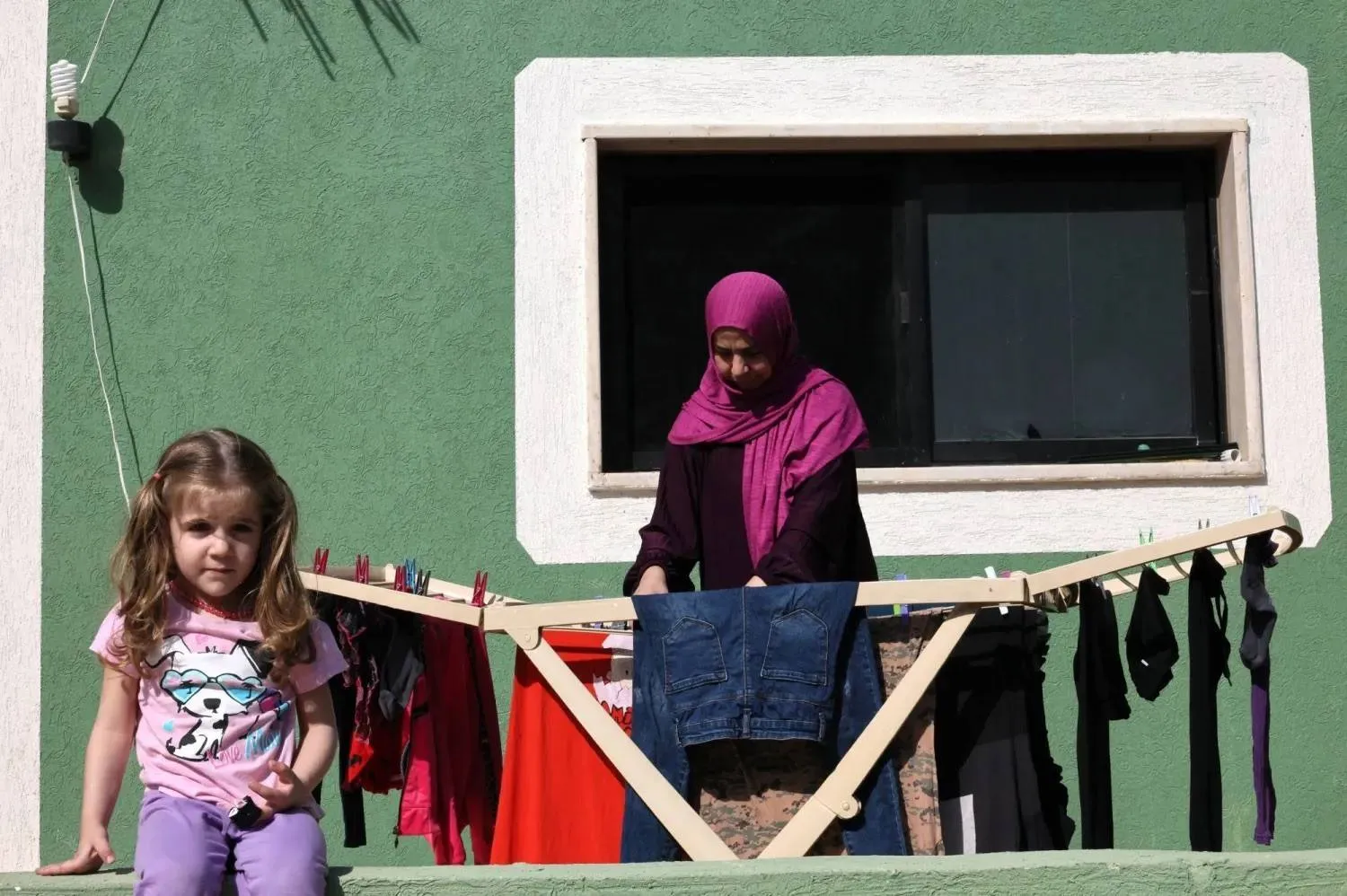
On Tuesday, Hezbollah announced a financial assistance program for displaced families whose homes had been destroyed or damaged and who had no alternative accommodation.
The program covers rent and furniture expenses of up to $14,000, payable over one year.
The announcement came days after Reuters reported that Hezbollah had received $200 million from Iran to assist displaced Lebanese families, a claim also questioned by Washington.
Questions over alternative funding channels
Sami Nader, director of the Middle East Institute for Strategic Affairs, told Asharq Al-Awsat that US skepticism suggested Washington was closely monitoring Hezbollah’s potential funding sources.
However, he did not rule out the possibility that Iran and Hezbollah had recently developed new methods of transferring money, including cryptocurrencies or gold.
Nader said US trade monitoring and tighter financial restrictions posed challenges to such channels, potentially explaining the latest round of sanctions. He stressed the need for Lebanon to enforce its financial laws across all sectors.
“The Lebanese state must enforce the laws as it did with Al-Qard Al-Hassan, and oversight must cover all areas,” he said.
Nader called for scrutiny of cryptocurrency exchange offices to determine whether they complied with Lebanese regulations, adding that new legislation might be needed to address emerging financial mechanisms.
Concerns over Lebanon’s financial standing
Lebanese Forces lawmaker Razi al-Hajj accused Hezbollah of trying to project the same strength it possessed before the two wars, while disregarding the deaths, injuries and economic collapse that followed.
He also accused the group of attempting to shift responsibility onto the government, which he said had already shouldered more than it could manage. While affirming that those affected by the fighting were entitled to assistance, al-Hajj said the central issue was enforcing laws against money laundering and terrorist financing.
He warned that failures in this area could damage Lebanon’s financial standing and international relations.
The deputy argued that Hezbollah’s funding, which he characterized as generally originating from illicit sources, posed a threat to state stability and ties with the international community.
He also warned that Lebanon could move from the Financial Action Task Force’s gray list to its blacklist.
Transparency must apply to everyone
Lawmaker Fouad Makhzoumi said demands for transparency and verification of funding sources, transfer methods and distribution mechanisms should apply to everyone without exception.
Writing on X, he warned of the risks of money laundering and terrorist financing, particularly given Lebanon’s inclusion on the gray list of the Financial Action Task Force (FATF).
Makhzoumi also urged the government to assume responsibility for providing shelter and assistance to displaced families, stressing that no Lebanese citizen should be left to face hardship alone.