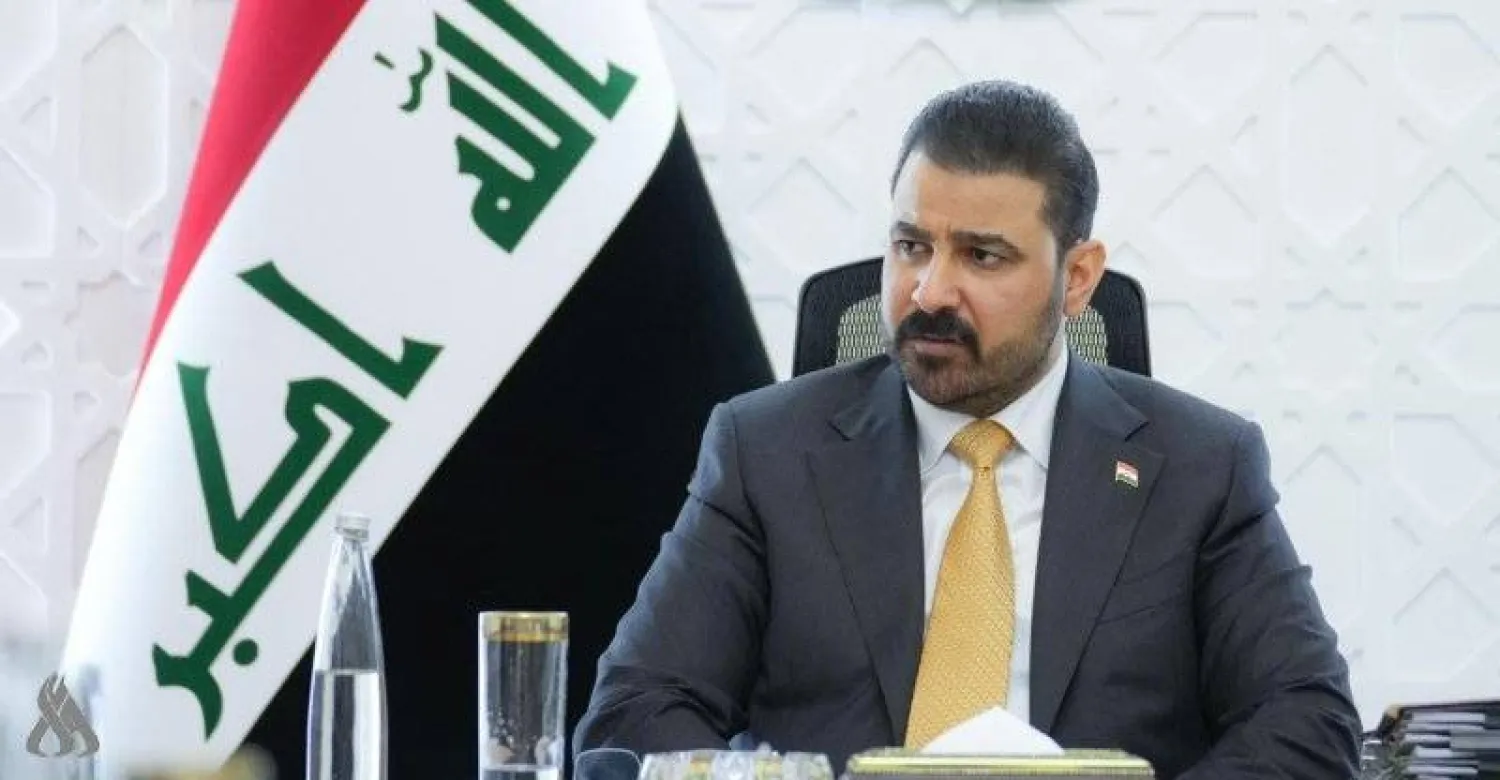
Iraqi Prime Minister Ali al-Zaidi has rejected a proposal to keep some international anti-ISIS coalition forces in Iraq beyond the September 30 deadline for their withdrawal, announced government spokesman Haider al-Aboudi.
He also stressed that Baghdad was closely monitoring regional developments but would not become part of the conflict.
Speaking at a news conference Monday, al-Aboudi confirmed that the withdrawal of coalition forces and the handover of their positions to Iraqi forces were proceeding as planned.
“The government is looking ahead to September 30, which represents an important milestone for the sovereignty of the Iraqi state and people,” he told Iraq's state news agency INA, adding that the date would mark “the complete end of the international coalition mission’s presence on Iraqi territory.”
On efforts to bring all weapons under state control, al-Aboudi stressed that the government was moving ahead with measures to regulate arms and unify decision-making, describing the issue as a top priority and a cornerstone of national sovereignty.
He noted that the Iraqi Constitution grants the armed forces exclusive authority over arms and prohibits the formation of armed groups outside the official security establishment.
Talks with armed factions were progressing positively and within the designated timetable, he added, indicating that the issue would be resolved before September 30.
Government decisions were based on national interests, he said.
Al-Aboudi announced that al-Zaidi would visit Paris and Berlin in the first half of September at the invitation of European officials, with security among the issues on the agenda.
Turning to the economy, the spokesman outlined the government’s strategy to diversify revenue sources and secure essential requirements. Iraqi exports were proceeding normally at more than 2 million barrels per day, he added.
The cabinet is expected to vote on the 2027 budget in September.
The government is continuing its campaign against corruption, pursuing suspects and seeking to cut off its sources, al-Aboudi underlined. He pointed to the value of recovered funds as evidence of unprecedented progress.
Fears of Armed Factions Spiraling Out of Control in Renewed War Spur Iraqi Contactshttps://english.aawsat.com/arab-world/5337365-fears-armed-factions-spiraling-out-control-renewed-war-spur-iraqi-contacts
Members of Iraq's pro-Iran paramilitary group Kataib Hezbollah gather in a mourning procession for one of their comrades who was killed the previous day in a strike in Basra, during the funeral in Baghdad on April 8, 2026. (AFP)
Fears of Armed Factions Spiraling Out of Control in Renewed War Spur Iraqi Contacts
Members of Iraq's pro-Iran paramilitary group Kataib Hezbollah gather in a mourning procession for one of their comrades who was killed the previous day in a strike in Basra, during the funeral in Baghdad on April 8, 2026. (AFP)
Iraqi officials fear Iran-backed armed factions could spiral out of control if fighting with the United States resumes, as conflicting reports of an airstrike on a security facility in eastern Iraq, denied by Baghdad, add to tensions.
A senior source in the ruling Coordination Framework alliance said the government was working to keep Iraq out of a new conflict by negotiating directly with armed factions to persuade them to remain neutral.
The talks are being conducted through influential intermediaries, the source said.
Baghdad is also deploying security forces to poorly controlled areas and remote locations outside major cities, as it recently did in Basra province, to prevent armed groups from attacking neighboring countries if war breaks out.
But the source, who is familiar with internal discussions on the regional escalation, cast doubt on the government's ability to contain the fallout from a war.
He said Baghdad could struggle to rein in Iran-backed factions or safeguard Iraqi oil exports, which have recently recovered to more than 3 million barrels per day.
Even before regional tensions intensified, the government was struggling to resolve the issue of weapons held by armed factions. Doubts over its disarmament strategy have deepened since a deadline to bring those weapons under state control was pushed back from Sept. 30 to June 30, 2027.
The Coordination Framework had been negotiating with the factions through a political committee of senior political figures.
But amid mounting fears of renewed war, reports have circulated widely that Prime Minister Ali al-Zaidi opened a separate channel of communication with the armed groups, bypassing the committee.
A political source told Asharq Al-Awsat that Iran-backed factions may have updated their lists of targets inside Iraq and across the region as the prospect of war grows.
Saud al-Saedi, a lawmaker from the Hoquq Movement, the political wing of the Kataib Hezbollah faction, denied that al-Zaidi had personally intervened in the negotiations.
Saedi told reporters that the Coordination Framework had reached understandings with the factions on reorganizing their weapons.
The plan called for a joint committee bringing together representatives of the factions, the government, the Popular Mobilization Forces (PMF) and the Coordination Framework, he said.
But al-Zaidi has yet to sign the agreement, Saedi added, suggesting that the prime minister was under US pressure.
US warning
Meanwhile, Washington has stepped up pressure on Baghdad over weapons outside state control, according to political sources cited by local news agency Shafaq News.
The sources said Steven Fagin, the US charge d'affaires in Iraq, had delivered direct warnings to government and political figures in recent days, stressing that Washington was closely monitoring efforts to bring weapons under state control.
Failure to honor commitments or produce a concrete plan to end the presence of weapons beyond state control by June 30 could prompt Washington to designate Iraq a "state sponsor of terrorism" and impose sanctions and other measures, the sources quoted Fagin as warning.
As Baghdad remains silent on the possibility of renewed war, armed factions have largely adopted the same approach.
But the Ansar Allah al-Awfiya movement, an ally of former Prime Minister Mohammed Shia al-Sudani, broke that silence last Friday, warning Washington against using Iraqi territory or airspace to attack Iran while pledging neutrality if war erupts.
The movement's spokesperson, Ali al-Fatlawi, said it would remain neutral as long as Iraq was not used as a launchpad for attacks on neighboring countries.
He also urged Washington not to violate Iraqi airspace.
"Any violation of Iraqi sovereignty will prompt a response from the movement," Fatlawi said, adding that its leadership would decide the nature of that response according to the circumstances.
In recent days, armed factions and affiliated media outlets reported dozens of incursions into Iraqi airspace by US warplanes and reconnaissance aircraft.
The claims coincided with western media reports that US and Israeli fighter jets had conducted exercises over Iraq and several other countries in the region, simulating strikes on Iran.
On Tuesday, media reports said a Popular Mobilization Forces facility in the eastern province of Diyala had come under air attack.
But Lieutenant General Saad Maan, an official with Iraq's Security Media Cell, dismissed the reports.
"There is no truth to reports of any attack or airstrike in the province," he said in a brief statement.
Israeli Detonations Reshape South Lebanon Villages, Deepen Their Isolationhttps://english.aawsat.com/arab-world/5337200-israeli-detonations-reshape-south-lebanon-villages-deepen-their-isolation
Israeli Detonations Reshape South Lebanon Villages, Deepen Their Isolation
Israeli tanks and military vehicles on a road between destroyed houses in southern Lebanon near the border with northern Israel, April 29, 2026. (AFP)
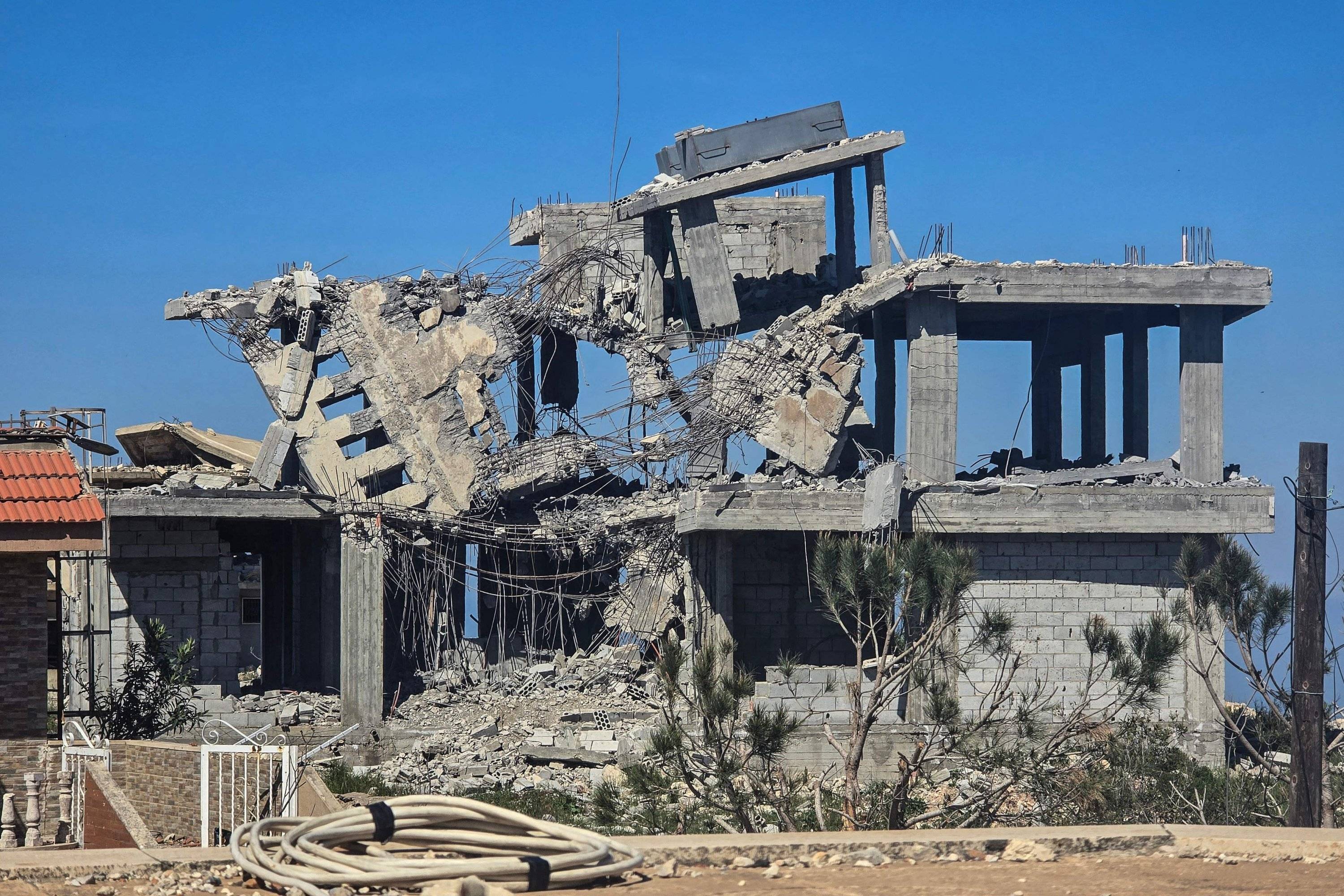
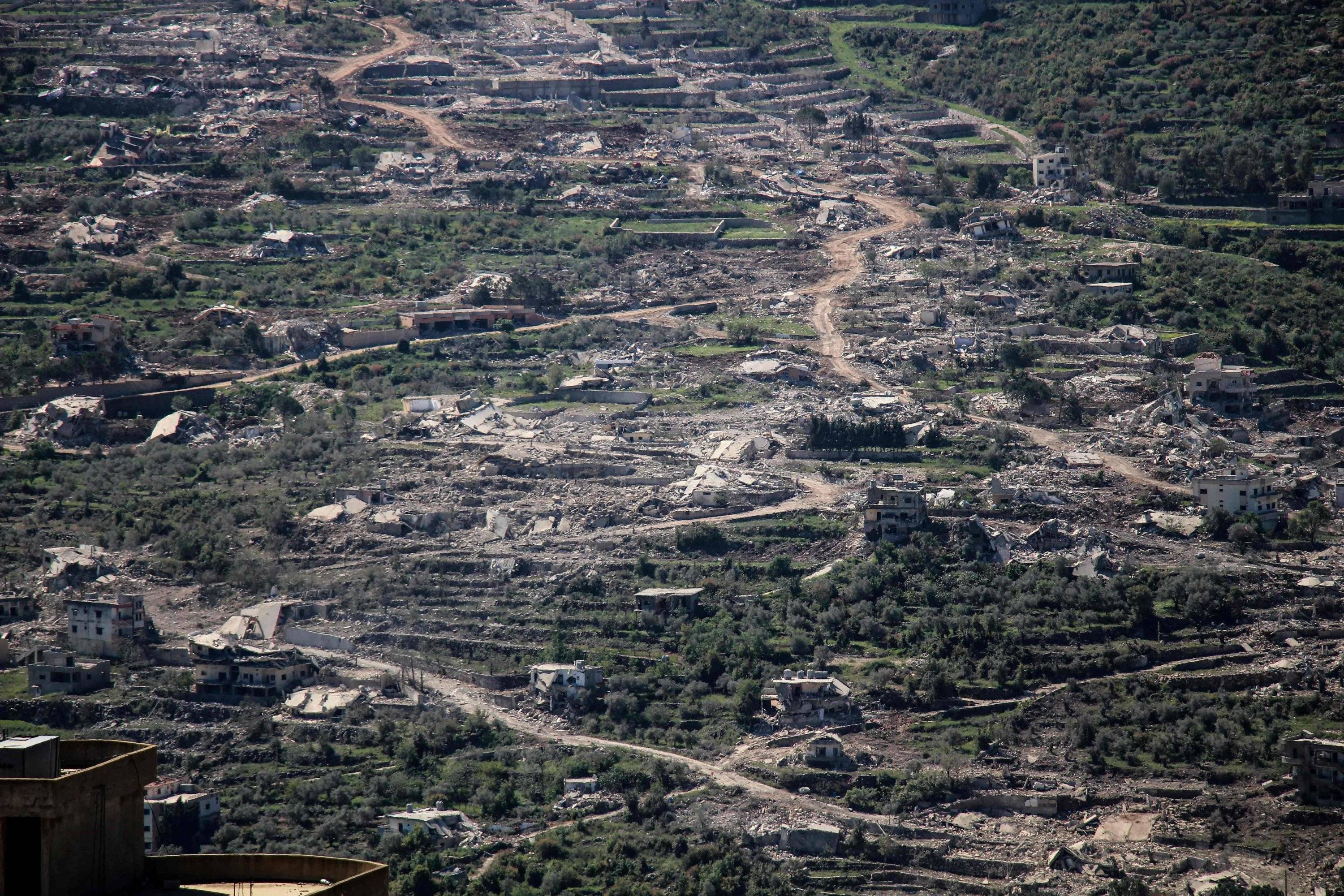
Israeli forces are blasting homes, farmland, roads and bridges across southern Lebanon, leaving villages stripped of familiar landmarks and raising fears that residents may never be able to return.
The destruction extends far beyond military positions and hilltops, according to scientific data and a study of war damage. A military expert says the pattern points to an Israeli effort to reshape the region's population and landscape.
Officials at Lebanon's National Council for Scientific Research told Asharq Al-Awsat that 2,057 Israeli explosions were recorded between April 17 and Oct. 29, reflecting the scale of Israeli military operations. No published breakdown of their geographic distribution or counting methodology was available.
An earlier scientific report published by the council documented 1,731 mining and demolition operations in southern Lebanon between March 2 and September 10, including 1,128 after the June 26 “framework agreement”.
The daily average surged from 5.15 operations before the agreement to about 15 afterward.
Homes and bridges in ruins
More than 90,000 homes across Lebanon had been damaged or destroyed by mid-June, according to preliminary estimates cited in a study by Information International. The figure was not limited to southern Lebanon.
The study documented seven bridges completely destroyed and partial damage to the Qasmieh Bridge, among eight bridges targeted along routes linking the area south of the Litani River to surrounding areas.
Citing the International Organization for Migration, the study said 499,784 people remained internally displaced as of July 1, highlighting the struggle to restore stability even as returns began.
The National Council for Scientific Research also documented a massive blast in Majdal Zoun on June 28 and ground waves triggered by an explosion in Shaqif overnight on July 30-31, equivalent to a magnitude 3.8 earthquake, according to the National Center for Geophysics.
A separate explosion in Ali al-Taher on September 10 coincided with a magnitude 4.1 seismic event recorded by the US Geological Survey.
The Shaqif blast raised concerns over the historic Beaufort castle, which has temporary enhanced protection and is listed among the "Castles of Jabal Amel" on the World Heritage List.
The remains of a home destroyed by the Israeli army in the village of Beit Lif, southern Lebanon, April 22, 2026. (AFP)
'Eliminating the foundations of life'
Retired Staff Brigadier General Khalil al-Gemayel described the destruction as a systematic scorched-earth policy designed to wipe out residential communities, deprive them of the basic necessities of life and prevent residents from returning.
He said the operations were paving the way for a prolonged Israeli presence in areas under its control.
The council's tally of 2,057 explosions since April was consistent with the scale of Israeli operations on the ground, Gemayel said, pointing to almost daily blasts targeting not only military positions and hilltops but also homes, neighborhoods, buildings and infrastructure.
The destruction was particularly concentrated around major population centers such as Bint Jbeil, Khiam and Aita al-Shaab, as well as villages including Zawtar al-Sharqiyeh, he said.
Gemayel said the pattern closely followed Israeli troop deployments, with built-up areas and population centers facing Israeli positions bearing the brunt of the demolitions.
The operations went beyond immediate military objectives and were intended to bring about sweeping demographic and environmental changes, he added.
"Destroying homes, infrastructure, vegetation and farmland effectively eliminates the foundations of life, rather than merely preventing military use of these areas," he said.
Gemayel compared the operations to Israel's actions in Syria's Golan Heights after its occupation in 1967, when villages were demolished and cleared.
He said the same approach was now being repeated in southern Lebanon, with the landscape altered and the traces of residential communities erased.
Even a political settlement and Israeli withdrawal would not guarantee a swift return of the displaced, he warned.
Rebuilding communities could take years, perhaps decades, with some residents potentially unable even to locate their former homes after entire streets, buildings and village landmarks disappeared.
A general view shows homes and structures demolished by the Israeli army in the village of Beit Lif, southern Lebanon, April 22, 2026. (AFP)
Imposing a new reality
Gemayel said the demolitions were concentrated in several areas along built-up stretches extending roughly 1,000 meters in front of Israeli positions, targeting buildings and residential communities facing deployed troops.
He identified Majdal Zoun and Mansouri, along with areas around Srebbine, Yater, Beit Yahoun, Hadatha, Baraachit and Aita al-Jabal, as examples.
He said Israeli aerial surveillance and other technological capabilities often allowed its forces to distinguish civilian from military movements, but that had not stopped the destruction from spreading.
Gemayel said the ultimate aim was to prevent residents from returning to areas occupied by Israeli forces or facing their positions by destroying villages and residential communities capable of sustaining everyday life.
The scale and pattern of destruction suggested Israel intended to maintain a long-term presence while imposing a new geographic and demographic reality that could prove difficult to reverse even after military operations ended, he said.
Syria Says Foiled Hezbollah-Linked Plot to Bomb Oil Refineryhttps://english.aawsat.com/arab-world/5337173-syria-says-foiled-hezbollah-linked-plot-bomb-oil-refinery
Explosives and other equipment that were seized in possession of the detainees. (Syrian internal security forces)
TT
TT
Syria Says Foiled Hezbollah-Linked Plot to Bomb Oil Refinery
Explosives and other equipment that were seized in possession of the detainees. (Syrian internal security forces)
Syrian authorities said on Tuesday they had prevented a sabotage attempt against an important refinery by figures linked to Lebanon's Hezbollah group, which denied the accusation.
The announcement comes after a series of unclaimed attacks against oil and gas pipelines across several parts of Syria.
Domestic intelligence and security forces "foiled a terrorist plot by a cell affiliated with the Hezbollah militia that was targeting the Homs refinery", the security forces said in a statement.
They said they had arrested two members of the cell and seized explosives intended for use in the attack.
In a statement later, Hezbollah denied the accusations "in their entirety", condemning "the repetition of these accusations".
It reiterated that it "has no presence or connections in Syrian territory and has nothing to do with any activity that undermined Syria's security and stability".
The Homs refinery, in central Syria, is the only operational one in a country devastated by more than a decade of civil war that ended in late 2024.
Another refinery, on the coast at Banias, is undergoing maintenance.
Damascus has previously announced the dismantling of cells linked to Hezbollah, which has denied the allegations each time.
The Lebanese group took part in Syria's war on the side of the since-overthrown Bashar al-Assad, fighting against those now in power in Damascus and earning their ongoing enmity.
On Sunday, Syrian news agency SANA reported a foiled plot against the refinery, while in early October Damascus reported sabotage attacks first against an oil pipeline and then a gas one.
Syrian President Ahmed al-Sharaa and Hezbollah leader Naim Qassem have both raised the possibility of meeting each other.
لم تشترك بعد
انشئ حساباً خاصاً بك لتحصل على أخبار مخصصة لك ولتتمتع بخاصية حفظ المقالات وتتلقى نشراتنا البريدية المتنوعة