


Tunisia: Court of Cassation Hears Final Appeal in 'Conspiracy Against State Security' Case

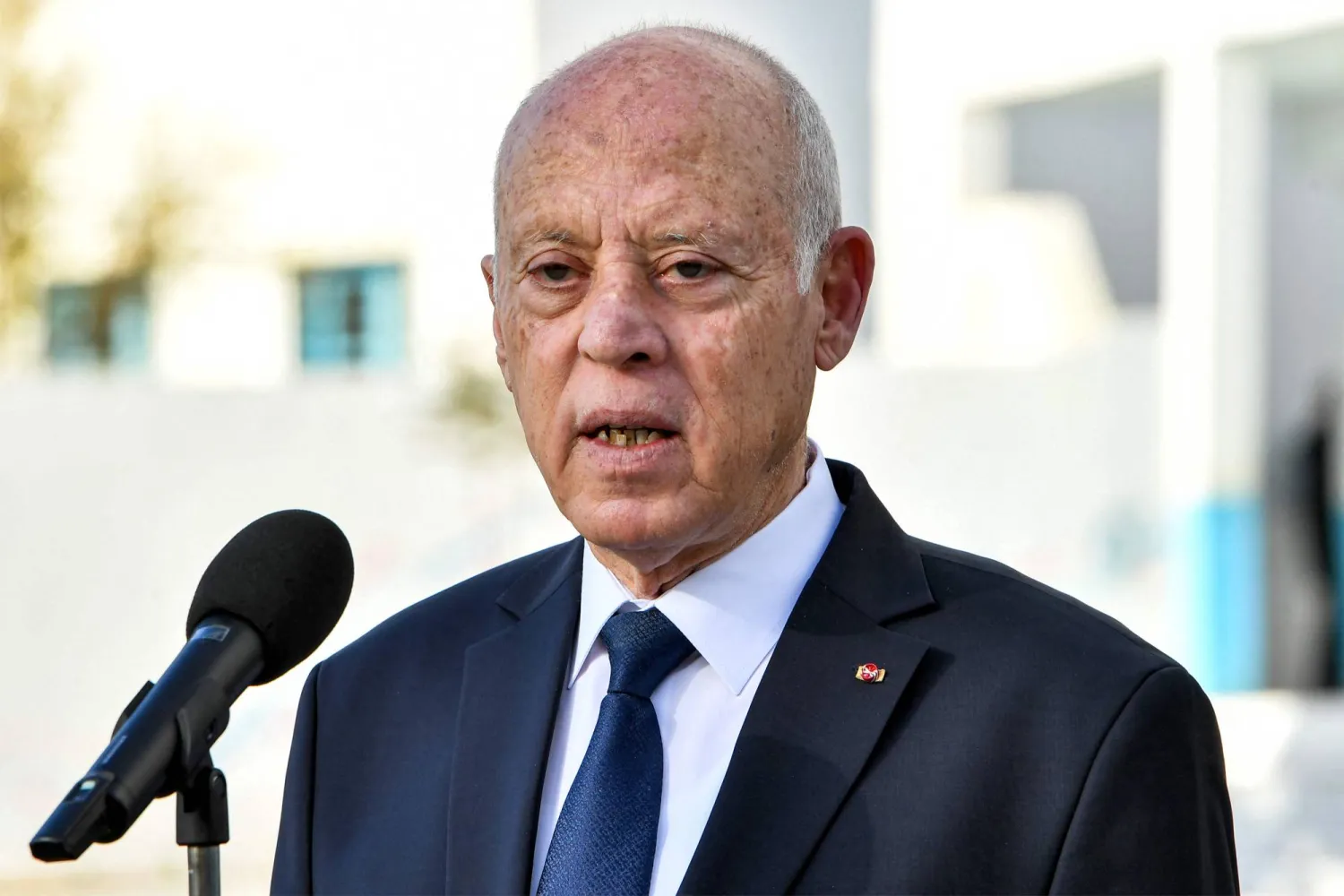
Tunisian President Kais Saied (AFP)
TT

Tunisia: Court of Cassation Hears Final Appeal in 'Conspiracy Against State Security' Case

Tunisian President Kais Saied (AFP)

The Tunisian Court of Cassation began hearing on Thursday the final appeal of dozens of opposition figures accused of plotting against the state.

In November, 34 defendants were sentenced to up to 45 years in prison in an appeal trial, triggering sharp criticism from rights groups.

The court will either confirm the verdict or order a retrial.

A small crowd gathered Thursday morning outside the courthouse to support the defendants, an AFP journalist reported.

"This is a political case that the authorities have used to silence dissent and imprison figures from across the opposition," said lawyer Haifa Chebbi, whose father Ahmed Nejib Chebbi, 82, is among the defendants.

Chebbi and other lawyers have said they were only notified of the hearing on Monday, arguing it did not provide them with enough time to prepare the defence.

On Wednesday, lawyer and opposition figure Dalila Msaddek, whose brother Jawhar Ben Mbarek is on trial, condemned the proceedings, calling them nothing more than "the blatant implementation of political instructions".

Their father, leftist activist Ezzedine Hazgui, told reporters he was "proud" that Jawhar and other Saied critics were in prison.

"I am proud because they defended their country," said Hazgui, who was among the protesters outside the court.

"We oppose the coup and all forces hindering Tunisia's progress," he added, referring to Saied's power grab five years ago.

Among the defendants in the mass trial were party leaders Issam Chebbi and Ghazi Chaouachi, as well as businessman Kamel Ltaief.

Amnesty International has urged Tunisian authorities to "rectify a travesty of justice that has upturned the lives of 34 prominent opposition figures, human rights defenders and lawyers who were convicted on unfounded charges".


Israeli Minister Presents Plan to Remove Gaza Population

Israel's far-right National Security Minister Itamar Ben Gvir - File photo
TT

Israeli Minister Presents Plan to Remove Gaza Population

Israel's far-right National Security Minister Itamar Ben Gvir - File photo

Israel's far-right National Security Minister Itamar Ben Gvir set out a plan on Thursday to remove Palestinians from the Gaza Strip and send them abroad.

Speaking in the run-up to close-fought Israeli elections, he said the plan aimed to see the departure of 250,000 Palestinians from Gaza in the first year, followed by the rest of the roughly two million residents over the following six years.

"It's realistic," said Ben Gvir, claiming that there were countries who were "ready" to take in Gazans, without naming which ones.

Forced displacement of civilians in occupied territory is considered a war crime under the Geneva Conventions.


Palestinians Say Israeli Army Kills Two Teenagers in West Bank

Israeli military heavy machinery demolish two Palestinian buildings near Ramallah, in the Israeli-occupied West Bank, August 31, 2026. REUTERS/Mohammed Torokman
TT

Palestinians Say Israeli Army Kills Two Teenagers in West Bank

Israeli military heavy machinery demolish two Palestinian buildings near Ramallah, in the Israeli-occupied West Bank, August 31, 2026. REUTERS/Mohammed Torokman

The Israeli army killed two teenagers in the occupied West Bank on Wednesday night, the Palestinian health ministry said, while the army said it opened fire during a "violent riot".

Omar Mohammad Naji al-Nassan, 19, and Khalil Rasem Khalil Shahada, 16, were shot dead by the Israeli army in the village of Al-Mughayyir, northeast of Ramallah in the central West Bank, the ministry said.

Amin Abu Alia, the head of the Al-Mughayyir village council, told AFP "Israeli settlers... tried to steal sheep from two homes" in the village, and that following a confrontation, "the Israeli army imposed a siege on the village before raiding its center".

He said the Israeli forces placed snipers inside buildings, who "opened live fire on residents who tried to confront the settlers".

The Israeli army meanwhile said it had "secured the entrance" to the village "in order to facilitate the return of livestock belonging to Israeli civilians that had been found in the area of the village".

"During the forces' activity in the area, a violent riot broke out, during which terrorists hurled cinder blocks and stones at the forces," the army said.

"The forces responded by firing at key instigators in order to remove the threat," it said, adding that the management of the incident was under review.

The Palestinian Red Crescent reported that the two teenagers were critically wounded by live fire during clashes, Nassan in the neck and Shahada in the back, and were transferred to two hospitals in Ramallah, where doctors pronounced them dead.

AFP footage filmed inside the Ramallah medical center showed mourners gathering around one of the bodies shrouded in a Palestinian flag.

The mourners carried the remains outside the hospital and chanted "with our souls and our blood, we will sacrifice ourselves for you, martyr. We were created to live in freedom."

The West Bank, occupied by Israel since 1967, has seen a surge in violence since the outbreak of war in the Gaza Strip following Hamas's attack on Israel on October 7, 2023.

Attacks by settlers on Palestinians have increased and become almost daily. At least 1,105 Palestinians, including a number of militants, have been killed by fire from Israeli soldiers or settlers, according to an AFP tally based on Palestinian official figures.

At least 48 Israelis, both civilians and security forces, have been killed in the West Bank in attacks carried out by Palestinians or during clashes with Israeli forces, according to Israeli official figures.


Houthi Changes Target Military Leaders as Government Strikes Intensify

Houthi fighter in Sanaa wearing a depiction of the group’s leader on his uniform (AP).
TT

Houthi Changes Target Military Leaders as Government Strikes Intensify

Houthi fighter in Sanaa wearing a depiction of the group’s leader on his uniform (AP).

The Houthi group has made surprise changes to the leadership of two military regions, as the Yemeni armed forces step up strikes against high-value Houthi targets, according to a Yemeni military source who spoke to Asharq Al-Awsat.

According to the source, who requested anonymity due to the sensitivity of the information, the changes included the commanders of the Third and Seventh Military Regions. He said the move reflects growing doubts within the group over the loyalty and competence of some of its leaders, amid intensifying government strikes, particularly those involving drones.

“Over the past few days, the group replaced the commanders of the Third and Seventh Military Regions with two longtime leaders considered among its closest loyalists in Saada,” the source said.

Restructuring on the Ground

The source, who is close to developments on the ground, said the reinforcements the group has sent to the fronts over the past 20 days have been accompanied by a broad reshuffling of field commanders. He noted that about 90 percent of commanders of subordinate units, at the company and battalion levels, were selected from ideological leaders, most of whom are from Saada Governorate.

The source attributed these moves to a “state of confusion and suspicion” within the group, saying they are no longer limited to tribal leaders or newly recruited members but have extended to senior leadership levels, including figures belonging to the social and sectarian circles closest to the group.

He added that the group’s confidence in tribal leaders “has fallen to its lowest levels,” prompting it to replace a number of field commanders with figures more closely tied to its central leadership.

Ali Hussein Al-Houthi, son of the founder of the Houthi group (X)

Factional Rivalries

The source linked some of the internal tensions to the growing influence of Ali Hussein Al-Houthi, the son of the group’s founder, saying his rise has caused noticeable divisions among senior leaders.

He pointed to disputes that have strained relations between Ali Hussein Al-Houthi and several prominent figures, including Abdul Hakim Al-Khaiwani, head of the group’s security and intelligence service, military commander “Abu Ali Al-Hakim,” and Mohammed Ali Al-Houthi, a member of what the group calls the “Supreme Political Council.”

Yemeni sources who spoke to Asharq Al-Awsat said representatives of Iran’s Islamic Revolutionary Guard Corps are seeking to contain the growing divisions among the group’s factions and prevent them from affecting its military and security cohesion, particularly as it faces mounting military and societal pressures.

Asharq Al-Awsat published a report in August 2025 on the growing intelligence role of the group founder’s son, who had come to oversee most of the group’s agencies and institutions, including the Foreign Ministry in the Houthi-controlled government, relying on the strong support provided to him by his uncle, Abdul-Malik Al-Houthi, the group’s current leader.

Security and political sources in Houthi-controlled areas said at the time that Ali Hussein Al-Houthi’s intelligence and repressive role had expanded significantly during the first months of 2025. He had been granted the rank of major general in the security services, and a special intelligence agency had been established for him under the name “Police Intelligence Service.”

Discontent Over Dhamar Arrests

In the same context, the military source said a new security agency linked to Ali Hussein Al-Houthi recently carried out a campaign of arrests that targeted about 70 figures from Dhamar Governorate at once, sparking widespread discontent among local communities.

“The available information confirms that a large part of the arrests and moves linked to the internal disputes are no longer being carried out by the Houthi security and intelligence service, but by a new security body,” the source said, referring to the agency he said is run by Ali Hussein Al-Houthi.

These developments come as the group faces mounting military pressure on several fronts, amid indications that it is moving to tighten its security grip and reorganize its leadership structure in anticipation of any potential breaches or shifts in the course of the fighting.
