


Germany Seeks to Quash Gaza Genocide Case at Top UN Court

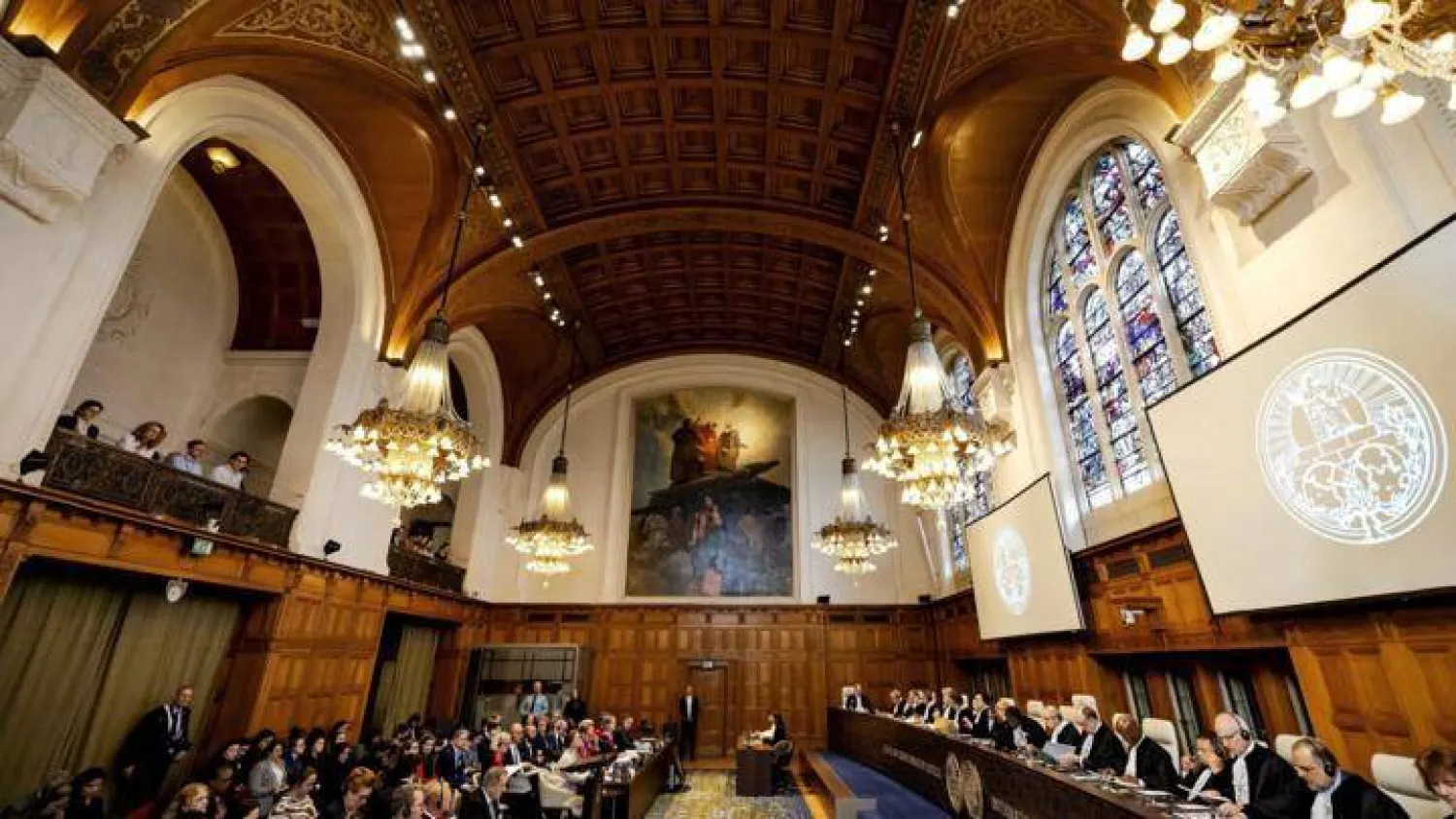
An overview of the court during a hearing at the International Court of Justice (ICJ) filed by Nicaragua against Germany over the financial and military aid that the European country provides to Israel and the lifting of subsidies to the aid organization UNRWA, in the Hague on April 8, 2024.  Robin Van Lonkhuijsen, AFP
An overview of the court during a hearing at the International Court of Justice (ICJ) filed by Nicaragua against Germany over the financial and military aid that the European country provides to Israel and the lifting of subsidies to the aid organization UNRWA, in the Hague on April 8, 2024. Robin Van Lonkhuijsen, AFP
TT

Germany Seeks to Quash Gaza Genocide Case at Top UN Court

An overview of the court during a hearing at the International Court of Justice (ICJ) filed by Nicaragua against Germany over the financial and military aid that the European country provides to Israel and the lifting of subsidies to the aid organization UNRWA, in the Hague on April 8, 2024.  Robin Van Lonkhuijsen, AFP
An overview of the court during a hearing at the International Court of Justice (ICJ) filed by Nicaragua against Germany over the financial and military aid that the European country provides to Israel and the lifting of subsidies to the aid organization UNRWA, in the Hague on April 8, 2024. Robin Van Lonkhuijsen, AFP

Germany will Monday ask the top United Nations court to toss out a case brought against it by Nicaragua, which has accused Berlin of "facilitating genocide" with its support of Israel.

Lawyers for Germany will kick off four days of hearings at the International Court of Justice (ICJ), the court based in The Hague that rules on disputes between countries, reported AFP.

The case dates back to 2024, following the start of Israel's offensive in Gaza. Nicaragua urged ICJ judges to impose emergency measures to force Berlin to halt all aid to Israel, in particular military equipment.

The court threw out Nicaragua's request in April of that year, saying "the circumstances, as they now present themselves" did not justify emergency orders.

The case is nevertheless ongoing and Germany is now seeking to have it removed, either by persuading judges they do not have the power to rule in the case or that Nicaragua's argument does not stack up.

Berlin has filed so-called "preliminary objections to the jurisdiction of the Court and to the admissibility of certain claims" presented by Nicaragua, according to an ICJ statement.

The detail of Berlin's case has not yet been made public.

- Genocide claim -

After Germany presents its case on Monday, Nicaragua will respond before both countries get another chance to address the court on Wednesday and Thursday.

It takes on average six months for the court to hand down a ruling in such cases.

The court could either side with Germany and throw out the case completely or rule against Berlin, meaning the case would then be considered "on the merits" in more detail.

During hearings at the court in April 2024, Nicaragua said Germany was "pathetic" to provide aid to Gaza while also simultaneously furnishing Israel with weapons.

Nicaragua's ambassador to the Netherlands, Carlos Jose Arguello Gomez, told the court: "Germany seems not to be able to differentiate between self-defense and genocide."

Germany retorted that Nicaragua's case was "grossly biased", strongly denying the accusations that it was in breach of the 1948 UN Genocide Convention.

Israel launched its offensive in Gaza in response to the deadly October 7, 2023 attacks against it by Hamas militants.

Due to its Nazi past, Germany has placed Israel's security "at the core" of its foreign policy, its representative told the court in the 2024 hearings.

Germany said its arms trade with Israel was subject to "detailed scrutiny... that far exceeds the requirements of international law".

This procedure is separate from a high-profile case also before the ICJ, in which South Africa has accused Israel of perpetrating genocide in Gaza, which Israel denies.

The ICJ's rulings are binding but it has no power to enforce them.

For example, it has ordered Russia to stop its invasion of Ukraine, a demand that has fallen on deaf ears in the Kremlin.



Israeli Army Spokesperson Sparks Outrage in Lebanon

This photograph taken from the southern Lebanese village of Zawtar al-Gharbiyeh shows smoke rising during the demolition of houses by the Israeli army in the village of Zawtar al-Sharqiyeh on November 22, 2026. (AFP)
TT

Israeli Army Spokesperson Sparks Outrage in Lebanon

This photograph taken from the southern Lebanese village of Zawtar al-Gharbiyeh shows smoke rising during the demolition of houses by the Israeli army in the village of Zawtar al-Sharqiyeh on November 22, 2026. (AFP)

Israeli military's Arabic-language spokesperson Ella Waweya sparked controversy in Lebanon after releasing a video showing her speaking to students inside a classroom in the occupied border village of Debel, coinciding with Lebanon’s Independence Day celebrations.

The incident, in which Waweya and Israeli soldiers entered the school in South Lebanon and filmed themselves with students without the administration’s consent, highlighted the plight of civilians living under Israeli occupation.

The footage triggered a wave of accusations against Debel’s residents and drew official Lebanese condemnation. The residents insisted that Israeli military activities were imposed on them, fearing that accusations of treason, coupled with security restrictions and economic hardship, could prevent them from remaining in Debel.

Without permission

Debel’s municipality said that the incident had occurred without prior coordination with the school administration, rejecting attempts to hold teachers and children responsible for the actions of Israeli forces.

Charbel Louka, a Debel native and head of the Kataeb Party’s Bint Jbeil district, explained that the incident took place in early October, when residents reported extensive Israeli military activity before soldiers carrying cameras entered the school, frightening the students.

“The Israelis did not come in a suit for a formal visit. They came in as armed soldiers and entered the school. You cannot say no to them,” Louqa said, stressing that civilians’ failure to resist an armed force did not constitute consent.

Residents had refrained from publicizing the incident, but the timing of the video’s release fueled accusations of treason against them, he added.

“If our people leave this area, the Lebanese state will lose its last link to this land. Once we leave, no one will remain,” he warned.

“We have endured humiliation and indignity to remain on this land and preserve our homes.”

He blamed those who decided to open a “support front” for Gaza, meaning Hezbollah, for exposing border villages to war and criticized the state’s failure to assert its authority.

Resilience under threat

Debel parish priest Father Fadi Felfle stressed that Israeli forces had imposed themselves on the village, entering the school without permission and taking the principal and teachers by surprise.

“We did not choose this war. We are people of peace, but circumstances have forced us to live through this difficult situation,” he said.

Felfle recalled the human and material losses suffered by the village. He added that residents have been unable to harvest their entire olive crop, while damaged roads and growing difficulties in accessing healthcare, education and housing compounded their suffering.

“More than half of Debel is now off-limits to us,” he noted.

He denounced accusations of treason by fellow Lebanese, warning that continued pressure could drive more residents from their homes.

Remaining on the land

MP Firas Hamdan contrasted images of schoolchildren in Rmeish raising the Lebanese flag and drawing a map of Lebanon with the footage from Debel.

He said that the steadfastness of residents of Rmeish, Ain Ebel and Debel, despite occupation, siege and isolation, might be the last tangible assertion of the land’s Lebanese identity.

Hamdan called for a UN-backed arrangement after UNIFIL’s mission ends to maintain safe humanitarian corridors, ensure supplies and services, and preserve residents’ links with state institutions, stressing that they deserved solidarity and support, not suspicion and accusations of treason.

Official Condemnation

Interior and Municipalities Minister Ahmad al-Hajjar discussed the incident with Debel Mayor Akl Naddaf, condemning the violation of the sanctity of educational institutions and the dignity of residents, particularly children.

He underlined the state’s responsibility toward South Lebanon and its duty to liberate occupied territory and extend its authority nationwide.

Education Minister Rima Karami also condemned the use of the school and children in military media footage.

Prime Minister Nawaf Salam rejected attempts by an occupying force to exploit Lebanese children to whitewash its occupation or impose its dominance over residents.


Iraqi PM Orders Takeover of Kurdistan Region’s Border Crossings After Oil Smuggling Probe

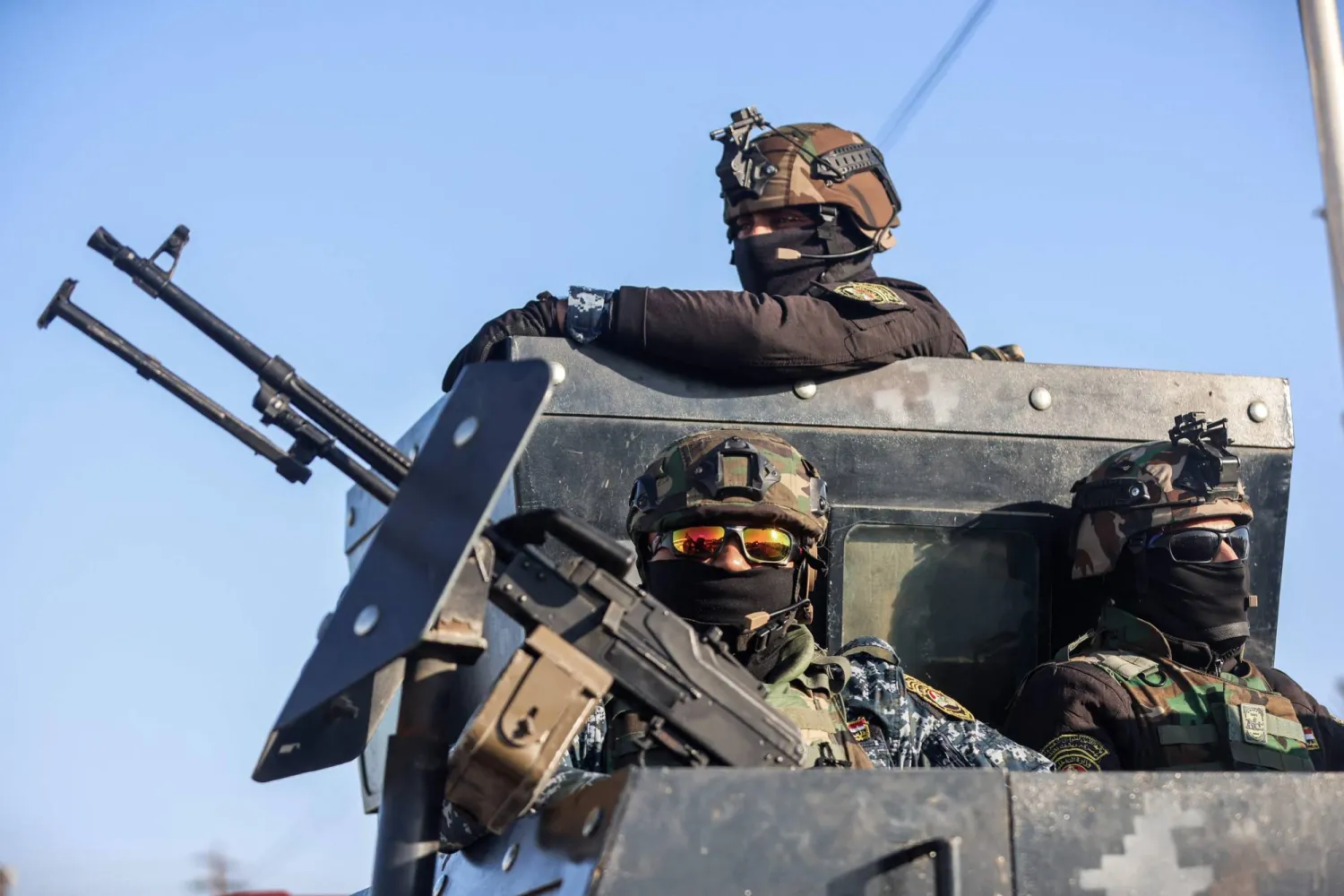
Iraqi soldiers deploy in Jurf al-Sakher, in Babil Province, on November 20, 2026. (AFP)
TT

Iraqi PM Orders Takeover of Kurdistan Region’s Border Crossings After Oil Smuggling Probe

Iraqi soldiers deploy in Jurf al-Sakher, in Babil Province, on November 20, 2026. (AFP)

Iraq's prime minister has ordered the federal oil ministry to manage oilfields in areas under Kurdish security control, the state news agency said on Tuesday, potentially deepening tensions between Baghdad and the semi-autonomous Kurdistan region. 

Prime Minister Ali al-Zaidi's order covers ministry fields in Diyala, Kirkuk, ‌Salahuddin and Nineveh ‌provinces and follows an ‌oil ⁠smuggling investigation at the ⁠North Oil Company. 

He also ordered the border crossings authority to take over all crossings in the Kurdistan region and directed the Kurdistan Regional Government to approve exports ⁠of crude oil and petroleum products ‌only through ‌the federal oil ministry. 

A dispute over ‌Kurdish authorities selling oil without Baghdad's ‌approval halted pipeline shipments to Türkiye for more than two years before the sides agreed in September 2025 to restart ‌them. 

Zaidi, meanwhile, removed the head of the border crossings authority and ⁠suspended ⁠North Oil Company's director general and his deputies pending further investigation, the agency said. 

In a separate case, Iraqi officials accused Kataib Hezbollah, an armed group backed by Iran, of running an oil smuggling network in its stronghold of Jurf al-Sakhar, south of Baghdad. The group denied the accusation. 


Israeli Airstrikes Kill at Least Six Palestinians in Gaza, Medics Say

Palestinians gather around the remains of a car that was targeted in an Israeli strike in Gaza City on November 23, 2026. (AFP)
TT

Israeli Airstrikes Kill at Least Six Palestinians in Gaza, Medics Say

Palestinians gather around the remains of a car that was targeted in an Israeli strike in Gaza City on November 23, 2026. (AFP)

Israeli airstrikes killed at least six Palestinians, including two police officers, in the Gaza Strip on Tuesday, local health and police officials said.

Medics said three people were killed in an Israeli airstrike at a police post in Khan Younis in southern Gaza. ‌The Hamas-run interior ‌ministry said two of those were ‌police ⁠officers.

Five other people ⁠were wounded in the attack, medics added. Later on Tuesday, medics said another Israeli airstrike near the Netzarim corridor further north killed another three people.

Commenting on the two strikes, the Israeli military told Reuters it struck fighters in both areas, without giving further details.

An October 2025 ⁠US-backed ceasefire halted major fighting in the shattered ‌territory, but has not ‌stopped Israeli attacks on Gaza or secured Hamas' disarmament.

Israel, which accuses ‌Hamas of trying to regroup and rearm, has stepped ‌up its attacks in Gaza in recent months. Hamas denies the Israeli allegations, saying it is committed to the ceasefire agreement and accusing Israel of trying to derail it.

At least ‌1,600 Palestinians and five Israeli soldiers have been killed since then, according to respective ⁠Palestinian and Israeli ⁠tallies.

Israeli troops now control around two-thirds of Gaza, up from more than half at the time of the ceasefire, with Hamas controlling a sliver of territory along Gaza's coast.

Israel's more than two-year-long assault on Gaza has killed tens of thousands, caused a hunger crisis, internally displaced Gaza's entire population and led to assessments of genocide from scholars and a United Nations inquiry.

Israel has said its actions were in self-defense after Hamas-led gunmen killed 1,200 people and took more than 250 hostages in an October 2023 attack on Israel.