
Iraq’s State Administration Coalition, which brings together Shiite, Sunni and Kurdish forces, sidestepped the issue of bringing weapons under state control while warning of the potential repercussions for Iraq from US sanctions on Iran.
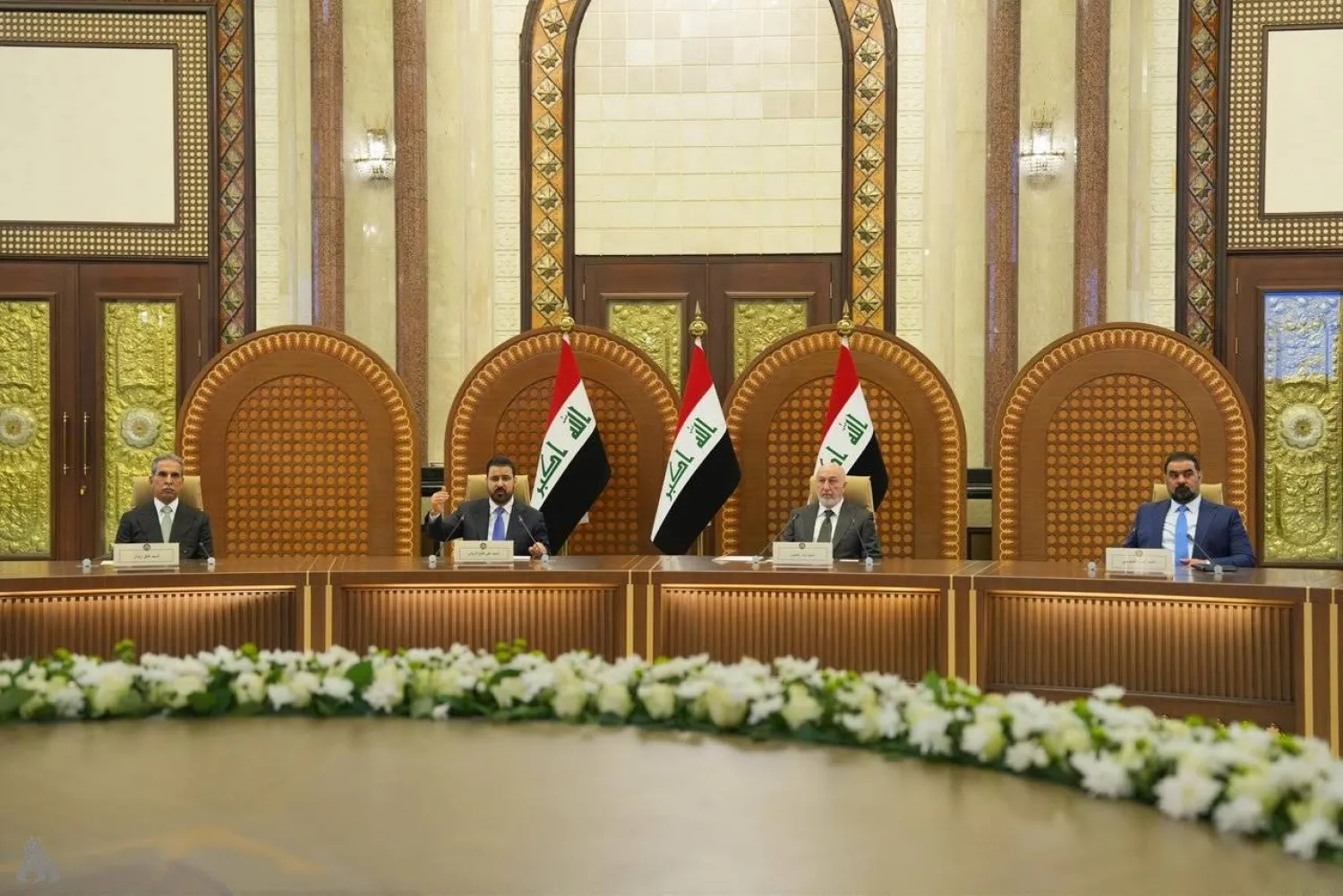
The State Administration Coalition, the political umbrella formed in 2022, met late Saturday at the request of Prime Minister Ali al-Zaidi.
It called for filling vacant cabinet positions and advancing the oil and gas bill, while stressing the need to shield Iraq from the effects of US sanctions on “some countries,” an apparent reference to Iran, amid difficult financial conditions.
The statement said the country was going through circumstances that “cannot tolerate risk.”
The government remains incomplete, with nine ministerial posts still vacant, notably the defense and interior portfolios, because of disputes within the Sunni and Shiite camps.
The coalition said gatherers agreed to begin talks next week with the blocs entitled to the remaining portfolios, while maintaining coordination among coalition members and supporting state institutions in confronting current challenges.
They also discussed the draft oil and gas law ahead of its referral to parliament, as well as support for the private sector as a partner in development.
Al-Zaidi under pressure
Observers in Baghdad noted that while al-Zaidi is working to implement a government program endorsed by the coalition, political forces now appear chiefly concerned with completing the cabinet without giving sufficient attention to bringing weapons under state control or combating financial and administrative corruption.
An informed source told Asharq Al-Awsat that the omission of the weapons issue reflected the depth of political divisions within the State Administration Coalition, particularly among forces in the Shiite Coordination Framework, which holds a majority in parliament and within the coalition itself.
The source, who is close to Sunni political forces, said Kurdish and Sunni parties support measures taken by al-Zaidi, but their positions run up against the Shiite majority whenever issues are put to a vote inside the coalition.
It added that Coordination Framework forces publicly support the prime minister but are divided over several issues concerning the Shiite bloc itself, including bringing weapons under state control, deputy prime minister posts and the leadership of the Popular Mobilization Forces.
Fayyad dispute
While some Kurdish and Sunni forces have settled on their ministerial nominees through consensus, majority votes or political trade-offs, the main disputes among Shiite factions center on two issues.
The first is the position of Popular Mobilization Forces chief Faleh al-Fayyad, who is also a leading member of the Coordination Framework.
The second concerns deputy prime minister posts, with Asaib Ahl al-Haq, led by Qais al-Khazali, insisting on obtaining the Shiite share of the position.
The group argues that it has the right to the post because it is the second-largest Shiite parliamentary bloc after former Prime Minister Mohammed Shia al-Sudani’s Reconstruction and Development Coalition and Nouri al-Maliki’s State of Law Coalition.
Asaib Ahl al-Haq now openly opposes al-Fayyad remaining as PMF chief. Disputes within the Shiite camp have shifted to whether he should retire because of his age or be compensated with another position. Meanwhile, the PMF leadership would go to another figure, from Asaib Ahl al-Haq or elsewhere, provided that person is not from al-Maliki’s State of Law Coalition, which supports al-Fayyad remaining in the post.