
Algeria Severs Ties with UAE as Abu Dhabi Says it Is Committed to Joint Interests

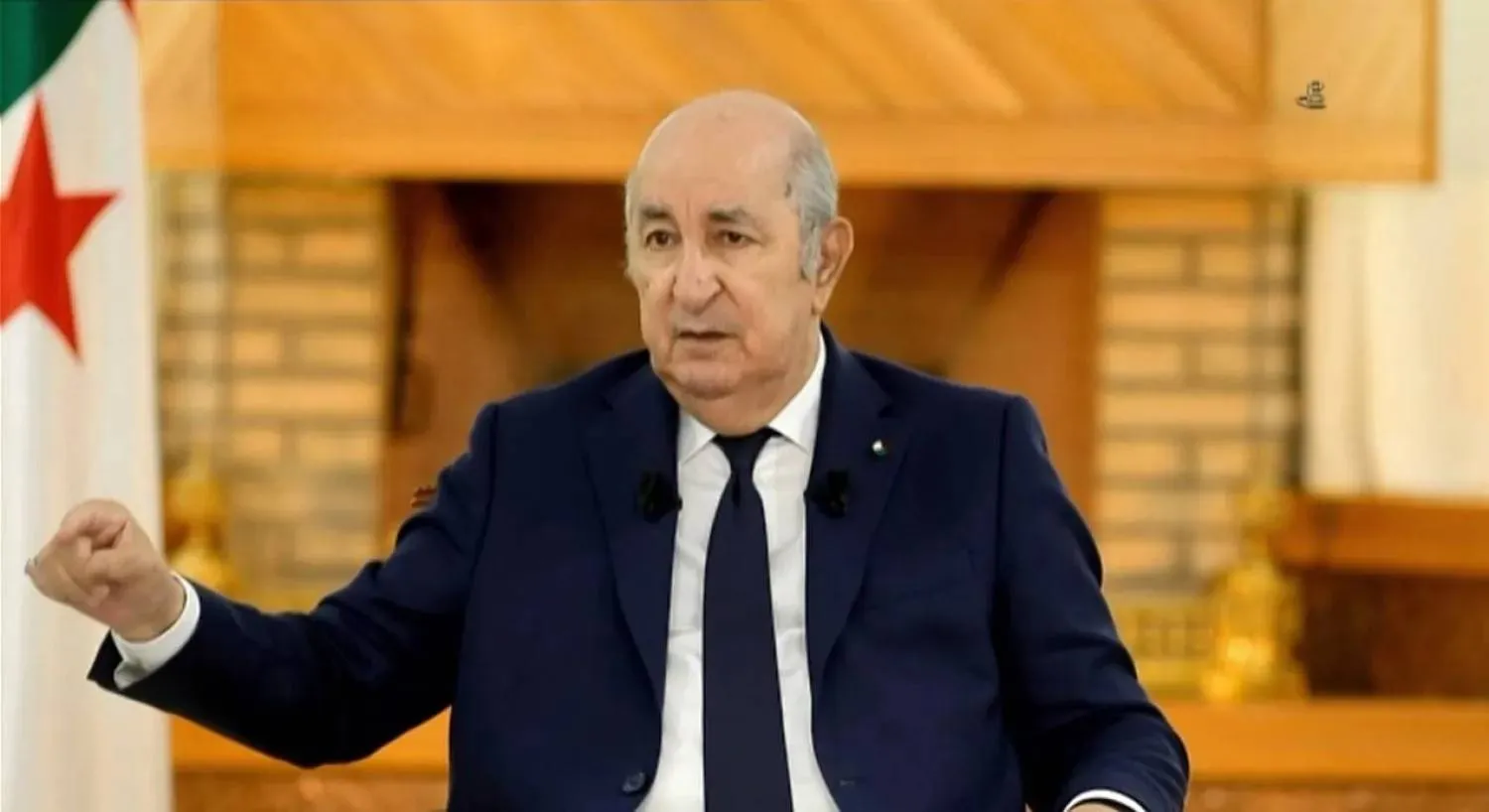
Algerian President Abdelmadjid Tebboune. (Algerian Presidency)
TT

Algeria Severs Ties with UAE as Abu Dhabi Says it Is Committed to Joint Interests

Algerian President Abdelmadjid Tebboune. (Algerian Presidency)

Algeria abruptly severed diplomatic relations with the United Arab Emirates on Thursday, giving it ambassador 48 hours to leave the country. 

"The Ministry of ‌Foreign Affairs (MoFA) affirms ‌the UAE’s appreciation for the brotherly Algerian people and its pride ‌in the ⁠bonds that unite ⁠the two peoples, particularly through the Algerian community residing in the UAE and Algerian visitors," the ministry said. 

The UAE ambassador was summoned to Algeria's foreign ministry, informed of the decision and given 48 hours to comply, the ministry said. 

It said the UAE's actions had reached a point where they could no longer be considered acceptable or tolerable and that it had "exhausted all means of preserving bilateral relations." 

The Algerian foreign ministry said it had warned Abu Dhabi several times but the UAE "persisted in its actions, reaching a point where they could no longer be considered acceptable or tolerable". 

"Algeria spared no effort to draw the Emirati side's attention to, and to warn it against, the dire consequences that could result from its regrettable and unjustified conduct," the ministry said. 

The UAE hoped Algeria's decision to cut diplomatic ties would be temporary, its foreign ministry said in a statement later in the day, adding that Abu Dhabi remained committed to preserving ties between the two countries' peoples and shared interests. 

Algeria said Thursday it was also closing its airspace to Emirati-registered civilian and military aircraft. 

The Algerian defense ministry said the airspace ban would go into effect Friday, with the exception of commercial flights to and from Algiers airport, which would continue until the end of 2026. 

Anwar Gargash, diplomatic adviser to the UAE president, said on X that diplomatic relations should be based on "rationality, communication and clarity of interests", rather than "riddles and signals that require decoding". 

Gargash, who did not explicitly mention Algeria ⁠or link his comments to its decision, said successful diplomacy depended on clear ‌positions and the effective management of interests and disagreements. 

In wake of Algiers’ position, the Emirati Foreign Ministry said: "The UAE reaffirms the importance it attaches to its relations with all countries and its commitment to developing and strengthening them to serve shared interests and promote understanding, cooperation and prosperity. 

"The UAE expresses hope that this decision will be temporary, in a manner that preserves the fraternal ties between the two brotherly peoples." 

"Furthermore, the Ministry of Foreign Affairs (MoFA) reaffirmed the UAE’s deep appreciation for the brotherly Algerian people and its pride in the strong ties connecting the two nations, particularly through the Algerian community residing in the UAE and Algerian visitors. The UAE remains committed to safeguarding and further strengthening these longstanding ties and mutual interests," it added. 

Algerian President Abdelmadjid Tebboune has often referred to the UAE as a "micro-state" or "statelet" seeking to destabilize several countries in the region, citing Libya, Mali and Sudan. 

Disagreements between Algeria and the UAE had deepened since Tebboune's first presidential term in 2020, particularly following the UAE's joining of the Abraham Accords and its normalization of relations with Israel. 

When Tebboune was asked about that step, he said that he does not favor "this rush" toward normalization. 

Algerian media outlets close to the authorities accuse the UAE of interfering in Algeria's internal affairs and in neighboring countries, especially in Libya and the African Sahel region. 

The newspaper El Khabar had published a headline on its front page last July 19, which read: "Towards cutting diplomatic relations with the UAE." 

Last year, Algerian state television denounced what it called a hostile media campaign after a UAE-based broadcaster aired an interview with historian Mohamed Amine Belghit, in which he described the Amazigh language as a "Zionist-French project." 

Belghit was sentenced to five years in prison on charges of harming state symbols following his statements regarding Amazigh, which is a national language in Algeria, before benefiting from a presidential pardon at the end of 2025. 

In February, Algeria began the process of cancelling an air services agreement with the UAE that was signed in Abu Dhabi in May 2013. 


Syrian Parliament Seeks to End Institutional Disorder

Syrian President Ahmad al-Sharaa addresses the Syrian People’s Assembly in Damascus, Syria, Sunday, July 12, 2026. AP
TT

Syrian Parliament Seeks to End Institutional Disorder

Syrian President Ahmad al-Sharaa addresses the Syrian People’s Assembly in Damascus, Syria, Sunday, July 12, 2026. AP

The Syrian People’s Assembly has begun coordinating with a number of executive bodies to launch a legislative phase focused on modernizing the legal framework governing state institutions.

The administrative steps are part of broader efforts to improve government efficiency and governance.

Speaker of the People’s Assembly Abdul Hamid Awak previously stressed that priority would be given to legislation proposed by the executive branch.

He said that a balance would also be maintained between bills submitted by government institutions and proposals put forward by lawmakers.

In recent months, several ministries and government agencies have moved forward with drafting new laws and regulations for parliamentary approval. These include proposals from the Ministry of Interior for legislation defining its functions and responsibilities, as well as a law regulating firearm ownership and combating crime.

Other proposed legislation concerns the Ministry of Sports and Youth, including amendments related to its responsibilities and affiliated institutions. Additional measures seek to strengthen the organizational structure and authority of the Ministry of Local Administration and its subsidiary bodies and councils, in addition to the final draft of a financial law governing administrative units.

Work is also underway on a project covering expropriation, property law, and agrarian reform.

A committee formed by the Ministry of Agriculture is leading the initiative in cooperation with several ministries and agencies, including the Ministries of Public Works and Housing, Local Administration, Defense, and Interior, before submitting it to the relevant parliamentary committees.

Parliament is also awaiting a new media law drafted by the Ministry of Information, journalism and media unions, and specialized committees tasked with defending journalists’ rights in Syria. Additional legislative proposals include judicial codes of conduct and laws governing the Ministry of Justice and its operations.

These steps follow the creation of internal committees within ministries and relevant institutions after the fall of Bashar al-Assad’s regime. A series of workshops was organized to review existing legislation, identify legal gaps, incorporate recommendations, and begin drafting new legal frameworks.

According to sources who spoke to Asharq Al-Awsat, parliament is currently focused on approving the committees recently formed, defining their mechanisms of operation, completing logistical and procedural preparations, and approving the budget for its 30 month term.

The budget is expected to be approved and announced during the next session, scheduled for the second week of this month. According to the sources, this will be the last session dedicated to parliament’s internal affairs before the legislative phase officially begins.

The sources described the process as a “comprehensive legislative revolution” targeting all state institutions and the three branches of government.

According to members of the People’s Assembly, the next phase and parliamentary agenda will focus heavily on these projects, which are estimated to number in the dozens and have been submitted by various ministries and institutions, including the Ministries of Justice, Interior, Local Administration and Environment, Sports and Youth, Agriculture, and others.

They expect the legislative and voting phase to begin during the next session, starting with laws concerning civil and service institutions linked to local communities and public life. These measures aim to resolve legal contradictions, close loopholes, and clarify overlapping authorities.

They are considered urgent legislation needed to improve organizational structures and revitalize institutions that currently face significant governance challenges due to multiple supervisory authorities and the accumulation of laws and decisions.

Nevertheless, lawmakers said that parliament’s top priority remains legislation concerning transitional justice, political isolation, and civil service reform.

“These laws are directly connected to the Syrian revolution and its social base,” members said, emphasizing their importance in promoting social peace, strengthening stability, and addressing injustices suffered by people dismissed from their jobs because of their support for the revolution.

On that basis, the first parliamentary sessions are expected to approve legislation dealing with individuals dismissed because of their stance toward the former regime. The law would establish provisions and mechanisms to address this complex issue, particularly in terms of compensation and creating a special pathway for reinstating them to their former positions or assigning them to other government jobs.


Fatah’s Jibril Rajoub Says Elections Won't be Held on Time

Fatah’s Jibril Rajoub Says Elections Won't be Held on Time
TT

Fatah’s Jibril Rajoub Says Elections Won't be Held on Time

Fatah’s Jibril Rajoub Says Elections Won't be Held on Time

Secretary-general of Fatah’s Central Committee Jibril Rajoub has ruled out the possibility of holding the Palestinian legislative elections on schedule in November, calling instead for presidential elections to be held first.

Speaking to journalists in the occupied West Bank city of Ramallah on Thursday, Rajoub said: “There will be no elections... We will proceed to elections after holding a comprehensive Palestinian national dialogue to reach consensus on the mechanisms for conducting them.”

Rajoub, from the dominant Fatah party of President Mahmoud Abbas, said holding presidential elections first “would solve a large part of the problem.”

“They are easier, less costly and can be held through consensus,” he said.

The last legislative elections in the Palestinian territories were held in 2006, when Hamas won. They defeated Fatah, which dominates the Palestinian Authority (PA) in charge of areas of the West Bank.

As a result, the Palestinian Legislative Council, which is the PA's parliament, has not met since 2007.

Abbas stayed on beyond the end of his term in 2009 and has since ruled by decree.

Palestinian legislative elections were due to take place on November 28, just over a month after Israel's general elections.

Abbas issued a decree-law in June calling for presidential elections in early 2027.

On Thursday, Rajoub said that, so far, no "serious" lists had been formed to participate in the elections.

"If the nomination period arrives and no list comes forward, what will happen?" he added.

The nomination period is scheduled to begin on September 26 and end on October 7.

Fatah rivals including Hamas and the Democratic Reform Current, a Fatah splinter group, have said they aimed to create joint lists for the election.

Holding elections is part of the reforms demanded by the international community, including the European Union, which supports the Ramallah-based Palestinian Authority financially.

Abbas had previously called on January 15, 2021 for legislative and presidential elections to be held in May and July of that year, respectively.

The elections were eventually postponed indefinitely due to the lack of guarantees that they could be held in Israeli-annexed east Jerusalem.

Abbas won the last Palestinian presidential election in 2005, and his term should have expired in 2009.


Al-Alimi: Bab Al-Mandab Should Not Become Another Strait of Hormuz

Yemeni Presidential Leadership Council Chairman Rashad Al-Alimi (Saba)
TT

Al-Alimi: Bab Al-Mandab Should Not Become Another Strait of Hormuz

Yemeni Presidential Leadership Council Chairman Rashad Al-Alimi (Saba)

Head of Yemen’s Presidential Leadership Council (PLC) Dr. Rashad Al-Alimi has stressed that Bab Al-Mandab must not be allowed to become another Strait of Hormuz, nor should Yemen be turned into a platform for geopolitical blackmail on behalf of Tehran.

Alimi met on Thursday with Head of the European Union Delegation Patrick Simonnet and Ambassador of the Netherlands Janet Sebben. They discussed areas of bilateral cooperation, as well as the latest local and regional developments.

He affirmed the state would continue to fulfill the aspirations of the Yemeni people. “It would continue to assume its responsibility to protect its citizens, restore its institutions, extend its authority throughout the national territory, and safeguard its coastline, ports, and territorial waters,” Alimi said.

Al-Alimi stressed that Yemen, as it defends Bab Al-Mandab, its coastline, and territorial waters and makes sacrifices to protect them, is defending not only its own security and sovereignty, but also contributing to international security and protecting global interests.

He said Yemen is helping to secure one of the world’s most important maritime routes for trade, energy supplies, and life-saving food commodities.

He stressed that this shared responsibility requires a more effective international partnership to support the Yemeni state and strengthen its ability to protect this strategic maritime route.

The President pointed to the clear link between this escalation and Iran’s broader strategy of shifting the cost of international pressure on Iran onto others. This is done by targeting neighboring countries, threatening energy facilities, and disrupting the Red Sea and supply chains, thereby turning Iran’s crisis with the international community into a crisis for the region and the global economy.

He stressed that Bab Al-Mandab must not be allowed to become another Strait of Hormuz, nor should Yemen be turned into a platform for geopolitical blackmail on behalf of the Iranian regime.

Al-Alimi affirmed that the government did not initiate this round of the war. Rather, the militias chose to resume the escalation by operating unauthorized flights and attacking civilians, displacement camps, the Port of Mocha, and civilian facilities in an attempt to impose new military realities on the ground.

“Therefore, we do not want international discourse to return to the same traditional equation of calling on both sides to exercise restraint, as if responsibility were equally shared,” he said. “The party that initiated the escalation must be identified, and those who launch attacks must hold responsibility for the escalation and its consequences at all levels,” he added.

Al-Alimi called for urgent European action, in coordination with the United Nations and donors, to provide shelter, food, healthcare, and other essential services to displaced persons, and to support local authorities. He warned against leaving thousands of Yemenis facing a new wave of displacement while the international community confines itself to statements of concern.

He also renewed his call to move from managing the threat to addressing its source. This requires the effective implementation of relevant UN Security Council resolutions and tighter measures to prevent the smuggling of weapons, technology, and dual-use components to the militias.

Al-Alimi urged EU member states to maintain their economic, humanitarian, and development support for the government and to encourage donors to support the reform and recovery program. He said this would strengthen state institutions’ capacity to provide services and meet their obligations.

He said a capable state is the real guarantee for peace. He stressed that peace based on state weakness, while militias retain their weapons and decision-making power over war, would amount to nothing more than a truce until the next round of fighting.