
How Israel Abducted a Senior Hamas Security Official from the Heart of Gaza

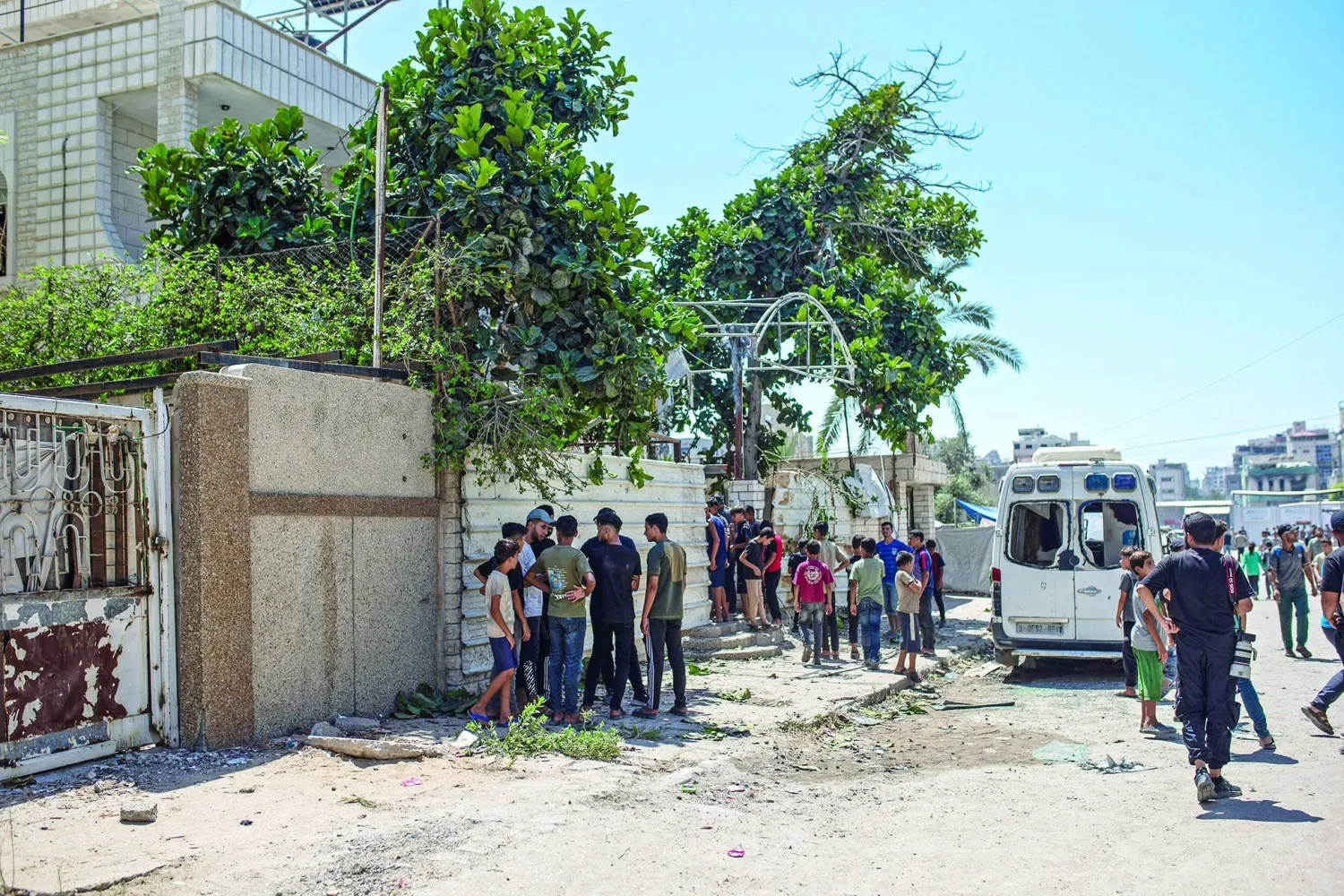
 Locals gather at the site of an Israeli airstrike in Gaza City, 01 September 2026. According to the Ministry of Health in Gaza, at least four Palestinians were killed in Israeli air strikes on 01 September.  EPA/MOHAMMED SABER
Locals gather at the site of an Israeli airstrike in Gaza City, 01 September 2026. According to the Ministry of Health in Gaza, at least four Palestinians were killed in Israeli air strikes on 01 September. EPA/MOHAMMED SABER
TT

How Israel Abducted a Senior Hamas Security Official from the Heart of Gaza

 Locals gather at the site of an Israeli airstrike in Gaza City, 01 September 2026. According to the Ministry of Health in Gaza, at least four Palestinians were killed in Israeli air strikes on 01 September.  EPA/MOHAMMED SABER
Locals gather at the site of an Israeli airstrike in Gaza City, 01 September 2026. According to the Ministry of Health in Gaza, at least four Palestinians were killed in Israeli air strikes on 01 September. EPA/MOHAMMED SABER

On September 1, an Israeli special forces unit abducted Moeen Al-Arabid, a senior security official with Hamas and its security apparatus, from the heart of an area controlled by the group in western Gaza City. The operation caused shock and disbelief within Hamas and among other Palestinian factions.

The area turned into a battlefield at the time of the operation, which was carried out in the morning. Israel used various types of aircraft, including warplanes, helicopters, and drones with different missions, to provide cover for the special forces unit affiliated with the Israeli General Security Service, known as the Shin Bet, ensure the operation's success, and facilitate the unit's withdrawal.

How the Operation Began

Sources familiar with the ongoing investigation into the operation told Asharq Al-Awsat that Israeli forces carried out intensive intelligence and military movements for more than a week before the attack. These movements were clearly visible, but the prevailing belief was that they were part of efforts to locate leaders or operatives from Palestinian factions in order to assassinate them, or part of military movements intended to demonstrate the forces' control inside the Gaza Strip.

The sources said that on several separate days over a period of roughly 10 days, military operations were carried out around what is known as the new road at the Netzarim Junction, which separates the northern, central, and southern parts of the Gaza Strip. Israel occupied the area during the war and constructed the road there.

Israeli military vehicles made incursions into the area almost daily during that period. Their movements, accompanied by gunfire, resulted in the complete closure of Salah Al-Din Road, the main thoroughfare, while Israeli forces maintained fire control over the area and its surroundings to prevent any movement by Palestinians.

The investigation shows that the Israeli special forces unit that carried out the operation entered and exited the Gaza Strip via this road under heavy protection from military vehicles conducting incursions in the area. The unit repeated the entry and exit scenario several times to monitor and reconnoiter the target site in western Gaza City, roughly no more than 4 kilometers away.

The special forces unit used the advancing military vehicles as cover to infiltrate through the new road near the Netzarim Corridor. This occurred on the morning before the operation, allowing the unit at times to reach the western side via the central coastal Al-Rashid Road, or through side streets leading to Street 10 and from there into the heart of Gaza City.

Intelligence Cover

The sources revealed that the operation was not limited to military movements on the ground. Israeli forces also intensified their intelligence cover by flying a large number of drones over wide areas. At least eight drones a day were operating for more than a week over the Katibah area where the attack took place, as well as the coastal road and its surroundings.

The sources said that the movement and density of the drones were continuously monitored. Those conducting the surveillance, whether members of the "resistance" or government security agencies, would send urgent reports about them. However, all assessments pointed to the possibility of an airstrike assassination, as had usually been the case.

No unusual movement by any armed party, such as special forces, armed gangs, or others, was detected on the ground. In the Katibah area, the situation appeared to be completely secure.

A Vital Location

One of the most significant findings to emerge recently came after security cameras, as well as cameras belonging to homes, commercial shops, and other locations installed along some streets and in certain areas, were tracked.

The Israeli special forces unit was identified through its use of a small bus. By tracking footage showing the vehicle, investigators determined that the unit had been present at a vital and strategically important location inside Gaza City on the day before the attack.

According to the findings, as revealed by Asharq Al-Awsat sources, the unit spent the night inside Gaza City before moving in the morning to carry out its security mission. It emerged that other members of the force were also present at the site, posing as vegetable vendors and others around the house where the senior Hamas security official was staying. He had been preparing for his son's wedding ceremony.

The investigation shows that the Israeli special forces unit used more than one vehicle during its infiltration, including on the day of the operation and when it withdrew. Those inside the bus were the ones who abducted Al-Arabid.

It also emerged that they had been moving around the area alongside other members of the force, indicating that the unit consisted of a large number of personnel, no fewer than 30. They withdrew in vehicles and on motorcycles under heavy aerial fire. Aircraft struck one of the vehicles belonging to the force, which was carrying a Palestinian license plate, while military vehicles moved into the area and closed Salah Al-Din Road toward the new road at the Netzarim Corridor to secure their safe passage and transport them into an Israeli-controlled position.

Earlier Details

Sources told Asharq Al-Awsat days earlier that the security operation had begun roughly two months ago, when Shin Bet officers assumed the identity of an international relief organization that would provide assistance to Palestinians by establishing small businesses, including stalls selling vegetables, drinks, and other goods in the area where the operation took place.

According to the sources at the time, Shin Bet used Palestinian operatives, including women, to carry out the project and supply them with vegetables every day, presenting them as aid from the organization. The proceeds from the sales were supposedly to benefit those taking part in the project. The operatives later asked them to monitor certain homes and the movements of specific individuals in the area, including Al-Arabid.

The sources said at the time that those running the project were later found, following the operation, to have been collaborators working for the Israeli Shin Bet. On the day of the operation specifically, new individuals appeared at some of the stalls, while others had been there since the previous day selling vegetables. They were later found to be Shin Bet operatives who had arrived in the area and concealed their weapons inside the stalls. When the time came to launch the attack, they took part in the operation before disappearing and withdrawing from the area.

Following the attack, Hamas security agencies succeeded in arresting collaborators and people who had benefited from the project run by the fictitious relief organization for questioning.

This is not the first time Israel has used the guise of international organizations to conduct operations inside the Gaza Strip. One such case occurred when an Israeli special forces unit infiltrated the Al-Shifa Medical Complex in March 2024, before military reinforcements arrived at the site. The operation subsequently continued for two weeks, during which Hamas operatives and members of its various security apparatuses were killed or captured, including commanders from the Al-Qassam Brigades.


Israeli Troops Block Olive Harvest in West Bank

A Palestinian takes part in a community action to clear the area around the olive trees in preparation for the upcoming harvest season on the outskirts of the West Bank town of Birzeit, Friday, Oct. 2, 2026, in an area that, according to residents, they were unable to access last year due to Israeli army restrictions and settler attacks. (AP Photo/Leo Correa)
TT

Israeli Troops Block Olive Harvest in West Bank

A Palestinian takes part in a community action to clear the area around the olive trees in preparation for the upcoming harvest season on the outskirts of the West Bank town of Birzeit, Friday, Oct. 2, 2026, in an area that, according to residents, they were unable to access last year due to Israeli army restrictions and settler attacks. (AP Photo/Leo Correa)

Israeli soldiers have barred Palestinian farmers and activists from harvesting olives in the northern West Bank, according to video footage obtained by The Associated Press.

The footage showed soldiers firing shots in the air and tear gas toward the Palestinian farmers and activists, while settlers were also seen in the area.

A Palestinian takes part in a community action to clear the area around the olive trees in preparation for the upcoming harvest season on the outskirts of the West Bank town of Birzeit, Friday, Oct. 2, 2026, in an area that, according to residents, they were unable to access last year due to Israeli army restrictions and settler attacks. (AP Photo/Leo Correa)

Israel's military said troops were deployed following reports of a confrontation, which was dispersed. It added that a security official at the scene fired shots into the air earlier, without elaborating. The military said no one was injured.

The olive harvest season in the West Bank is usually marred by tensions between Palestinian farmers and settlers. Israel has imposed new rules this year, prohibiting Palestinians from harvesting in what’s known as Area C, which is under Israeli security control and encompasses the majority of the territory’s agricultural lands.


Sudan’s Omar al-Bashir Seeks Treatment Abroad

Former Sudanese President Omar Hassan al-Bashir inside a cage in a Khartoum court during his corruption trial on August 31, 2019 (Reuters)
TT

Sudan’s Omar al-Bashir Seeks Treatment Abroad

Former Sudanese President Omar Hassan al-Bashir inside a cage in a Khartoum court during his corruption trial on August 31, 2019 (Reuters)

Sudan's former president Omar al-Bashir is seeking permission to travel abroad for medical treatment, his lawyer told AFP on Friday, saying the jailed ex-ruler requires tests unavailable in war-ravaged Sudan.

Bashir, 82, was recently transferred from a hospital in the northern city of Merowe to Aliaa Specialist Military Hospital in Omdurman, across the Nile from the capital Khartoum, after suffering health complications, his lawyer Mohamed El-Hassan El-Amin said.

El-Amin added that Bashir's condition "requires medical tests and cardiac imaging that are not currently available in Sudanese hospitals".

"There is no specific country being sought for treatment. He could travel to any country able to provide the required care," he told AFP.

In a statement on Wednesday, Bashir's family said his health had deteriorated to the point that treatment abroad had become "urgent", without disclosing details of his condition.

Bashir seized power in 1989 and ruled Sudan for three decades before being ousted in April 2019 following months of mass protests.

The International Criminal Court has accused him of genocide, war crimes and crimes against humanity over the Darfur conflict that erupted in 2003.


Hezbollah Seeks to Ease Supporters’ Anger With Pledge to Cover Displaced Families’ Rent

Hezbollah supporters hold a portrait of former Secretary-General Hassan Nasrallah on the second anniversary of his assassination in Beirut’s southern suburbs (Reuters). 
TT

Hezbollah Seeks to Ease Supporters’ Anger With Pledge to Cover Displaced Families’ Rent

Hezbollah supporters hold a portrait of former Secretary-General Hassan Nasrallah on the second anniversary of his assassination in Beirut’s southern suburbs (Reuters). 

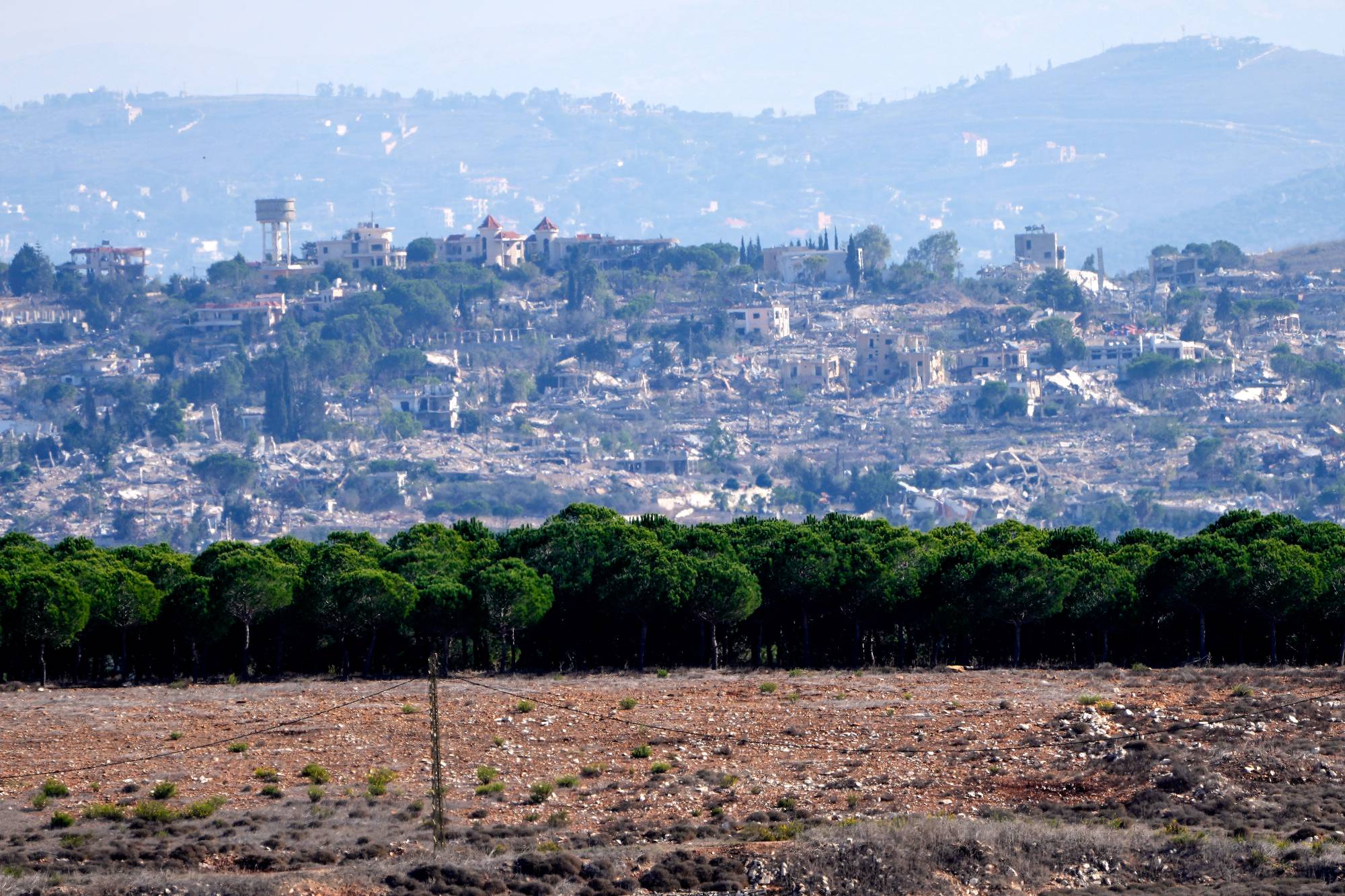
Hezbollah is seeking to ease growing anger among its supporters by pledging to contribute to housing costs for families who lost their homes in the war, nearly six months after a devastating escalation that began on March 2, during which Israel occupied more than 65 villages and towns in South Lebanon.

Hezbollah Secretary-General Naim Qassem’s announcement of plans to contribute to a housing project, alongside a commitment to provide accommodation, repairs and reconstruction using the group’s resources and donations, comes amid mounting frustration over its failure to deliver promised housing allowances for nearly two years.

The delays have worsened conditions for thousands of families, particularly those displaced from border communities.

Hezbollah has yet to disclose details of the initiative, leaving prospective beneficiaries hoping that long-promised payments will soon materialize.

No Full Rent Coverage

Residents of Beirut’s southern suburbs understand the announcement to mean that Hezbollah will cover only part of displaced families’ rent rather than the full amount.

Local sources told Asharq Al-Awsat that the pledge had dashed hopes of full coverage, as provided in 2006 and following the 2024 war.

“We are waiting for the details to be announced to understand the nature of this support,” they added.

The issue has become increasingly pressing for Hezbollah, which faces a financial crisis that Qassem has attributed to a financial “siege” preventing the transfer of funds from Iran to Lebanon.

Researcher Mohammad Shamseddine estimated that around 35,000 families currently require housing assistance.

He told Asharq Al-Awsat that the last payment, made after the March 2026 war, consisted of monthly allowances of up to $400 for households in Beirut and $300 in the south.

No final decision has been reached on the amount to be allocated, its distribution or whether payments would cover specific months or an entire year, he noted.

Following the first round of fighting in 2024, Hezbollah paid up to $10,000 per property for minor repairs, spending an estimated $300 million. It also disbursed $800 million in housing assistance, covering furniture and one year’s rent for those whose homes were completely destroyed.

In 2025, Qassem announced that the group had provided housing allowances to 50,755 people and repaired homes for 332,000 others.

Growing Discontent Among Supporters

Hezbollah opponent Ali Murad linked the announcement to rising dissatisfaction within the group’s support base, ranging from limited objections to occasional public criticism of its decisions and the course it has charted for South Lebanon.

He questioned what options remained available to residents after everything they had endured and whether Hezbollah had a clear vision for the next phase.

Murad told Asharq Al-Awsat that the party was under pressure to offer at least partial accommodation solutions while continuing to blame the state for shortcomings, despite recognizing the severity of its crisis.

He maintained that rental assistance alone could not compensate residents for their losses.

While the government has clear obligations toward its citizens, displaced families primarily need a viable plan allowing them to return to their villages and homes, something currently unavailable, he explained.

Murad urged the state to assume responsibility for the south, not merely by paying compensation or countering Hezbollah, but by becoming the residents’ principal authority and point of reference.

Three Objectives Behind the Pledge

Paris-based professor of law and foreign policy Mohieddine Al-Shuhaimi identified three objectives behind Hezbollah’s announcement.

First, he argued, Hezbollah wants to preempt the state by portraying itself as capable of delivering aid where public institutions appear absent or unable to fulfill their responsibilities.

Second, it seeks to demonstrate that it can still secure funding despite substantial losses, restrictions and sanctions.

Third, the initiative aims to bolster morale among supporters amid emerging, albeit limited and largely unspoken, discontent.

According to Al-Shuhaimi, Hezbollah fears even minor dissent within its ranks and wants to reaffirm its position as the community’s protector rather than leaving that role to the state.

On financing, he observed that although the party has lost substantial revenue sources and parts of its financial network, it retains diminished resources and continues receiving assistance through informal channels despite tighter oversight.

Al-Shuhaimi called on Lebanese authorities to avoid merely reacting to Hezbollah’s initiatives and instead develop a comprehensive financial strategy aligned with a political process.

The state, he concluded, must reclaim its role and work toward ending the exceptional situation created by Hezbollah’s weapons through a coordinated political and financial approach.