Fatah Demands Apology for Oct. 7 ‘Catastrophe’ as Hamas Hits Back

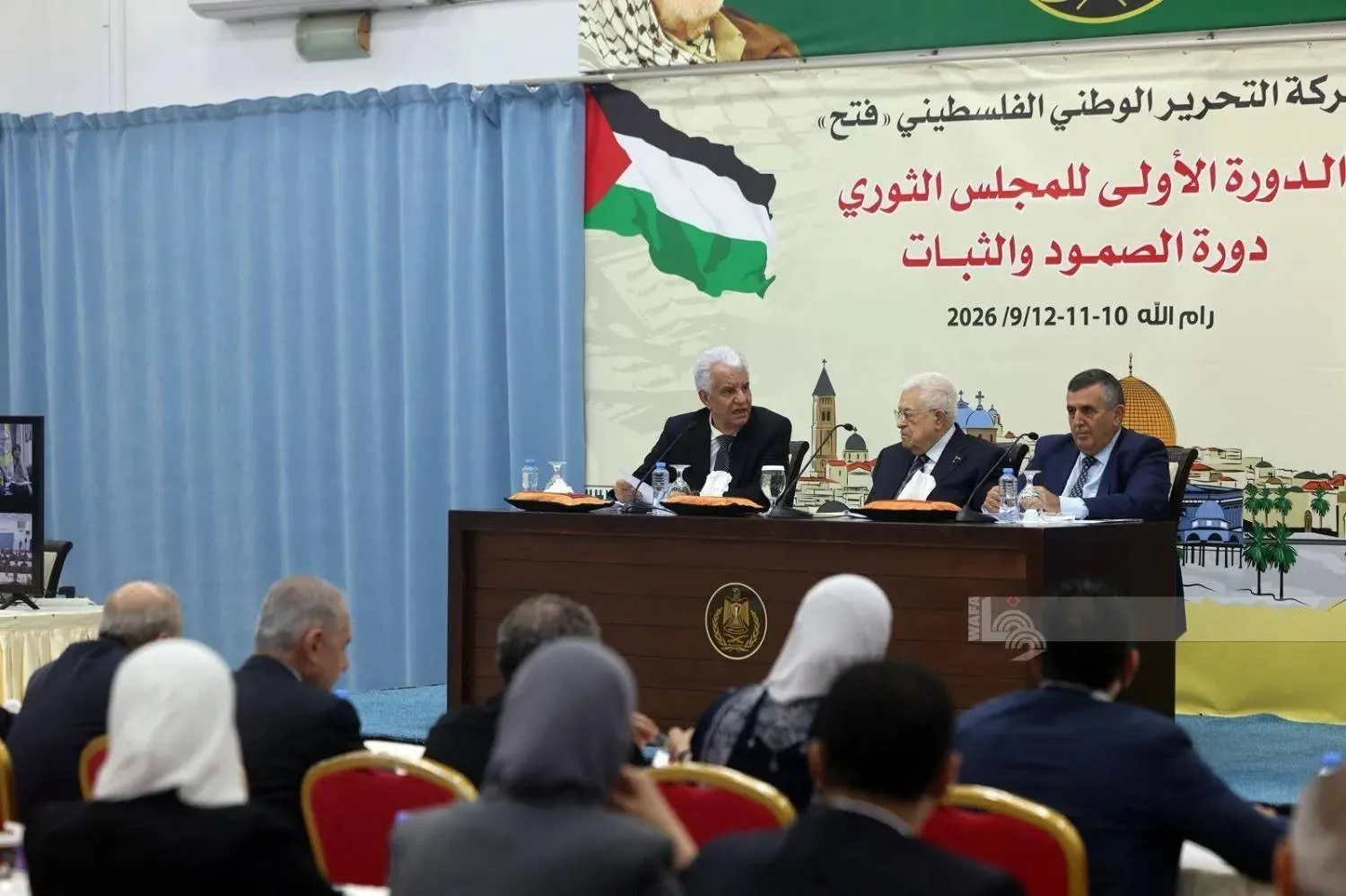
A meeting of Fatah’s Revolutionary Council in Ramallah (WAFA) 
TT

Fatah Demands Apology for Oct. 7 ‘Catastrophe’ as Hamas Hits Back

A meeting of Fatah’s Revolutionary Council in Ramallah (WAFA) 

A heated Palestinian debate erupted after Fatah Central Committee member Majed Faraj called on Hamas to apologize to the Palestinian people for what he described as the “catastrophe” that followed Oct. 7, 2023.

Speaking to Fatah activists at a public gathering ahead of legislative elections, Faraj said Hamas should apologize before returning to political life as a Palestinian faction like any other.

“This is a personal opinion and not an official position,” he added.

Fatah supporters and several of its leaders applauded, including Zakaria Zubeidi, who was recently released from an Israeli prison under a Hamas-Israel prisoner exchange deal. His reaction drew criticism from Hamas activists and freed prisoners.

Bassem Naim, a member of Hamas’ political bureau, hit back at Faraj, Fatah and the Palestinian Authority, arguing that the Oct. 7 attack had strategic consequences not only for Palestine but for the region and the world.

In a Telegram post, Naim said that if Hamas were required to apologize, Faraj should also demand apologies from Fatah and the late Yasser Arafat for what, by Faraj’s own standard, were “catastrophes” inflicted on Palestinians over decades. He cited the Al-Aqsa Intifada, which was followed by Israel’s Operation Defensive Shield and the reoccupation of the West Bank, as well as earlier events in Jordan, Lebanon and the first Gulf War.

Naim said Palestinians had the right to assess every stage of their national struggle and demand accountability, but argued that such scrutiny should not be selective or serve foreign agendas. He described the Oslo process as a “major mistake” that had proved a catastrophic failure.

He added that Hamas had repeatedly called for comprehensive national dialogue to review all paths, including the “Al-Aqsa Flood,” but accused Fatah of rejecting such efforts, most recently at meetings in Ankara and El Alamein.

Fatah Revolutionary Council member Monzer al-Hayek defended his movement, saying the only thing Fatah could apologize for was failing so far to achieve an independent Palestinian state.

He noted that Fatah had built a national authority, given Palestinians an entity, identity and passport, and advanced the statehood project until Palestine achieved UN non-member observer state status.

Al-Hayek accused Hamas of obstructing the national liberation process, weakening the political track and helping create conditions that brought Israel’s far right to power.

The dispute comes amid mutual accusations that each movement is seeking to obstruct or postpone the elections. Hamas has sought to form a broad electoral coalition of several factions, while Fatah has worked to block the effort and persuaded PLO factions, including the Popular Front for the Liberation of Palestine, not to join.

Fatah’s Revolutionary Council said the movement would contest legislative elections scheduled for Nov. 28 on an official national list in consultation with PLO factions. It called for comprehensive national dialogue, Palestinian unity within the PLO framework and a fully sovereign Palestinian state on the June 4, 1967 borders.

President Mahmoud Abbas reaffirmed his commitment to holding legislative elections on Nov. 28, 2026, and urged the international community to pressure Israel not to obstruct voting in Jerusalem and the Gaza Strip.


Israel Strikes East Lebanon, Says Targeting Hezbollah Arms

Smoke rises from the site of an Israeli strike that targeted the southern Lebanese village of Kfar Tebnit on May 21, 2026. (AFP)
TT

Israel Strikes East Lebanon, Says Targeting Hezbollah Arms

Smoke rises from the site of an Israeli strike that targeted the southern Lebanese village of Kfar Tebnit on May 21, 2026. (AFP)

Israel struck a mountainous area in eastern Lebanon on Monday, according to Lebanese state media, with the Israeli military saying it was targeting a shipment of weapons headed for Hezbollah.

"Enemy aircraft launched a strike at dawn against the Al-Shaara region, in the highlands of the Anti-Lebanon mountain range, without resulting in victims or damage," Lebanon's official National News Agency (NNA) said.

The Israeli military said it "struck a weapons shipment transferred from Syria to Lebanon, intended for the Hezbollah terrorist organization".

Hezbollah, which is backed by Iran, emerged badly weakened from two successive wars with Israel since 2023.

The ousting in 2024 of Syrian president Bashar al-Assad, a key ally of the group, cut off a major weapons route.

Hezbollah lawmakers have nonetheless maintained that the group is rebuilding its military capacities, as fighting with Israel has wound down since June.

In October, Lebanese security forces seized a half-ton of explosives transported in a truck from east Lebanon towards Beirut.

Hezbollah acknowledged ownership of the explosives, saying they were intended for "resistance" against Israel.

Lebanese authorities have announced a plan to disarm Hezbollah, but the group has refused to lay down its weapons.


US Envoy Says Lebanon’s Hezbollah Should Disarm ‘Voluntarily'

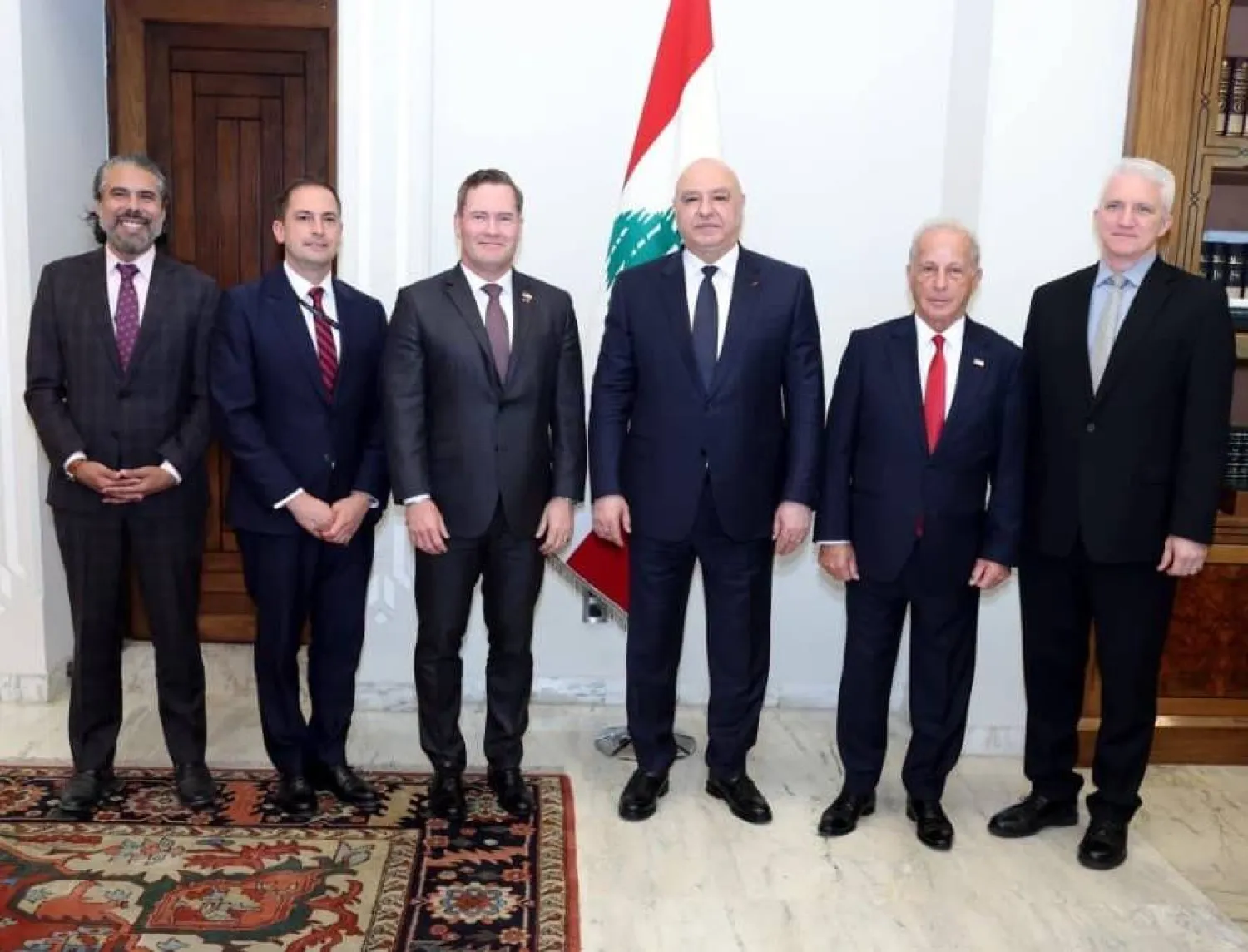
Lebanese President Joseph Aoun receives US envoy Mike Waltz at the Baabda presidential palace on Monday. (NNA)
TT

US Envoy Says Lebanon’s Hezbollah Should Disarm ‘Voluntarily'

Lebanese President Joseph Aoun receives US envoy Mike Waltz at the Baabda presidential palace on Monday. (NNA)

Iran-backed Hezbollah should "voluntarily" lay down its weapons and hand them over to the Lebanese state, visiting US envoy Mike Waltz said on Monday, adding that "no country can have two armies". 

"I think the message should be loud and clear, that Lebanese sovereignty must be fully restored," said Waltz, who is the US ambassador to the United Nations. 

"And the mechanism to do that will be the Lebanese armed forces." 

Waltz held separate talks in Lebanon with President Joseph Aoun and Prime Minister Nawaf Salam.

Hezbollah, which has fought successive wars with Israel, is under pressure to disarm. 

It was the only armed group that refused to hand over its weapons after Lebanon's civil war ended in 1990. 

"I appreciate every Lebanese soldier that steps forward to defend their country, to restore their sovereignty, to defend their people. This is a unique opportunity in history to do that, one," Waltz said. 

"And two, to Hezbollah and to their Iranian backers, no country can have two armies. I hope and pray Hezbollah will disarm. They should do that voluntarily." 


Syria Needs EU Support to Ensure Stability, Kallas Says

High Representative of the European Union for Foreign Affairs Kaja Kallas speaks prior to the Foreign Affairs Council meeting in Brussels, Belgium, 16 November 2026. (EPA)
TT

Syria Needs EU Support to Ensure Stability, Kallas Says

High Representative of the European Union for Foreign Affairs Kaja Kallas speaks prior to the Foreign Affairs Council meeting in Brussels, Belgium, 16 November 2026. (EPA)

European Union foreign ministers will discuss on Monday elevating their relationship with Syria as the war-torn country needs urgent support to ensure stability amid ‌escalating tensions ‌in the ‌region, ⁠the bloc's foreign policy ⁠chief said.

"We really see that Syria needs a lot of investments, to build ⁠up institutions and ‌its ‌reforms," Kaja Kallas ‌told reporters ahead of ‌a monthly foreign ministers meeting in Brussels.

"On the European side we ‌want to see Syrian refugees return but ⁠they ⁠need conditions to return. There's a lot we can do together because the stability of Syria is in our interest and the interest of region."