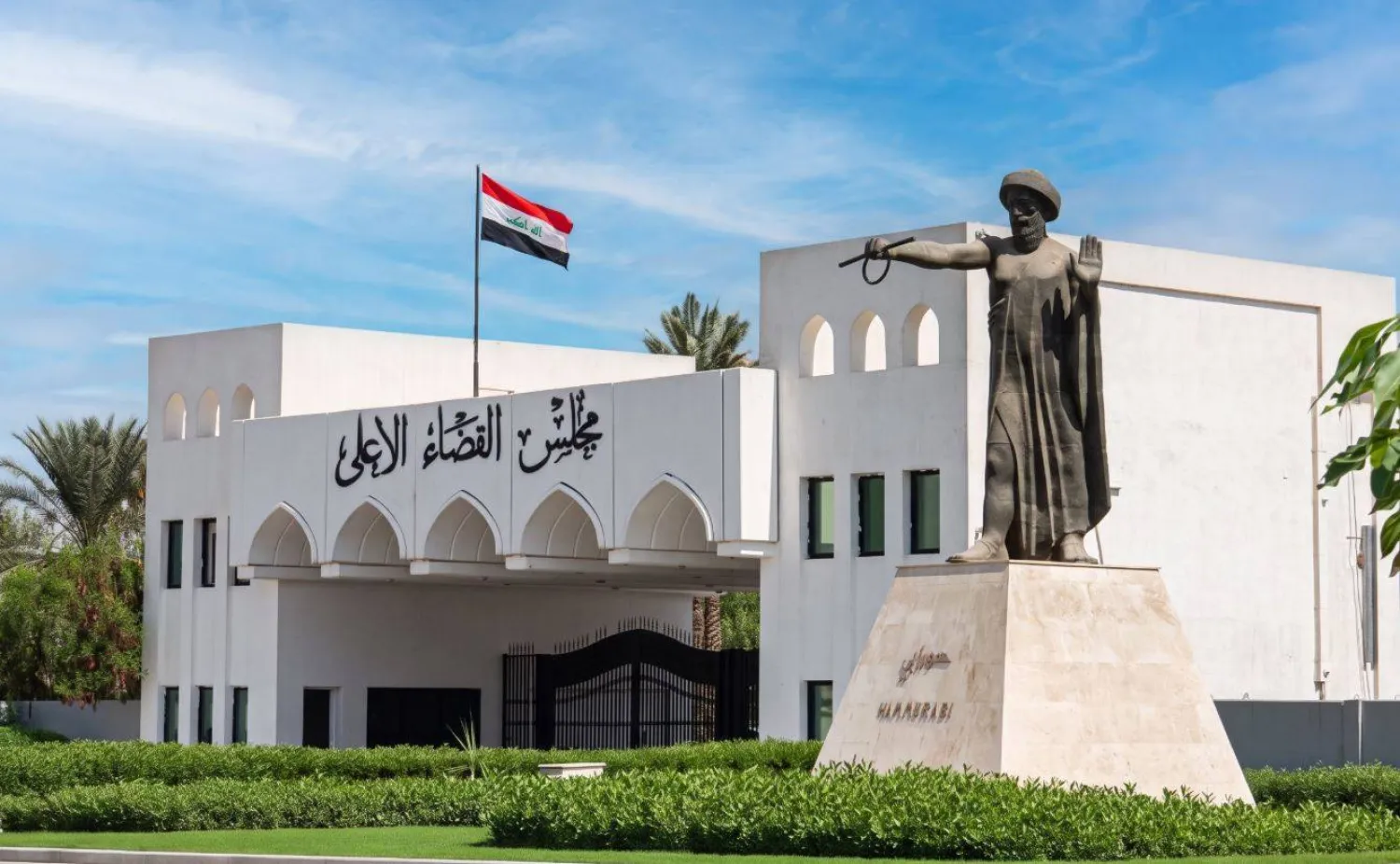
During the nearly three-hour session, the judge read the investigation findings, which were also shown on a screen, including the suspects' testimonies (INA)
During the nearly three-hour session, the judge read the investigation findings, which were also shown on a screen, including the suspects' testimonies (INA)
Six French nationals went on trial on Sunday, as Iraq moves to prosecute thousands of suspected ISIS members.
Iraq's prisons, already packed with ISIS suspects, have received thousands more detainees transferred since last year from Syria.
The trial of the six French nationals began on Sunday morning.
An AFP correspondent in the courtroom reported that the judge set the next hearing for October 5.
During the nearly three-hour session, the judge read the investigation findings, which were also shown on a screen, including the suspects' testimonies.
The investigation found that they joined ISIS after travelling first to Turkey and then Syria.
The judge then inquired about their legal representation before setting the new hearing date.
The suspects include Charlie Sun, Kamel Ben Mbarak, Najib Megherbi, Mehdi Ismael and Ibrahim Azahaf, who arrived in Syria when he was 14 years old, according to their French lawyers.
Among them was also Noureddine El Mansouri, who was stripped of his French nationality in June 2026, though the decision is still under appeal.
The suspects are part of a group of 47 French citizens transferred from Syria last year.
The larger group includes Adrien Guihal, who claimed responsibility for the 2016 Nice attack for ISIS.
The group swept across Syria and Iraq in 2014, committing massacres and forcing women and girls into sexual slavery.
French lawyers on Thursday urged the repatriation of the French nationals detained in Iraq, warning that they could face the death penalty.
In February, over 5,700 ISIS detainees from more than 60 countries were transferred to Iraq by the United States, after years held in Syrian prisons overseen by Kurdish-led forces.
Among them were at least five French nationals, some of whom were minors when their parents joined ISIS.
Earlier this month, Iraq's judiciary said it had completed their interrogation and that the cases would proceed to trial.
It added that more than 450 Syrians would be released after investigations found no evidence warranting legal action against them.
In April, Iraq handed over two detained foreigners, from Finland and the United States, to their countries after they were cleared of suspicion.
Intensive Strikes Target Houthis Amid Suspicions of Toxic Shells Used by Militiashttps://english.aawsat.com/arab-world/5335340-intensive-strikes-target-houthis-amid-suspicions-toxic-shells-used-militias
Intensive Strikes Target Houthis Amid Suspicions of Toxic Shells Used by Militias
Smoke billows from a site that was targeted west of the city of Taiz, on October 21, 2026. (Photo by AFP)
Fighting has intensified across Yemen, with battles spreading to several provinces as Operation "Dawn of Yemen" entered its 25th day and Houthi attacks on civilian areas and infrastructure continued in Yemen and Saudi Arabia.
The Saudi-led coalition said Saudi air defenses intercepted and destroyed a Houthi ballistic missile fired toward the kingdom's Eastern Province early on Thursday.
Yemen's armed forces said on Thursday evening they had carried out 982 strikes on Houthi positions and fortifications in 24 hours, killing or incapacitating 324 commanders and fighters and destroying 108 military vehicles.
The strikes came as Operation "Dawn of Yemen," launched by Presidential Leadership Council Chairman Rashad al-Alimi to reclaim Houthi-held territory and restore state authority, entered its 25th day.
Authorities in Taiz called for an urgent investigation into reports that Houthi forces had fired shells suspected of containing internationally banned toxic substances.
They said earlier incidents had left civilians and soldiers suffering breathing difficulties, with some losing consciousness, and called for specialized testing to establish whether the symptoms were linked to substances released by the shells.
The authorities urged investigators to document witness accounts, medical records and reported cases, and identify any substances used. They also called on the United Nations and international organizations to support the inquiry and hold those responsible accountable if the allegations were confirmed.
Health officials in Taiz said Houthi shelling struck an ambulance on Wednesday as it tried to evacuate an injured civilian from a village in the al-Awat area, west of al-Shaqab in the Sabr al-Mawadim district, south of Taiz city.
The ambulance was badly damaged and put out of service.
The strike came amid heavy shelling of villages around Jabal Sabr, the officials said. They also reported that another ambulance had been hit by a shell the previous week and that Houthis had looted 15 ambulances from health offices and medical centers across several districts.
Aden airport reopens after missile strikes
Fighting spread from the outskirts of Taiz to fronts in Lahj province, Dhubab and the Bab al-Mandab Strait, as coalition warplanes stepped up strikes along Yemen's western coast and Houthi missiles again targeted Aden International Airport.
Aden airport resumed operations on Thursday after engineers repaired runway damage caused by Houthi ballistic missile strikes the previous day.
Aviation sources said technical teams had worked intensively to restore the runway and allow flights to resume.
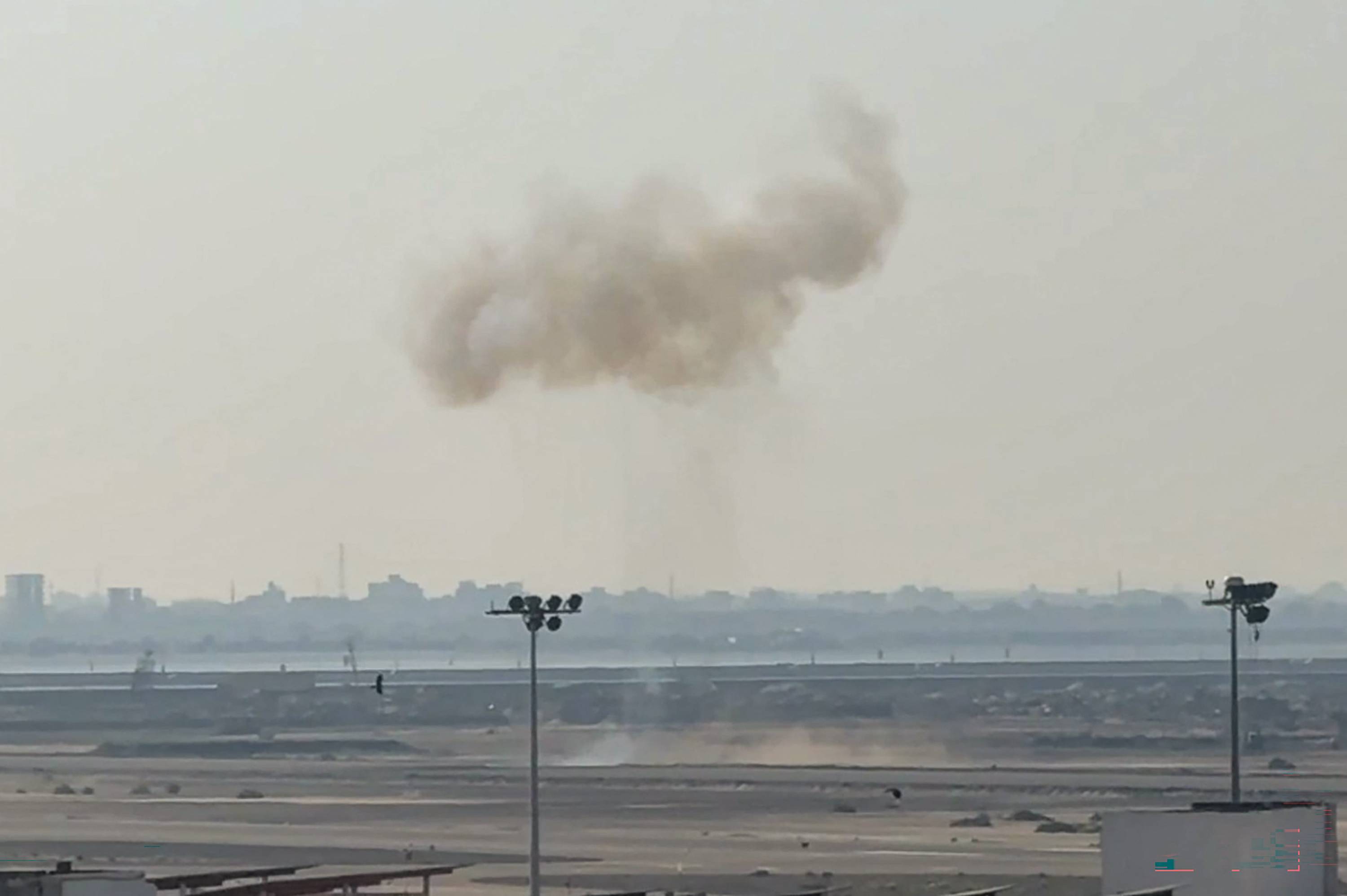
The Houthis fired two ballistic missiles at the airport on Wednesday, one at 1 p.m. local time and another at 3 p.m.
This frame grab taken from AFPTV video footage on October 28, 2026 shows smoke rising after a missile targeted Yemen's Aden airport for the second time. (Photo by AFPTV / AFP)
The group, which had demanded the airport be evacuated before the strikes, claimed it was targeting a military cargo aircraft. Airport security sources, however, reported no casualties or material damage.
The attacks drew widespread condemnation over the targeting of a civilian airport.
Critics said the Houthis' warnings to civilians on social media shortly before the strikes did not absolve the group of criminal responsibility and amounted to psychological pressure and intimidation against civilians and travelers.
Yemen's Transport Ministry condemned the attacks, saying the latest two strikes brought the number targeting the airport to six in recent days.
It warned that the shelling endangered passengers, aircrews and airport workers, threatened air traffic and posed serious risks to humanitarian and relief operations.
The ministry held the Houthis fully responsible and urged the international community and the International Civil Aviation Organization (ICAO) to act urgently to protect civilian facilities and ensure aviation safety.
Yemenia Airways said it had diverted flights bound for Aden to Djibouti airport following the shelling.
The airline said the disruption was beyond its control and that the diversions were necessary to protect passengers, crews and aircraft and comply with aviation safety requirements.
Fighting spreads along western front
Ground fighting widened to the Bab al-Mandab Strait and Dhubab district, where military sources said government forces had repelled Houthi infiltration attempts.
The Houthis said they had attacked government positions in the two areas with ballistic missiles and heavy weapons.
In northwestern Lahj province, the Southern Giants Brigades struck Houthi concentrations along the al-Mudaraba and al-Subaiha front, inflicting casualties as clashes involving various weapons erupted.
Coalition warplanes backed the ground operations with a series of strikes along the western coast, including four targeting Houthi positions and movements near the port city of Mokha.
Other airstrikes hit Houthi fortifications in Jabal al-Nar, east of Mokha.
Government forces also repelled an attack on Kahlan and Hamma villages in the al-Misrakh district, west of Taiz, while military units continued clearing recently recaptured positions along the al-Dhabab front, around Jabal Han and near the old airport.
Artillery exchanges continued along the al-Shaqab, al-Aqrud and Sameh fronts in eastern and southern Taiz province.
Nearly 10,000 Casualties in Yemen Escalation as Taiz Health System Struggles to Survivehttps://english.aawsat.com/arab-world/5335326-nearly-10000-casualties-yemen-escalation-taiz-health-system-struggles-survive
Nearly 10,000 Casualties in Yemen Escalation as Taiz Health System Struggles to Survive
Houthis repeatedly target ambulances in Taiz (AFP)
Nearly 10,000 people have been killed or wounded in Yemen's latest military escalation, pushing the country's battered health system to the brink of collapse as a Houthi siege tightens around its third-largest city.
The crisis, the worst in years, has pushed Yemen's healthcare system into what international agencies now classify as a complex emergency that can no longer be contained.
Yemen's Health Ministry warned of an imminent collapse in healthcare services in Taiz province, where stocks of medicines, medical supplies and oxygen have reached critical lows after nearly three months of escalating Houthi military operations and attacks on civilians and infrastructure, compounded by an unprecedented plunge in international funding.
The southwestern city of Taiz remains under Houthi siege as fighting intensifies across the city and surrounding districts. Continued shelling has forced more than 250,000 people to flee rural areas of Taiz and neighboring Lahj province.
The latest verified field data from the World Health Organization (WHO) put the toll from the recent escalation at 9,072 casualties, recorded through the country's remaining health surveillance systems.
The toll includes 1,677 deaths directly linked to hostilities and 7,395 wounded, overwhelming trauma and emergency centers and stretching the surgical capacity of an already crippled health system beyond its limits.
Health authorities in Taiz accused Houthi forces of targeting an ambulance on Wednesday as it attempted to evacuate a wounded civilian from a village under heavy shelling in the Al-Awat area of Sabir Al-Mawadim district, south of the city.
It was the second reported attack on an ambulance during the current escalation. A strike the previous week killed an ambulance driver and a wounded girl being transported for treatment after an earlier shelling attack, and injured a nurse accompanying them.
Press authorities in the province also accused the Houthis of looting 15 ambulances from health offices and medical centers in rural districts.
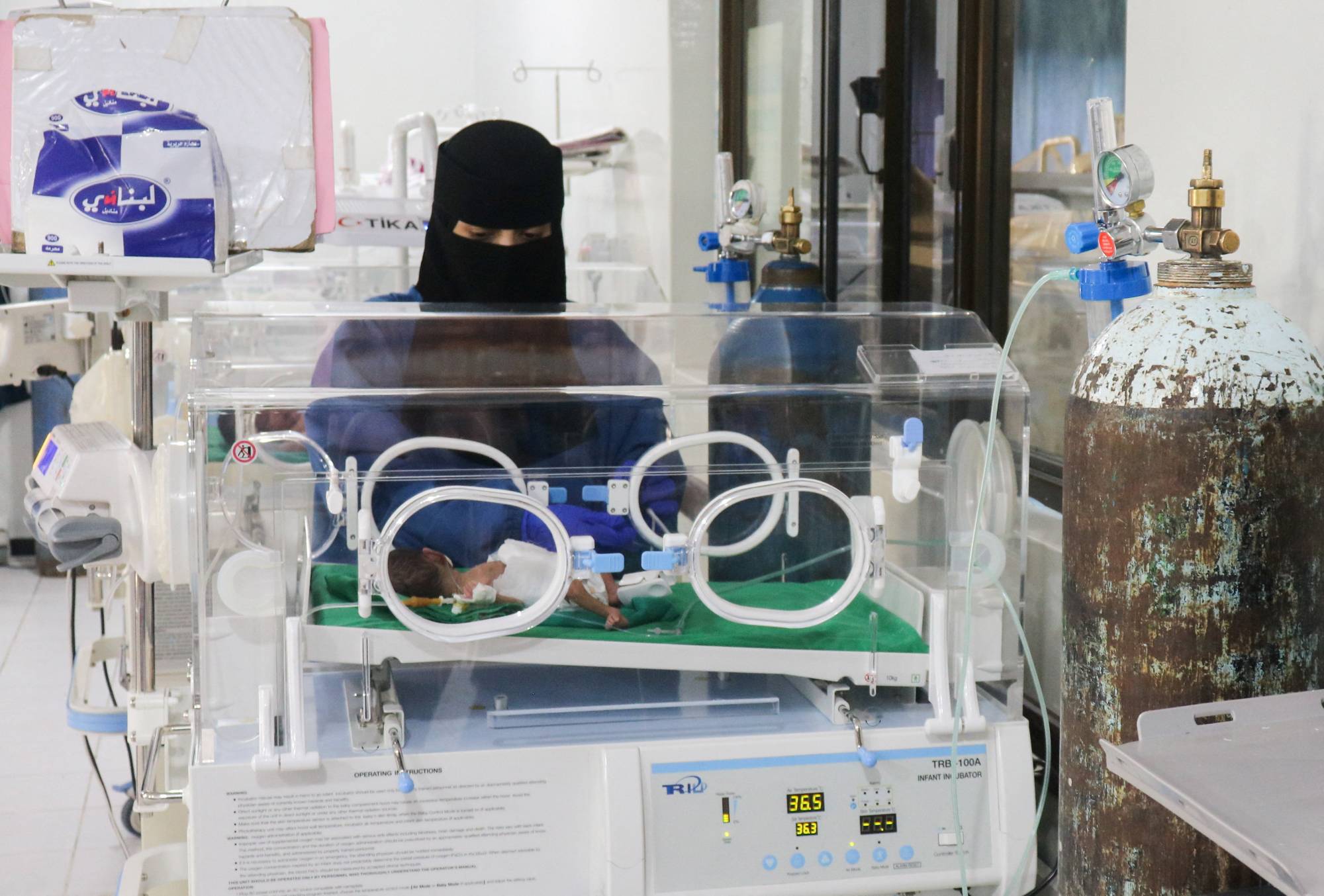
A nurse attends to a newborn baby inside an incubator at a hospital in the southwestern city of Taiz, Yemen, October 23, 2026. REUTERS/Ebrahim al-Suhaibi
A final plea for help
In besieged Taiz, the health crisis is nearing breaking point.
According to Yemen's Health Ministry, 42 healthcare facilities across the province could shut down completely within days as supplies of medicines, lifesaving medical equipment and medical oxygen cylinders run out.
The looming closures threaten services with no ready alternatives, including neonatal incubators, intensive care units and regular dialysis sessions for hundreds of patients.
The crisis has deepened as healthcare facilities continue to come under direct attack. In the latest incident, Houthi gunmen opened fire on Al-Thawra General Hospital, wounding patients and medical staff.
Public health officials are also warning of a cholera outbreak spiraling out of control, with infection rates tripling in just weeks as destroyed water and sewage networks and deteriorating sanitation services fuel the spread of the disease.
The outbreak is colliding with a severe malnutrition crisis. Thousands of displaced children lack the basic immunity needed to fight bacteria transmitted through contaminated water, pushing death rates among children under five to record highs.
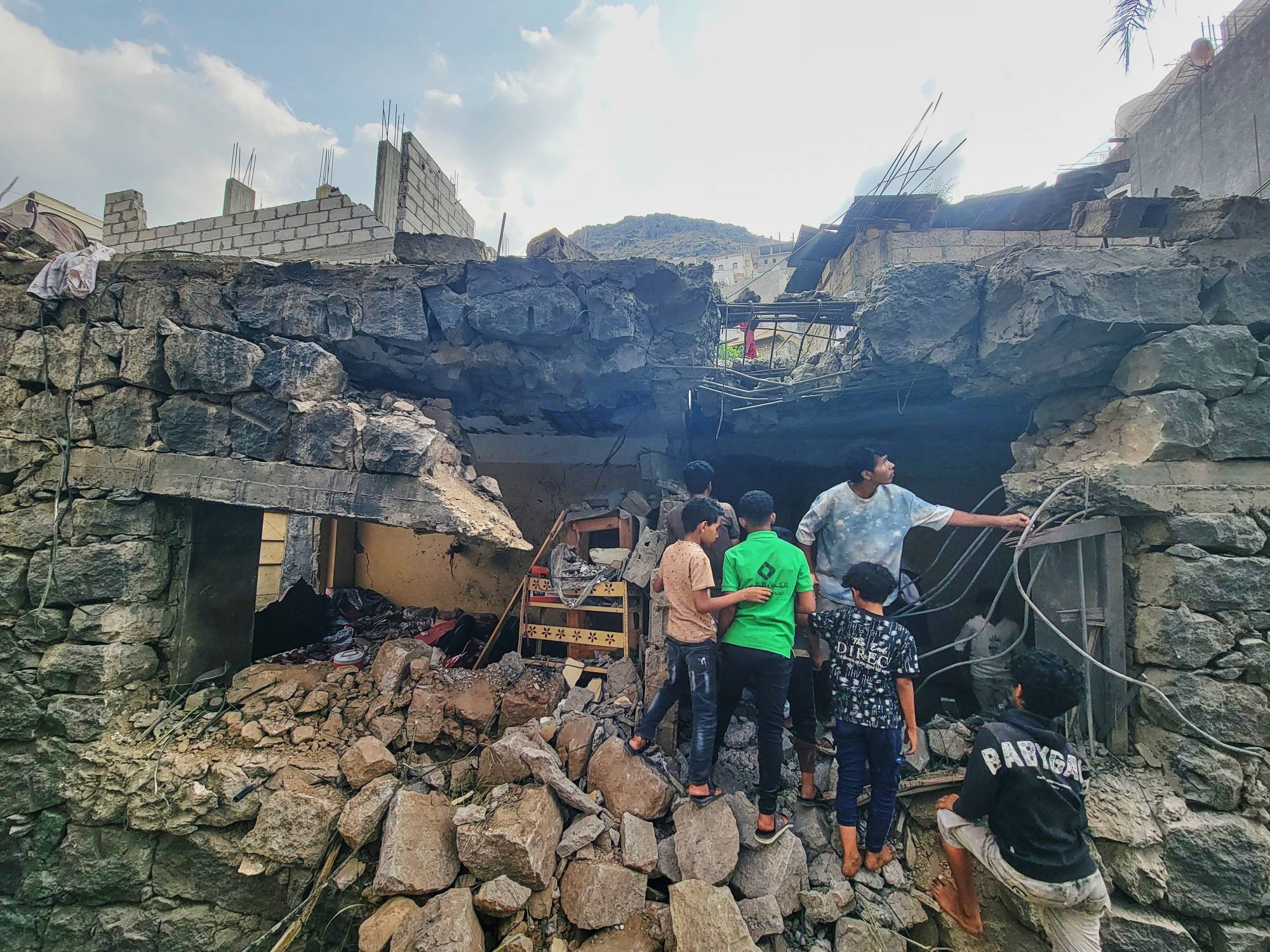
Residents walk amid debris from their homes after a missile strike in Seina, Taiz, Yemen, Tuesday, Oct. 20, 2026. (AP Photo/Marzouq Al Jabri)
Funding dries up as needs surge
As humanitarian needs soar, international and local relief operations are running into what aid officials describe as a crippling funding drought.
Earlier this month, the WHO issued an urgent appeal for $31 million to keep essential healthcare operations running across Yemen. Donors have provided just $2.1 million, leaving a staggering 93% funding gap.
The consequences have been swift. Fifteen vital healthcare facilities have closed permanently, while dozens of mobile medical teams have been disbanded, cutting off what had been the only lifeline for remote communities and displacement camps in conflict-hit provinces such as Marib.
International and local humanitarian groups agree that time has effectively run out.
Without immediate international pressure to halt hostilities, open safe humanitarian corridors to restore the flow of supplies into besieged Taiz and release emergency funding, Yemen faces the prospect of the worst healthcare collapse in its modern history.
550 Private Schools in Sanaa Come Under Houthi Recruitment Pressurehttps://english.aawsat.com/arab-world/5335312-550-private-schools-sanaa-come-under-houthi-recruitment-pressure
550 Private Schools in Sanaa Come Under Houthi Recruitment Pressure
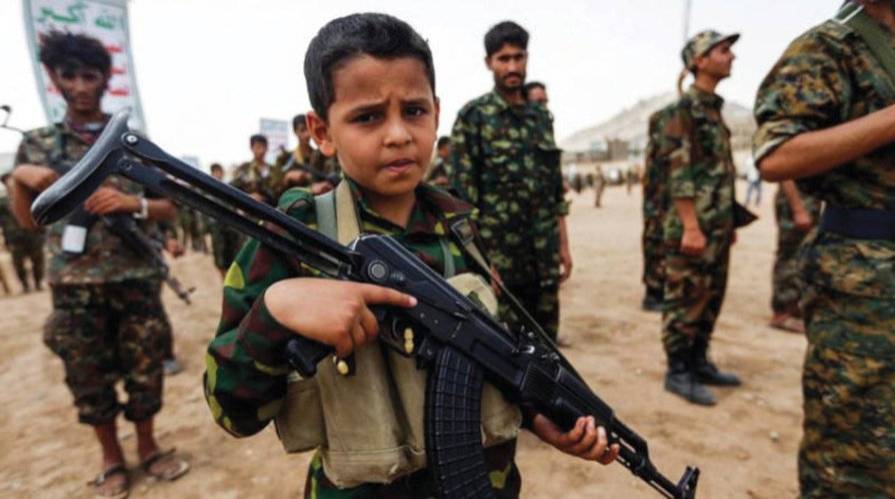
Houthis continue to recruit children and transform schools into training centers (local media)
The Houthi militias have escalated their campaigns to recruit students from private schools in Sanaa, exploiting educational institutions to supply its battlefronts with new fighters and offset its ongoing human losses.
The group is reportedly forcing students to attend military training courses while threatening school administrations with closure, fines, and other penalties.
Educational sources in Sanaa told Asharq Al-Awsat that the group's so-called "Jihadist Department," in coordination with the Ministry of Education in its unrecognized government, recently launched a campaign targeting more than 550 private schools in Sanaa and its outskirts.
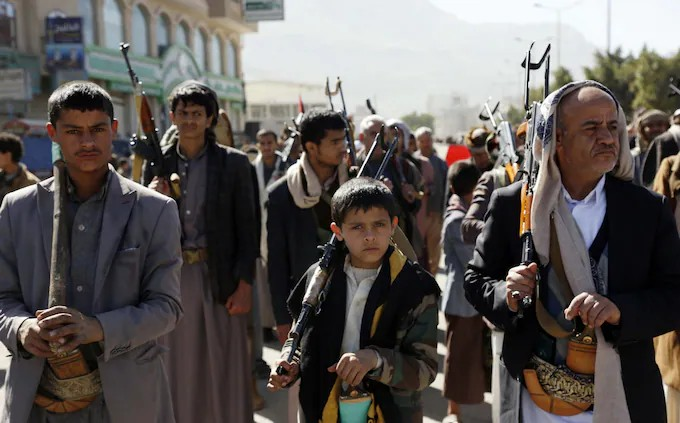
A Yemeni child carries his weapon during a gathering of new Houthi fighters in Sanaa (AFP)
The move marks a new escalation in the group's use of the education sector to advance its military and ideological agenda.
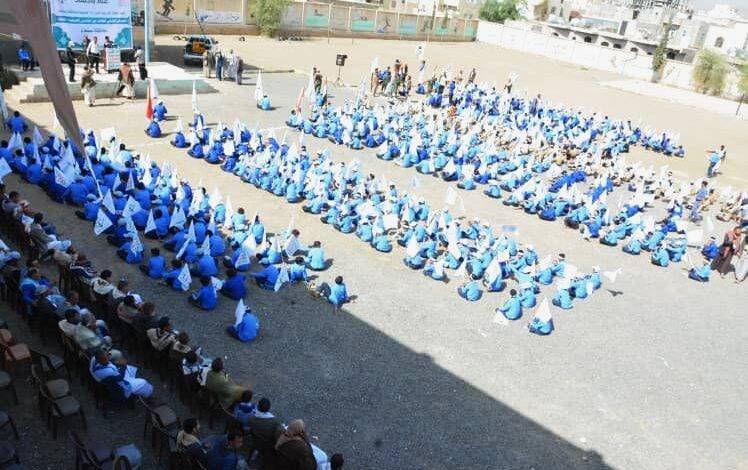
According to the sources, Houthi supervisors have, in recent days, conducted field visits to schools in ten districts across Sanaa, ordering each school administration to select five students to enroll in military training courses.
They warned that institutions refusing to comply could face closure, punitive measures, and financial penalties.
The campaign has sparked widespread anger and concern among teachers, students, and parents, who view it as part of the group's long-standing effort to undermine the educational process. For years, they say, the Houthis have subjected curricula and school activities to ideological indoctrination and turned educational institutions into tools serving their military project.
Houthis encourage families to take pride in their sons as fighters or martyrs (Getty)
Forced Military Courses
Parents who spoke to Asharq Al-Awsat said their children were taken from classrooms without their families' knowledge and transported to undisclosed locations, where they were subjected to ideological indoctrination and military training.
This has heightened fears that the activities are a prelude to recruiting students and sending them to the front lines.
As a result, some families have stopped sending their children to the targeted schools for fear of forced recruitment.
Several private schools have reported declining attendance, amid growing concerns over continued Houthi pressure and raids on educational institutions, which many believe are being transformed into recruitment channels rather than centers for learning.
Abdullah, the father of four students from the Maeen district in central Sanaa, said he had been forced to keep two of his children, who are in middle and high school, at home out of fear they would be recruited.
He said he no longer trusts the school administration's ability to protect them from Houthi pressure, leaving him with the painful choice of either depriving them of an education or risking their military indoctrination.
He added that most families now fear sending their children to school because educational institutions have, in his words, become recruitment gateways where students are subjected to military indoctrination.
"We sent our children to school to learn and build their future, not to be pushed into military courses and battlefronts," he said.
He noted that the group's actions now go beyond imposing its views on curricula and school activities, extending to pressuring school administrations to hand over students to organizers of combat training programs.
Houthi militias have coerced schools in Sanaa into sectarian programs and mobilization for combat (X)
Pressure on Schools
A teacher at a private school in the Al-Sabeen district south of Sanaa, speaking on condition of anonymity, said private school administrations across Sanaa and its suburbs are facing mounting pressure from the group's cultural supervisors to implement directives aimed at recruiting students and sending them to military training courses at the expense of their education.
The teacher stressed that schools, which should provide a safe environment for learning and future-building, are facing growing interference in their internal affairs as pressure increases to pull students out of classrooms and involve them in activities unrelated to education.
These developments come as the education system in Houthi-controlled areas continues to deteriorate.
Tens of thousands of teachers and education workers have gone unpaid for years, while policies pursued by the group have worsened living conditions and weakened schools' ability to fulfil their educational mission.
لم تشترك بعد
انشئ حساباً خاصاً بك لتحصل على أخبار مخصصة لك ولتتمتع بخاصية حفظ المقالات وتتلقى نشراتنا البريدية المتنوعة