What’s Left of Hezbollah Two Years after the War?

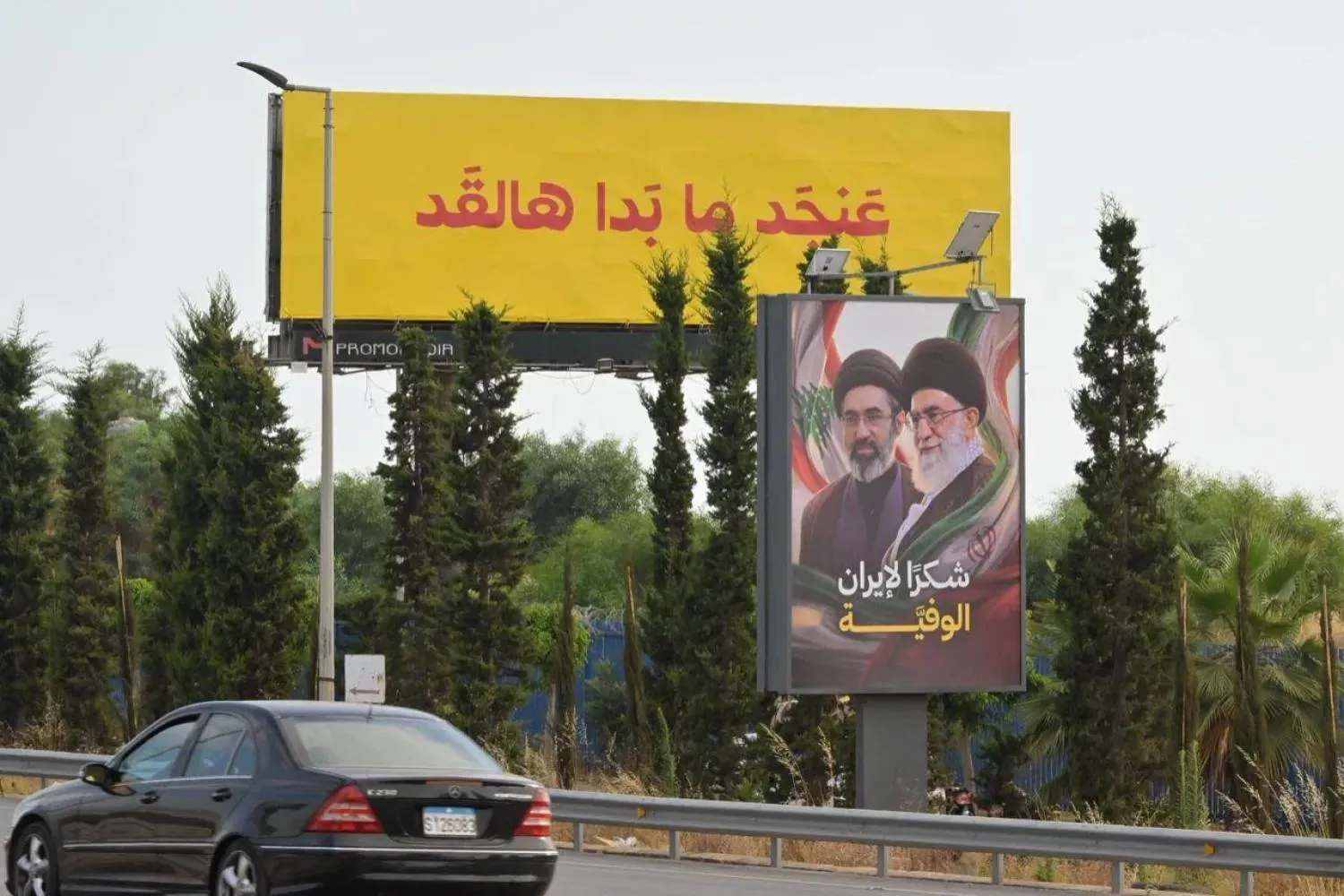
A poster expresses gratitude to Iran for its support to Lebanon. (Asharq Al-Awsat)
TT

What’s Left of Hezbollah Two Years after the War?

A poster expresses gratitude to Iran for its support to Lebanon. (Asharq Al-Awsat)

The expanded war in Lebanon, which erupted with widespread Israeli bombardment on September 23, 2024, and led to intense clashes and battlefield shifts, has forced a new reality on Hezbollah.

The Iran-backed group's military capabilities, supply lines, and political influence have significantly declined following severe losses within its senior leadership ranks. Furthermore, Hezbollah's deployment on the ground and operations have fundamentally changed compared to its pre-war positioning.

Two years later, the group is navigating a far more complex military landscape. While the loss of a vast portion of its leadership, declining drone and missile capabilities, and shrinking supply lines through Syria have severely weakened its position, the party still retains enough military capacity to continue operating.

It is actively attempting to reorganize its ranks and adapt to an altered battlefield reality - one that stretches from north of the Litani River into broader territory across southern Lebanon and the Western Bekaa.

Speaking to Asharq Al-Awsat, security and defense expert Riad Kahwaji estimated that Hezbollah's capabilities have significantly declined between 2024 and today across its leadership, military structure, political influence, and supply lines, evaluating the scale of this drop to have "exceeded nearly half."

He explained that the group has lost the vast majority of its first- and second-tier leaders, while most of the leaders present today were classified within the third tier in 2024.
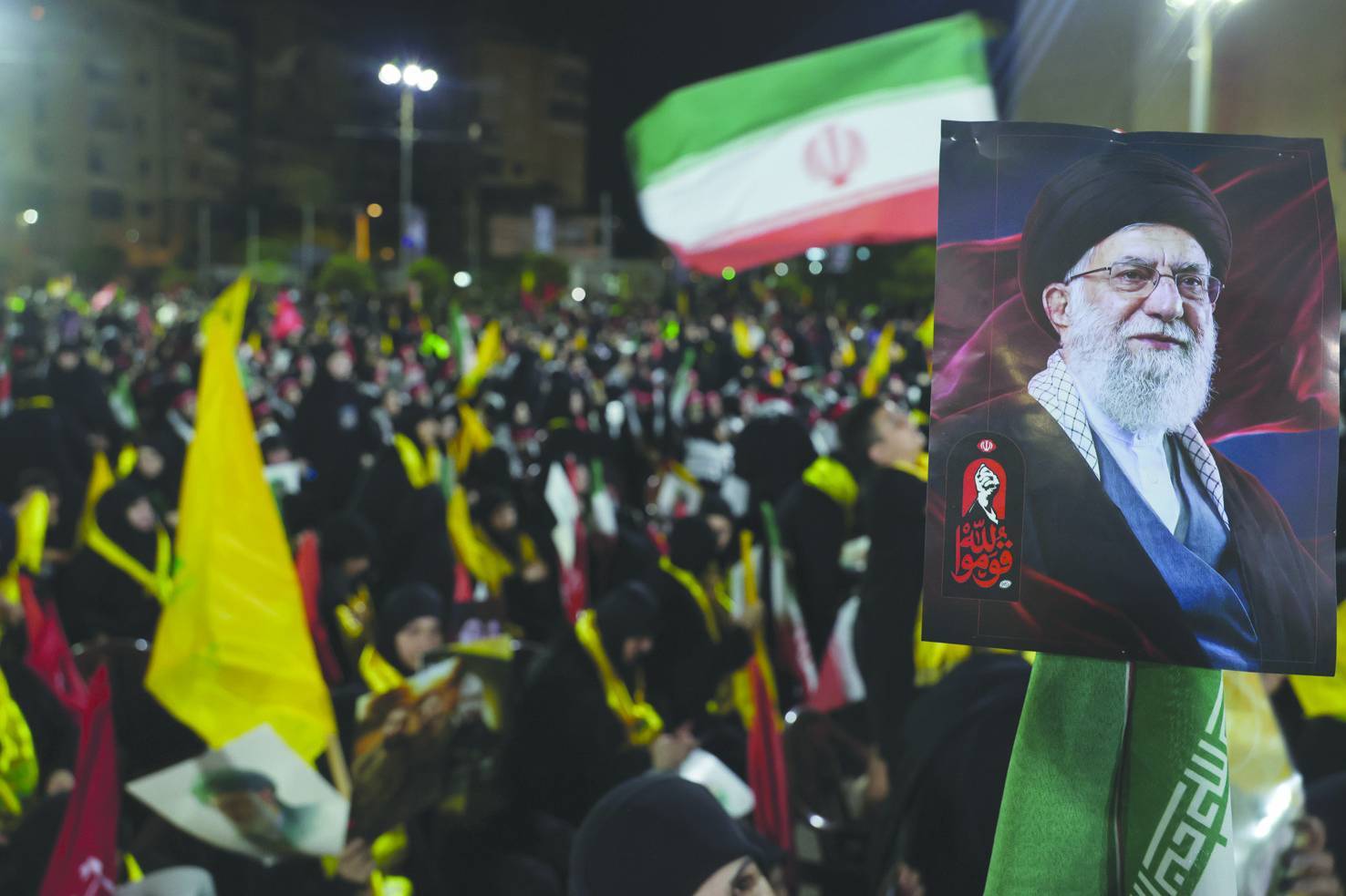
Hezbollah supporters carry posters of slain Iranian supreme leader Ali Khamenei during a rally coinciding with his funeral in Iran in Beirut's southern suburbs. (EPA file)

The nature of management within the group has also changed, as "management in 2024 was local under Iranian guidance, whereas today management and guidance have become directly Iranian," he added.

On the military level, Kahwaji said that "the party's forces have become stationed north of the Litani, after having previously been present directly on the border."

"Nabatieh has practically become the separation line of contact between the group's presence and the Israeli forces," he noted.

Regarding the military arsenal, he said that "missile and drone capabilities still exist, but they have become less than half of what they were before."

He added that Hezbollah's political influence within Lebanon has significantly weakened from its previous levels, noting that one of the most prominent shifts affecting the group is the severe disruption of its supply lines through Syria, which have now been largely cut off.

Since the November 2024 ceasefire up to the current stage, retired Brigadier General Dr. Khalil Helou told Asharq Al-Awsat that the party’s "capabilities have dropped compared to what they were before the war, but it has not lost its military capacity and still possesses capabilities that allow it to continue."

Its limited responses to Israel during the current stage may be a sign that it has entered a new "phase of reorganization and rebuilding of combat readiness," he added.

Helou explained that the period following the November 2024 ceasefire was marked by ongoing Israeli assassinations targeting Hezbollah operatives, while the group largely refrained from retaliating.

This pattern underscores a significant drop in Hezbollah's capabilities compared to its pre-2024 strength, while simultaneously indicating that the group has been undergoing a phase of reorganization, rearmament, and rebuilding of its combat readiness, he noted.

Helou stressed that the strategic landscape shifted following the outbreak of the US war on Iran at the end of February, which Hezbollah joined in early March.

"From that point until the second ceasefire on June 17, the party engaged in the fighting, launching effective retaliatory operations in certain areas and firing missiles into both the Israeli interior and Israeli-occupied territories," Helou said.

He remarked that during that phase, Israel "advanced, made incursions, and established its presence on the ground," while Hezbollah continued to carry out military responses, though the situation following the latest ceasefire has returned to a pattern similar to the period that followed November 2024.

"Today, we have virtually returned to the previous phase, as Hezbollah's responses to Israeli attacks have become almost nonexistent," he stated. "If we review operations over the past two and a half months since the ceasefire, the military operations carried out by the group against Israel are highly limited and can be counted on two hands. This stands in sharp contrast to dozens of daily Israeli operations, including airstrikes, shelling, and assassinations."


West Bank on Verge of ‘Explosion’, Says Senior Palestinian Official

Israeli soldiers take positions during an army raid in the Rafidia area of Nablus, West Bank, 19 October 2026. (EPA)
TT

West Bank on Verge of ‘Explosion’, Says Senior Palestinian Official

Israeli soldiers take positions during an army raid in the Rafidia area of Nablus, West Bank, 19 October 2026. (EPA)

Israeli settler attacks risk setting off an "explosion" in the occupied West Bank, a senior Palestinian leader told AFP, while urging that the response remain peaceful.

Jibril Rajoub, the secretary general of the central committee of the Palestinian Authority's ruling Fatah faction, said he called for "peaceful confrontation" as he took part in meetings in Cairo with other Palestinian movements including Gaza-based rival Hamas, which led the October 7, 2023 attacks against Israel.

"The terrorism carried out by the army and settlers, under the supervision of the Israeli government... is a prelude to a coming reaction and explosion," Rajoub told AFP in Cairo.

But he said that a "peaceful, nonviolent struggle is a necessity and a strategic choice for all Palestinians".

"Bloodshed is no longer an acceptable option," he said, calling for "peaceful confrontation with the occupation, despite the crimes it commits".

Settlers have carried out daily physical attacks, thefts and other attacks against Palestinians, with the violence intensifying in the run-up to October 27 elections, in which Prime Minister Benjamin Netanyahu, governing with the fiercely pro-settlement far-right, is seeking a new mandate.

Violence has picked up as extremist settlers seek to stop the Palestinian olive harvest, an annual season with cultural resonance for the community.

More than 500,000 Israelis live in West Bank settlements, which are considered illegal under international law, surrounded by around three million Palestinians.

The talks in Cairo came after Palestinian leader Mahmoud Abbas, who has ruled since 2005, delayed elections slated to start next month until September 2027.

Rajoub said the talks called for "unified political representation" with the principle of a "single authority" and "only one legitimate armed force".

Hamas took over Gaza in 2007, dividing the two Palestinian territories. Israel has vowed to obliterate Hamas after the October 7, 2023 attack, the deadliest day in Israel's history. The Hamas attack resulted in 1,221 deaths.

At least 1,125 Palestinians have died in the West Bank since October 2023, mostly by the Israeli military, according to an AFP tally based on Palestinian health ministry figures.

Settler attacks have killed 23 Palestinians in that timeframe, according to the United Nations.

Palestinian attacks have killed at least 49 Israelis in the same period, according to Israeli figures.

In Gaza, the Israeli offensive has killed 74,459 Palestinians since October 2023, according to figures under the health ministry run under Hamas. The United Nations generally considers the figures reliable.


Israel to Resume Commercial Shipments to Gaza After Hamas Fee Dispute

Tents are pictured by the rubble of collapsed buildings in the Jabalia camp for Palestinian refugees in the northern Gaza Strip on October 19, 2026. (AFP)
TT

Israel to Resume Commercial Shipments to Gaza After Hamas Fee Dispute

Tents are pictured by the rubble of collapsed buildings in the Jabalia camp for Palestinian refugees in the northern Gaza Strip on October 19, 2026. (AFP)

Israel said on ‌Monday it would resume allowing commercial goods shipments into Gaza after a days-long halt over a tax dispute involving Hamas and merchants, restoring a key route for food and other essentials to the aid-dependent enclave.

COGAT, the Israeli military agency overseeing humanitarian affairs in Gaza, said it made the decision after merchants reported that Hamas authorities had withdrawn demands for payments of 10,000 shekels ($3,225) per truck.

"The resumption of coordination is being carried ‌out in accordance ‌with Israel's commitment to the ‌humanitarian provisions ⁠of the ceasefire agreement," ⁠it said.

COGAT said the merchants' accounts had not been independently verified and shipments would resume gradually, with priority given to essential goods ahead of winter.

Oversight would be tightened to ensure payments are made and received only through documented bank transfers, with any merchant ⁠found to have paid Hamas facing ‌exclusion from the system.

Hamas said ‌the 10,000-shekel fee was a voluntary contribution by better-off Gazans ‌to a national fund supporting people in need in ‌the war-ravaged territory.

Most Gazans remain dependent on aid after three years of war, repeated displacement and severe restrictions on aid deliveries. While last year's US-brokered ceasefire halted the heaviest ‌fighting, it has not ended Israeli attacks.

Local health officials said on Monday ⁠that at ⁠least five Palestinians, including a 14-year-old boy, were killed in separate Israeli strikes in Gaza City and Khan Younis. The Israeli military did not immediately comment.

Israel says Hamas has continued to rearm and carry out attacks in violation of the ceasefire, while Hamas accuses Israel of undermining the agreement.

Gaza health officials say about 1,500 Palestinians have been killed by Israeli fire since the October 2025 ceasefire, while Israel says four of its soldiers have been killed by fighters in Gaza over the same period.


Dawn of Yemen Operation Piles Pressure on Houthis in Taiz

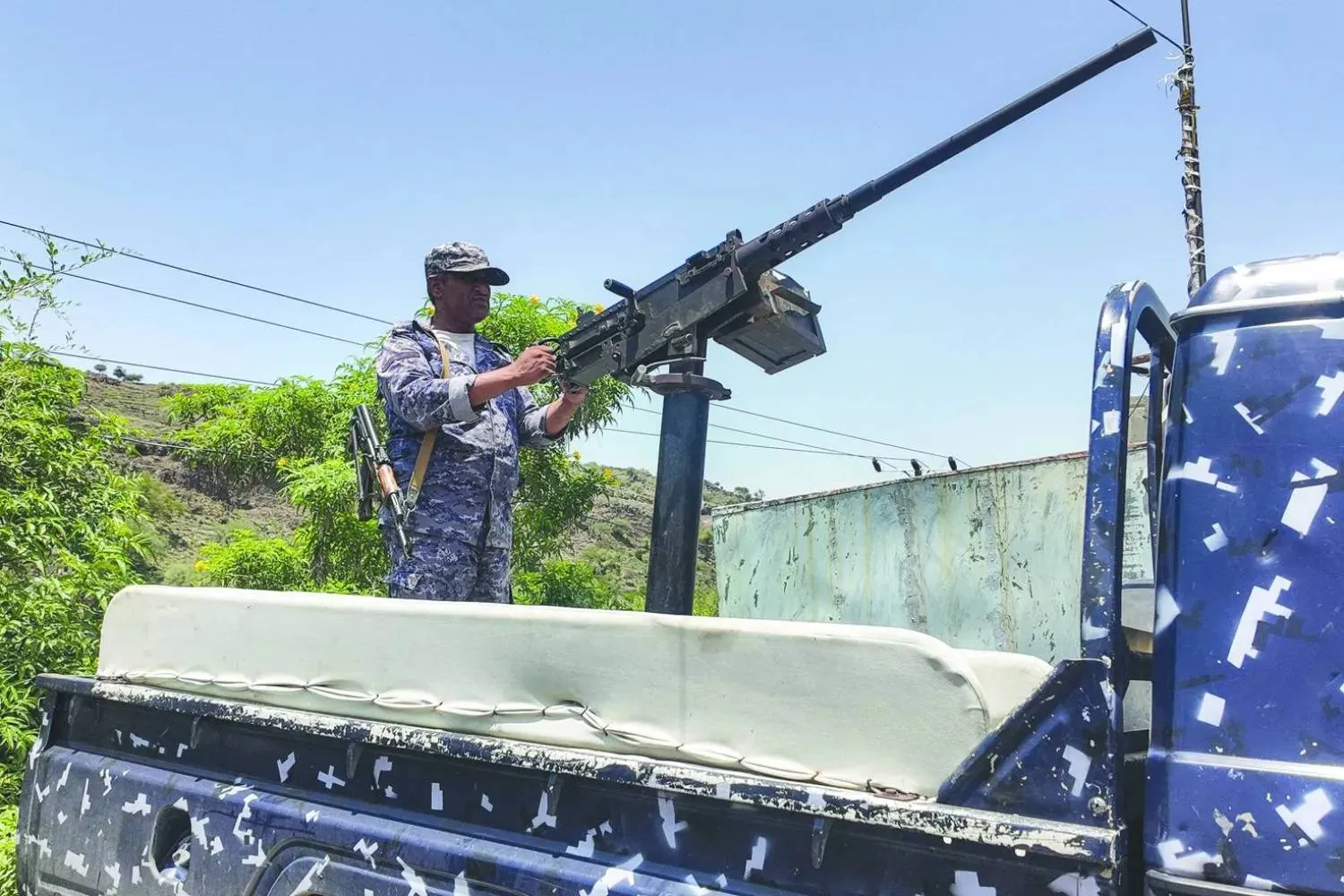
A member of the Saudi-backed Yemeni government forces, including National Army and Taiz Axis forces, mans a turret mounted on the back of a pickup truck at a checkpoint along the Kadha frontline west of Taiz in western Yemen on September 13, 2026. (AFP)
TT

Dawn of Yemen Operation Piles Pressure on Houthis in Taiz

A member of the Saudi-backed Yemeni government forces, including National Army and Taiz Axis forces, mans a turret mounted on the back of a pickup truck at a checkpoint along the Kadha frontline west of Taiz in western Yemen on September 13, 2026. (AFP)

The "Dawn of Yemen" operation entered its 15th day amid sustained military pressure against Iran-backed Houthi militias on the Taiz and Marib fronts.

Government forces continued offensive operations to retake Houthi-held positions, supported by airstrikes on militia gatherings and reinforcements, with Yemeni military estimates placing Houthi casualties at over 15,000 dead and wounded in recent weeks.

The Yemeni Armed Forces said they carried out 1,326 operations over the past 24 hours, striking Houthi gatherings, vehicles, fortifications, and firing positions.

According to an initial toll, the operations resulted in the neutralization of around 370 militants and the destruction and disabling of dozens of military vehicles and assets.

In Taiz, clashes continued across multiple axes, as government forces advanced backed by the popular resistance, and the recapture of positions, heavy weapons, and military equipment.

Meanwhile, the Houthis are seeking to reorganize their ranks and reinforce combat positions following the collapse of attacks described as some of the fiercest over the past two days.

Government forces made advances in the Al-Sanamat and Al-Sarari areas of the Saber district, south of Taiz, following an offensive that began at dawn on Sunday, according to military sources. They reported significant casualties among the Houthis.

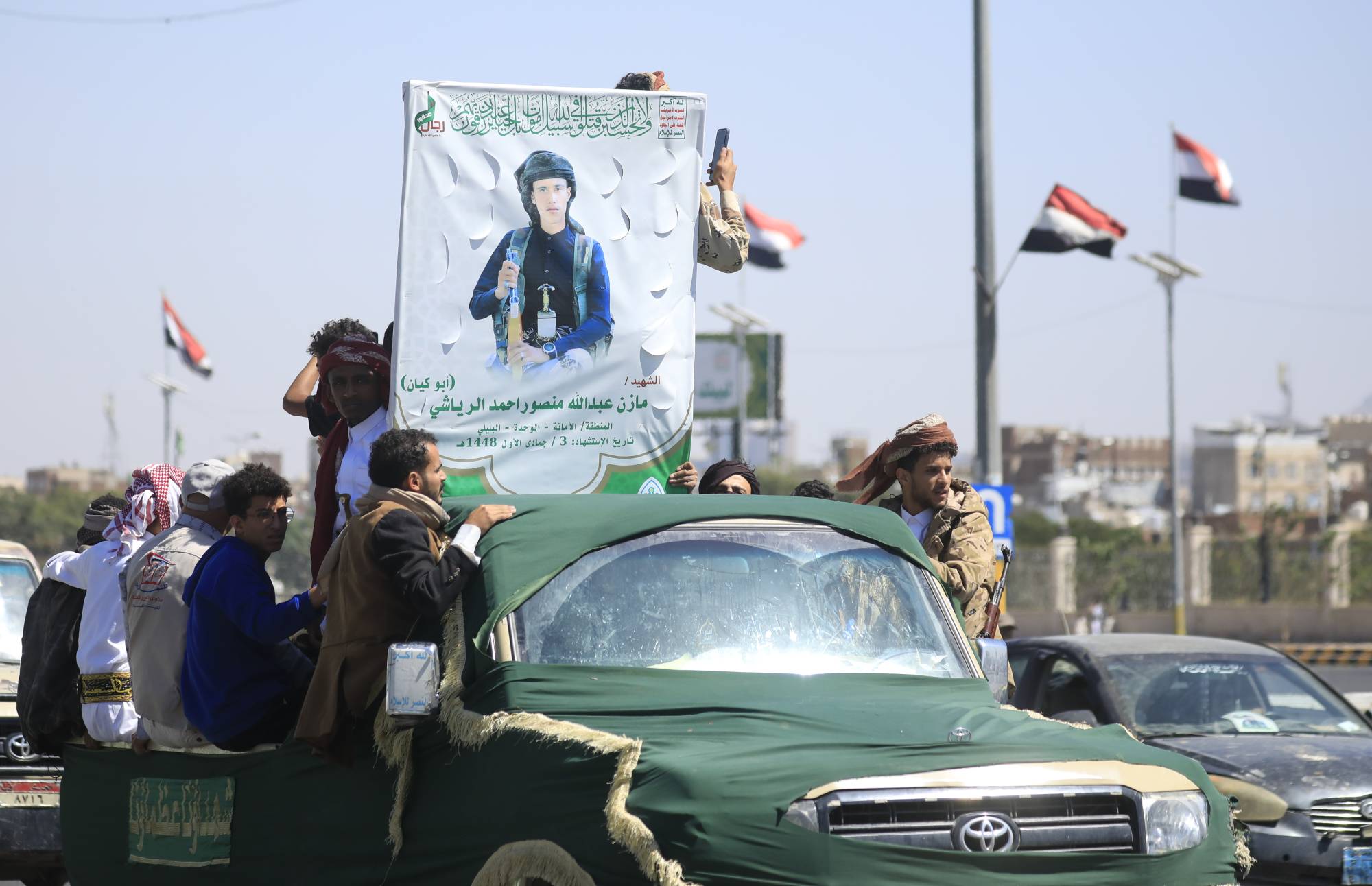
Houthi supporters ride in pickup trucks carrying portraits and the coffin of a fighter killed in recent fighting during a funeral procession in Sanaa, Yemen, 17 October 2026. (EPA)

Warplanes launched three airstrikes targeting group gatherings northwest of the city.

Government forces also maintained pressure on the remaining Houthi pockets in the Bab al-Mandeb area, while working to secure the highlands separating the Taiz and Lahj governorates.

The effort aims to consolidate the positions recaptured by the forces and prevent the militants from using them to launch counterattacks.

In Aden, an expanded security meeting chaired by Yemeni Minister of Interior Major General Ibrahim Haydan discussed the latest security developments, general mobilization, and the level of readiness within security agencies across governorates.

The meeting also addressed ongoing efforts to combat crime, pursue wanted individuals, and apprehend subversive cells.