
Settler Attack on West Bank Village Injures Israeli Forces, Drawing Rare Rebuke

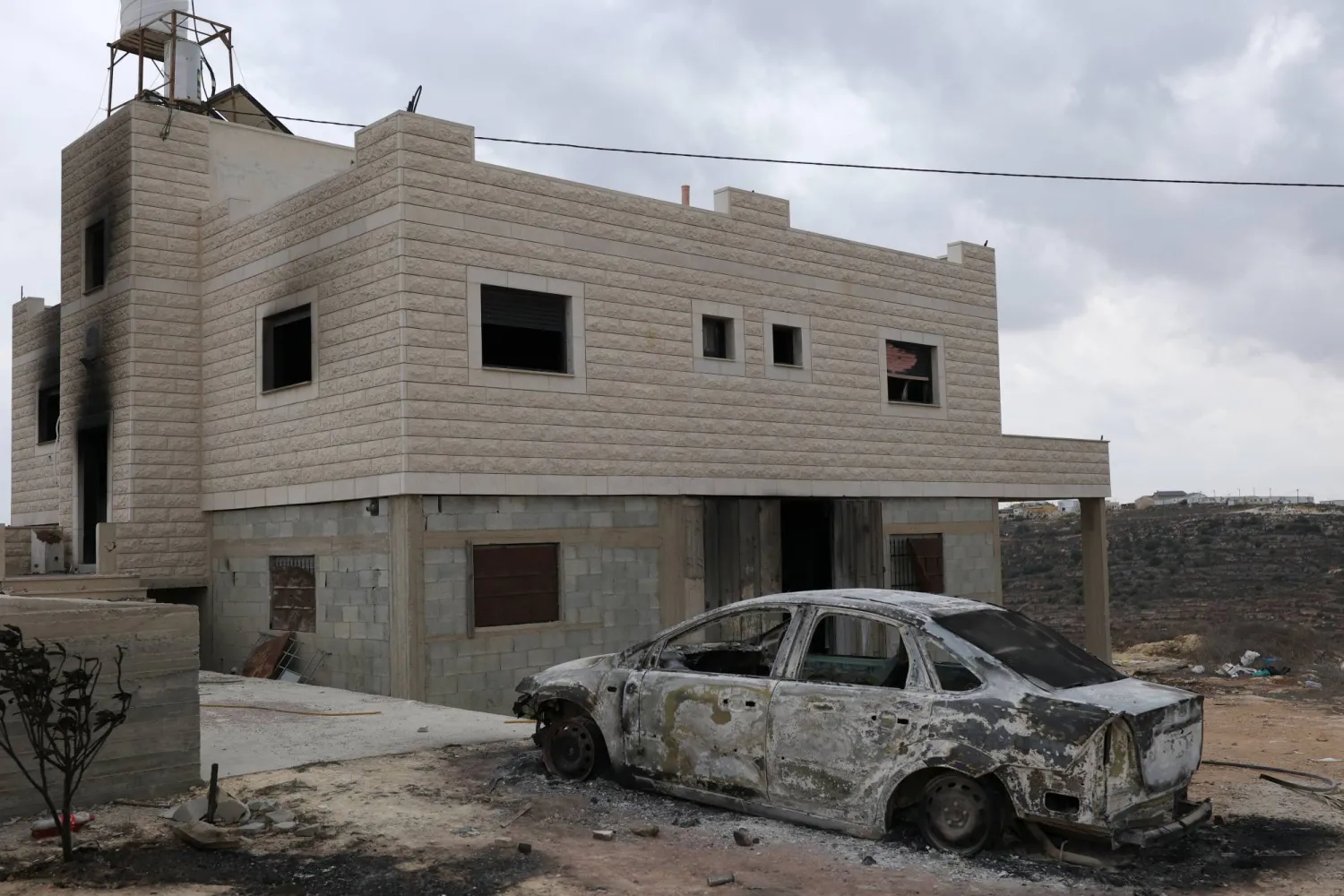
A burned-out car stands outside a damaged building in the West Bank village of Jalud, south of Nablus, 29 September 2026. (EPA)
TT

Settler Attack on West Bank Village Injures Israeli Forces, Drawing Rare Rebuke

A burned-out car stands outside a damaged building in the West Bank village of Jalud, south of Nablus, 29 September 2026. (EPA)

More than 100 Israeli settlers attacked a Palestinian village in the occupied West Bank early Tuesday, drawing condemnation from the US and from the Israeli government after they injured three members of the security forces.

The raid, and attacks on other West Bank villages on Tuesday, came amid mounting international criticism of settler violence, which Israeli Prime Minister Benjamin Netanyahu downplayed last week.

Settlers stormed the village of Jalud in the northern West Bank as the military attempted to accompany a Palestinian family back to their home after they had been displaced by settler attacks two months earlier.

The Israeli military said "more than 100 Israeli rioters" were in the area overnight and soldiers and border police tried to disperse them.

"As a result of the clashes, three Israel Border Police officers were lightly injured," it said in a statement.

One person was arrested and two minors were taken in for questioning, police said.

The military said the settlers had blocked roads, set tires on fire and thrown rocks at security forces, also setting fire to Palestinian buildings and vehicles in the village.

It added that the attack had prevented the return of the family, who had been displaced "following several incidents of (Israeli) nationalist crime against them".

- 'No justification' -

Israel has occupied the West Bank since 1967 and has been accelerating settlement expansion there. Some 500,000 Israeli settlers live among three million Palestinians.

Netanyahu condemned the attack, which he blamed on "a small group of rioters".

Their actions "cause great harm to that community and interfere with our forces as they carry out their mission", he said.

President Isaac Herzog, who holds a largely ceremonial role, called the attack "a moral stain, an assault on the rule of law and our most fundamental values". Such criticism from Israeli official is rare for attacks in which the victims are Palestinian.

The US State Department told AFP that "we condemn criminal violence by any party in the West Bank and support appropriate investigations, legal accountability, and judicial processes for those responsible".

Settler attacks against Palestinians including beatings, vandalism and arson averaged six a day in the first half of the year, according to the United Nations.

Recent weeks have also seen high-profile attacks against Israelis in the West Bank, including the shooting dead of a settler by a Palestinian.

Israel has voiced outrage and imposed diplomatic repercussions on several Western countries that imposed sanctions against products from Israeli settlements in the West Bank, which are illegal under international law.

- Rising settler ambitions -

Mahmoud al-Toubasi, a member of the family seeking to return to Jalud, told AFP that he and his relatives had left the house more than two months ago, and that it had been occupied by settlers until the attack on Tuesday.

"My wife, my son and I went to the house in the car, accompanied by an army vehicle in front of us and another behind us," he said.

Settlers attacked the group upon their arrival at the house and were pushed back by soldiers with pepper spray, he added.

"We were not physically injured, but we suffered some choking from the pepper spray," Toubasi said.

In a separate attack on Tuesday, dozens of settlers from hilltop outposts raided the Palestinian village of Al-Mughayyir, northeast of Ramallah, residents told AFP.

An AFP journalist saw at least five burnt-out cars as a result.

In a separate incident in the town of Beitunia near Ramallah, dozens of settlers came to hold a prayer for the Jewish holiday of Sukkot using loudspeakers, Mayor Ribhi Dawla told AFP.

"This gathering is a dangerous precedent," he said. "There are ambitions for settlements in the area, they placed a caravan in the western part of the town and installed an iron gate."

In another incident on Tuesday evening, the Palestinian Red Crescent reported that its crews were "treating three people who were assaulted and beaten by settlers in the Jamala area near Ramallah" and taking them to hospital.

Violence has increased in the West Bank since the start of the Gaza war in October 2023, with Israeli soldiers or settlers killing at least 1,111 Palestinians in that period, including both gunmen and civilians, per an AFP tally based on data from the Palestinian health ministry.

Israeli figures show at least 49 Israelis, including civilians and security personnel, have been killed in Palestinian attacks or during Israeli military operations during the same period.


Syria Says Arrested Hezbollah-Affiliated Cell Planning Attacks

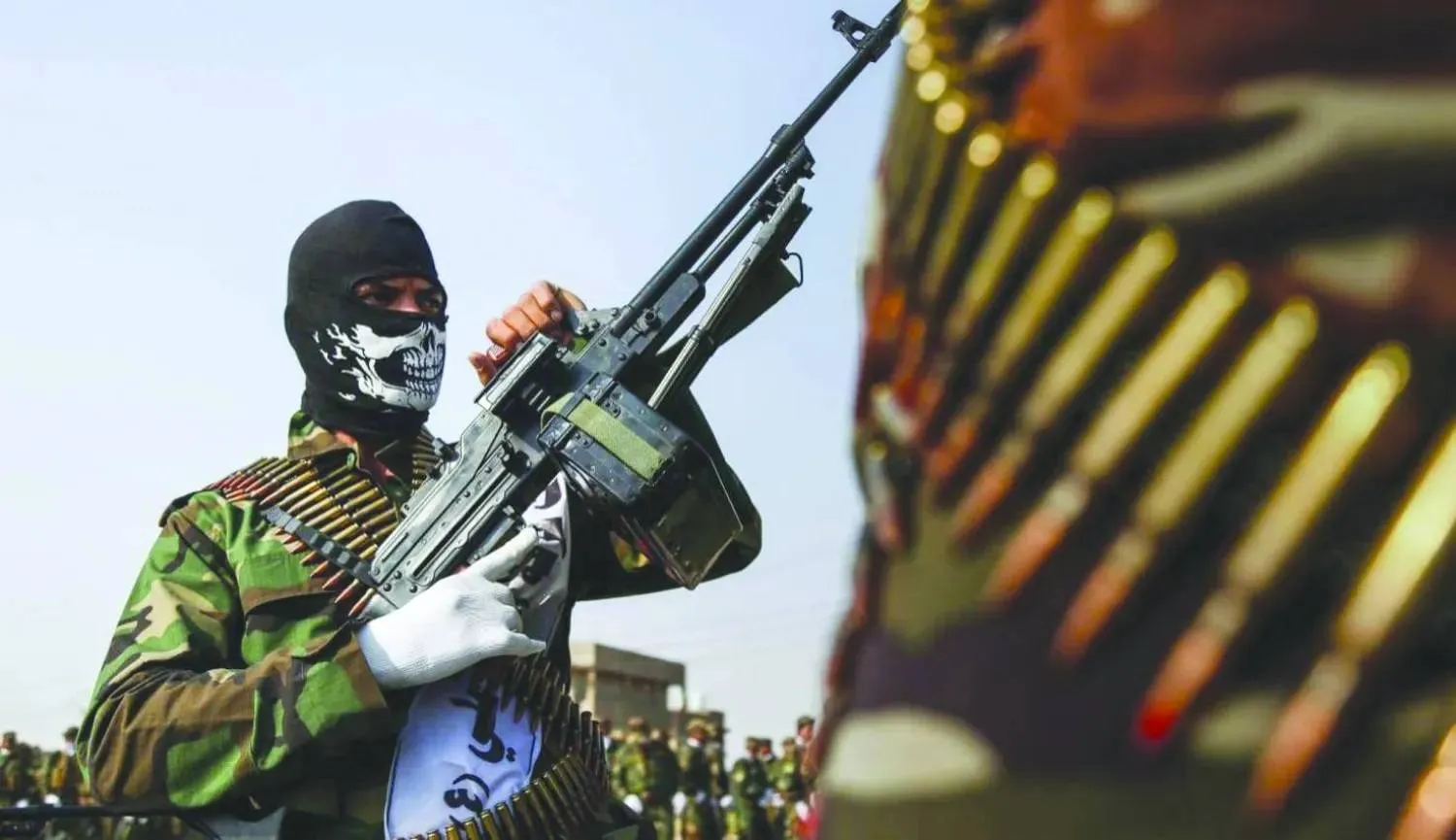
Syrian Internal Security Forces during the security operation against the Hezbollah cell. (Syrian Internal Security Forces on X)
TT

Syria Says Arrested Hezbollah-Affiliated Cell Planning Attacks

Syrian Internal Security Forces during the security operation against the Hezbollah cell. (Syrian Internal Security Forces on X)

Syrian authorities said on Tuesday that they had arrested a Hezbollah-affiliated cell in the country's south near the Israeli-occupied Golan Heights, accusing it of planning attacks on unspecified targets.

The new authorities in Damascus, who ousted longtime ruler Bashar al-Assad in 2024, are hostile to the Lebanese group, which is a sworn enemy of Israel and fought on Assad's side during the Syrian civil war.

Tuesday's announcement came hours after Israeli Prime Minister Benjamin Netanyahu said there were "indications" that Israel's enemies could try to attack ahead of elections scheduled for late October.

Syrian intelligence services and security forces "thwarted a sabotage plot in the Yarmuk basin in Daraa (province) and arrested a Hezbollah-affiliated cell composed of three individuals", Syrian state television reported, quoting a statement from the internal security forces.

A suspect detained in the security operation. (Syrian Internal Security Forces on X)

The Yarmuk basin area, where state media has previously reported Israeli incursions and shelling, borders the Israeli-annexed Syrian Golan Heights, as well as Jordan.

"The operation followed careful monitoring of an attempt by the cell to prepare rocket launch platforms with the aim of carrying out attacks to destabilize security and stability," the statement said.

It did not specify the target of the alleged planned attacks and said investigations were ongoing.

Syrian authorities have previously said they dismantled several Hezbollah-linked cells preparing attacks in Syria, accusations the group has denied.

Authorities have also previously announced several seizures of weapons they said were bound for Hezbollah, which lost a key supply route from its backer Iran when Assad was toppled.

In recent weeks, Netanyahu and Israeli Defense Minister Israel Katz have issued repeated warnings to Iran and Hezbollah promising retaliation in case of any attack.

Hezbollah drew Lebanon into the Middle East war in March with rocket fire at Israel, which responded with airstrikes and a ground invasion.

Suspects detained in the security operation. (Syrian Internal Security Forces on X)

The latest war and a previous round of hostilities with Israel in 2023-2024 have weakened the group.

Israel has carried out hundreds of strikes in Syria since Assad's ouster and sent troops into a UN-patrolled buffer zone that had separated Israeli and Syrian forces in the Golan since 1974.

It has also carried out repeated incursions deeper into Syrian territory and has vowed to keep troops in a so-called "security zone" in southern Syria, where it seeks a broader demilitarized area.

Israel captured most of the Golan Heights from Syria in the 1967 Arab-Israeli War and later annexed the areas under its control, a move only recognized by the United States and Colombia.


Morocco’s King Names El Mansouri First Woman Head of Gov’t

Fatima Ezzahra El Mansouri, Morocco’s newly appointed head of government. (AFP)
TT

Morocco’s King Names El Mansouri First Woman Head of Gov’t

Fatima Ezzahra El Mansouri, Morocco’s newly appointed head of government. (AFP)

King Mohammed VI has appointed Fatima Ezzahra El Mansouri, a leader of the Authenticity and Modernity Party (PAM), as Morocco’s head of government, making her the first woman named to the post. She has been tasked with forming a government.

The appointment places El Mansouri at the center of a demanding political period. Her government will face expectations over social policy and regional inequality as Morocco prepares to co-host the 2030 World Cup.

Early life and political background

El Mansouri was born in Marrakech on Jan. 3, 1976, and is 50. Her family comes from the Rehamna region near the city.

Her late father, Abderrahmane El Mansouri, served as pasha of Marrakech for three decades and was Morocco’s ambassador to the United Arab Emirates.

Growing up close to public administration, politics and diplomacy shaped her early interest in law and public service.

Education

El Mansouri attended French schools in Marrakech and earned her baccalaureate at Lycée Victor Hugo. She later studied law in France, obtaining a postgraduate diploma in business contract law from the University of Montpellier.

She also earned a diploma in Anglo-American business law from New York University and a degree in private law from Mohammed V University in Rabat, according to the supplied account.

From law to politics

After completing her studies, El Mansouri established a law practice in Marrakech specializing in property and commercial transactions.

She joined PAM when it was founded in 2008. A year later, at 33, she was elected mayor of Marrakech, becoming the first woman to lead the city’s municipal council. The supplied account describes her as the second woman to become a mayor in Morocco.

Government and party leadership

El Mansouri went on to serve in parliament. She returned to the Marrakech mayoralty in September 2021 and was appointed minister of national territory planning, urban planning, housing and city policy the following month.

In February 2024, she became coordinator of PAM’s collective leadership, strengthening her position within the party before her appointment to form a government.

The challenges ahead

El Mansouri’s appointment is a milestone for women in Moroccan politics.

Her government will also be judged on its response to demands for improved living standards, efforts to narrow the gap between cities and less-developed areas, and preparations for the 2030 World Cup.


Israel Kills Commander of Hamas Armed Wing’s Northern Brigade

Palestinians attend the funeral of Izz al-Din al-Beik and his aide, Mohannad Abu Foul, in Gaza City on Tuesday. (EPA)
TT

Israel Kills Commander of Hamas Armed Wing’s Northern Brigade

Palestinians attend the funeral of Izz al-Din al-Beik and his aide, Mohannad Abu Foul, in Gaza City on Tuesday. (EPA)

Israel killed Izz al-Din al-Beik, commander of Hamas’s Qassam Brigades Northern Brigade, in a dawn strike on an apartment in northwestern Gaza City yesterday, four Hamas sources told Asharq Al-Awsat. Israeli officials also announced his killing.

The sources said al-Beik, known as “Ashmawi,” died immediately when three missiles struck the apartment in the Al-Nasr neighborhood. They said the missiles were probably fired by warplanes to ensure he was killed.

The body of his personal aide, Mohannad Abu Foul of Jabalia refugee camp, was found that morning.

Israeli Prime Minister Benjamin Netanyahu and Defense Minister Israel Katz announced the operation. The Israeli military later said it had killed al-Beik, accusing him of planning attacks and trying to rebuild the Northern Brigade after it suffered heavy losses in the war.

The strike hit at 3:30 a.m., an Asharq Al-Awsat correspondent reported. Fire engulfed the apartment and burned for more than half an hour before civil defense crews put it out.

The Israeli military appeared to have used missiles that caused intense fires, which could kill a target through either the blast or the toxic smoke they produced.

Israel’s Channel 12 gave a different account of the number of missiles fired. It said two struck the room where al-Beik was sleeping, followed by three more in case he had been in another room and to ensure he was dead.

The building stands beside another hit in a similar daylight strike about two months ago. That attack killed Adham Nasman, the Qassam Brigades’ Gaza Brigade operations commander, who had played a prominent role in the Oct. 7, 2023, attack.

Previous attempt

Al-Beik survived an assassination attempt in late May, days after the killings of Izz al-Din al-Haddad and Mohammed Odeh. The two had led the Qassam Brigades in Gaza in succession after Mohammed Sinwar.

That strike killed Imad Aslim, deputy commander of the Gaza Brigade and commander of its Zeitoun Battalion. Sources told Asharq Al-Awsat at the time that Aslim had been due to meet al-Beik and the brigade’s new commander, Mohannad Rajab. Neither al-Beik nor Rajab had arrived when the strike hit.

Al-Beik’s killing came about two weeks after Israel killed Mohammed al-Yazouri, commander of the Qassam Brigades’ Khan Younis Brigade, and Nail Abu Obeid, commander of its Rafah Brigade. Both had replaced commanders killed by Israel in similar operations.

The Qassam Brigades have lost most of their longtime leaders and military council members. The latest strikes indicate that Israel is targeting members appointed to its new military council to replace them.

Hamas sources have previously told Asharq Al-Awsat that the group’s structure is flexible and that it quickly replaces commanders who are killed.

Who Was Al-Beik?

Al-Beik, 48, was from the Falouja area of Jabalia refugee camp, a major Hamas stronghold. A prominent member of the group for years, he joined in the late 1990s after becoming active in mosques.

He began working with the Qassam Brigades when the second intifada broke out and became heavily involved in resisting Israeli incursions into Jabalia camp and the nearby town of Beit Lahiya. He was among the first to use Yassin anti-armor projectiles against a major Israeli operation in Jabalia in 2004.

Hamas sources told Asharq Al-Awsat that al-Beik led one of the Qassam Brigades’ first special units in Jabalia, now known as the Nukhba.

He then commanded the camp’s Imad Aqel, or western, Battalion for many years before becoming the Northern Brigade’s intelligence chief. He took command of the brigade after Ahmed al-Ghandour was killed in November 2023.

As intelligence chief, al-Beik was regarded as a favorite of Mohammed Odeh, then the Qassam Brigades’ intelligence chief for Gaza, the sources said. The two were close and both came from Jabalia camp.

The sources said al-Beik led efforts to thwart what became known during the war as the “Generals’ Plan,” which they said aimed to displace residents of northern Gaza. He stayed with his fighters in direct battles against Israeli forces, they said.

One Hamas source who knew him well described al-Beik as a skilled sniper and a popular figure who had also overseen Northern Brigade operations for a time. He survived several attempts on his life before and during the war.

In one attempt inside Jabalia camp during the latter half of the war, his aide was killed but al-Beik escaped.