


Washington Keeps Sights on 'Dismantling Militias' Despite Iraq Withdrawal

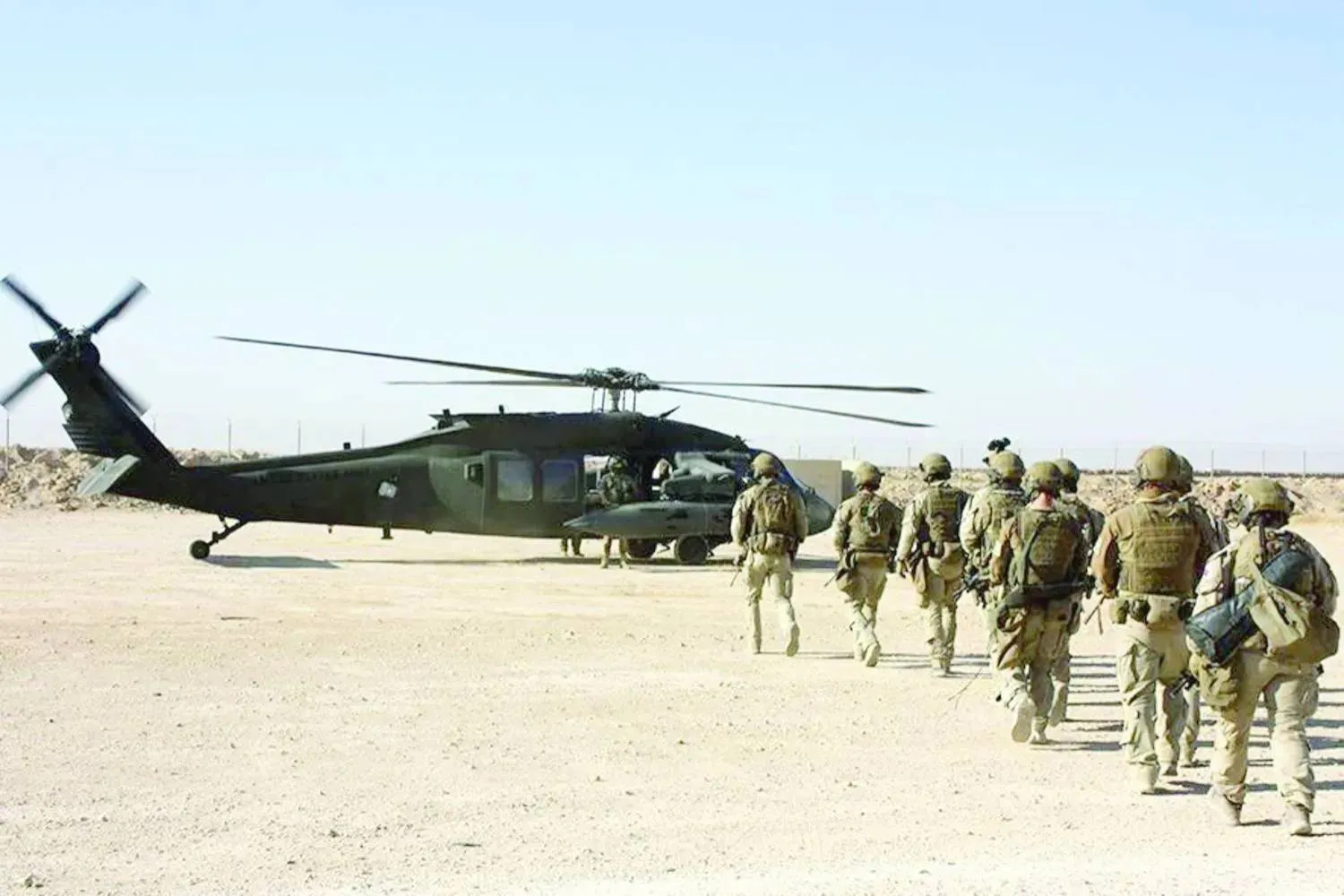
Training at Ain al-Asad air base in western Iraq. (File photo/US Army)
TT

Washington Keeps Sights on 'Dismantling Militias' Despite Iraq Withdrawal

Training at Ain al-Asad air base in western Iraq. (File photo/US Army)

Iraq reached a watershed on Wednesday as US forces withdrew from their bases nearly a quarter-century after an invasion that killed hundreds of thousands of Iraqi civilians and thousands of American troops, opened the door to Iranian interference in Iraq and beyond, and upended the regional balance of power.

The withdrawal fulfills a 2024 agreement signed by the administration of former President Joe Biden to end the US military presence in Iraq this year.

President Donald Trump’s administration has made little fanfare about the redeployment. It has yet to announce a comprehensive review of the invasion, which began in March 2003 and inflicted staggering human and financial losses.

As many as 210,000 Iraqi civilians were killed between the invasion and 2023, along with 4,599 US troops, according to Brown University’s Costs of War project. The cost reached about $2.8 trillion.

The departure of US troops and equipment marks a transition from a wartime coalition mission to an Iraqi-led security effort, according to Pentagon spokesman Sean Parnell.

“The primary responsibility for addressing Iraq's remaining security challenges, including ISIS remnants and Iran-aligned militias that undermine Iraqi sovereignty and regional stability, now rests with the Government of Iraq,” he added.

About 1,500 US and international coalition troops fighting ISIS had recently been stationed in Iraq as forces reorganized and withdrew ahead of Wednesday’s Sept. 30, 2026, deadline, a US official said.

The mission will continue in Jordan, where the Pentagon says it can strike militants threatening US personnel and interests.

US forces there will focus on ISIS fighters, the official said.

“If the situation deteriorates beyond Iraq’s and Syria’s ability to control it, and they ask for our help, we will intervene and help them.”

Protecting the embassy and consulate

The military airlifted personnel and equipment out of Erbil, the last US military base in Iraq, in time to meet Wednesday’s deadline, a defense official said.

Some US Marines will stay to guard American diplomatic missions, alongside contractors maintaining Iraq’s fleet of F-16 fighter jets and US-made tanks, current and former US officials said.

“The military has already removed a Patriot air defense battery stationed around Erbil,” other officials said.

The United States will probably concentrate its remaining air defenses on protecting its embassy in Baghdad and consulate in Erbil, they added, despite continuing attacks by Iran and armed factions.

About 170,000 US troops were in Iraq at the height of its internal conflict in 2007. Former President Barack Obama pledged to end the war after his election in 2008. In 2011, he announced an end to combat operations and a phased withdrawal.

But ISIS and al Qaeda seized large swaths of Iraq and Syria in 2014, prompting the United States to lead a coalition of international and Arab partners in launching Operation Inherent Resolve. The campaign continued into Trump’s first term.

Iraq reclaimed its territory from terrorist groups and began to recover. Yet it remains burdened by the influence Iran gained through allied armed groups, whose involvement in the current US-Iran war poses serious risks.

Iranian factions

US estimates put the number of Tehran-aligned fighters at more than 200,000. They use attack drones and ballistic missiles to strike US forces and neighboring countries.

The US withdrawal was supposed to coincide with the disarmament of armed factions, according to The Washington Post. But the groups ignored calls to disband, and Iraqi Prime Minister Ali al-Zaidi extended their disarmament deadline to June 2027.

Iran could benefit from the US withdrawal, Mark Cancian, a senior adviser at the Center for Strategic and International Studies in Washington, told the newspaper. But Tehran’s recent actions in the region have also forged unexpected alliances against it.

The invasion plunged Iraq into chaos by toppling President Saddam Hussein, Iran’s adversary on its western border, Cancian said.

Iranian attacks on countries hosting US troops during the latest war have pushed some of those countries closer to Israel, he added.

“We acted against them only in response to attempts to target our troops,” a US official said of Iran-backed militants.

Confronting the groups from now on would be “an Iraqi responsibility.”

As Iraq holds a “sovereignty celebration” this week to mark the withdrawal, the Trump administration is piling pressure on Baghdad to disarm Iran-backed factions. Many defy the state’s efforts to bring them under control.

'They want to vacation in France'

Al-Zaidi’s government faces a daunting task: reining in factions that Iran insists on preserving.

Speaking to The New York Times, the Iraqi prime minister noted that every Iraqi today wants full sovereignty for their country.

He added that Iraqis also want authority to rest exclusively with the state, and pledged to end “the law of the jungle” in Iraq.

During al-Zaidi’s recent White House visit, Trump said: “We don’t think we need the military there anymore.”

“We have a great champion, a new champion. He’s young and handsome,” he added.

But Victoria Taylor, a former US State Department official who worked on Iraq, explained that believing al-Zaidi can disarm the factions within a few months is asking the impossible.

According to Taylor, these armed groups exist because Iran wants them to remain, and Iran continues to find them useful as a tool and a source of leverage against the Iraqi government and the United States in the region.

This situation will continue even after US forces withdraw, she added.

Former Assistant Secretary of State for Near Eastern Affairs David Schenker remains hopeful, citing positive signals from some Iraqi faction officials who seem to want to operate legally.

They want to vacation in France with their families, he said, referring to their desire to give up their weapons.



Syria Needs EU Support to Ensure Stability, Kallas Says

High Representative of the European Union for Foreign Affairs Kaja Kallas speaks prior to the Foreign Affairs Council meeting in Brussels, Belgium, 16 November 2026. (EPA)
TT

Syria Needs EU Support to Ensure Stability, Kallas Says

High Representative of the European Union for Foreign Affairs Kaja Kallas speaks prior to the Foreign Affairs Council meeting in Brussels, Belgium, 16 November 2026. (EPA)

European Union foreign ministers will discuss on Monday elevating their relationship with Syria as the war-torn country needs urgent support to ensure stability amid ‌escalating tensions ‌in the ‌region, ⁠the bloc's foreign policy ⁠chief said.

"We really see that Syria needs a lot of investments, to build ⁠up institutions and ‌its ‌reforms," Kaja Kallas ‌told reporters ahead of ‌a monthly foreign ministers meeting in Brussels.

"On the European side we ‌want to see Syrian refugees return but ⁠they ⁠need conditions to return. There's a lot we can do together because the stability of Syria is in our interest and the interest of region."


Jordan Bans Telegram App Over ‘Radicalization’ Claims

Jordanian military police stand guard outside Jordan's State Security Court in Amman, Jordan, November 15, 2026. (Reuters)
TT

Jordan Bans Telegram App Over ‘Radicalization’ Claims

Jordanian military police stand guard outside Jordan's State Security Court in Amman, Jordan, November 15, 2026. (Reuters)

Jordan announced a ban on the Telegram messaging app on Monday, citing concerns that it was being used to spread extremism, weeks after a deadly attack on a church.

"We announce the blocking of the Telegram app in Jordan, in the framework of efforts aiming to bolster digital security and protect users," the Jordanian security directorate said.

It said the move came "in the context of the commitment to protecting society and countering any uses that could contribute to and facilitate committing cyber crimes, threats, blackmail or spreading illegal content".

It also said it sought to counter "attempt to spread radicalization and extremism which affects national security".

The ban comes after the October 23 attack on a church in the southern Karak governorate that killed nine people and wounded dozens of others.

On Sunday, a court sentenced three men to death by hanging over the attack. Authorities described them as followers of a hardline extremist ideology.


Confrontation between Iraqi PM, Kataib Hezbollah Intensifies

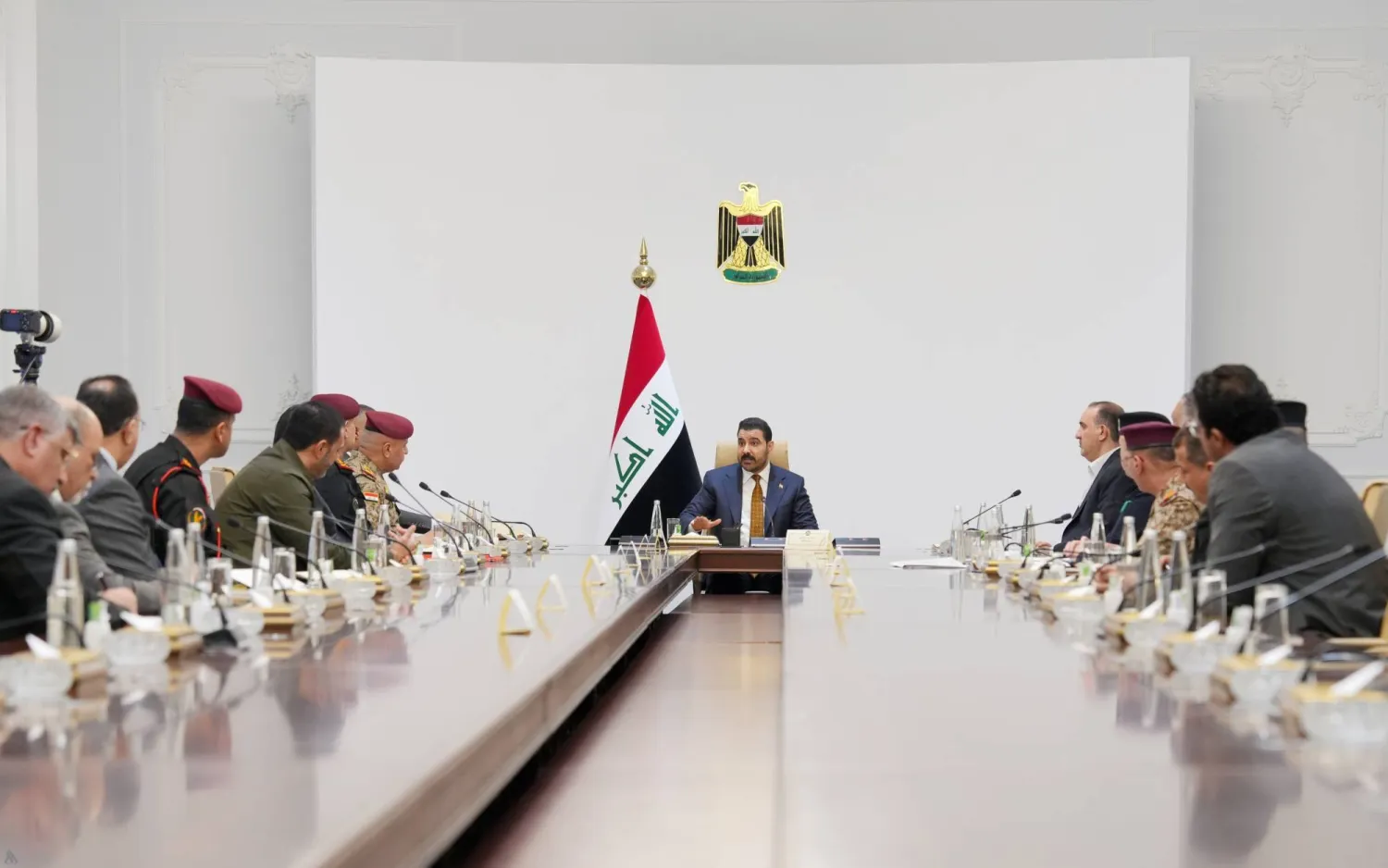
Iraqi PM Ali al-Zaidi chairs a security meeting on Sunday on oil smuggling in Jurf al-Sakhar. (INA)
TT

Confrontation between Iraqi PM, Kataib Hezbollah Intensifies

Iraqi PM Ali al-Zaidi chairs a security meeting on Sunday on oil smuggling in Jurf al-Sakhar. (INA)

Iraqi Prime Minister Ali al-Zaidi has won half the battle against armed factions by referring dozens of security and military officials across Babil province’s operational sectors to the judiciary for failing to halt oil smuggling in Jurf al-Sakhar, an area that has been held by the Kataib Hezbollah faction.

The government has made strides in its efforts to impose state monopoly over arms, including by offering government positions as incentives to several armed groups.

A number of those factions, including Kataib Hezbollah and Harakat al-Nujaba, have however refused to surrender their arms, arguing that they are “ideological” and tied to what is known as the “unity of arenas”, as promoted by Iran.

However, the sudden revelation that the armed faction, which has controlled Jurf al-Sakhar for years, was involved in smuggling oil passing near the area by puncturing pipelines has largely changed the equation.

The revelation was made after the security-political committee formed by al-Zaidi managed to enter the previously off-limits area to the authorities. There, it uncovered oil smuggling operations involving tanker trucks.

The development prompted al-Zaidi, who is also Commander-in-Chief of the Armed Forces, to issue several decisions viewed by experts as paving the way, for the first time, for a real confrontation with the armed factions to allow military units to enter the area.

According to a statement from the Office of the Commander-in-Chief of the Armed Forces, al-Zaidi chaired an emergency security meeting on Saturday evening to review the findings of a committee investigating oil smuggling in Jurf al-Sakhar.

The committee confirmed the accuracy of Federal Intelligence and Investigations Agency reports detailing oil smuggling operations, unauthorized refineries, and administrative irregularities.

“In light of the investigation’s findings, the Commander-in-Chief of the Armed Forces directed that all suspects involved in the oil smuggling operations be referred to the judiciary and that legal measures be taken against them,” it added.

He also decided to relieve the following officials in Babil of their duties: the police chief, the director of northern Babil police, the director of Babil intelligence and counterterrorism at the Ministry of Interior, the director of national security in Babil, the director of intelligence and security for Babil province at the Ministry of Defense, the director of Babil intelligence, the commander of the Popular Mobilization Forces (PMF) in Babil, the commander of the Energy Police’s Sixth Brigade at the Ministry of Interior, and the director of the Oil Pipelines Company at the Ministry of Oil.

“The Commander-in-Chief directed that operations commanders, provincial police chiefs, and directors of security and intelligence agencies bear full responsibility for any oil smuggling incidents occurring within their sectors of responsibility.”

He stressed the need to tighten oversight and security measures to prevent these practices and hold those negligent accountable, stressing that “not a single inch of Iraq, from Zakho to Basra, will remain a place where smuggling is practiced.”

Legal expert Ali al-Tamimi told Asharq Al-Awsat that “Iraq today faces the most dangerous threat to its sovereignty: weapons outside state control.”

He said the PM’s measures in Jurf al-Sakhar sparked widespread legal debate even though the moves align with the constitution.

“These referrals and dismissals are grounded in Article 78, which designates the prime minister as the direct executive responsible for the state's general policy and commander-in-chief of the armed forces,” he remarked.

He added: “Individuals who sabotage oil infrastructure are prosecuted as terrorists under the Anti-Terrorism Law and could gave penalties up to the death penalty.”