Syria, Hezbollah Exchange Messages to Ease Security Tensions through Turkish Mediation

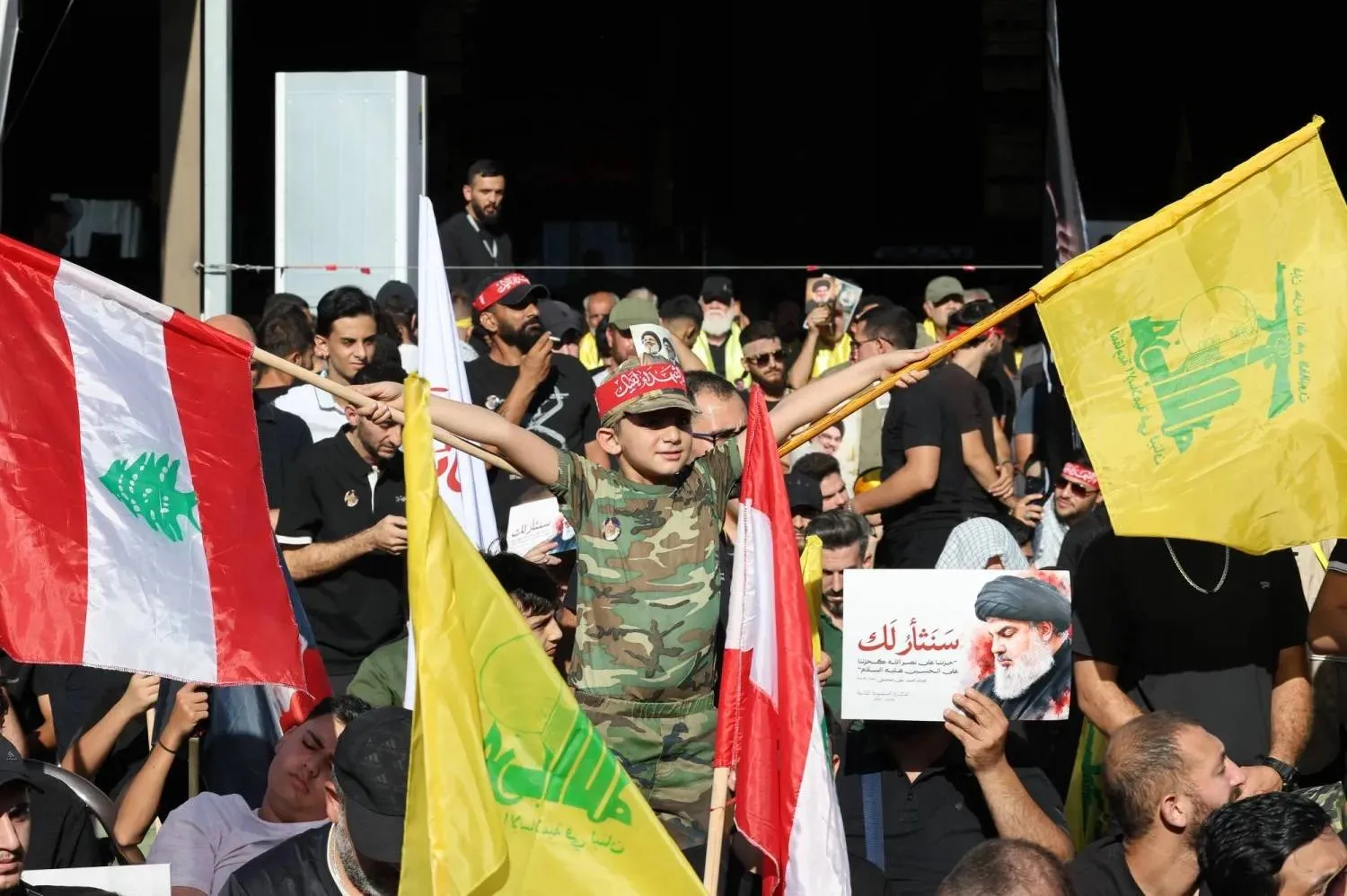
Hezbollah supporters carry Lebanese and Hezbollah flags during a commemoration marking the second anniversary of the assassination of the group’s former secretary-general, Hassan Nasrallah (EPA)
TT

Syria, Hezbollah Exchange Messages to Ease Security Tensions through Turkish Mediation

Hezbollah supporters carry Lebanese and Hezbollah flags during a commemoration marking the second anniversary of the assassination of the group’s former secretary-general, Hassan Nasrallah (EPA)

Security issues dominated secret Turkish-mediated talks between Hezbollah and Syria, during which the two sides exchanged messages aimed at easing tensions.

Hezbollah offered assurances that it would stay out of Syria’s security and military affairs and refrain from supporting groups affiliated with the former government, in return for a Syrian pledge not to intervene militarily in Lebanon as part of any plan to disarm the group there.

Reuters cited six sources familiar with the matter as saying representatives of the Syrian government and Lebanon’s Hezbollah held direct talks in Türkiye in an effort to ease tensions.

It described the meeting as the first known encounter of its kind between the two longtime adversaries.

While Hezbollah has kept silent on the matter, Lebanese sources familiar with the group’s activities told Asharq Al-Awsat that this was the second meeting.

An initial encounter to “break the ice” took place in Istanbul on the sidelines of the “Pledge for Jerusalem Conference,” hosted by Türkiye last December.

Hezbollah’s delegation was led by Ammar al-Moussawi, the group’s official responsible for Arab and international relations.

“Türkiye is continuing to mediate between the two sides, and contacts through Türkiye intensified after US President Donald Trump’s threats that Damascus could carry out the task of disarming Hezbollah,” the sources said, referring to remarks in which he said Syrian President Ahmed al-Sharaa could accomplish the task.

The sources said the second meeting, reported by Reuters, took place in Türkiye during the first 10 days of September. No Hezbollah security or military officials attended, they added.

The two meetings “do not amount to negotiations or understandings, but fall within the framework of messages exchanged between the two sides through Turkish mediation,” the sources said.

Security priorities

Security issues top both sides’ priorities amid concerns, including Syrian fears that Hezbollah could support remnants of the former government or seek to reactivate the southern Syrian front against Israel.

Hezbollah has repeatedly denied in statements that it intervenes in Syrian affairs or supports any groups in southern Syria.

The sources said Türkiye “worked to address the fears previously raised by President Trump’s remarks about Syrian intervention inside Lebanon against Hezbollah, and provided assurances of no interference whatsoever in Lebanese affairs, in return for assurances from Hezbollah that it would stay entirely out of the Syrian arena, refrain from obstructing security measures along the border with Lebanon, and pledge not to provide support of any kind to groups affiliated with the former government.”

They said Hezbollah “publicly affirms that it is staying entirely out of the Syrian arena and is not intervening there in any way, maintaining its focus on Lebanon.”

Effort to ease tensions

Those accounts align with what Reuters reported from its sources, who included two Syrian officials, a US official and a senior Lebanese security source close to Hezbollah.

The six sources said the meeting took place last month at the invitation of Türkiye’s security and intelligence services in an effort to reduce tensions.

It brought together Hezbollah representatives and officials from Syria’s intelligence services and Foreign Ministry.

The Syrian Foreign Ministry, Türkiye’s foreign and defense ministries, and the US State Department did not respond to Reuters’ questions about the meeting. Hezbollah’s media office declined to comment.

Both Hezbollah and the Syrian government had signaled openness to talks.

Syrian Foreign Minister Asaad al-Shibani said in July that Damascus was open to meeting the group. A month later, Hezbollah Secretary-General Naim Qassem said in a televised address that the group had no objection to meeting Syria’s leadership.

Resolving points of tension

The US official, the two Syrian officials and the Lebanese source said the meeting focused on resolving points of tension between the two sides and went well.

One Syrian official said the two sides agreed there was no hostility between them, and Syria assured Hezbollah it would not intervene militarily in Lebanon to disarm the group.

The official said Syrian representatives, in turn, asked Hezbollah to help halt cross-border smuggling attempts and dismantle its remaining sleeper cells, particularly in southern Syria.

According to Reuters, the Syrian official said Hezbollah’s representatives did not directly respond to the request to halt arms smuggling and dismantle its cells in Syria, but pledged not to interfere in Syrian affairs.

The Lebanese source, who had direct knowledge of the meeting and its outcome, said the two sides “made significant progress on security issues.”

“Hezbollah wants to protect its rear,” the source said, referring to fears of a Syrian attack on the group inside Lebanon.

Both the Syrian official and the Lebanese source said no final agreement was reached and there was no plan to issue an announcement. The Lebanese source said contacts between the two sides through Türkiye began about two months ago.

Iran absent from meeting

Three of the sources said Türkiye, a key ally of Syrian President Ahmed al-Sharaa, pushed for the meeting because it wanted to be directly involved in those efforts. Iran, Hezbollah’s main backer, was absent from the meetings.

The Lebanese security source said Hezbollah attended with Iran’s knowledge, but Tehran was disappointed that it was not directly involved and that Sharaa has so far rejected the idea of establishing any direct relations with it.

That disappointment was the main reason no final agreement was reached and no announcement was made about the meeting, the source said.


Sisi Says Egypt Ready for Any Measure to Protect Saudi Arabia

President Abdel Fattah al-Sisi (Egyptian Presidency)
TT

Sisi Says Egypt Ready for Any Measure to Protect Saudi Arabia

President Abdel Fattah al-Sisi (Egyptian Presidency)

Egypt's parliament will meet on Sunday after President Abdel Fattah al-Sisi asked lawmakers to authorize support for Saudi defenses.

Speaking at a graduation ceremony at the Egyptian military academy, Sisi said on Saturday that it was "inconceivable" for Cairo to stand by while Saudi Arabia was "harmed or its security and stability threatened.”

"Egypt, of course, with the directives of His Majesty King Salman and Crown Prince Mohammed bin Salman, will carry out any measure to protect you or defend you," he said.

Sisi said Cairo stood "with full force and support to protect and defend the lands of our brothers in the Gulf,” before asking attendees to stand and give a military salute to Gulf states.

"I'm not talking about fighting anyone or attacking anyone," he added. "We are speaking only about defense."

Shortly after Sisi's remarks, state media reported that parliament would convene an emergency session on Sunday at the president's request.

Former Egyptian Assistant Foreign Minister Ambassador Mohamed Hegazy said that al-Sisi’s remarks about Egypt’s willingness to take measures to protect its Gulf Arab brethren, if requested, “carry a clear political and strategic message: Egypt views Gulf security as an integral part of Egyptian and Arab national security, and Arab solidarity is not limited to political and diplomatic positions, but extends to a readiness to shoulder responsibility when Arab states face threats to their security and stability.”

Hegazy told Asharq Al-Awsat that “the president’s remarks also underscore that any potential Egyptian action would be defensive and protective in nature, undertaken at the request of its Gulf partners, rather than aimed at attacking any party or entering into an open military confrontation.”

He said this “reflects the distinction between possessing the capability to protect Arab interests and seeking escalation.”

“The president’s remarks affirm that force in this context is a tool of deterrence and protection, not an instrument of war and escalation. This comes within the framework of Egypt’s longstanding commitment to Arab solidarity, while safeguarding security, stability, and the resources of the countries of the region,” he added.


UN: Sudan’s Warring Parties Show No Serious Commitment to a Settlement

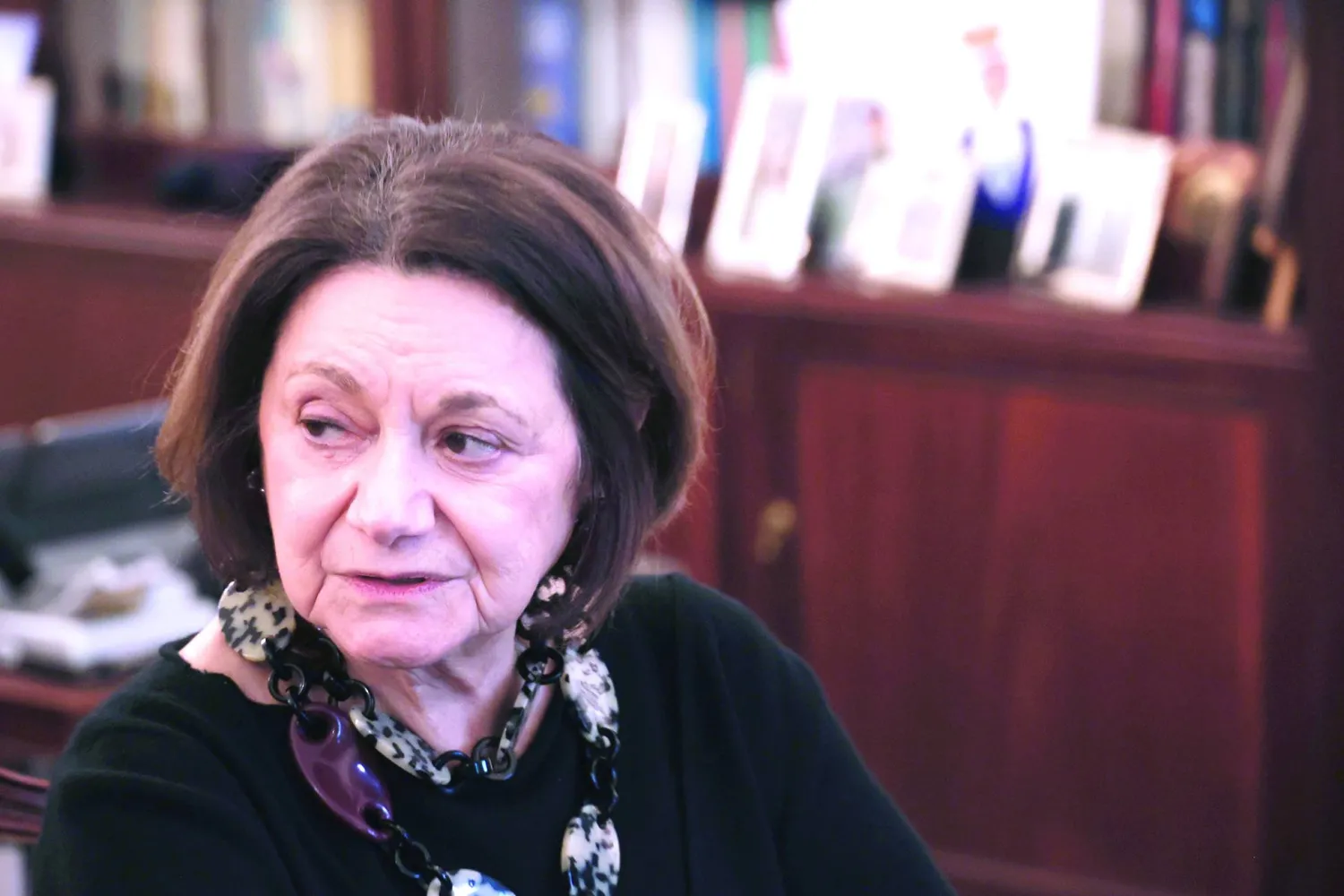
Rosemary DiCarlo, UN Under-Secretary-General for Political and Peacebuilding Affairs (AP)
TT

UN: Sudan’s Warring Parties Show No Serious Commitment to a Settlement

Rosemary DiCarlo, UN Under-Secretary-General for Political and Peacebuilding Affairs (AP)

Rosemary DiCarlo, UN Under-Secretary-General for Political and Peacebuilding Affairs, said Friday that Sudan’s warring parties showed no serious commitment to a negotiated settlement despite neither side being capable of securing a military victory, raising fears of further escalation in the coming months.

Briefing the Security Council, the UN under-secretary-general for political and peacebuilding affairs painted a bleak picture of a conflict fueled by continued arms supplies, recruitment and foreign support.

Her assessment came a day after Sudanese army chief Gen. Abdel Fattah al-Burhan disclosed that he had sent a message to US President Donald Trump expressing Sudan’s commitment to Washington-backed peace efforts.

Washington has not publicly responded to Burhan’s remarks. The army chief met Trump’s senior adviser for Arab and African affairs, Massad Boulos, in Egypt earlier this month.

Civilian toll mounts

DiCarlo told the council that conditions in Sudan continued to deteriorate, with little prospect of a breakthrough and no significant improvement in recent months.

Fighting had been particularly fierce in North Kordofan, South Kordofan and Blue Nile states, but violence was spreading well beyond those front lines.

Drone strikes and air raids had killed civilians at a displacement camp in Blue Nile, an artisanal gold mine in Red Sea state and several locations in North Kordofan, including schools, a courthouse, university accommodation and a shelter for displaced families.

She condemned a drone strike on two clearly marked World Food Program (WFP) trucks carrying food aid through an area subjected to repeated attacks by the Rapid Support Forces (RSF) and the Sudan People’s Liberation Movement-North (SPLM-N).

One driver was killed in the attack.

DiCarlo identified drone strikes as the leading cause of civilian casualties this year, calling for an immediate halt to such attacks and tighter restrictions on drone use.

She expressed concern that weapons continued to flow into Sudan while both sides recruited fighters, increasing the likelihood of further escalation.

Rather than seeking dialogue, military leaders appeared convinced they could make greater gains on the battlefield and achieve their objectives through force, provided foreign backing continued.

She urged the warring parties to abandon that calculation and called on outside powers to use their influence to end the conflict rather than fuel it.

DiCarlo also drew attention to growing insecurity along Sudan’s borders, particularly given the fragility of several neighboring countries.

Preventing the war from developing into a broader regional crisis must remain a collective priority, she stressed.

Diplomatic efforts continue

Despite the deadlock, DiCarlo reported continued UN coordination with the Quad, which is seeking to secure a humanitarian truce.

The United Nations stood ready to help implement any agreement, she stressed, emphasizing that further delays were unacceptable.

She also pointed to modest progress through the efforts of the UN secretary-general’s personal envoy for Sudan, Pekka Haavisto.

Both warring parties had established committees to consider the unilateral release of detainees and had negotiated prisoner exchanges.

Haavisto was also working with UNICEF to ensure that Sudanese students could take a unified, nationally recognized 12th-grade examination, while talks continued with Chad over arrangements for Sudanese refugee students.

Partners from the Quintet visited Khartoum in early September to consult Sudanese stakeholders, who consistently called for an end to the war and the restoration of civilian rule.

DiCarlo welcomed growing international engagement, citing the first joint meeting between the Quintet and the Quad during the UN General Assembly’s high-level week in September.

A Sudan Consultative Group meeting scheduled for Geneva next week would bring together both diplomatic groupings and other mediators.

Referring to the anniversary of the fall of El Fasher, DiCarlo called for much greater pressure on the warring parties and their supporters to end the fighting.

She emphasized that accountability was essential after the immense suffering endured by Sudanese civilians, who deserved peace and a genuine prospect of a better future.

US urges humanitarian truce

US Deputy Representative Jeff Bartos called for a humanitarian truce and an end to weapons flows into Sudan, pledging continued efforts to expand sanctions.

He described the Quintet’s work as the most credible path toward a peaceful political transition under civilian leadership.


Qatar Offers Comprehensive Plan to Ease Lebanon’s Electricity Crisis

Lebanese President Joseph Aoun welcomes Qatari Prime Minister and Foreign Minister Sheikh Mohammed bin Abdulrahman bin Jassim Al Thani in Beirut (AFP/Lebanese Presidency). 
TT

Qatar Offers Comprehensive Plan to Ease Lebanon’s Electricity Crisis

Lebanese President Joseph Aoun welcomes Qatari Prime Minister and Foreign Minister Sheikh Mohammed bin Abdulrahman bin Jassim Al Thani in Beirut (AFP/Lebanese Presidency). 

Lebanon and Qatar are close to reaching an agreement to overhaul Lebanon’s electricity sector, with Doha set to finance, develop and operate the project without requiring any upfront investment from the Lebanese treasury, Prime Minister Nawaf Salam announced Friday.

The announcement came during a visit to Beirut by Qatari Prime Minister and Foreign Minister Sheikh Mohammed bin Abdulrahman Al Thani, who unveiled plans for a major energy investment and broader cooperation, including energy interconnection projects linking Lebanon with Syria and Iraq.

Energy dominated the talks, alongside Israeli attacks in South Lebanon and Qatar’s continued support for the Lebanese Army.

Aoun calls for pressure on Israel

Al Thani began his visit at Baabda Palace, where President Joseph Aoun praised Qatar’s Emir Sheikh Tamim bin Hamad Al Thani and the Qatari leadership for their efforts to ease regional tensions and restore stability.

Aoun urged Doha to work with Arab and friendly countries to press Israel to halt its attacks in South Lebanon and implement the framework agreement reached through US-sponsored negotiations with Lebanon.

He described the mounting toll of Israeli operations, including casualties and widespread destruction in southern villages, and called for intensified diplomatic efforts to secure an Israeli withdrawal.

Aoun also reiterated Lebanon’s condemnation of attacks on Gulf countries, most recently Saudi Arabia, and reaffirmed solidarity with Gulf states.

Welcoming stronger bilateral ties, he highlighted Qatar’s willingness to help address Lebanon’s longstanding electricity crisis.

For his part, Al Thani reaffirmed Doha’s support for the Lebanese government’s efforts and called for Israel to withdraw from occupied Lebanese territory and hand over those areas to the Lebanese Army.

Qatar to finance and operate electricity project

At a joint news conference at the Grand Serail, Salam announced that the two governments were nearing an agreement to rehabilitate, develop and modernize Lebanon’s electricity generation infrastructure.

The proposed project would cover various sources of power generation and the infrastructure needed to support them, with the aim of providing a more reliable electricity supply at a lower cost.

Salam explained that the initiative would follow a build-operate-transfer (BOT) model, under which Qatar would finance, implement and operate the project before ownership is transferred.

Crucially, Lebanon would not have to provide any upfront capital investment, helping overcome the financial obstacles that have long hindered improvements to electricity supply.

Salam outlined the government’s priorities as increasing production, reducing costs and improving management, stressing that reliable electricity at affordable prices would encourage investment and help revive the economy.

The discussions also covered securing gas supplies and preparing an intergovernmental agreement to pave the way for a comprehensive solution to the electricity crisis.

Broader energy partnership

Al Thani confirmed that both countries had agreed on a comprehensive framework for energy cooperation, including a major investment project intended to benefit Lebanon’s economy and participating Qatari companies and institutions.

He reaffirmed Qatar’s commitment to standing alongside the Lebanese people during a difficult period for the region and expressed hope for closer cooperation across other sectors.

Turning to regional security, the Qatari prime minister urged all parties to implement UN Security Council Resolution 1701, called for Israel’s withdrawal from all occupied positions and stressed the importance of respecting existing agreements.

He also revealed that Doha was coordinating with Washington on reconstruction efforts in South Lebanon to enable displaced residents to return to their homes.

Qatar would continue supporting the Lebanese Army as a national institution responsible for safeguarding the country’s security and stability, he added.

Berri stresses support for army

Al Thani also met Parliament Speaker Nabih Berri to discuss political and security developments in Lebanon and the region, continued Israeli attacks and bilateral relations.

Berri expressed appreciation for Qatar’s longstanding support, particularly for South Lebanon, and its commitment to Lebanese sovereignty, the withdrawal of Israeli forces and the return of displaced residents.

He welcomed Doha’s willingness to contribute to economic recovery and reconstruction.

Both leaders agreed on the importance of strengthening national unity and supporting state institutions, particularly the Lebanese Army and security forces, as guarantors of stability and sovereignty.