


Palestinian Factions Hold Preliminary Talks in Cairo Ahead of Broader Dialogue

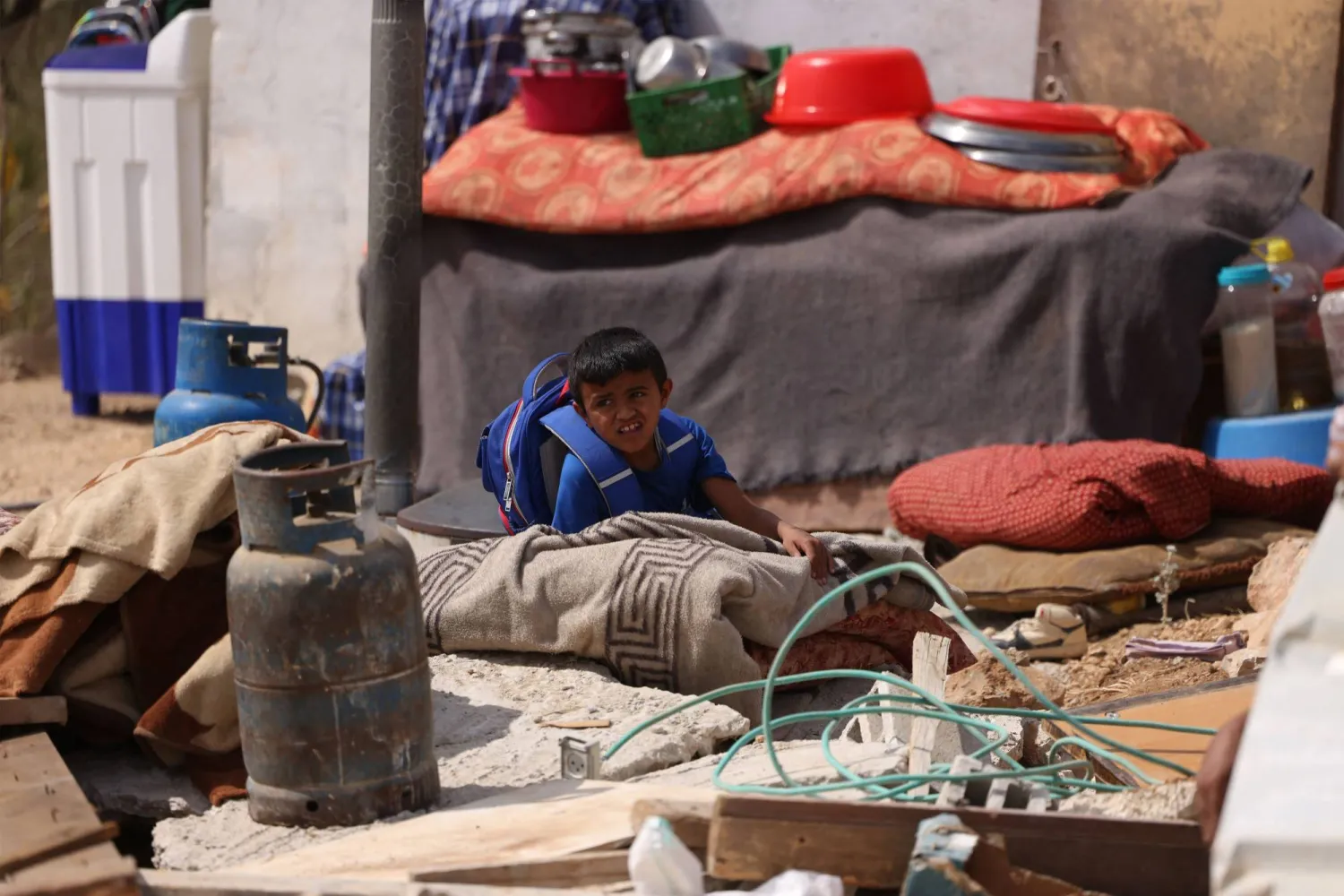
A boy sits amid belongings next to a structure used as a living room after it was demolished by Israeli authorities, who said it had been built without a permit, in the Palestinian village of Umm al-Khair, in the Israeli-occupied West Bank, on October 14, 2026. (Photo by HAZEM BADER / AFP)
TT

Palestinian Factions Hold Preliminary Talks in Cairo Ahead of Broader Dialogue

A boy sits amid belongings next to a structure used as a living room after it was demolished by Israeli authorities, who said it had been built without a permit, in the Palestinian village of Umm al-Khair, in the Israeli-occupied West Bank, on October 14, 2026. (Photo by HAZEM BADER / AFP)

A new round of Palestinian diplomatic activity is underway in the Egyptian capital, Cairo, for the second time in less than a week, aimed at paving the way for comprehensive dialogue following the postponement of Palestinian elections to September 2027 from next November, and discussing arrangements for the next phase.

According to Palestinian sources who spoke to Asharq Al-Awsat on Wednesday, four Palestinian factions are beginning a limited round of national dialogue in Cairo through a series of bilateral and group meetings. The talks are part of preparations for a broader national dialogue involving a wide range of factions, including Fatah, and possibly even Palestinian President Mahmoud Abbas.

The four factions are Fatah, Hamas, Islamic Jihad and the Popular Front for the Liberation of Palestine (PFLP). Their delegations will hold bilateral and joint meetings to consult on the participants and agenda for the broader dialogue.

Fatah Rejects Participation of Dahlan's Faction

According to three Palestinian sources who spoke separately to Asharq Al-Awsat, Fatah remains adamantly opposed to the participation of the Democratic Reform Current, a breakaway faction led by Mohammed Dahlan.

Fatah also rejects the participation of Palestinian factions that emerged around the start of the Second Intifada in late 2000, including the Popular Resistance Committees, the Palestinian Mujahideen Movement, the Palestinian Freedom Movement (Al-Ahrar) and other smaller factions that it says receive funding from Iran, Hezbollah and Hamas.

The sources explained that Fatah, by contrast, insists on the participation of all Palestine Liberation Organization (PLO) factions, including those that no longer have a significant popular base or an active political role, such as As-Sa'iqa, the Palestinian Democratic Union (FIDA), the Palestinian Popular Struggle Front and the Palestine Liberation Front.

One source confirmed that the meetings would address arrangements concerning the PLO and the Palestinian internal political landscape as a whole, as well as the Palestinian National Council and other issues.

A third source from a faction participating in the Cairo talks said all outstanding disputes were expected to be resolved during the meetings, which could last two days or be extended if necessary.

The source said discussions would focus on ending the Palestinian division entirely, establishing clear mechanisms for forming the Palestinian National Council and setting an official date for comprehensive national dialogue to be convened at the direct invitation of President Abbas.

The source explained that, if approved, the comprehensive national dialogue would address numerous issues, including the conditions for joining the PLO and restructuring it, the Palestinian National Council and legislative and presidential elections.

Meanwhile, a Palestinian source close to the factions and currently in Cairo told Asharq Al-Awsat on Wednesday that Palestinians were placing considerable hopes on Egypt's role this time, following the election postponement, and on Cairo's sponsorship of efforts to bridge divisions, achieve broad national consensus and convene comprehensive dialogue soon despite the difficulties.

The source noted that the current consultations among Palestinian factions largely center on mechanisms for managing the Palestinian political landscape and its future direction.

The main disagreements concern the nature of the anticipated dialogue and whether it will lead to the establishment of a temporary leadership framework for the PLO and agreement on a national unity government in accordance with previous agreements, or merely result in conventional discussions without binding outcomes, as has happened in the past.

The source said the direction of the talks would become clearer in the coming hours.

Rebuilding the Political System

Fatah spokesperson Abdel Fattah Dawla said the meetings taking place Wednesday with several factions present in Cairo were intended to build on previous consultations and the positive atmosphere established with Egyptian officials and representatives of Palestinian factions.

"The ongoing meetings on Wednesday with some of the factions present in Cairo are aimed at continuing the efforts launched during previous consultations and building on the positive atmosphere achieved with our brothers in Egypt and representatives of Palestinian factions, with the goal of creating the conditions for comprehensive national dialogue. All of this lays the foundation for a new phase of joint national action," he said.

Dawla believes that "the fundamental guarantee for the success of the dialogue is genuine political will among all parties and a readiness to move from managing disagreements to resolving them, and from exchanging positions to committing to implementable national understandings."

He told Asharq Al-Awsat: "We also need specific implementation mechanisms, agreed timelines and follow-up committees to ensure that whatever is agreed upon is translated into practical steps, whether in administering the Gaza Strip, unifying institutions or rebuilding the political system on democratic and participatory foundations, and renewing the legitimacy of its institutions through elections when conditions allow for a fair and inclusive process."

Regarding Cairo's current role, the Fatah spokesperson said Egypt could help create an appropriate environment for dialogue, bring opposing viewpoints closer together and assist the factions in moving beyond discussions of their differences toward agreement on a shared national vision.

Cairo, meanwhile, remains committed to its role in ending the suffering of the Palestinian people, according to a statement issued Wednesday by Egypt's Foreign Ministry marking the first anniversary of the Sharm El-Sheikh Peace Summit.

The ministry stressed Egypt's continued commitment to implementing the peace plan, consolidating the ceasefire, beginning reconstruction efforts and completing the Israeli withdrawal.



Lebanon Judge Issues Warrants for Five Detained Hezbollah Members

A Hezbollah supporter holds up a Hezbollah flag in Beirut, Lebanon, on July 26, 2025. (AP)
TT

Lebanon Judge Issues Warrants for Five Detained Hezbollah Members

A Hezbollah supporter holds up a Hezbollah flag in Beirut, Lebanon, on July 26, 2025. (AP)

A Lebanese judge on Wednesday issued arrest warrants for five Hezbollah members detained this month in the country's north and ordered three others to be brought in for questioning, a judicial official told AFP.

The move came as pressure mounts on the Iran-backed group to surrender its weapons, after it was weakened by two wars with Israel in recent years.

Lebanon's government decided last year to disarm the group after a November 2024 Israel-Hezbollah ceasefire. An Israel-Lebanon deal agreed this year after the latest war erupted also involves the group's disarmament.

The judicial source said that a judge on Wednesday questioned the five men for several hours, issued formal "arrest warrants against them" and ordered security forces to bring "three Hezbollah members connected with this cell" in for questioning.

Security forces had detained the five in a mountainous area between Batroun and Bsharre in northern Lebanon, a region far from Hezbollah's main strongholds, in possession of "maps and documents", a judicial official had previously told AFP.

Judicial proceedings were subsequently launched against them for allegedly "forming an armed group, recruiting members, equipping them and supplying them with weapons".

On Tuesday, Hezbollah lawmaker Hussein al-Hajj Hassan said that the five, and others arrested over a truckload of explosives seized last month, had been "unjustly and forcibly detained", accusing authorities of "committing grave and dangerous errors against their people".

In October, authorities seized half a ton of explosives that Hezbollah subsequently said "belong to the resistance" against Israel, demanding that the shipment be returned.


Boulos to Asharq Al-Awsat: US Efforts Have Achieved Tangible Progress Between Libyan Parties

Massad Boulos, senior advisor to US President Donald Trump for Arab and African affairs. (AP file)
TT

Boulos to Asharq Al-Awsat: US Efforts Have Achieved Tangible Progress Between Libyan Parties

Massad Boulos, senior advisor to US President Donald Trump for Arab and African affairs. (AP file)

Massad Boulos, senior advisor to US President Donald Trump for Arab and African affairs, said diplomatic efforts led by Washington to unify Libyan institutions and reach a political settlement to the crisis have achieved “tangible: progress, stressing his country's support for a Libyan-led political track culminating in unified governance and credible elections.

In remarks to Asharq Al-Awsat, Boulos reiterated that the US is seeking to establish a unified Libyan executive authority capable of administering all Libyan territory, providing security and economic stability for the population, and paving a credible path toward holding successful national elections.

US efforts have succeeded in narrowing many gaps of disagreement between the Libyan parties over more than a year, he added, without providing details on the nature of the understandings reached or whether they are tied to a timeline for forming a unified executive authority.

Boulos’s remarks come amid renewed diplomatic activity on the Libyan crisis, as political and institutional division persists between the east- and west-based governments, military and security centers of influence remain fragmented, and efforts to organize national elections to end the transitional phase continue to falter.

In recent months, media reports have circulated details of a US initiative to unify authority in Libya, under which Saddam Haftar, deputy commander of the Libyan National Army (LNA), would assume the presidency of the Presidential Council, while Government of National Unity (GNU) Prime Minister Abdul Hamid al-Dbeibah would head a unified government.

Boulos did not disclose details regarding this formula in his remarks.

He stressed that the work of the United Nations Support Mission in Libya complements the US initiative and efforts aimed at enabling the country to reach a unified executive authority capable of extending state sovereignty.

He signaled continued coordination between Washington and the UN on the political track.

However, Boulos’s remarks did not include a direct stance on the recent naval attacks targeting the port of Benghazi, or on their potential repercussions for Libya's security and sovereignty, amid fears that the fallout of the Russia-Ukraine war could spill over into Libya, and concerns over the country being drawn into international and regional conflicts.

He also did not clarify Washington's position on the demand by the parliament-designated government for an international investigation into the attacks, or on the UN mission's call to open an immediate, independent inquiry to uncover the circumstances and determine responsibility.

Amid ongoing Libyan division, the attacks raise questions about the ability of security and military institutions to handle external threats, as well as the extent to which international developments affect the country's sovereign interests at a time when US efforts are focused on unifying political, economic, and security institutions.

On Monday, the US State Department renewed its call for forming a unified Libyan government and holding credible elections, affirming that Washington supports the establishment of an executive authority capable of extending its control over all Libyan territory.


Iraq’s Top Court Says Baghdad Can Deploy Troops to Secure Borders in Kurdistan Region

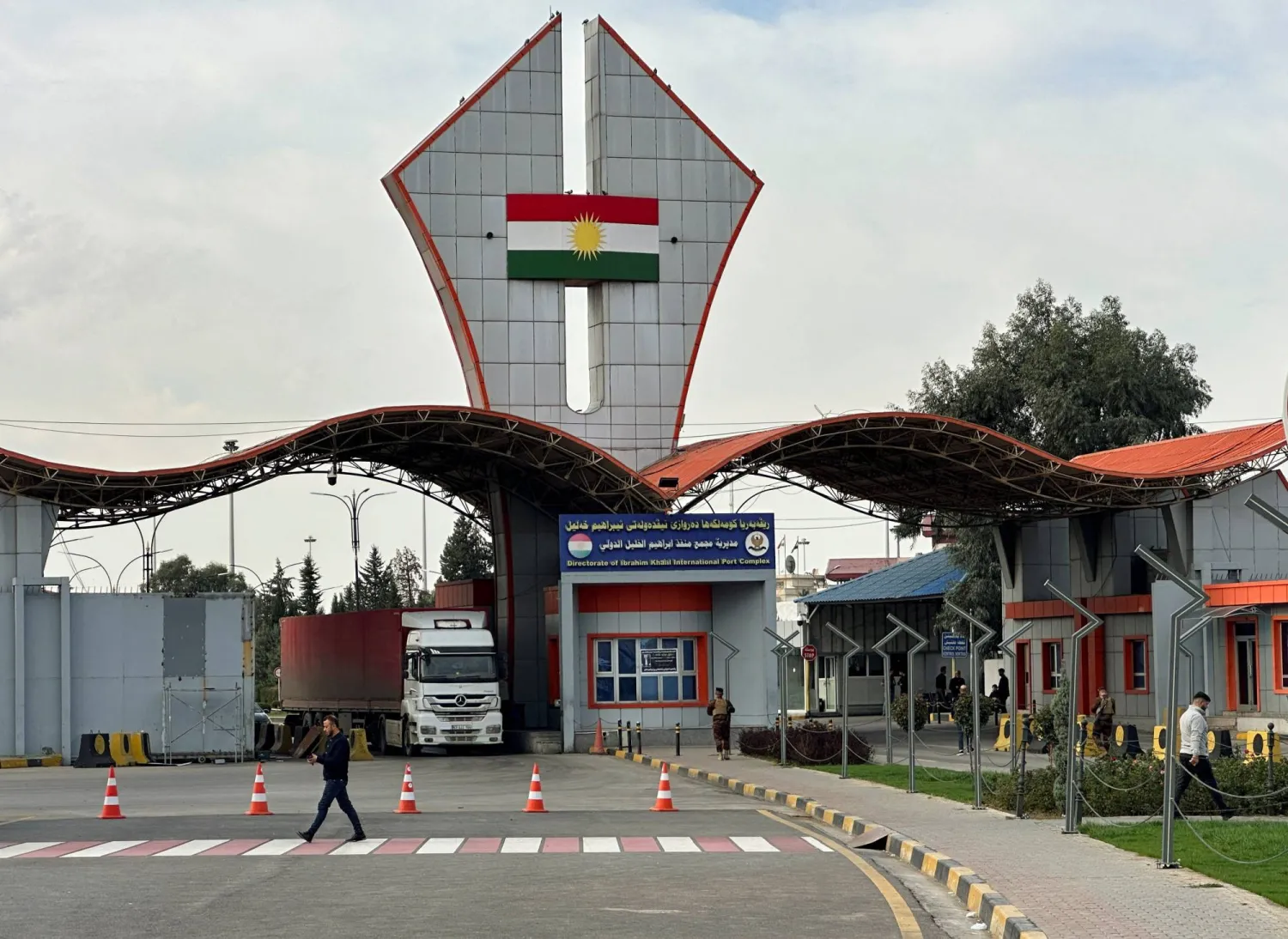
The Ibrahim Khalil border crossing between Iraq and Türkiye, on the outskirts of Zakho, in Duhok province, Iraq, November 24, 2026. (Reuters)
TT

Iraq’s Top Court Says Baghdad Can Deploy Troops to Secure Borders in Kurdistan Region

The Ibrahim Khalil border crossing between Iraq and Türkiye, on the outskirts of Zakho, in Duhok province, Iraq, November 24, 2026. (Reuters)

Iraq's highest court ruled on Wednesday that Baghdad can deploy federal forces along all international borders, including in the semi-autonomous Kurdistan region, backing Prime Minister Ali al-Zaidi's push to assert more central control. 

Al-Zaidi ordered federal authorities on Tuesday to take over border crossings run by the Kurdistan Regional Government, and has also demanded authority over oil fields controlled by Kurdish security forces, following a probe into smuggling at the state-run North Oil Company. 

The moves escalate tensions with the Kurdish authorities, and have been seen as part of a two-pronged pitch to assert central government authority, just a week after he also took on Kataib Hezbollah, a powerful armed faction aligned with Iran. 

The court decision, reported by Iraqi state TV, appears to be a victory for al-Zaidi, a 41-year-old multimillionaire businessman and political novice who came to power in a compromise just six ‌months ago. 

But political ‌analysts say it may yet prove difficult to implement moves that challenge the interests of ‌factions ⁠that have accrued substantial ⁠power over decades of ethnic and sectarian warfare, such as the Kurds and heavily armed factions loyal to Iran. 

London-based Renad Mansour, Deputy Director of the Middle East and North Africa Program and Director of the Iraq Initiative at Chatham House, said al-Zaidi is trying to establish a centralized political order. 

“Iraq's judiciary is very much supportive of the government's campaign... And the judiciary is important because if you look at the decisions being made, most of them come down to legal definitions. Most of them come down to corruption, illegality, sovereignty. These are hugely legal terms...,” he said. 

“So what this drive is about is the Iraqi government trying to reclaim some sovereignty... because it's such a fragmented state ⁠where there isn't a center.” 

A senior Shiite politician close to al-Zaidi told Reuters the prime ‌minister is focused on dismantling the model of a state within a state ‌that has prevailed in Iraq, a major global oil producer. 

Al-Zaidi’s strategy seeks to restrain armed factions who operate ‌above state authority and draw clearer limits on the Kurdistan region's independent exercise of authority over strategic economic and security matters, ‌the politician said. 

KURDISTAN REJECTS 'THREATS' 

The Federal Supreme Court ruled that federal authorities could oversee agencies operating at all border crossings, including those in the Kurdistan region, though they must coordinate with regional and provincial governments on customs administration, state television reported. 

The court said the federal oil ministry can also oversee and audit oil and gas fields, while Baghdad shares responsibility for managing the oil and gas they produce with regional governments and producing provinces, ‌state TV reported. 

Al-Zaidi has directed the federal oil ministry to manage oil fields under Kurdish security control in Kirkuk, Nineveh, Diyala and Salahuddin provinces, all of which are outside the ⁠Kurdistan region but have seen areas ⁠come under Kurdish forces' authority. 

The Kurdistan Regional Government on Wednesday rejected what it called "military language and threats" in a statement from the spokesman for the Iraqi military announcing the new measures. It said it was working with federal authorities to combat corruption and called for an end to oil smuggling across Iraq. 

Iraq's state news agency, citing what it said was an Iraqi government intelligence report, said oil belonging to the state-owned North Oil Company was being diverted and smuggled from Kirkuk, as well as from Sulaymaniyah inside Kurdistan, to Iran and onward to Afghanistan. 

A senior Iraqi security source close to recent military and security developments told Reuters a direct military confrontation with Kurdish regional forces was not an option for Baghdad, but the coming days could witness the deployment of additional federal forces in the vicinity of oilfields the government wants brought under central control. 

Oil smuggling allegations were also behind al-Zaidi's confrontation last week with Kataib Hezbollah. 

He ordered troops to stand by to enter the city of Jurf al-Sakhar in the Euphrates valley south of Baghdad, a Kataib Hezbollah stronghold. The group initially responded with defiance but allowed soldiers into the city under a compromise brokered by Shiite politicians.