


Hezbollah Says Explosives Shipment Seized by Authorities Belongs to Group

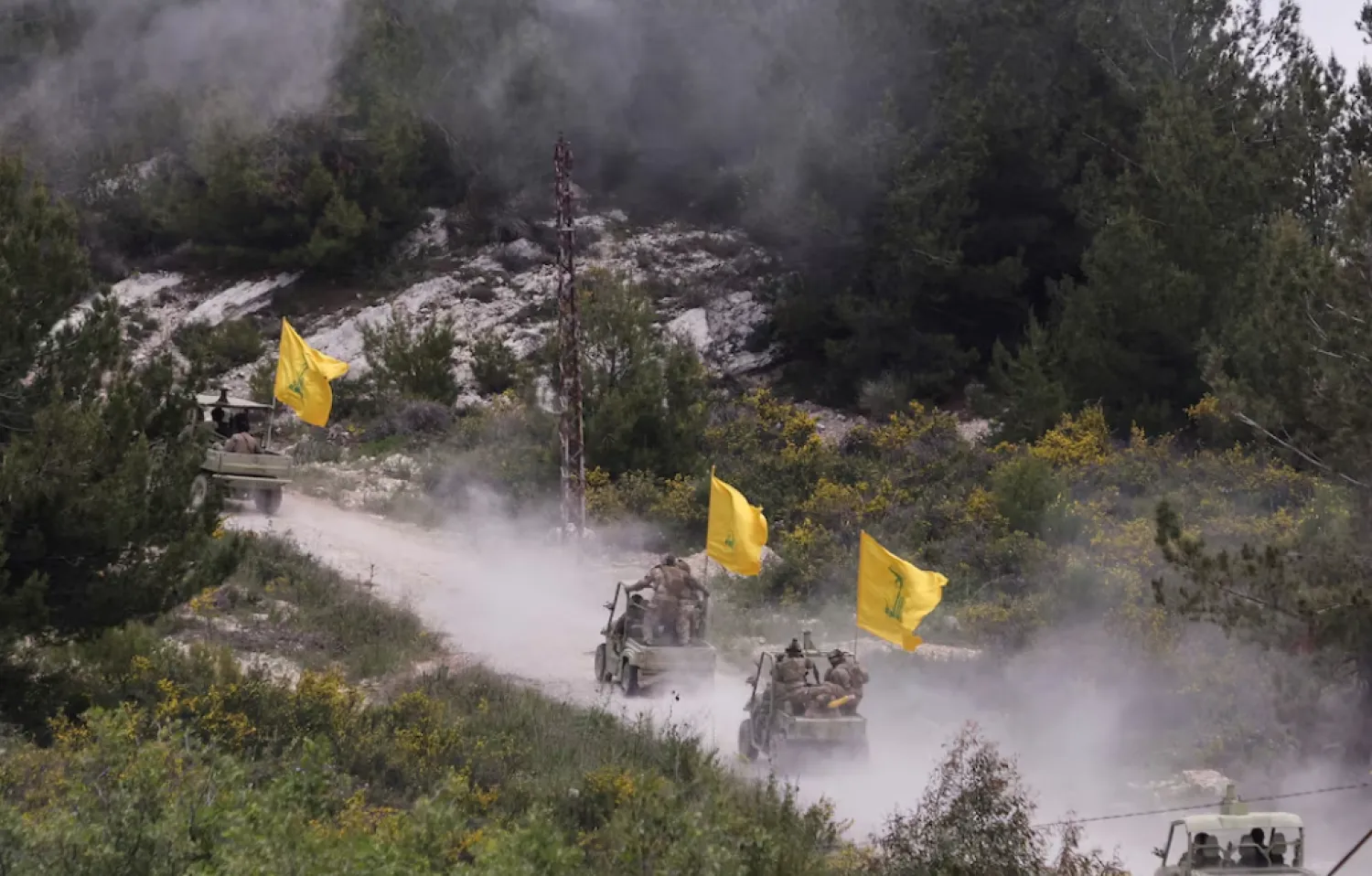
Hezbollah members take part in a military exercise during a media tour organized for the occasion of Resistance and Liberation Day, in Aaramta, Lebanon. REUTERS/Aziz Taher/File photo
TT

Hezbollah Says Explosives Shipment Seized by Authorities Belongs to Group

Hezbollah members take part in a military exercise during a media tour organized for the occasion of Resistance and Liberation Day, in Aaramta, Lebanon. REUTERS/Aziz Taher/File photo

A Hezbollah MP acknowledged Thursday that a 500-kilogram shipment of explosives seized last week by Lebanese authorities belonged to the group, a rare admission by the Iran-backed militants.

"The vehicle and its cargo belong to the resistance" against Israel, lawmaker Hassan Fadlallah said. He said Hezbollah also called for the immediate release of those arrested over the seizure.

A Hezbollah official and a Lebanese security source told Reuters that the explosives seized in the car last week were intended to be used in explosive drones targeting Israeli troops.

Fadlallah said Hezbollah had immediately contacted security agencies to clarify that it owned the vehicle and the cargo, and to demand the materials be returned and those detained be released.

Fadlallah's acknowledgment reflects Hezbollah's efforts to continue transporting weapons across Lebanon despite the government's vow to bring all arms in the country under state control.

On March 2, the government specifically banned Hezbollah's military activities hours after the movement launched rockets at Israel in solidarity with Tehran, pulling Lebanon into the regional war that erupted following US and Israeli strikes on Iran.

The government decisions were an attempt to reverse the relative freedom Hezbollah had enjoyed for years in transporting military equipment across Lebanon.

The group's main arms supply route through Syria was severed when its ally, then-president Bashar al-Assad, was ousted in late 2024. The new Syrian authorities have regularly announced seizures of weapons along their border with Lebanon that they say are intended for Hezbollah.

Throughout 2025, Lebanese troops seized and destroyed Hezbollah weapons depots in southern Lebanon in line with the government's plan to exert state control over all weapons, but that roadmap was put on pause when the new war erupted.

Under a deal reached through US-brokered talks between Lebanon and Israel this year, Beirut has vowed to disarm Hezbollah, which would in turn lead to Israeli troops gradually withdrawing from Lebanon.

But Hezbollah has refused to disarm as long as Israeli forces remain on Lebanese land and Israel has continued carrying out strikes across southern Lebanon.

Yemen’s Government Activates Emergency Plans to Protect Airports and Border Crossings

A displaced boy wearing an FC Barcelona jersey walks outside a tent at a displacement camp on the outskirts of Aden, Yemen, Wednesday, Nov. 11, 2026. (AP Photo/Abdulnasser Alseddik)
TT

Yemen’s Government Activates Emergency Plans to Protect Airports and Border Crossings

A displaced boy wearing an FC Barcelona jersey walks outside a tent at a displacement camp on the outskirts of Aden, Yemen, Wednesday, Nov. 11, 2026. (AP Photo/Abdulnasser Alseddik)

Military developments in Yemen have prompted the government to raise the level of preparedness at vital facilities and activate emergency plans at airports and land border crossings.

The move comes as displacement caused by Houthi escalation has expanded, surpassing 347,000 people, while the United Nations warns that civilian casualties since last August have exceeded 300 killed and wounded.

The latest measures reflect concerns that the repercussions of the fighting could spread to transportation, navigation, and supply sectors, particularly amid growing threats linked to the Bab al-Mandab Strait, one of the world's most important maritime trade routes.

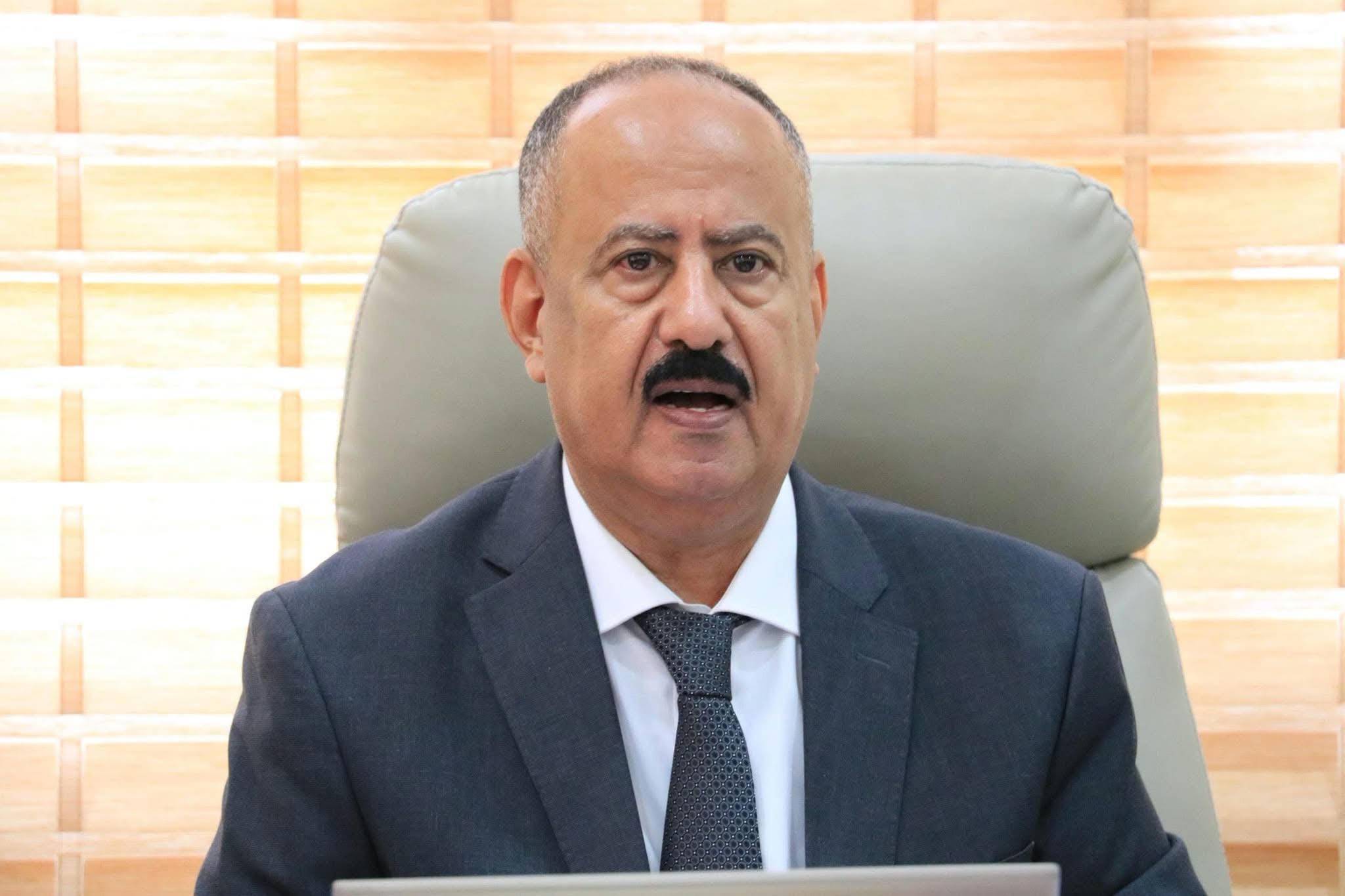
Yemeni Transport Minister Mohsen al-Omari instructed authorities to increase readiness and vigilance at airports and land crossings, activate emergency plans, tighten security and monitoring procedures, and strengthen coordination with local authorities and security agencies to ensure uninterrupted operations and the safety of critical infrastructure.

Yemeni Transport Minister Mohsen al-Omari (goverment media)

The directives were issued during a meeting with officials from the Civil Aviation and Meteorology Authority, the Land Transport Regulatory Authority, and directors of airports and border crossings to review emergency plans and the level of preparedness across ministry-affiliated institutions.

Al-Omari stressed that current circumstances require greater coordination and preparedness, noting the strategic importance of Bab al-Mandab as a vital waterway for global shipping and commerce.

He warned that any threat to international maritime routes would have consequences extending far beyond Yemen and impact global trade, and stressed that safeguarding maritime security is a shared responsibility requiring serious international action and close coordination with the Yemeni government and Saudi Arabia, which he said continues to support Yemen.

The minister also stated that Yemen has “no future under the Houthis,” describing the militias as an extremist sectarian and ideological project backed by Iran. He called for continued vigilance and strict adherence to government directives regarding developments in Bab al-Mandab and other vital areas.

Rising Wave of Displacement

Alongside the government measures, the humanitarian impact of the conflict continues to worsen. The International Organization for Migration (IOM) reported that the number of displaced people in Yemen has exceeded 347,000, including more than 14,000 individuals displaced during the last three days of the reporting period.

The organization documented the displacement of 18,780 people, representing 3,130 families, between November 8 and 14, indicating the continued flight of civilians from conflict zones and insecure areas.

Taiz Governorate has received the largest number of displaced people, hosting 143,130 individuals (41% of all recorded cases), followed by Lahj with 91,314 people (26%) and Aden with 70,404 people (20%). Additional displaced populations were recorded in Abyan, Hodeidah, Shabwa, Marib, Hadramawt, Al-Mahra, and Al-Dhalea.

The UN Office for the Coordination of Humanitarian Affairs (OCHA) reported that humanitarian agencies and partners have managed to deliver emergency assistance to more than 270,000 displaced people, roughly two-thirds of the total displaced population. More than 202,000 people have received emergency cash assistance.

In the health sector, aid programs reached over 103,000 displaced individuals, while a measles and rubella vaccination campaign launched on November 7 vaccinated more than 600,000 children.

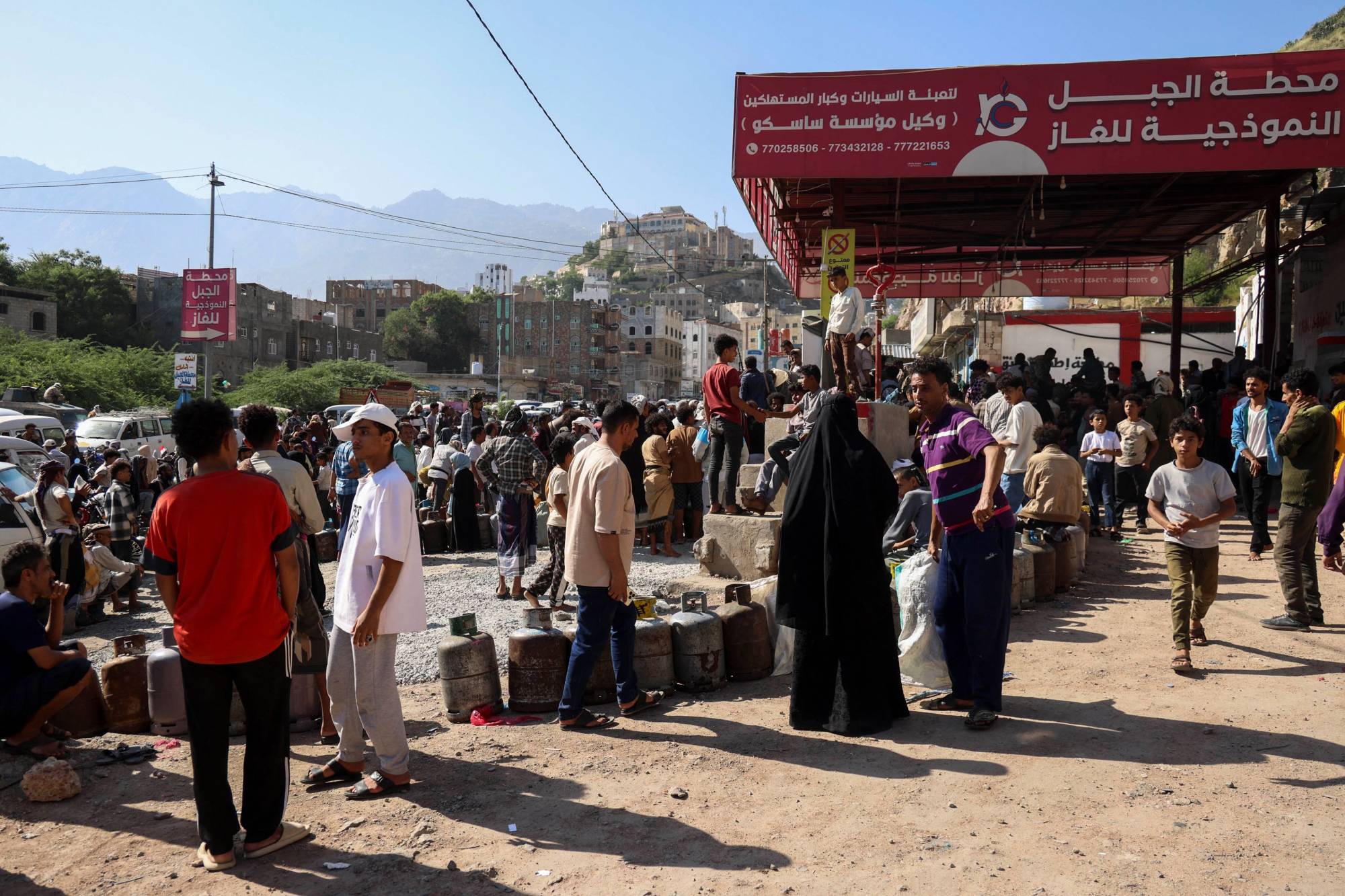
Yemenis line up to refill gas bottles at a refilling station in Taiz on October 19, 2026. (Photo by Ahmad AL-BASHA / AFP)

Civilian Casualties

The UN Human Rights Office documented more than 300 civilian casualties (killed and wounded) since the beginning of August, including over 70 deaths in cases verified by the organization.

According to the office, children account for more than one-third of all victims and nearly half of those killed. It warned that the true toll is likely much higher because the published figures include only cases independently verified by the UN.

These figures underscore the growing humanitarian consequences of the escalation, as fighting and displacement continue while the government seeks to secure critical infrastructure and reduce risks to transportation, shipping, and trade.


Syria FM Says Working Towards New Deal with EU

Foreign Minister Asaad al-Shaibani speaks at the Syria Partnership Coordination Forum in Damascus on Tuesday. (SANA)
TT

Syria FM Says Working Towards New Deal with EU

Foreign Minister Asaad al-Shaibani speaks at the Syria Partnership Coordination Forum in Damascus on Tuesday. (SANA)

Foreign Minister Asaad al-Shaibani said Tuesday that Syria was working towards a new agreement with the European Union as the sides seek to deepen ties nearly two years after the ouster of longtime ruler Bashar al-Assad.

Shaibani's remarks came a day after EU top diplomat Kaja Kallas said the bloc would look to sign a nearly 20-year-old association deal with Syria, as the country seeks recover and rebuild after more than 13 years of civil war.

Shaibani told the Syria Partnership Coordination Forum, held with the EU in Damascus, that "we are currently working with the (European) Union on a joint scope paper for a new agreement" that would "open doors to trade and investment, and make political dialogue and institutional cooperation a firm commitment".

Syria and the EU signed a cooperation agreement including on economy and trade in 1977.

In 2008, they preliminarily inked an association agreement to replace the earlier deal but it never went into force due to human rights concerns.

Kallas on Monday said that EU foreign ministers meeting in Brussels had "supported moving ahead" with the 2008 deal and launching talks for an updated one.

"Syria needs investment and a successful transition," she said, adding: "The aim is to give Europe and Syria a framework for trade, political dialogue, and closer cooperation as soon as possible."

Syria's conflict killed more than half a million people, sent millions fleeing internally and abroad, and ravaged the country's infrastructure and industry.

The EU in 2025 removed its sanctions on Syria's economy in a bid to help its post-war recovery, while in May this year the bloc restored the cooperation agreement with Syria.

On Tuesday, European Commissioner for the Mediterranean, Dubravka Suica, told the event in Damascus that "the EU wants to deepen the political dialogue, strengthen trade and economic cooperation, and support Syria's reintegration" into the European-Mediterranean space.

"Respect for human rights and the protection of minorities is fundamental to our relationship with Syria. All Syrians must have a say in their country's future," she added.

The bloc has emphasized the need for Syria to carry out reforms and for its transition to be inclusive, particularly after sectarian violence last year.


UN: Drones Account for Nearly Three-quarters of Sudan War Deaths this Year

A man sits on his home debris following a strike in Imtidad Nasser, a neighborhood east of Khartoum's airport, Sudan, Tuesday, Oct. 20, 2026. (AP Photo/Marwan Ali)
TT

UN: Drones Account for Nearly Three-quarters of Sudan War Deaths this Year

A man sits on his home debris following a strike in Imtidad Nasser, a neighborhood east of Khartoum's airport, Sudan, Tuesday, Oct. 20, 2026. (AP Photo/Marwan Ali)

The UN human rights office said on Tuesday it had confirmed 2,230 civilian deaths in Sudan's civil war so far this year, with drone strikes accounting for nearly three-quarters of the toll and emerging as the conflict's "defining feature".

United Nations High Commissioner for Human Rights Volker Turk condemned the "brazen disregard for the laws of war" by ⁠the warring parties which ⁠he said may amount to war crimes.

Sudan's army has been fighting the Rapid Support Forces in a civil war since April 2023 and both sides have stepped ⁠up drone strikes in recent months.

"The increased use of ...drones emerged as one of the defining features of the conflict in the Sudan, enabling parties to extend their reach far beyond areas of territorial control and front lines," said the UN report covering the January-June period.

Since then, the UN-verified toll has risen ⁠to ⁠2,230 of whom over 1,630 were killed by drones, according to a UN statement released alongside the report, adding that the true scale of loss was likely higher.

As well as those killed directly by the fighting, drones are increasingly targeting facilities that ensure human survival such as water sources and power supplies, the UN statement said.
