
Iraq Parliament Fills Cabinet Posts, Naming a US-Sanctioned Deputy Prime Minister

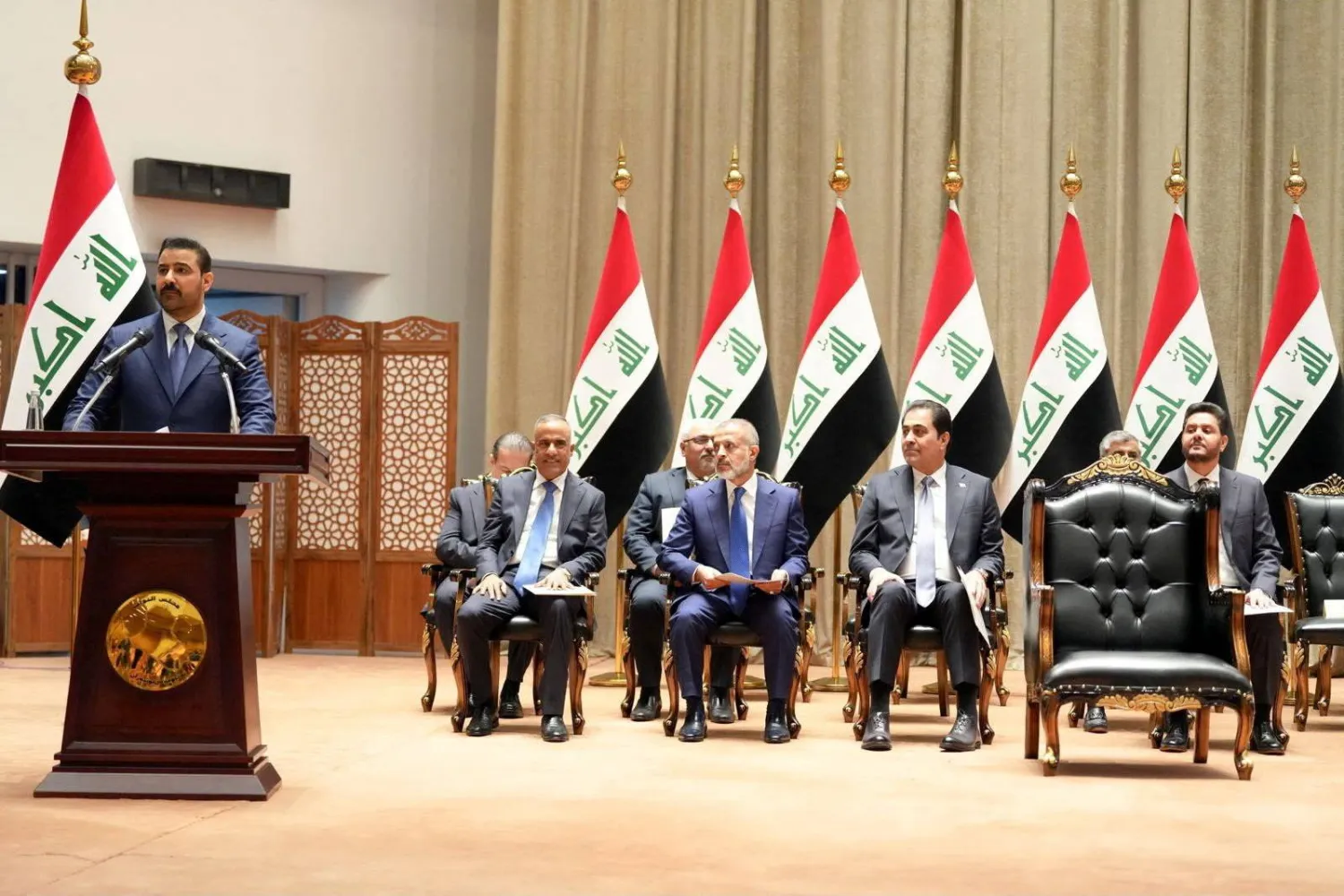
 Iraqi Prime Minister Ali al-Zaidi attends a parliamentary session to approve the remaining members of his cabinet, in Baghdad, Iraq, October 15, 2026. (Iraqi Prime Minister's Media Office/Handout via Reuters)
Iraqi Prime Minister Ali al-Zaidi attends a parliamentary session to approve the remaining members of his cabinet, in Baghdad, Iraq, October 15, 2026. (Iraqi Prime Minister's Media Office/Handout via Reuters)
TT

Iraq Parliament Fills Cabinet Posts, Naming a US-Sanctioned Deputy Prime Minister

 Iraqi Prime Minister Ali al-Zaidi attends a parliamentary session to approve the remaining members of his cabinet, in Baghdad, Iraq, October 15, 2026. (Iraqi Prime Minister's Media Office/Handout via Reuters)
Iraqi Prime Minister Ali al-Zaidi attends a parliamentary session to approve the remaining members of his cabinet, in Baghdad, Iraq, October 15, 2026. (Iraqi Prime Minister's Media Office/Handout via Reuters)

Iraq's parliament voted Thursday to appoint ministers to previously vacant Cabinet posts and complete the country's government, including a deputy prime minister who is under US sanctions.

Laith al-Khazali, appointed to that post, is the brother of Qais al-Khazali, leader of the Iran-backed Asaib Ahl al-Haq armed faction. Laith al-Khazali was arrested by US forces in 2007 over allegations related to an attack targeting American forces in Karbala in January of that year, which resulted in the deaths of five US soldiers.

He was released from US custody in June 2009. In 2019, the US Treasury Department imposed sanctions on him, citing his leadership role in Asaib Ahl al-Haq and allegations involving human rights abuses as well as the 2007 attack.

His appointment to a senior government position raises questions about its potential implications for relations between Baghdad and Washington. Iraqi Prime Minister Ali al-Zaidi was backed by US President Donald Trump when he took the post and has strong relations with Washington, but he has also sought to maintain relations with Iran.

Past Iraqi governments have also sought to balance relations with Washington and Tehran, but the balancing act has become more difficult since the US and Iran went to war on Feb. 28.

There was no immediate official statement from the US on the appointment.

Republican US Rep. Joe Wilson wrote on X that al Khazali “is a designated terrorist and Iranian puppet whose militia AAH killed Americans and Iraqis.”

“He is no better than ISIS, maybe even worse,” Wilson said. "It is outrageous but sadly not shocking that he has been appointed deputy PM of Iraq.”

The parliament also appointed two other deputy prime ministers, as well as a new interior minister, defense minister, planning minister, minister of higher education and scientific research, and culture minister.

The other Cabinet posts had been appointed five months earlier.

Al-Zaidi said in a statement that with the vacant posts filled, “we are embarking on a phase of accelerated, diligent work” and pledged to "move forward in implementing our government’s priorities and program, and in fulfilling the aspirations of all Iraqis.”

He said the government had worked over the past several months amid complicated domestic and international circumstances, noting that the war in the region had imposed exceptional economic challenges on Iraq, in addition to security challenges.

Al-Zaidi has vowed to fight corruption and strengthen Iraq's sovereignty, both by completing the withdrawal of US forces from the country and by disarming non-state armed groups.

Some of the most powerful factions have said they have no intention of giving up their weapons, although Asaib Ahl al-Haq is one of a handful that have agreed to hand over their arms.


Egypt, Iran FMs Discuss Regional Developments

Egypt's Foreign Minister Badr Abdelatty speaks during a plenary session of the International Institute for Strategic Studies (IISS) Manama Dialogue 2026 in Manama on October 31, 2026. (AFP)
TT

Egypt, Iran FMs Discuss Regional Developments

Egypt's Foreign Minister Badr Abdelatty speaks during a plenary session of the International Institute for Strategic Studies (IISS) Manama Dialogue 2026 in Manama on October 31, 2026. (AFP)

Egyptian Foreign Minister Badr Abdelatty held telephone talks on Thursday with his Iranian counterpart Abbas Araghchi on the latest regional developments and efforts to ease tensions, reported dpa.

An Egyptian Foreign Ministry spokesman said the ministers exchanged views on the latest developments and concerns over the possibility of renewed military conflict and its impact on regional and international security and stability.

Abdelatty underlined the importance of prioritizing diplomatic solutions and urged all parties to demonstrate the necessary openness to reach a political settlement to the crisis.

He stressed that exercising flexibility and arriving at compromises would serve the interests of all sides and prevent the region from sliding into a new wave of escalation, which could otherwise yield severe political, economic, and humanitarian repercussions for the region and the entire world.


Yemen Warns against Houthis Using Red Sea to Extort Int’l Community

The Yemeni and German delegations meet in Berlin. (Yemeni government media)
TT

Yemen Warns against Houthis Using Red Sea to Extort Int’l Community

The Yemeni and German delegations meet in Berlin. (Yemeni government media)

The Yemeni government warned of an expanding threat posed by the terrorist Houthi militia to regional security and international navigation, citing growing Iranian involvement in managing Houthi military operations and growing ties with terrorist organizations in the Horn of Africa. The warning coincided with continued Houthi attacks on civilians and the tightening of the siege on the city of Taiz.

Yemeni Foreign Minister Afrah Al-Zouba presented these concerns during a series of meetings in Berlin with German officials and experts at think tanks and research centers specialized in Yemeni affairs.

The discussions addressed the developments of the Houthi escalation since last June, as well as its military, humanitarian, and security repercussions on Yemen and the wider region.

Al-Zouba stated that the Houthis intensified their attacks following the landing of an aircraft belonging to Iran's Mahan Air, which is linked to the Iranian Revolutionary Guard Corps (IRGC), at Hodeidah airport.

She explained that the plane carried Iranian experts, funds, and advanced weaponry to support Houthi military operations, in direct violation of Yemeni sovereignty and international laws and resolutions.

The escalation reached the west coast and Bab al-Mandeb regions prior to a government deployment under Operation Dawn of Yemen.

Authorities cautioned against renewed efforts by the militia to expand along the west coast, threaten shipping lanes in the Red Sea and Bab al-Mandeb Strait, and leverage maritime corridors to pressure the international community.

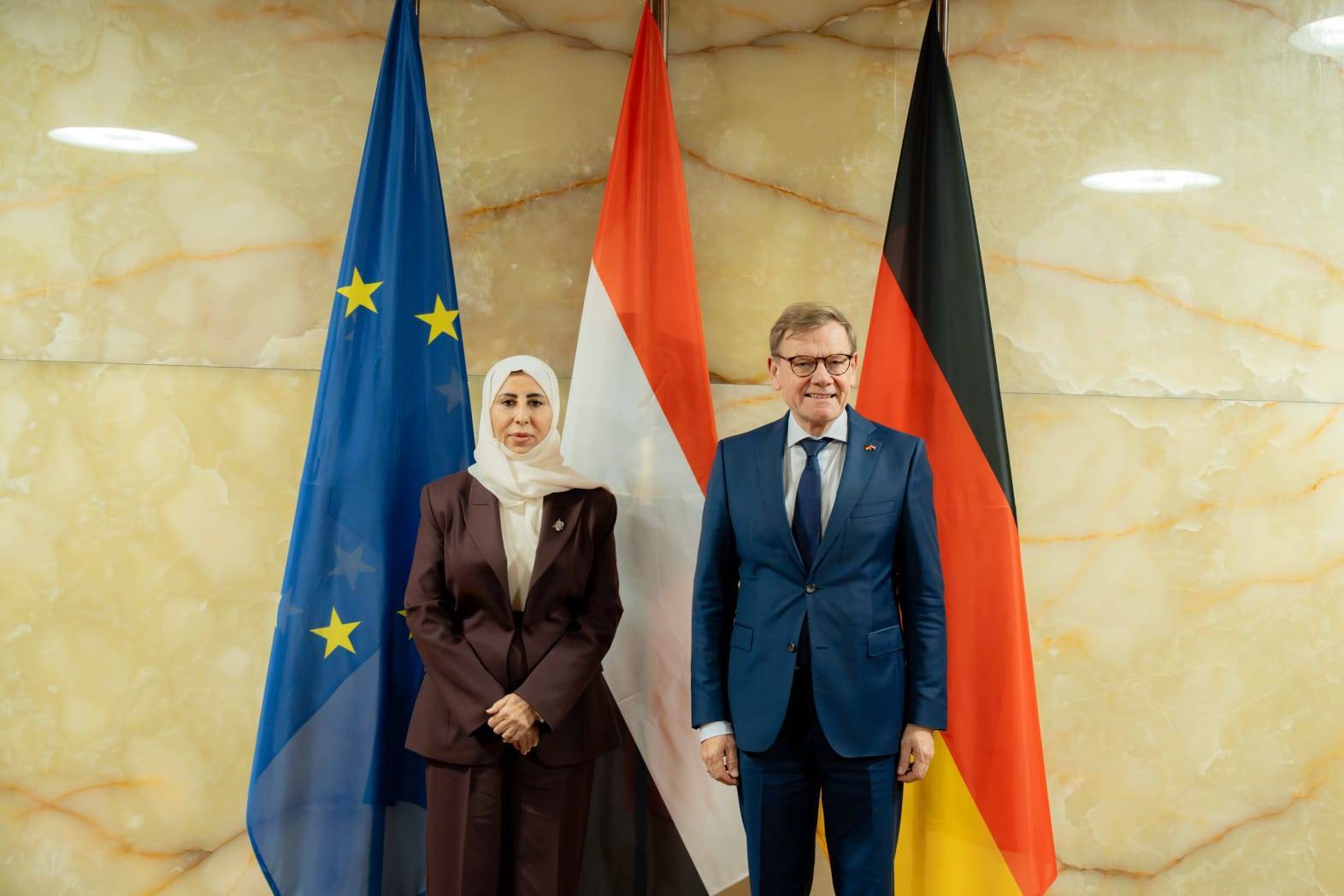
Meeting with German Foreign Minister Johann Wadephul, Al-Zouba warned that the Houthi threat extends beyond Yemen's borders, pointing to the militia’s targeting of Saudi territory and international shipping lanes, and the resulting risks to regional security and global energy and food supplies.

Yemeni Foreign Minister Afrah Al-Zouba meets with her German counterpart Johann Wadephul. (Yemeni government media)

She presented the Yemeni government's announcements regarding the participation of experts from the IRGC and Hezbollah in managing Houthi operations, in addition to the group's links with terrorist organizations in the Horn of Africa, chief among them the Somali Al-Shabaab movement.

These ties raise the level of threat to maritime security and regional stability, she warned.

The two sides discussed ways to develop the capabilities of the Yemeni Coast Guard to protect territorial waters and secure international trade routes, while strengthening bilateral consultation and information exchange regarding security developments in Yemen and the region.

Al-Zouba delivered a written letter from Chairman of the Presidential Leadership Council Dr. Rashad Al-Alimi to German Chancellor Friedrich Merz.

The message addressed bilateral relations, regional issues, and the latest updates on the situation in Yemen.

On the humanitarian level, Al-Zouba highlighted the Houthi siege on the city of Taiz, the targeting of civilian and health facilities, and the resulting closure of medical centers, medicine shortages, and lack of safe corridors, warning of catastrophic impacts on civilians.

She detailed the Houthi recruitment of child soldiers, indiscriminate landmine deployment, and the ongoing detention of UN and humanitarian personnel, noting the death of several detainees including UN staff member Mohammed Ibrahim Al-Shami.


Houthis Under Govt Pressure in al-Jawf, Lahj

Yemeni troops hold a position during clashes with Iran-backed Houthis in Yemen's northwestern al-Jawf province on November 2, 2026. (AFP)
TT

Houthis Under Govt Pressure in al-Jawf, Lahj

Yemeni troops hold a position during clashes with Iran-backed Houthis in Yemen's northwestern al-Jawf province on November 2, 2026. (AFP)

Yemeni government forces have advanced to a new phase of offensive operations against the Houthis in al-Jawf and Lahj governorates, according to military developments reflecting the expanding scope of Operation Dawn of Yemen.

The shift to offensive maneuvers coincided with government forces thwarting Houthi attempts to recapture previously lost positions in Marib and Taiz.

In the latest field updates, government forces successfully secured their positions across strategic mountain ranges in eastern Al-Jawf. This follows tactical advances into areas formerly controlled by the terrorist Houthi group.

Military officials said the breakthrough reinforces current positions and establishes the necessary conditions to sustain the advance toward al-Hazm, the governorate's capital.

Armed forces spokesman Majed al-Nuzaili said troops managed to recapture positions from the Houthis in several regions in al-Jawf.

He stressed that the operations will continue to reclaim positions from the group.

Government forces have advanced through the al-Dahidha mountain range, breaching Houthi fortifications and seizing military equipment. Airstrikes and drone operations also targeted Houthi strongholds and weapons depots across several locations.

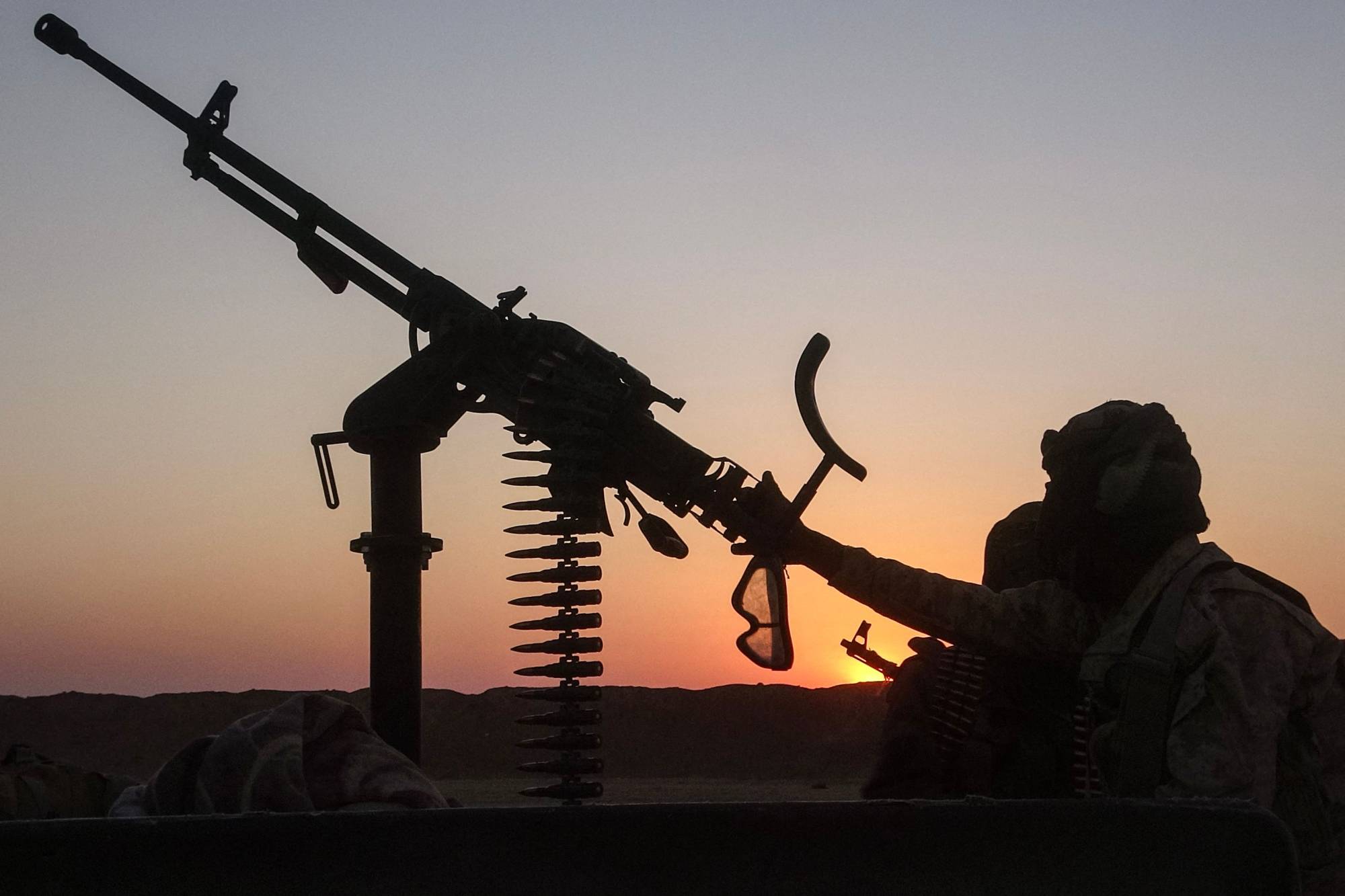
Yemeni forces sit on a pick-up truck mounted with a heavy machine-gun as they hold a position during clashes with Iran-backed Houthis in Yemen's northwestern al-Jawf province on November 2, 2026. (AFP)

This territorial gain holds strategic importance due to the mountainous terrain and its proximity to routes leading to al-Hazm, the Houthis' primary administrative and military hub in the governorate. Government forces are currently working to secure these newly recaptured positions before pressing forward with further operations.

In an attempt to contain this advance, the Houthi group launched a broad attack on government force positions in the Halhalan area. However, government forces managed to repel the assault and force the militants to retreat, said government military sources.

In Lahj, government forces have regained the initiative after reorganizing their military deployment along the Tur al-Baha axis, launching a swift counteroffensive to recapture areas seized by the Houthi group in the al-Maqatirah district.

Supported by warplanes, government troops breached the border of the district and advanced into Bani Abdan village, where heavy fighting continues in the surrounding vicinity. Military operations also expanded to target Houthi positions in the Hayfan and al-Zuraiqah al-Sham regions of the neighboring Taiz governorate.

These latest field updates indicate that government forces have successfully shifted from containing the initial Houthi push in al-Maqatirah to executing direct offensive operations to reclaim lost ground.

Military officials said the transition follows a strategic reinforcement of troops and a reorganization of the military command along the Tur al-Baha axis, effectively shifting the balance of power on this front.