Yemen Rejects Iran's Mediation Bid While It Continues to Arm Houthis

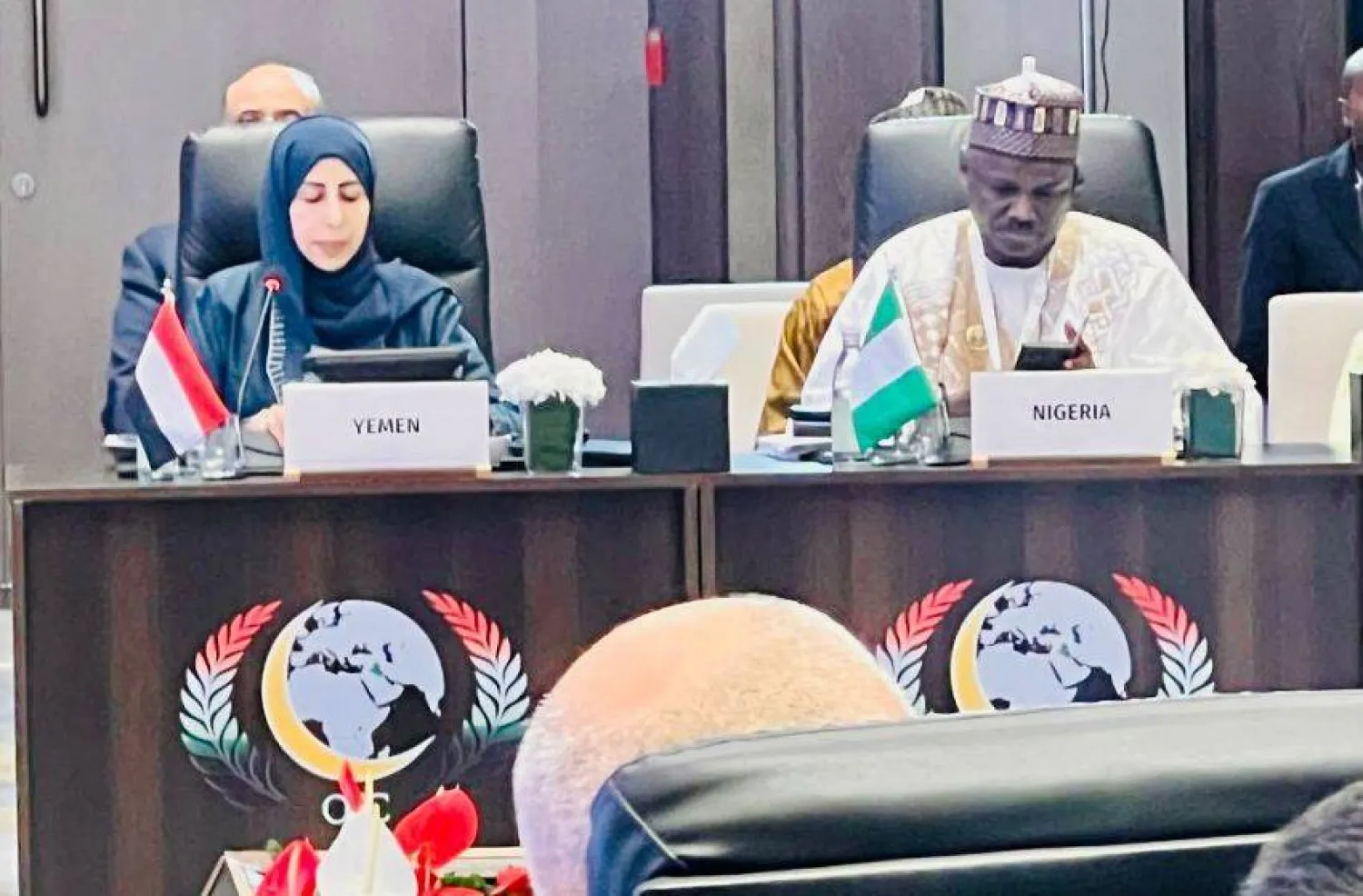
Al-Zouba called on the Islamic world to cut off funding and arms supplies to the Houthis (SABA)
TT

Yemen Rejects Iran's Mediation Bid While It Continues to Arm Houthis

Al-Zouba called on the Islamic world to cut off funding and arms supplies to the Houthis (SABA)

The Yemeni government has rejected Iran's attempts to position itself as a mediator in the country's war, holding Tehran responsible for supporting the Houthi takeover and prolonging the conflict by supplying the group with weapons, funding, training, missiles, drones and military experts.

Foreign Minister Afrah Al-Zouba said Iran had made itself a party to the war against the Yemeni people and should end its military support for the Houthis and respect national sovereignty and the principles of good neighborliness rather than offer to mediate. Her remarks reflect the government's efforts to move beyond political accusations against Tehran and press for international action against the sources of the group's weapons.

Speaking on the sidelines of the 52nd session of the Council of Foreign Ministers of the Organization of Islamic Cooperation (OIC) in the Iraqi capital, Baghdad, Al-Zouba said Tehran could not arm one party to a conflict and then present itself as a mediator seeking to end it.

She argued that Iran's attempts to portray the war as a conflict between Yemen and Saudi Arabia ignored the reality of an armed group's takeover of the Yemeni state.

The minister accused the Iranian regime of using Yemen as a bargaining chip and channeling pressure directed at Tehran into attacks whose costs are borne by the people of the region, international trade and global markets.

She noted that the Houthis had rejected regional and international peace initiatives, including a Saudi-proposed roadmap, and exploited periods of de-escalation to regroup and strengthen their military capabilities.

Tehran's Responsibility

Al-Zouba also rejected Iran's attempts to portray the Houthis as Yemen's legitimate representatives or describe them as the "Yemeni Armed Forces."

She stressed that Tehran's dealings with the group did not grant it the legitimacy to represent the Yemeni state or give the Iranian regime authority over Yemen's sovereign decisions.

The minister also rejected efforts to characterize the campaign to restore state institutions as a conflict between Yemen and Saudi Arabia.

She said Houthi claims that the group acts according to its own interests and calculations did not absolve Iran of responsibility for arming it and enabling it to continue its attacks.

Al-Zouba cited several Iranian actions that she described as violations of Yemeni sovereignty, including the handover of Yemen's diplomatic premises in Tehran to a Houthi representative in November 2019.

She also pointed to the smuggling of an Islamic Revolutionary Guard Corps (IRGC) officer into Sanaa in October 2020 and his appointment as ambassador to the Houthis, as well as flights operated to Sanaa airport in July 2026 without the internationally recognized government's approval.

The minister accused Tehran of continuing to interfere in Yemen's affairs despite the severing of diplomatic relations in October 2015, describing those actions as violations of the rules governing relations between states, Yemeni sovereignty and the Vienna Convention on Diplomatic Relations.

Al-Zouba linked these accusations to the ongoing military escalation in Yemen, citing Houthi ballistic missile attacks on Maashiq Palace, the seat of the presidency and government in the temporary capital, Aden.

She also pointed to the continued siege of Taiz and shelling of residential neighborhoods, alongside attacks targeting Saudi Arabia and threatening international shipping.

Call for Islamic Action

Amid what she described as growing threats, the Yemeni foreign minister urged OIC member states to take a firm stance against the Houthis, designate the group a terrorist organization, cut off its funding sources and halt the flow of weapons and military expertise to its forces.

She stressed that the continuation of the war could not be separated from Iranian military and technical support, warning against allowing Yemeni territory to become a launching pad for threats to regional security.

Al-Zouba called for Islamic solidarity to move beyond declarations and translate into practical measures that protect member states and their resources while countering foreign interference that fuels conflicts.

She also urged the international community to enforce the arms embargo on the Houthis under UN Security Council Resolutions 2216 and 2624, hold the group's financiers accountable and support the Yemeni government in restoring state institutions and extending its authority throughout the country.

Al-Zouba emphasized that Yemen's security was closely tied to that of its neighbors and that confronting Iranian interference required ending support for armed proxies and safeguarding national sovereignty.

She also highlighted Saudi Arabia's continued support for Yemen through economic, humanitarian and development assistance.

On the political front, the minister said the Yemeni government, which had remained committed to pursuing peace for 12 years, would not accept a political process that served as cover to legitimize the Houthi takeover or allow weapons to remain outside state institutions.

She stressed that a just and lasting peace required respect for Yemen's sovereignty, unity and territorial integrity, the restoration of its institutions and adherence to the agreed framework for a political settlement, foremost among them UN Security Council Resolution 2216.

The remarks came as Operation Dawn of Yemen, launched by Presidential Leadership Council Chairman Rashad al-Alimi, continued its campaign to restore state institutions and extend government authority across the country's entire territory, according to the government.


Israel Deports 14 Activists on Palestinian Solidarity Mission

French-Palestinian lawyer and member of European Parliament Rima Hassan holds a Palestinian flag upon arriving to join a rally in her support at Place de la Republique in Paris on June 12, 2025. AFP - THIBAUD MORITZ
TT

Israel Deports 14 Activists on Palestinian Solidarity Mission

French-Palestinian lawyer and member of European Parliament Rima Hassan holds a Palestinian flag upon arriving to join a rally in her support at Place de la Republique in Paris on June 12, 2025. AFP - THIBAUD MORITZ

Israel said on Sunday it had deported 14 Western activists who had gone to the occupied West Bank on solidarity missions with Palestinians facing violence from Israeli settlers.

Israeli authorities arrested them on Friday near Ramallah after an altercation between the activists and settlers, according to the Human Rights Defenders Fund, a group that provides legal support to activists who visit to support Palestinians.

The activists had gone with hopes of protecting Palestinians during their annual olive harvest, which has been hit by a surge of attacks by Israeli settlers who have beaten and stolen from the farmers, AFP said.

"Fourteen foreigners who were staying in Israel on tourist visas were deported after being detained by security forces," Israel's Population and Immigration Authority said in a statement.

They were deported for "having violated legal provisions" of their visas and "disrupting public order", it said.

The activists came from the United States, Canada, Italy and Germany, it added.

A spokeswoman for the agency said that the last of the activists was deported Sunday morning.

Israeli police said that three Palestinians were also arrested. A police statement accused the foreign activists of "provocative activities" aiming to trigger clashes and of backing "anti-Israeli media campaigns".

But Sharona Weiss, the head of international advocacy at the Human Rights Defenders Fund, told AFP that the foreigners had been accompanying Palestinian farmers on their land "when settlers arrived and began attacking them".

A journalist and a 77-year-old activist were among those expelled, she said. The group said another 15 foreigners including a journalist had been expelled the week before.

The deportations come amid growing international criticism of violence by Israeli settlers in the West Bank, which Israel has occupied since 1967.

The Israeli rights group Yesh Din said it has documented more than 850 acts of violence committed by settlers during the five-week olive harvest.

Settlers have also attacked journalists covering the olive harvest, including photojournalists for AFP and The Washington Post, and beat up a visiting French mayor.

Israel has voiced anger over international criticism and ordered the closure of the British consulate after London imposed sanctions on products from Israeli settlements.


Palestinian Authority Arrests Brokers Over Alleged Sale of Jericho Homes to Settlers

Settlers stand on the roof of one of eight homes they said they purchased in Jericho last Thursday (AP). 
TT

Palestinian Authority Arrests Brokers Over Alleged Sale of Jericho Homes to Settlers

Settlers stand on the roof of one of eight homes they said they purchased in Jericho last Thursday (AP). 

The Palestinian Authority has arrested several property and land brokers suspected of facilitating the transfer of homes in Jericho to Israeli settlers, amid fears the move could mark the beginning of what has been described as a “Jewish invasion” of one of the world’s oldest continuously inhabited cities.

Palestinian security forces spokesman Maj. Gen. Anwar Rajab said several suspects had been detained in connection with homes seized by settlers in Al-Duyuk al-Tahta, west of Jericho.

Security sources told Asharq Al-Awsat that the brokers were suspected of facilitating the transfer of the properties as part of a plan to enable settlers to take control of an entire neighborhood. The suspects were remanded in custody for 15 days pending investigation.

The case emerged Wednesday when 20 Jewish families entered eight homes they claimed to have legally purchased through the Nachala settlement movement, with the involvement of the Binyamin Regional Council, in an operation described as secret.

The houses are located in Area C of the occupied West Bank, near the archaeological site known as the Hasmonean Palaces.

Israel’s Yedioth Ahronoth newspaper reported that the purchases had been arranged in secrecy, with only a small number of people involved. Even some participants’ wives were reportedly surprised by the move.

Settlers who arrived at the site said they were reestablishing Jewish settlement in Jericho, which Jews regard as their gateway into Palestine.

The takeover sparked an uproar in the Palestinian territories, raising questions about how the properties had been transferred, whether the transactions were illegal, particularly as some of the homes stand on government-owned land, and where the Palestinian Authority had been during the process.

The site lies in Al-Duyuk al-Tahta, within Area C, but very close to Area A, which is under Palestinian administration. Establishing a settlement outpost there would therefore carry serious geographical and political implications.

The Palestinian Authority responded immediately by forming a crisis committee and launching an arrest campaign.

Palestinian Security Forces Investigate Property Transfers

In a statement, Palestinian security forces said investigations into the settlers’ seizure of homes in the Al-Duyuk area of Jericho governorate were ongoing, under close supervision by the relevant authorities and the Public Prosecution.

They said legal measures would be taken against anyone found to be involved, in accordance with established procedures.

The security forces warned citizens against dealing with documents, papers or information circulated on social media about the case or similar incidents, saying such material could be intended to sow confusion and disrupt investigations.

They urged residents and media outlets to rely exclusively on official sources and avoid rumors or unreliable information, some of which was intended to incite discord and disputes within Palestinian society.

The statement reaffirmed the security services’ commitment to protecting citizens and their property and maintaining security and public order. It said any official developments would be announced through authorized channels.

The security forces stressed that they would not allow the case to become a source of rumors or tolerate attempts to undermine public security, threaten property, mislead public opinion or exploit the investigation to spread disorder.

The statement followed the widespread circulation of forged documents seeking to implicate a Palestinian Authority figure, triggering heated debate on social media.

Before the security forces issued their statement, the Palestinian Land Authority rejected claims that preliminary sale transactions, official documents or powers of attorney existed in connection with the properties.

It said such practices formed part of Israeli occupation policies aimed at seizing more land and forcibly displacing residents.

The authority stressed that any action taken by a third party concerning state property constituted a violation of state ownership. It said no allocation, lease or other transaction had been authorized for Plot 14.

According to land records predating 1967, one of the two plots on which the buildings stand belongs to the state, while the other belongs to its historical owners.

The Land Authority maintained that the occupation could not confer property rights and that any measures taken under its authority were null and void, carrying no legal effect.

Israeli Commander Accused of Prior Knowledge

As Palestinian authorities continued their arrests and investigations, a separate controversy erupted in Israel.

Although the Israeli military initially said the operation had not been coordinated with it, Israeli security sources familiar with the matter told Haaretz that Maj. Gen. Avi Bluth, head of the military’s Central Command, had known in advance about plans by settlers and the Nachala movement to take over Palestinian homes west of Jericho.

According to the sources, Bluth met the settlers a day before they entered the properties and asked them to keep the operation secret and not inform field officers until the takeover was complete.

The sources said he had spoken with senior settler leaders involved in the operation, asked them not to disclose his prior knowledge and “wished them success.”

The allegations gained further attention following remarks by former Israeli Prime Minister Ehud Olmert, who also accused Bluth of assisting settlers involved in attacks against Palestinians in the West Bank.

The Israeli military dismissed the accusations as “offensive and baseless.”

Since the settlers entered the homes, the army has had to divert three combat platoons to protect them after the settlers attacked Bedouin residents in a nearby area and forced them to leave.

Israel’s Walla news website reported Saturday that the entry of Israelis into homes near Jericho had prompted two families from the local Bedouin community to abandon their temporary shelters.

The report said the army had contacted the families and offered assistance to prevent their departure, but both decided to leave.

The Israeli military said it had tried unsuccessfully to persuade the families to stay and would therefore work to prevent Jewish settlers from taking over the two vacated homes.

Senior Israeli military officials warned of the risk of further escalation.


Sudan’s RSF Claims New Gains in Blue Nile Fighting

Sudanese refugees walk at the Iridimi refugee camp, northwest of Iriba, in Wadi Fira province, eastern Chad, November 27, 2025. (Reuters)
TT

Sudan’s RSF Claims New Gains in Blue Nile Fighting

Sudanese refugees walk at the Iridimi refugee camp, northwest of Iriba, in Wadi Fira province, eastern Chad, November 27, 2025. (Reuters)

Sudan’s Rapid Support Forces (RSF) and allied fighters said they had captured the town of Maqja in the southeastern Blue Nile region, following clashes that saw them gain control of several other areas.

The Tasis alliance, which includes the RSF and the Sudan People’s Liberation Movement-North (SPLM-N), said its forces had seized Maqja after taking control of Sali, Al-Keili and Bakori.

The alliance’s claims could not be independently verified, although the Blue Nile regional government acknowledged changes in troop deployments and territorial control.

Videos released Friday by Tasis fighters showed members of the RSF, SPLM-N and Al-Bishi Forces, a Blue Nile paramilitary group affiliated with the RSF, inside Maqja.

The Sudanese army neither confirmed nor denied losing the town. However, pro-army social media platforms said no troops had been stationed there when alliance forces entered, claiming the army had withdrawn from the area about three months earlier.

The platforms played down the significance of the announced capture, describing the videos circulated by the RSF-SPLM-N alliance as part of the information war.

Maqja has witnessed fighting between the two sides before. On September 20, Anadolu Agency quoting a local official, reported that the army and allied forces had repelled an RSF-SPLM-N attack on Maqja and Mada.

Maqja lies in the Bau locality in southwestern Blue Nile, connected by local roads to Kurmuk, Al-Damazin and the Ingessana Hills. It lies some 90 kilometers from Al-Damazin, the regional capital.

The RSF and SPLM-N had captured the strategic Sali area in Kurmuk following clashes with government forces in late October and early November.

Army, RSF claim separate drone shootdowns

Meanwhile, the Sudanese army and RSF separately announced that they had shot down drones in the West Kordofan and Blue Nile states.

In a statement Saturday, the army said its air defenses had downed a hostile FH-95 drone that morning over the Ayal Bakhit area of West Kordofan.

The army did not identify the drone’s operator or provide further details.

The RSF, meanwhile, claimed to have shot down a Bayraktar Akinci drone belonging to the Sudanese army while it was flying over the Blue Nile front.

Neither incident could be independently verified. Images of wreckage released by the RSF did not establish the drone’s type or when and where it had been brought down.

Regional government acknowledges military changes

In its first official response to the latest developments, the Blue Nile regional government issued a statement seeking to reassure residents, urging them to rely on official information and refrain from circulating unverified reports about the fall of towns or the collapse of military positions.

The government acknowledged military and security developments in parts of the region, saying military operations required troop movements and changes in deployment and territorial control.

It said it was monitoring the situation in coordination with military and security authorities and working to protect civilians and maintain essential services.

The statement did not specifically deny that RSF and SPLM-N forces had entered Maqja, nor did it clarify where army units had been deployed before the latest developments.

The Blue Nile region lies in southeastern Sudan, bordering Ethiopia and South Sudan. Al-Damazin hosts the headquarters of the Sudanese army’s Fourth Infantry Division.

The SPLM-N, led by Abdelaziz al-Hilu, has long maintained positions in the southern part of the region, particularly near the borders with South Sudan and Ethiopia.