


Yemeni Forces Intensify Strikes against Houthis

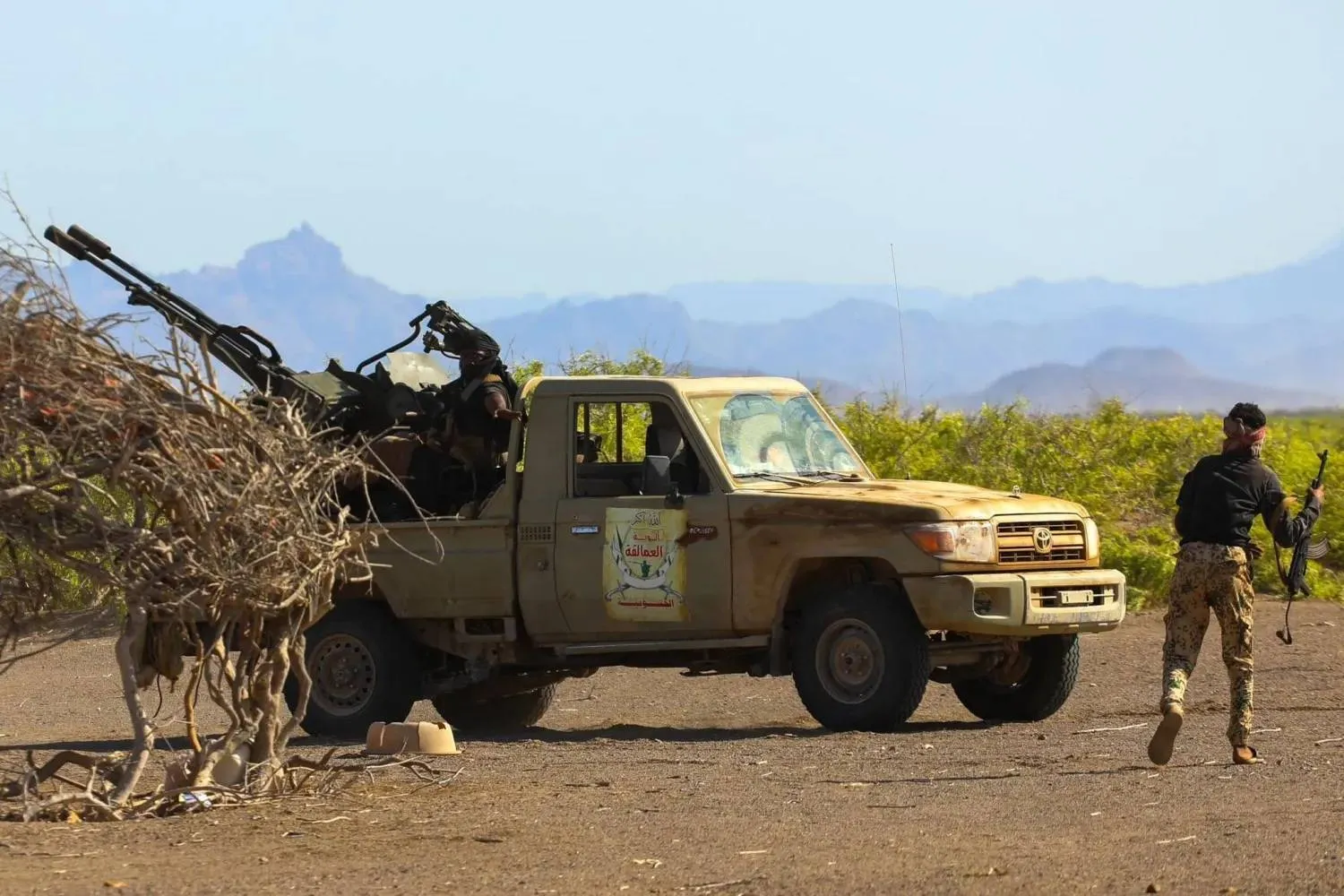
The Giants Brigades repel Houthi attacks near Bab al-Mandeb. (Military media)
TT

Yemeni Forces Intensify Strikes against Houthis

The Giants Brigades repel Houthi attacks near Bab al-Mandeb. (Military media)

Violent clashes broke out anew on Tuesday across the battlefronts of the Yemeni city of Taiz, where Houthi militants launched fresh assaults on the Al-Shaqab front. The offensive coincided with intense shelling targeting surrounding villages in the Mount Saber region, even as government forces and the Popular Resistance continued to repel the attacks and block any hostile advance.

The developments unfolded alongside ongoing military maneuvers under Operation Dawn of Yemen, which entered its 16th day.

These new developments come in the wake of escalating airstrikes and drone attacks targeting Houthi positions in Taiz, Marib, and Al-Jawf. The Giants Brigades announced that they repelled a large-scale assault by the group in the Kahbub Mountains, west of Lahj.

On the political level, the Yemeni leadership has intensified its efforts to demand the designation of the Houthis as a terrorist organization and to tighten international restrictions on their sources of armament and funding.

On the ground, Yemeni field sources said army forces and the local resistance repelled Houthi attacks on the Al-Shaqab front, south of Taiz, preventing the attackers from making any progress.

In the Al-Misrakh district south of Taiz, government forces, backed by the Popular Resistance, continued their offensive against Houthi positions amid violent battles in the village of Sanamat.

Government forces had announced on Monday that they achieved advances in the Sanamat and Al-Sarari areas following clashes with the Houthis that attempted to infiltrate towards the region's villages, reach the summit of Mount Al-Arous, and cut off roads through the villages of Saber.

Field sources reported a lull in Houthi attacks on the outskirts of the city over the past 24 hours, amid assessments that the group is attempting to regroup its forces in preparation for launching heavier assaults.

In the past 24 hours, spokesperson for the Yemeni Armed Forces Majed Al-Nuzaili announced the execution of 1,164 operations, which neutralized 558 Houthis, including field commanders. The operations also destroyed and disabled 135 military vehicles and equipment.

He added that forces seized new positions in Taiz with aerial and artillery support, while the Shabwa fronts continued to press the group's positions, hindering their movements and reinforcements.

In Marib and Al-Jawf, government forces announced the targeting of Houthi armored vehicles, machinery, and fortifications using drones, coinciding with a new missile attack on the city of Marib.

The Media Center of the Armed Forces published footage showing the targeting of Houthi vehicles in Al-Jawf and fortifications and positions in Marib.

On the political level, Chairman of the Yemeni Presidential Leadership Council Dr. Rashad Al-Alimi, said Operation Dawn of Yemen will continue until its objectives are achieved.

The operation "is not limited to military action, but rather includes protecting the population, restoring services, preparing conditions for recovery and reconstruction, and ensuring the regular functioning of state institutions," he stressed during a meeting with Chargé d'Affaires of the US Embassy to Yemen Neil Hop.

The officials discussed bilateral relations and military and security developments, in light of the continuous Houthi attacks inside Yemen and across the border with Saudi Arabia.

Al-Alimi stressed the need to support efforts aimed at delivering water, food, and medicine, facilitating the movement of civilians, and opening vital roads for humanitarian supplies.

He renewed his thanks to Saudi Arabia for its political, economic, and humanitarian support to the Yemeni government and people.

Al-Alimi officially requested United Nations Secretary-General Antonio Guterres to support international action through the Security Council to designate the Houthi group as a terrorist organization, ensure the enforcement of the arms embargo against it, dry up its sources of funding and armament, and hold accountable its backers and those responsible for its violations.

During a phone call with Guterres, Al-Alimi briefed the Secretary-General on the missile and drone attacks targeting state institutions and civilian facilities, as well as the expanding assaults on cities and villages, coinciding with the siege of Taiz and the shelling of its residential neighborhoods.

He also noted the continued detention of more than 70 United Nations staff members and the abduction of thousands of citizens.



Syria Needs EU Support to Ensure Stability, Kallas Says

High Representative of the European Union for Foreign Affairs Kaja Kallas speaks prior to the Foreign Affairs Council meeting in Brussels, Belgium, 16 November 2026. (EPA)
TT

Syria Needs EU Support to Ensure Stability, Kallas Says

High Representative of the European Union for Foreign Affairs Kaja Kallas speaks prior to the Foreign Affairs Council meeting in Brussels, Belgium, 16 November 2026. (EPA)

European Union foreign ministers will discuss on Monday elevating their relationship with Syria as the war-torn country needs urgent support to ensure stability amid ‌escalating tensions ‌in the ‌region, ⁠the bloc's foreign policy ⁠chief said.

"We really see that Syria needs a lot of investments, to build ⁠up institutions and ‌its ‌reforms," Kaja Kallas ‌told reporters ahead of ‌a monthly foreign ministers meeting in Brussels.

"On the European side we ‌want to see Syrian refugees return but ⁠they ⁠need conditions to return. There's a lot we can do together because the stability of Syria is in our interest and the interest of region."


Jordan Bans Telegram App Over ‘Radicalization’ Claims

Jordanian military police stand guard outside Jordan's State Security Court in Amman, Jordan, November 15, 2026. (Reuters)
TT

Jordan Bans Telegram App Over ‘Radicalization’ Claims

Jordanian military police stand guard outside Jordan's State Security Court in Amman, Jordan, November 15, 2026. (Reuters)

Jordan announced a ban on the Telegram messaging app on Monday, citing concerns that it was being used to spread extremism, weeks after a deadly attack on a church.

"We announce the blocking of the Telegram app in Jordan, in the framework of efforts aiming to bolster digital security and protect users," the Jordanian security directorate said.

It said the move came "in the context of the commitment to protecting society and countering any uses that could contribute to and facilitate committing cyber crimes, threats, blackmail or spreading illegal content".

It also said it sought to counter "attempt to spread radicalization and extremism which affects national security".

The ban comes after the October 23 attack on a church in the southern Karak governorate that killed nine people and wounded dozens of others.

On Sunday, a court sentenced three men to death by hanging over the attack. Authorities described them as followers of a hardline extremist ideology.


Confrontation between Iraqi PM, Kataib Hezbollah Intensifies

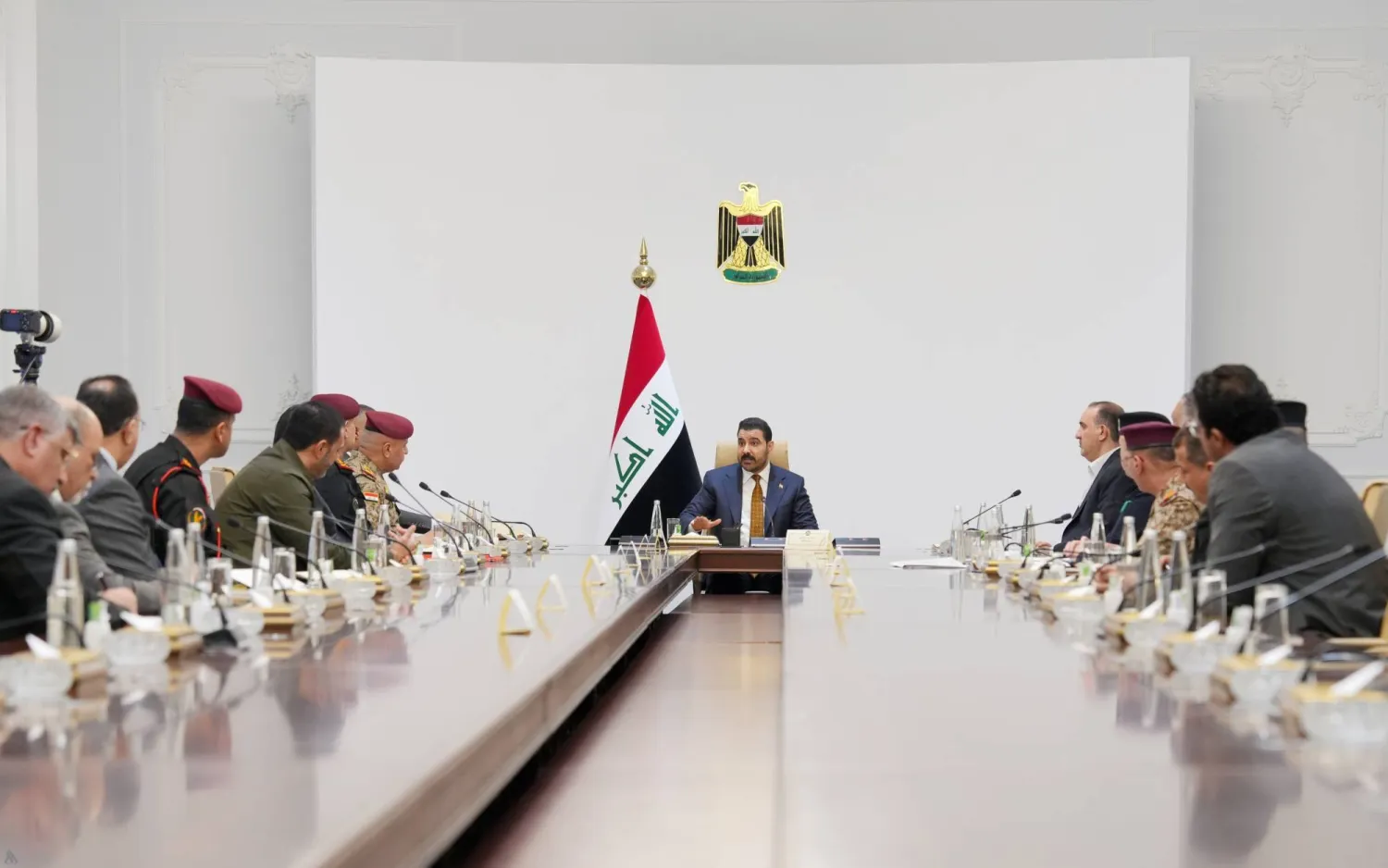
Iraqi PM Ali al-Zaidi chairs a security meeting on Sunday on oil smuggling in Jurf al-Sakhar. (INA)
TT

Confrontation between Iraqi PM, Kataib Hezbollah Intensifies

Iraqi PM Ali al-Zaidi chairs a security meeting on Sunday on oil smuggling in Jurf al-Sakhar. (INA)

Iraqi Prime Minister Ali al-Zaidi has won half the battle against armed factions by referring dozens of security and military officials across Babil province’s operational sectors to the judiciary for failing to halt oil smuggling in Jurf al-Sakhar, an area that has been held by the Kataib Hezbollah faction.

The government has made strides in its efforts to impose state monopoly over arms, including by offering government positions as incentives to several armed groups.

A number of those factions, including Kataib Hezbollah and Harakat al-Nujaba, have however refused to surrender their arms, arguing that they are “ideological” and tied to what is known as the “unity of arenas”, as promoted by Iran.

However, the sudden revelation that the armed faction, which has controlled Jurf al-Sakhar for years, was involved in smuggling oil passing near the area by puncturing pipelines has largely changed the equation.

The revelation was made after the security-political committee formed by al-Zaidi managed to enter the previously off-limits area to the authorities. There, it uncovered oil smuggling operations involving tanker trucks.

The development prompted al-Zaidi, who is also Commander-in-Chief of the Armed Forces, to issue several decisions viewed by experts as paving the way, for the first time, for a real confrontation with the armed factions to allow military units to enter the area.

According to a statement from the Office of the Commander-in-Chief of the Armed Forces, al-Zaidi chaired an emergency security meeting on Saturday evening to review the findings of a committee investigating oil smuggling in Jurf al-Sakhar.

The committee confirmed the accuracy of Federal Intelligence and Investigations Agency reports detailing oil smuggling operations, unauthorized refineries, and administrative irregularities.

“In light of the investigation’s findings, the Commander-in-Chief of the Armed Forces directed that all suspects involved in the oil smuggling operations be referred to the judiciary and that legal measures be taken against them,” it added.

He also decided to relieve the following officials in Babil of their duties: the police chief, the director of northern Babil police, the director of Babil intelligence and counterterrorism at the Ministry of Interior, the director of national security in Babil, the director of intelligence and security for Babil province at the Ministry of Defense, the director of Babil intelligence, the commander of the Popular Mobilization Forces (PMF) in Babil, the commander of the Energy Police’s Sixth Brigade at the Ministry of Interior, and the director of the Oil Pipelines Company at the Ministry of Oil.

“The Commander-in-Chief directed that operations commanders, provincial police chiefs, and directors of security and intelligence agencies bear full responsibility for any oil smuggling incidents occurring within their sectors of responsibility.”

He stressed the need to tighten oversight and security measures to prevent these practices and hold those negligent accountable, stressing that “not a single inch of Iraq, from Zakho to Basra, will remain a place where smuggling is practiced.”

Legal expert Ali al-Tamimi told Asharq Al-Awsat that “Iraq today faces the most dangerous threat to its sovereignty: weapons outside state control.”

He said the PM’s measures in Jurf al-Sakhar sparked widespread legal debate even though the moves align with the constitution.

“These referrals and dismissals are grounded in Article 78, which designates the prime minister as the direct executive responsible for the state's general policy and commander-in-chief of the armed forces,” he remarked.

He added: “Individuals who sabotage oil infrastructure are prosecuted as terrorists under the Anti-Terrorism Law and could gave penalties up to the death penalty.”