Yemeni, Int’l Efforts Underway to Open Route into Besieged Taiz Within Days

Government efforts to open a route for humanitarian aid deliveries in Taiz (local media)
TT

Yemeni, Int’l Efforts Underway to Open Route into Besieged Taiz Within Days

Government efforts to open a route for humanitarian aid deliveries in Taiz (local media)

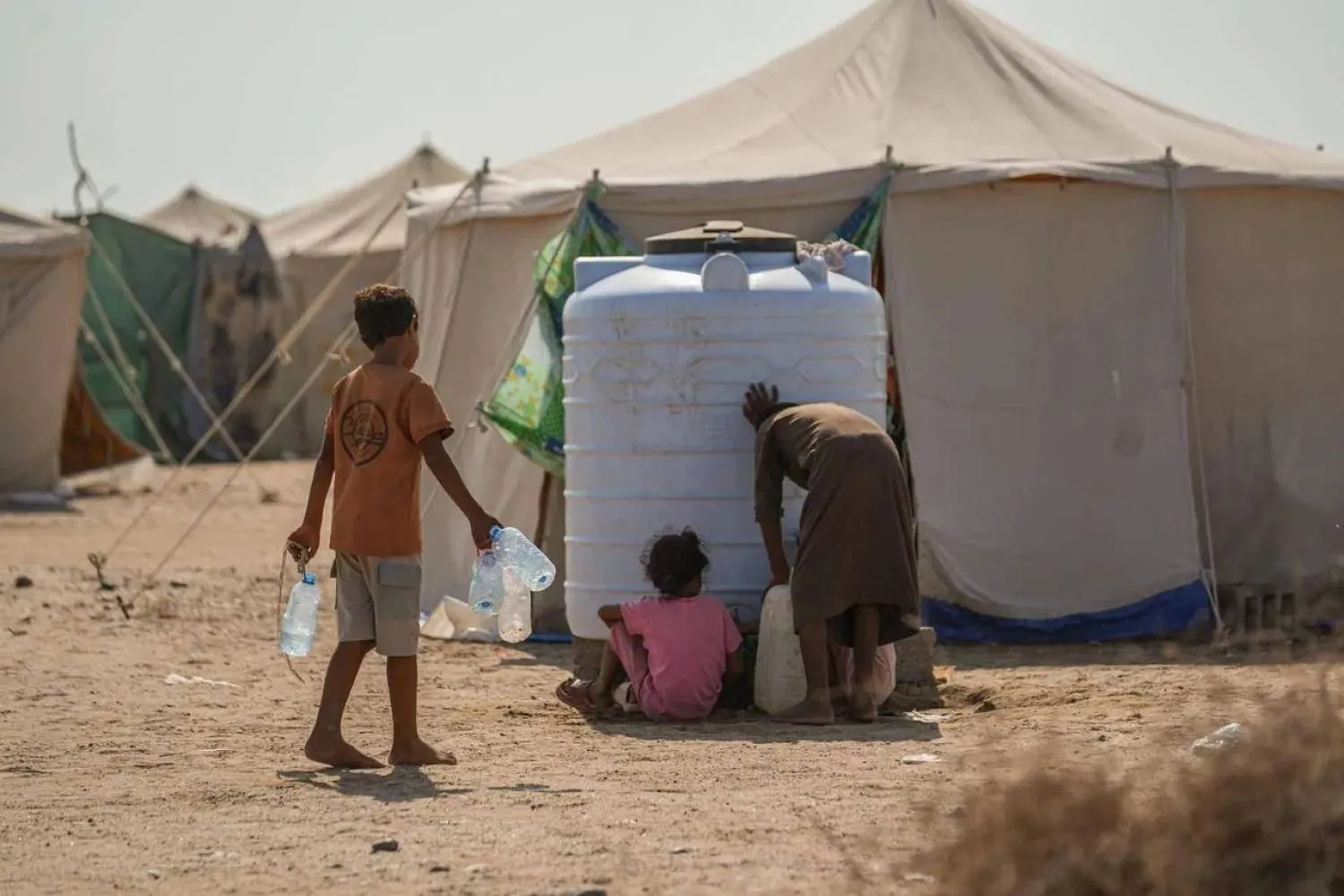
Yemeni government officials are working with local authorities and humanitarian organizations to open a road through one of the main entrances to the city of Taiz to deliver urgently needed relief supplies to the province, which is under siege by Houthi militias.

The operation is expected to take place in the coming days.

Nayef al-Bakri, Yemen's Minister of Youth and Sports and head of the Committee for Popular Mobilization and Government Support for the Armed Forces, told Asharq Al-Awsat in a telephone interview that the committee was making every effort, in coordination with international partners, to assist residents trapped in Taiz.

He said a relief convoy being prepared would carry fuel, medicines and other essential supplies, while additional convoys would be dispatched to provinces and areas affected by Houthi attacks.

Bakri said what troubled the militias most was the exceptional resilience and loyalty to their country demonstrated by the people of Taiz.

He praised the city's men, young people and women for their sacrifices in the face of the siege and Houthi attacks, saying the world had witnessed powerful images of women in Taiz, including one carrying the body of her son killed in the fighting and another purchasing weapons for the resistance.

He said these images reflected the city's unwavering loyalty and determination to defend religion and country.

Asked how the aid would reach Taiz, Bakri said the committee was in constant contact with the provincial governor and was exploring routes and access points to deliver available supplies, including fuel, medicines and other humanitarian necessities.

He said discussions were also underway with the International Committee of the Red Cross (ICRC) about its potential role in facilitating the delivery of aid, adding that efforts to secure access were continuing.

Bakri said Hadramout province would send aid donated by its residents to Taiz. The committee had also sent letters to the King Salman Humanitarian Aid and Relief Center (KSrelief), requesting additional assistance for the province.

He noted that the center was already providing extensive programs and continued support across Yemen's provinces.

Bakri said Yemen was witnessing a broad community mobilization to support people affected by the war, particularly as more than 200,000 families had been displaced.

He praised the solidarity shown among Yemenis across different provinces in sheltering displaced families and meeting their needs.

He said the government and local authorities were fulfilling their responsibilities toward displaced families alongside community-led initiatives and humanitarian efforts undertaken by the committee.
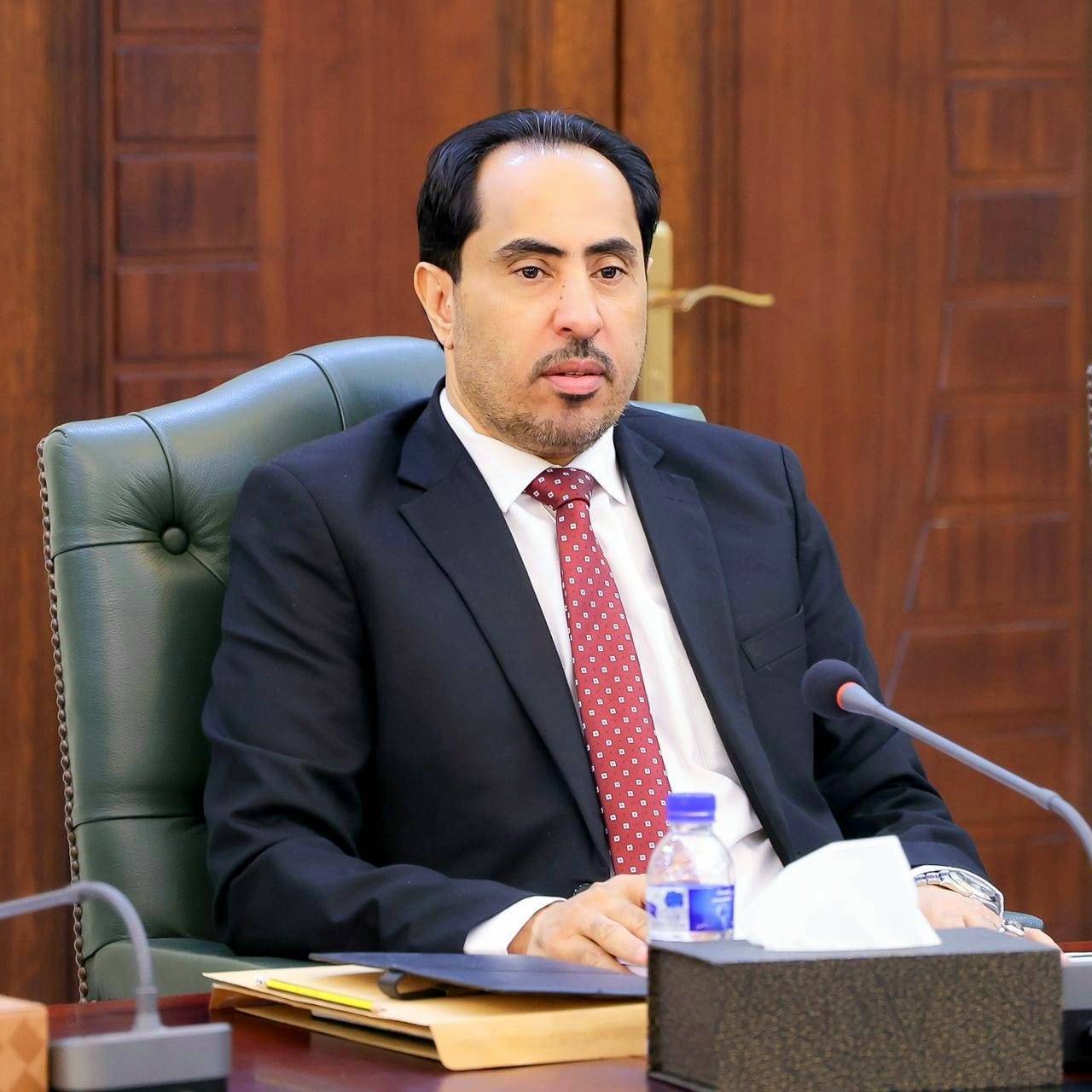
Nayef al-Bakri, Yemen's Minister of Youth and Sports and head of the Committee for Popular Mobilization and Government Support for the Armed Forces

On assistance to other provinces, Bakri said the committee, in cooperation with local authorities in Aden, had carried out a relief campaign for residents of Al-Subaiha, Al-Mudaraba and Ras al-Ara, particularly families whose areas had come under missile fire and Houthi attacks.

He said a relief convoy had been dispatched two days earlier, while preparations were underway for additional convoys in coordination with the governor of Lahj to support people affected in Al-Mudaraba district and surrounding areas.

Bakri said relief efforts also extended to Al-Dhale province, where the committee was coordinating with the governor to provide assistance to families affected by the fighting in Murais, Qataba and frontline areas.

He said the committee's work had both community and humanitarian dimensions, focusing on supporting families and provinces suffering from the consequences of the war and Houthi attacks.

"The committee is expanding its relief operations in the coming days to include districts along the western coast, particularly Mawza, Al-Waziya and Mokha, which are experiencing large waves of displacement as a result of military operations and Houthi attacks," Bakri said.

He added that the assistance would also reach displaced people's camps in Aden and Lahj provinces, in coordination with international organizations and government agencies responsible for displaced populations.

"In Shabwa province, the committee is arranging relief convoys to support districts witnessing military confrontations," Bakri said.

He said preparations were also underway to organize and dispatch a convoy from Al-Mahra province to Al-Jawf, while several provinces continued providing support to the battlefronts in Marib.

Bakri stressed that Yemenis from all walks of life, including displaced people, were participating in the “Dawn of Yemen” battle and joining various battlefronts.

Turning to Saudi support, Bakri said the Kingdom played an important role in assisting Yemen as a whole.

He praised the efforts of the joint forces and KSrelief in delivering aid to people affected by the conflict.

He also emphasized the importance of assistance delivered to Aden with the support of the joint forces and KSrelief, saying it had helped families affected by the fighting and eased the consequences of the war.


Bilal Erdogan: Developments in Syria Will Restore Shared Ties Between Beirut, Tripoli and Turkish Cities

Bilal Erdogan, the son of Turkish President Recep Tayyip Erdogan, center, waves to his Lebanese supporters outside a mosque after Friday prayers in Tripoli, northern Lebanon, Friday, Nov. 13, 2026. (AP)
TT

Bilal Erdogan: Developments in Syria Will Restore Shared Ties Between Beirut, Tripoli and Turkish Cities

Bilal Erdogan, the son of Turkish President Recep Tayyip Erdogan, center, waves to his Lebanese supporters outside a mosque after Friday prayers in Tripoli, northern Lebanon, Friday, Nov. 13, 2026. (AP)

Bilal Erdogan, son of Turkish President Recep Tayyip Erdogan, called on Friday for greater regional unity to confront attacks on Gaza, the West Bank, southern Lebanon and Syria, voicing hope that recent developments in Syria would revive historic trade and economic ties between Lebanese, Syrian and Turkish cities.

Erdogan, President of the Board of Trustees of the Knowledge Dissemination Foundation, made the remarks in the northern city of Tripoli on the second day of his visit to Lebanon, where he was welcomed by political and religious figures and locals.

Speaking after prayers at the Grand Mansouri Mosque, his first stop in the city, Bilal Erdogan said he had brought a message from his father to the Lebanese people, aimed at strengthening relations and bonds of brotherhood between the two countries.

He also voiced hope for an end to war and conflict in Lebanon, paving the way for stability, recovery and prosperity similar to the development Türkiye had experienced over the past 24 years.

"God willing, this visit will help end the war in Lebanon and bring prosperity and recovery, as happened in Türkiye over the past 24 years," Bilal Erdogan said.

Turning to Syria, said recent developments could help restore the historic ties and shared economic interests linking cities across Lebanon, Syria and Türkiye.

"God willing, with the recent developments in Syria, the bonds of shared destiny between Beirut, Tripoli, Antakya, Damascus, Gaziantep and Istanbul will be restored, as they were in the past," he said.

"The people of these cities will once again engage in trade, cooperation, partnership and brotherhood."

He stressed the need to revive cooperation between Tripoli and cities in Syria and Türkiye, strengthening economic and social ties and reconnecting communities across the region.

Addressing Israeli attacks, Bilal Erdogan said regional unity and solidarity could deter further assaults and prevent wars from continuing.

He cited what he described as genocide in Gaza, violations against villages and homes in the West Bank, destruction in southern Lebanon and attacks in Syria.

“Those demolishing homes and seizing land in Gaza, the West Bank, Syria and southern Lebanon would not dare continue if the region's peoples stood united,” he said.

Bilal Erdogan toured Tripoli's old markets, the Mevlevi lodge, citadel and several Ottoman-era mosques.

He is due to visit Kouachra in the northern Akkar region on Saturday to meet residents of Turkmen descent before traveling to Beirut for talks with Prime Minister Nawaf Salam, who will host a luncheon in his honor to conclude the visit.

He kicked off his Lebanon visit on Thursday with meetings with President Joseph Aoun, Parliament Speaker Nabih Berri, former Progressive Socialist Party leader Walid Jumblatt, Lebanon's Grand Mufti Sheikh Abdel Latif Derian and Greek Orthodox Metropolitan of Beirut Elias Audeh.


UN Rights Chief Demands Houthis Return Body of Yemeni Staff Member

UN High Commissioner for Human Rights Volker Turk delivers a statement at the United Nations Offices in Geneva, on September 16, 2025. (AFP)
TT

UN Rights Chief Demands Houthis Return Body of Yemeni Staff Member

UN High Commissioner for Human Rights Volker Turk delivers a statement at the United Nations Offices in Geneva, on September 16, 2025. (AFP)

The UN's ‌human rights chief on Friday demanded the return of the body of a Yemeni staff member of his office who died of unknown causes weeks ago after being held in Houthi custody for more than two years.

Mohammad el-Shami's family learned of his death on October 30, more than a month after it occurred, but ‌they have received no ‌explanation of the cause ‌or ⁠circumstances. El-Shami ⁠had been held by the Houthi militia since June 6, 2024.

"Our colleague must be laid to rest in a dignified manner, in accordance with the wishes of his family – which was denied contact with him ⁠for two years while he ‌was in detention," ‌said United Nations High Commissioner for Human Rights Volker ‌Turk.

His family said the Houthis had ‌agreed in principle to an investigation in a statement earlier this week. "Do not allow Mohamed to die twice: once when he was taken from ‌his family and disappeared, and again when the truth about his ⁠fate ⁠is allowed to disappear from the world."

There was no immediate comment from the Houthis, who have previously alleged those detained were part of a spy network working for the United States and Israel.

More than 70 UN employees and dozens of humanitarian workers remain in detention in Yemen. A video circulating this week appeared to show one of them "confessing", Turk's office said, voicing fears that the group may be subject to torture or ill-treatment.


Palestinian Teen Reunites with Family After Month in Israeli Jail

The mother of Ezzedine al-Lahalia, a 15-year-old Palestinian teenager, kisses him as they reunite in the village of Al-Jib in the Israeli-occupied West Bank, late on November 12, 2026, after his release from an Israeli prison where he had spent a month in detention. (AFP)
TT

Palestinian Teen Reunites with Family After Month in Israeli Jail

The mother of Ezzedine al-Lahalia, a 15-year-old Palestinian teenager, kisses him as they reunite in the village of Al-Jib in the Israeli-occupied West Bank, late on November 12, 2026, after his release from an Israeli prison where he had spent a month in detention. (AFP)

Looking tiny in his adult-size grey prison jumpsuit, 15-year-old Palestinian Ezzedine al-Lahalia appeared stunned as his mother embraced him after a month in an Israeli jail.

His first request was a child's wish for his favorite food: stuffed cabbage and shawarma.

The teenager, who had been charged with throwing stones, was reunited with his family Thursday night in an emotional scene witnessed by an AFP photographer.

Ezzedine's mother held back tears as she kissed his cheeks, while the older men released alongside him greeted their wives and children.

Then Israeli troops fired tear gas, interrupting the families' reunions.

Lahalia, from the West Bank city of Sair, reunited with his family in the village of Al-Jib near Jerusalem, where Israeli authorities typically release Palestinian prisoners on Thursdays.

"After the Israelis brought the prisoners out, after we had received them, they fired tear gas," Ezzedine's mother, Rania Jaradat told AFP, adding that the scene was reminiscent of when soldiers took the boy from the family home on October 14, 2026.

"They were afraid that the families would assemble near the gate and celebrate," she said.

After Lahalia's release, she said, "the first thing he asked for was stuffed cabbage and shawarma". She happily complied.

He was released after the family paid 5,000-shekels (around $1,500) in bail.

As the eldest of five, his absence was particularly felt by his younger siblings.

"They're happy that I've returned, but they were very distressed while I wasn't with them," Ezzedine told AFP.

According to the Addameer Prisoner Support and Human Rights Association, 9,300 Palestinians are currently held in Israeli jails, including 350 minors.

Earlier this week, the military said it had shot a 14-year-old in a group of boys it suspected of throwing stones at a passing car in the north of the West Bank.

The Israeli human rights group B'Tselem noted an increase in deaths of Palestinians after the easing of open-fire rules in 2022 for stone throwers.